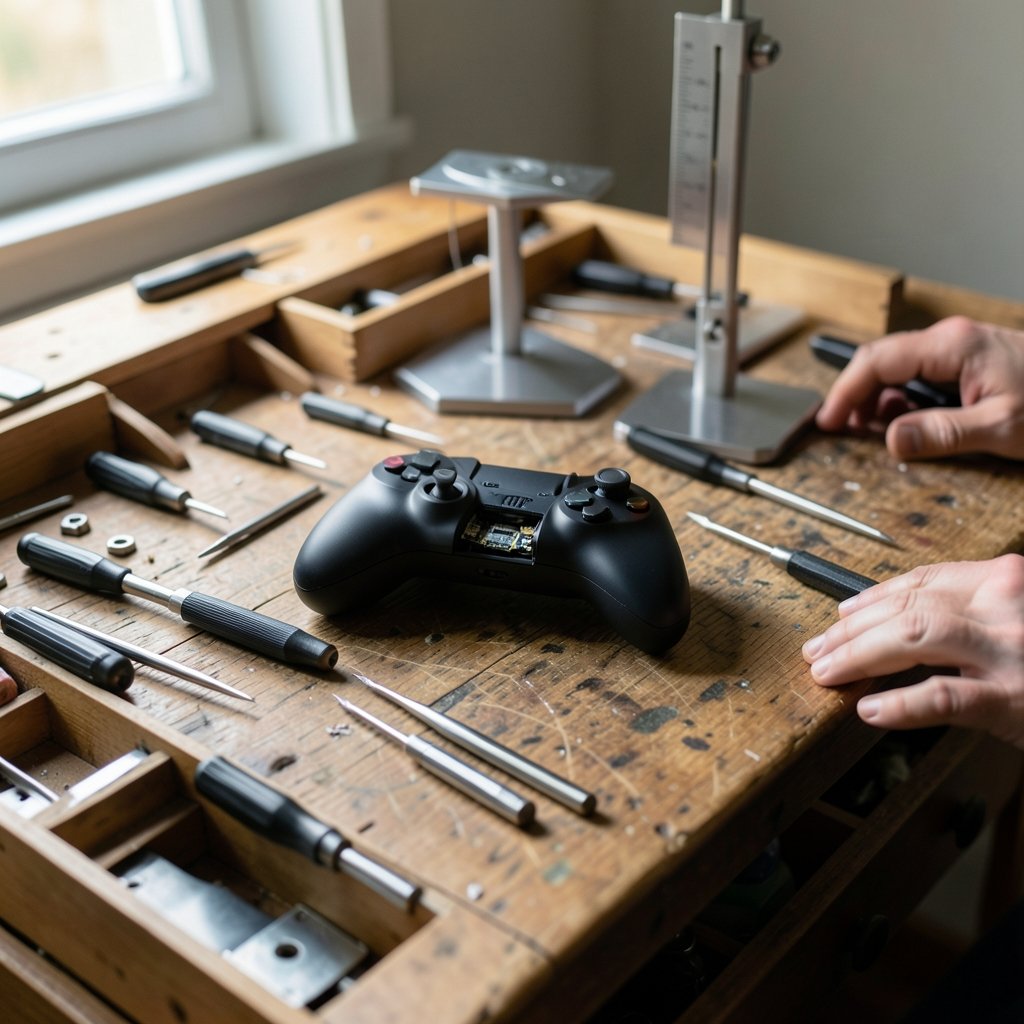
Ever noticed your character drifting across the screen while your thumbs are nowhere near the stick? That ghost input is the reason joystick technology has become one of the most argued-about topics in gaming hardware. In 2026, three sensor designs dominate the conversation: potentiometers, Hall effect, and the newer TMR (tunneling magnetoresistance) modules. Each one measures thumb movement in a completely different way, and each makes a different trade-off between price, precision, and how long it survives daily abuse. This breakdown explains how each design actually works, where each one fails, and what to check before you spend money on a controller that claims to be drift-proof. (Joystick)
How Each Joystick Sensor Actually Works
The stick you push with your thumb is just a plastic lever. Underneath it sits a sensor that converts tilt into an electrical signal. The sensor type is what changes everything.
Potentiometer joysticks: the classic wiper
A potentiometer is a resistive track with a metal wiper that slides across it as the stick moves. The wiper’s position changes the resistance, and the controller reads that change as a direction. It is cheap, well understood, and has been the default in gamepads for decades.
The weakness is mechanical. The wiper physically contacts the track, so every hour of play wears it down. Dust and skin oils get inside. The resistive material degrades unevenly. Over months or years, the resting position no longer reads as center, and you get stick drift: the cursor creeps, the camera pans, or your character walks in circles. Potentiometers are not doomed, but they are the most wear-prone design of the three.
Hall effect joysticks: magnets instead of contact
Hall effect sensors measure the strength of a magnetic field using a semiconductor element. A magnet is mounted on the moving stick assembly, and the sensor reads how the field changes as the stick tilts. No wiper touches anything, so there is no contact surface to wear out.
That is the core selling point: no physical contact, no contact wear. Hall effect sticks became common in mid-range and premium controllers during the late 2010s and are now standard in many “pro” models. They are mature, widely produced, and generally cheaper to source than TMR parts.
TMR joysticks: the newer magnetic approach
TMR stands for tunneling magnetoresistance. A TMR sensor uses a magnetic tunnel junction, a layered structure whose electrical resistance changes dramatically depending on the direction of a magnetic field. Compared with Hall sensors, TMR designs typically claim higher sensitivity, better linearity, and lower power draw, which matters for wireless controllers.
That is the theory, at least. TMR is newer to gamepads, the parts are less mature in mass production, and most of the performance claims come from component vendors and controller makers rather than independent lab testing. TMR is promising, but it is not automatically better just because it is newer.
Side-by-Side Comparison
| Feature | Potentiometer | Hall Effect | TMR |
|---|---|---|---|
| Sensing method | Physical wiper on resistive track | Magnetic field via Hall sensor | Magnetic field via tunnel junction |
| Contact wear | High (wiper rubs track) | None | None |
| Drift risk over time | Highest | Low | Low (less long-term data) |
| Typical cost | Lowest | Mid | Higher |
| Power draw | Low | Moderate | Low |
| Maturity in gamepads | Very high | High | Emerging |
| Independent test data | Extensive | Moderate | Limited |
The table tells the practical story. Potentiometers win on cost and lose on longevity. Hall effect is the safe middle ground with a proven track record. TMR sits at the premium end with strong theoretical advantages and a thinner evidence base.
What Actually Causes Stick Drift
Drift gets blamed on “cheap parts,” but the mechanism is more specific. In a potentiometer, three things combine:
- Wiper wear. The metal contact erodes the resistive track where the stick rests most often, usually near center.
- Contamination. Dust, sweat, and skin oils create insulating films on the track.
- Mechanical slack. The stick’s plastic housing loosens, so the resting position shifts away from true center.
Magnetic sensors eliminate the first two problems entirely because nothing touches the sensing element. That does not make them indestructible. Hall and TMR sticks can still develop drift from mechanical wear in the stick housing, from a magnet that shifts out of alignment after a drop, or from calibration data that no longer matches the hardware. A magnetic stick with a sloppy housing can drift just as badly as a worn potentiometer.
This is the most common mistake buyers make: assuming “Hall effect” or “TMR” on the box means the stick will never drift. The sensor is only one part of the assembly. Housing quality, spring tension, and factory calibration matter just as much.
The Trade-Offs Nobody Puts on the Box
Vendor marketing tends to present magnetic sensors as a clean upgrade. The reality is messier.
Sensitivity is not the same as accuracy. A TMR sensor may detect tinier field changes than a Hall sensor, but if the controller’s firmware applies aggressive dead zones or smoothing, that extra resolution never reaches the game. What you feel in practice depends on the whole signal chain, not the sensor alone.
Power claims need context. TMR’s lower power draw is real in datasheets, but in a controller the sticks are a small fraction of total battery use. RGB lighting and wireless radios usually dominate. Do not buy a controller purely for TMR-based battery savings.
Maturity has value. Hall effect parts have years of field data behind them. TMR is newer to this application, and long-term reliability data for gamepad use is still thin. Early adopters are, in effect, running the field test.
Price still tracks the part. Potentiometer controllers remain the cheapest. Hall effect models carry a modest premium. TMR models currently sit at the top of the range, and that gap is not always justified by measurable in-game benefit.
Practical Buying Advice That Actually Works
If you are shopping in 2026, here is what tends to hold up in real use.
Check the whole stick assembly rather than the sensor name alone. Look for reviews that mention housing wobble, spring feel, and whether calibration holds after a few months. A well-built Hall effect stick usually beats a poorly built TMR one.
Calibrate before you judge. Many controllers ship slightly off-center. Run the calibration routine in the companion app or console settings before deciding a stick is drifting. A surprising number of “defective” units are just uncalibrated.
Test for drift properly. Load a game with a visible dead zone or use a controller-testing app. Let go of the stick and watch the readout for 30 seconds. Any movement at rest is drift, no matter how small.
Keep magnetic sticks away from strong magnets. Speakers, magnetic phone mounts, and even some carrying cases can shift a magnet inside the stick assembly. Store controllers sensibly.
Do not ignore the dead zone setting. A small dead zone masks minor drift but costs precision in competitive games. If you need a large dead zone to hide drift, the stick is failing.
Weigh repairability. Some controllers let you swap stick modules without soldering. If you play heavily, a repairable design with mid-tier sensors often outlasts a sealed premium model.
For context on how hardware bets and platform decisions ripple through the industry, the broader 2026 gaming landscape is shifting fast, from the Xbox layoffs and studio sales to the questions around BioWare’s closure and Mass Effect’s future. Controller hardware is not immune to those pressures, and component choices are increasingly driven by cost and supply chain reality rather than pure performance.
Where the 2026 Market Is Heading
The direction of travel is clear: magnetic sensing is displacing potentiometers in mid-range and premium controllers. Hall effect is doing most of that work because it is proven and affordable. TMR is positioning itself as the next step, and it may well become standard in flagship models over the next few hardware cycles.
What is less clear is whether the average player will notice. In blind tests, most people cannot reliably tell a good Hall effect stick from a good TMR stick. The differences show up in lab measurements, power budgets, and long-term durability data, not in moment-to-moment feel. The meaningful upgrade for most players is simply moving off potentiometers to any well-built magnetic design.
There is also a regulatory angle worth watching. Consumer protection bodies in several regions have taken interest in drift complaints and misleading durability claims. If enforcement tightens, “drift-free” marketing language may face more scrutiny, which would push makers toward clearer, testable specifications. For a look at how platform-level rules reshape hardware economics, the ongoing fight over Apple’s App Store fee structure shows how quickly policy can change the calculus for device makers.
None of this means potentiometers are dead. Budget controllers will keep using them for years because they are cheap and good enough for casual play. But if you play competitively or log hundreds of hours a year, the math favors magnetic sensors. The real question is no longer “Hall effect or potentiometer” but “which magnetic design, and is the rest of the controller built to match?”
Conclusion
TMR, Hall effect, and potentiometer joysticks each solve the same problem in a different way, and in 2026 the ranking is fairly settled. Potentiometers remain the budget option with the highest wear risk. Hall effect is the proven, widely available middle ground that most players should default to. TMR offers real theoretical advantages in sensitivity and power, but its gamepad track record is still short and its premium is not always earned.
The smartest approach is to stop shopping by sensor label and start shopping by build quality. Check the housing, confirm calibration holds, test for drift at rest, and favor controllers you can repair. Do that, and you will get a stick that lasts, whichever sensor sits underneath it.
FAQ
What is the main difference between TMR, Hall effect, and potentiometer joysticks?
The difference is how each sensor detects movement. Potentiometers use a physical wiper sliding on a resistive track. Hall effect sensors read a magnetic field with a semiconductor element. TMR sensors read a magnetic field using a magnetic tunnel junction, which typically offers higher sensitivity and lower power draw. Only potentiometers rely on physical contact, which is why they wear out fastest. (Sensors)
Are Hall effect joysticks really drift-proof?
No. Hall effect sticks remove the contact wear that causes most potentiometer drift, but they can still drift from mechanical wear in the stick housing, magnet misalignment after a drop, or stale calibration. “Drift-resistant” is accurate. “Drift-proof” is marketing.
Is TMR better than Hall effect for gaming controllers?
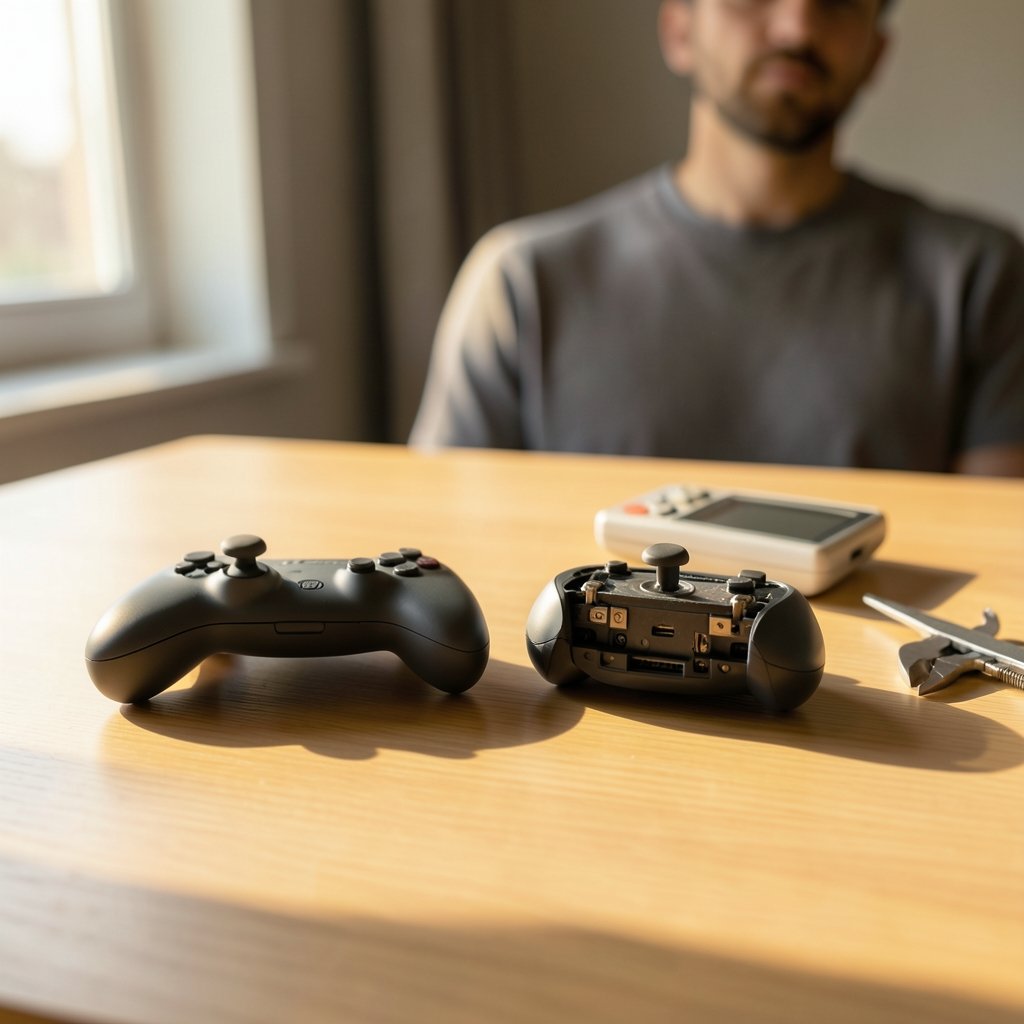
Not automatically. TMR generally claims better sensitivity, linearity, and power efficiency on paper, but independent long-term testing in gamepads is limited. A well-built Hall effect controller often performs better in practice than a poorly built TMR one. Build quality and calibration matter more than the sensor name.
Why do potentiometer sticks drift so often?
Three factors combine: the metal wiper erodes the resistive track where the stick rests, dust and skin oils contaminate the surface, and the plastic housing loosens over time. Together they shift the resting position away from true center, which the controller reads as constant input.
How can I test my controller for stick drift?
Open a controller-testing app or a game with a visible dead zone readout, release the stick, and watch the values for about 30 seconds. Any movement at rest indicates drift. Also calibrate the controller first, since many “drifting” units are simply uncalibrated out of the box.
Should I replace my potentiometer controller with a magnetic one?
If you play heavily or competitively, yes. Magnetic sticks remove the most common wear failure and usually last longer. If you play casually and your current controller works fine, there is no urgent reason to upgrade until drift appears.