
Can you really pair PlayStation VR2 Sense controllers with Valve’s new standalone headset? That question has been burning through VR forums since Valve confirmed Steam Frame as its next major hardware push. The short answer is messier than the hype suggests, and the long answer involves open-source drivers, Bluetooth quirks, and a community that refuses to take “no” for an answer.
This guide breaks down what the Steam Frame PSVR2 controller mod actually involves in 2026, what the community has achieved so far, where the technical walls stand, and what you should realistically expect before you dig out your old Sense controllers.
Why People Want This Mod in the First Place
The appeal is obvious once you look at the hardware. PSVR2 Sense controllers offer adaptive triggers, capacitive touch sensing, and precise finger tracking that puts them in a different league from most standalone VR controllers. They’re also sitting in millions of homes, often gathering dust after the PSVR2’s PC adapter launch left some users frustrated with the setup.
Meanwhile, Steam Frame arrives as Valve’s attempt to build a standalone headset that doesn’t depend on a PC tether. The headset ships with its own controllers, but enthusiasts immediately asked a practical question: if the hardware is open enough, why not use the Sense controllers they already own?
There’s also a preservation angle. VR hardware ages fast, and users who invested in PSVR2 accessories want those accessories to survive the platform transition. This is the same instinct that drove the Steam Deck out of stock alternatives 2026 scramble, where buyers hunted down hardware that fit their existing libraries rather than starting from scratch.
What the Mod Actually Requires
The technical stack comes first: getting PSVR2 Sense controllers to work outside Sony’s hardware and software involves three separate problems that must all be solved at once.
The Tracking Problem
Sense controllers rely on inside-out tracking using cameras on the headset itself. The controllers emit infrared light patterns that the PSVR2’s cameras read. Steam Frame uses its own tracking architecture, so the controllers and the headset need a shared language for spatial data. This is the hardest barrier, and it’s why most “mods” are really driver-level translation layers rather than simple pairing tricks.
The Bluetooth and Firmware Problem
Pairing is the easy-looking part that trips people up. Sense controllers communicate over Bluetooth, but Sony’s firmware expects specific handshake protocols. Community developers have built open-source tooling to bridge this gap, and the results are promising but inconsistent. Users report that pairing succeeds on one firmware version and fails on the next, which makes the whole experience feel like chasing a moving target.
The Input Mapping Problem
Even when tracking and pairing work, the controller’s adaptive triggers and haptic feedback need software that knows what to do with them. Without proper mapping, you get a controller that technically connects but feels dead in your hands. This is where most casual attempts stall out.
The State of the Mod in 2026
Here’s the honest picture: as of early 2026, there is no official, Valve-blessed path to using PSVR2 Sense controllers with Steam Frame. Valve has not published documentation confirming or denying compatibility, and Sony has shown no interest in broadening Sense controller support beyond PlayStation and PC VR setups.
That doesn’t mean nothing works. The open-source community has made real progress, and the pattern mirrors other Valve hardware adventures. When the Decky loader not working steam deck fix 2026 situation frustrated users, the community stepped in with workarounds long before official patches arrived. The same energy is now pointed at Steam Frame controller compatibility. (Steam Link)
What Works Today
- Basic pairing via community drivers: Some users report successful Bluetooth pairing with third-party driver packages, though results vary by firmware version.
- Partial input mapping: Button presses and stick input can be translated, but adaptive trigger resistance is largely unsupported.
- Tracking handoff: Experimental builds attempt to feed controller tracking data into SteamVR’s input system, with mixed latency results.
What Doesn’t Work
- Native adaptive trigger support: The resistance feedback that makes Sense controllers special is not reliably reproduced.
- Finger tracking accuracy: Capacitive sensing data gets lost in translation, so fine finger detection is rough at best.
- Stable long-session reliability: Users report disconnects and drift after 30 to 60 minutes of play.
Practical Tips If You Want to Try It
If you’re determined to experiment, here’s what actually helps based on community reports and the general pattern of VR modding.
Start with a known firmware version. Don’t update your controllers until you’ve confirmed the community driver supports your current firmware. Updates have broken working setups repeatedly.
Test pairing before you commit to a headset purchase. Borrow or try a Steam Frame unit if you can. Buying hardware on the promise of a mod that might not work is how people end up disappointed.
Keep expectations about haptics low. Treat the mod as a way to get usable input, not a way to replicate the full PSVR2 experience. The adaptive triggers are the first feature to break and the last to get fixed.
Watch the driver repositories closely. The developers behind these projects move fast, and a fix that didn’t exist last month may be live today. Follow the changelogs rather than relying on old forum posts.
Have a fallback plan. If the mod fails, you should still have working controllers for your headset. Don’t sell your Steam Frame controllers before you’ve confirmed the Sense setup is stable for your use case.
Common Mistakes That Waste Time
The most frequent error is assuming the mod is a one-click install. It isn’t. Users who expect a simple pairing menu get frustrated fast.
The second mistake is mixing firmware versions between the two controllers. Sense controllers update independently, and mismatched firmware causes pairing failures that look like driver bugs but are actually version conflicts.
The third mistake is ignoring USB and Bluetooth interference. VR setups often run in rooms crowded with wireless signals, and the Sense controllers’ Bluetooth link is sensitive to interference. A cheap USB Bluetooth dongle on a crowded port can ruin an otherwise working setup.
Finally, people forget that SteamVR input profiles need manual configuration. Even a perfectly paired controller will feel broken if the game doesn’t have a mapping profile that understands it.
How This Fits the Bigger Hardware Picture
The Steam Frame controller question sits inside a larger shift in consumer hardware: users increasingly expect cross-platform compatibility and punish companies that lock accessories to one platform. The same tension appears in the Steam machine release date 2026 discussion, where buyers want to know how open Valve’s next box will be to third-party peripherals.
It also echoes the platform fee wars. Just as the Apple scotus 27 percent app store fee 2026 ruling reshaped how developers think about walled gardens, VR users are pushing back against accessory lock-in. The modding community’s persistence is a symptom of that larger shift.
Compatibility Comparison at a Glance
| Feature | Official Steam Frame Controllers | PSVR2 Sense Controllers (Modded) |
|---|---|---|
| Native pairing | Yes | No, community drivers only |
| Adaptive triggers | Yes | Rarely, unstable |
| Finger tracking | Yes | Partial, lossy |
| Haptic feedback | Full support | Limited |
| Setup difficulty | Plug and play | High, firmware-sensitive |
| Long-session stability | Reliable | Mixed reports |
| Warranty and support | Covered | None |
Is It Worth the Effort?
For most people, no. The mod is a hobbyist project, not a consumer solution. If you want reliable VR input on Steam Frame, use the controllers that come in the box. The Sense controller mod is for tinkerers who enjoy the process as much as the result.
That said, the community work matters. Every driver breakthrough pushes Valve and Sony toward more open hardware, and the pressure is real. The same dynamic played out in the source control world, where the Anthropic scion source control 30000 merges 2026 story showed how scale forces platforms to adapt. VR accessory compatibility is heading in the same direction.
Who Should Try It
- Developers and tinkerers who want to understand VR input pipelines.
- Users with spare Sense controllers who don’t mind the risk.
- Community contributors willing to file bug reports and test builds.
Who Should Skip It
- Casual players who want things to just work.
- Competitive users who need zero-latency, reliable input.
- Anyone under warranty pressure who can’t afford a bricked controller.
What to Watch Next
Three developments could change everything. First, Valve’s official documentation on Steam Frame input protocols could open the door to sanctioned third-party controllers. Second, Sony firmware updates could either lock down or loosen the Sense controller’s Bluetooth behavior. Third, open-source driver maturity will determine whether the mod moves from experiment to everyday option.
Keep an eye on the broader VR modding scene too. The Tesla website robotaxi semi roadster three hardware bets 2026 coverage is a reminder that hardware bets often hinge on software ecosystems catching up, and VR is no different.
Conclusion
The Steam Frame PSVR2 controller mod is real, but it’s not ready for prime time. The community has built impressive bridges between Sony’s hardware and Valve’s new headset, yet the experience remains fragile, firmware-dependent, and missing the adaptive trigger magic that makes Sense controllers special.
If you’re a tinkerer, dive in. Follow the driver repositories, test carefully, and keep your expectations calibrated. If you’re a regular player, stick with the official controllers and let the modders do their work. The compatibility gap will likely narrow over the next year, and the pressure from users is exactly what pushes platforms toward openness.
FAQ
Can I use PSVR2 Sense controllers with Steam Frame right now?
Not through any official method. Community drivers offer partial, unstable support, but there is no Valve-sanctioned pairing path as of early 2026.
Do adaptive triggers work with the mod?
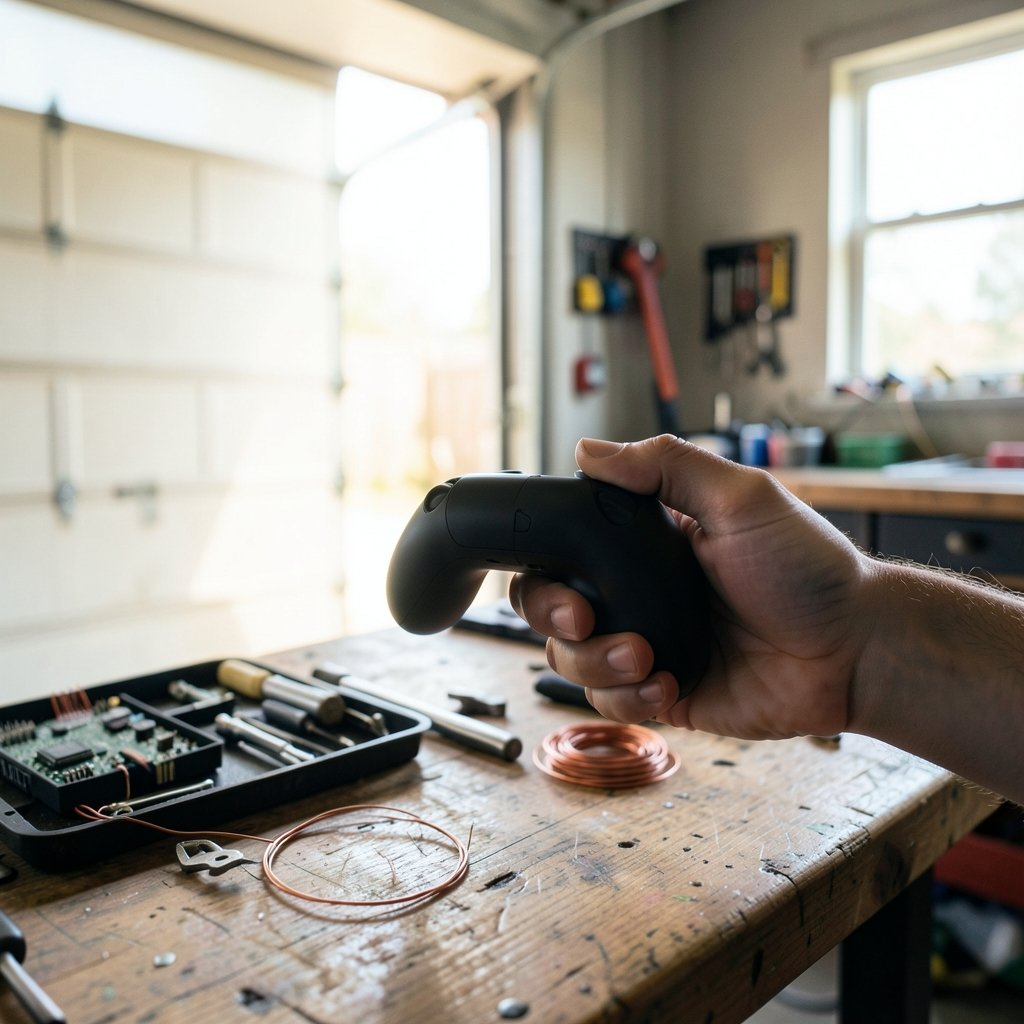
Rarely and unreliably. Adaptive trigger resistance is the first feature to break and the hardest to restore, so most users get button and stick input only.
Will this mod void my controller warranty?
Modifying firmware or using unofficial drivers can affect warranty coverage. Check your regional consumer protection rules before proceeding, since policies vary.
Why do my controllers disconnect after 30 minutes?
Bluetooth interference, firmware mismatches, and driver instability are the usual culprits. Try a dedicated USB Bluetooth adapter and confirm both controllers run identical firmware.
Is Valve likely to add official Sense controller support?
There is no public indication of that. Valve has not commented on PSVR2 compatibility for Steam Frame, and Sony has shown little interest in expanding Sense support beyond its own platforms.
What is the safest way to experiment with the mod?
Use a spare controller if possible, avoid updating firmware until you confirm driver support, and test in short sessions before committing to long play. Keep official controllers as your reliable fallback.
One more consideration: audio and haptics share the same Bluetooth bandwidth, so if you’re routing headset audio through the same adapter, expect the controller link to suffer. Splitting audio to a wired connection can meaningfully improve stability. Likewise, disable unused controller features in the driver config—turning off finger tracking when you don’t need it reduces the data load and cuts disconnect frequency. Finally, document your working configuration. Firmware versions, driver builds, and mapping profiles that work today are worth saving, because the next update can wipe a stable setup overnight. The mod rewards patience and record-keeping more than raw technical skill.