

What if the biggest hole in a company’s cloud security wasn’t a clever hacker, but a single checkbox someone forgot to tick? That scenario plays out more often than most IT leaders like to admit. Cloud security posture management, usually shortened to CSPM, exists to catch exactly that kind of quiet, human-sized mistake before it becomes a headline.
This article walks through the practical benefits of CSPM, where it fits in a modern security stack, and what teams typically get wrong when they roll it out. The focus stays on what actually works in day-to-day operations, not on vendor slide decks.
What CSPM Actually Does
CSPM provides a continuous scanning and assessment layer for cloud environments. It connects to providers such as AWS, Azure, and Google Cloud, reads the configuration of accounts, networks, storage, identity policies, and workloads, and compares that configuration against a security baseline. When something drifts, the tool flags it.
That baseline might come from the CIS Benchmarks, from NIST guidance, or from the organization’s own internal policy. The important shift is from periodic manual audits to automated, near-real-time checks. A team that once reviewed its cloud settings quarterly can now see a misconfiguration within minutes of it appearing. (NIST Cybersecurity Framework)
For teams already juggling multiple providers, this matters even more. Anyone comparing platforms through a lens like AWS vs Azure vs Google Cloud 2026 quickly realizes that each provider uses different terminology, default settings, and logging models. CSPM normalizes all of that into one consistent view.
Benefit 1: Catching Misconfigurations Before Attackers Do
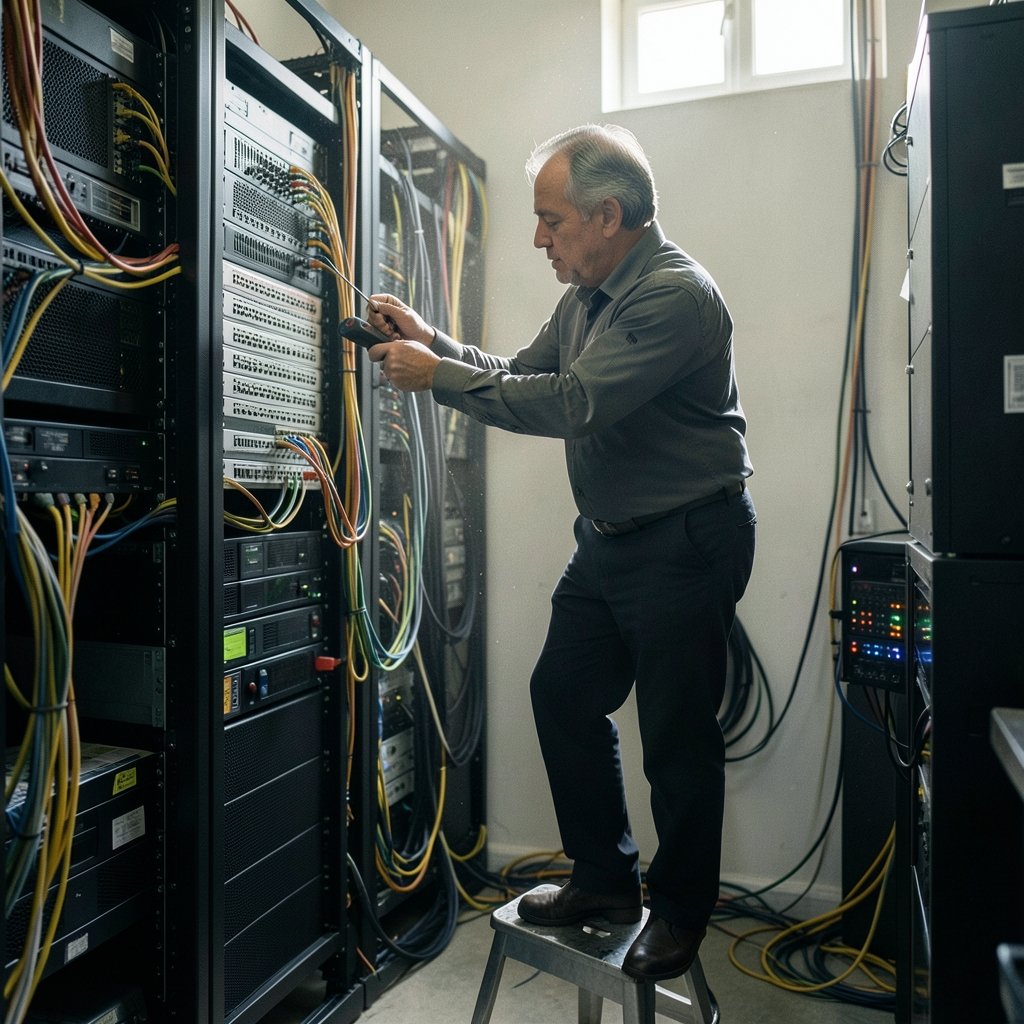
The single strongest argument for CSPM is misconfiguration detection. Public cloud breaches are repeatedly traced back to customer-side errors rather than flaws in the provider’s infrastructure: an open storage bucket, an overly permissive identity role, a database exposed to the public internet, or logging that was switched off.
These errors are not signs of incompetence. They are the natural result of fast-moving engineering teams provisioning resources through templates and consoles at speed. A developer spinning up a test environment at 11 p.m. is not thinking about whether the bucket policy is world-readable.
CSPM closes that gap by making configuration review automatic and continuous. Practical tips that separate tools which work from tools which just generate noise:
- Start with a small, high-signal rule set. Focus first on public storage, overly broad identity permissions, disabled logging, and unencrypted data stores. Expand later.
- Assign every finding to an owner as well as its account. A finding with no owner is a finding that never gets fixed.
- Tune aggressively in the first month. Out-of-the-box rulesets are deliberately broad and will flag accepted exceptions. Suppress those with documented justification.
- Treat recurring findings as design problems. If the same misconfiguration appears weekly, the fix belongs in the infrastructure template, not in a ticket.
The most common mistake is enabling every rule on day one. Teams drown in thousands of alerts, lose trust in the tool, and quietly stop looking at it. A narrow, well-owned ruleset beats a comprehensive one nobody reads.
Benefit 2: Continuous Compliance Instead of Annual Panic
Compliance frameworks such as SOC 2, ISO 27001, PCI DSS, and NIST all require evidence that controls operate consistently throughout the year, rather than once a year. Historically, that evidence was assembled by hand during audit season, often by pulling screenshots and configuration exports from multiple consoles.
CSPM changes the economics of this. Findings map directly to control frameworks, so the evidence trail is generated continuously. When an auditor asks whether encryption at rest was enforced across the estate during the review period, the answer comes from a dashboard rather than a scramble.
This is where the practical value shows up most clearly. Security teams report that the time spent on audit preparation drops substantially, and the quality of evidence improves because it reflects the actual state of the environment rather than a snapshot taken on a convenient day.
There is a caveat worth stating plainly: automated compliance mapping is only as good as the mapping itself. Framework versions change, and control interpretations vary between auditors. Teams should confirm that the tool’s mappings match the auditor’s expectations before relying on them.
Benefit 3: One View Across Multiple Clouds
Multi-cloud estates are now the norm rather than the exception. A typical mid-sized company might run production workloads in AWS, a data platform in Azure, and machine learning experiments in Google Cloud, often following an acquisition or a departmental decision made years earlier.
Each provider has its own security console, its own alerting model, and its own vocabulary. Security analysts end up context-switching between three dashboards with three different severity scales. Consistency erodes, and coverage gaps appear in whichever cloud gets the least attention.
CSPM consolidates this into a single inventory and a single policy language. The benefits are concrete:
| Without CSPM | With CSPM |
|---|---|
| Separate dashboards per provider | One consolidated view |
| Inconsistent severity ratings | Normalized risk scoring |
| Policies defined per cloud | One policy applied everywhere |
| Manual cross-cloud reporting | Automated reporting |
| Blind spots in the least-used cloud | Uniform coverage |
The last row deserves emphasis. In practice, the cloud a team uses least is almost always the one with the weakest oversight, and it is frequently the one an attacker finds most interesting.
Benefit 4: Shifting Security Left Into Infrastructure as Code
Modern cloud environments are increasingly defined in code. Terraform, CloudFormation, and similar tools mean that a misconfiguration is often written once and then replicated dozens of times across environments.
CSPM products increasingly scan infrastructure as code templates before deployment, catching issues at the pull-request stage. This is the difference between fixing a problem in a code review and fixing it in production at 2 a.m.
What works in practice:
- Run IaC scanning as a required check in the pipeline, not as an optional advisory.
- Fail the build only on high-severity issues at first, to avoid blocking delivery and generating resentment.
- Feed recurring findings back into shared module libraries so the fix propagates everywhere.
- Keep runtime scanning alongside IaC scanning, because manual console changes and drift still happen.
The combination of pre-deployment and runtime scanning is what makes posture management genuinely continuous. Neither half is sufficient alone.
Benefit 5: Better Prioritization and Less Alert Fatigue
Security teams are chronically short on time. A tool that produces ten thousand findings without prioritization has not helped anyone; it has simply moved the problem.
Good CSPM platforms correlate findings with context: is the resource internet-facing, does it hold sensitive data, is it in production, is there an active exploit path? That context turns an undifferentiated list into a ranked work queue. The practical effect is that analysts spend their hours on the findings that actually matter, and engineers stop receiving tickets about low-risk issues in sandbox accounts.
This is also where the convergence with broader cloud-native security platforms becomes relevant. Many organizations now evaluate posture management as part of a wider suite that includes workload protection and identity analysis. Teams weighing that decision often look at comparisons such as Astrix vs Oasis vs Entro non human identity security 2026 to understand how identity risk fits alongside configuration risk.
Benefit 6: Faster Incident Response and Cleaner Forensics
When an incident occurs, the first questions are always the same: what changed, when, and by whom? CSPM tools maintain configuration history, which turns those questions into queries rather than investigations.
Knowing that a security group was opened to the world four hours before anomalous traffic began is enormously valuable. It shortens containment time and gives responders a defensible timeline. This is a benefit that rarely appears in vendor marketing but consistently ranks high among teams who have lived through a real incident.
Where CSPM Fits in the Wider Stack
CSPM is not a replacement for other controls. It complements them. A rough division of labor looks like this:
| Control area | Primary question answered |
|---|---|
| CSPM | Is the environment configured securely? |
| Workload protection | Is running code behaving maliciously? |
| Identity analysis | Who and what can access this resource? |
| Network security | Is traffic controlled and inspected? |
| Logging and detection | What is happening right now? |
Organizations that treat CSPM as a checkbox rather than as part of a layered program tend to see less value. The tool surfaces problems; the surrounding process fixes them.
Common Mistakes That Undermine the Benefits
Even well-chosen tools fail when adoption is poor. These are the patterns that show up repeatedly:
- No clear ownership model. Findings route to a shared inbox and die there.
- Rules left at defaults. Either too noisy or too permissive, rarely right.
- No integration with engineering workflow. If fixes require leaving the tool and filing a separate ticket, they get deprioritized.
- Ignoring the human side. Engineers need short, clear remediation guidance, not a link to a 40-page policy document.
- Measuring activity instead of outcomes. Counting findings closed means little if the same issues keep reappearing.
The teams that get the most from posture management treat it as an engineering feedback loop, not as a compliance artifact. They measure time-to-remediation, recurrence rates, and the proportion of issues caught before deployment.
What to Look For When Evaluating Tools
Buyers should focus on a handful of practical criteria rather than feature-count comparisons. Coverage across the clouds actually in use comes first. Then depth of the policy engine, quality of remediation guidance, integration with ticketing and CI/CD pipelines, and the quality of the underlying risk scoring.
It is also worth checking how the tool handles exceptions. Every real environment has accepted risks, and a platform that cannot document and expire exceptions gracefully will either be bypassed or will generate permanent noise.
Finally, consider how the tool fits alongside the rest of the security portfolio. Teams building out broader programs often pair posture management with adjacent investments, and resources such as this guide to the best internet security australia options illustrate how endpoint and network controls complement cloud-side visibility. For organizations handling sensitive client data, the same logic applies to application-layer tooling, as seen in reviews of the best case management software for law firms, where configuration discipline and access control matter just as much as in the cloud console. (Cloud security)
Conclusion
The benefits of cloud security posture management come down to visibility, consistency, and speed. CSPM turns an opaque, fast-changing cloud estate into something a team can actually see and reason about. It catches the quiet misconfigurations that cause most cloud breaches, generates compliance evidence continuously rather than annually, and gives multi-cloud organizations one consistent standard instead of three divergent ones.
None of this happens automatically. The tool is the easy part. The hard part is ownership, tuning, and wiring findings into the way engineers already work. Teams that invest in those habits see posture management become a genuine force multiplier. Teams that treat it as a purchase rather than a practice end up with an expensive dashboard nobody opens.
Frequently Asked Questions
What is cloud security posture management in simple terms?
It is a category of tool that continuously checks how cloud environments are configured and flags anything that deviates from a security baseline. Think of it as an automated inspector that walks through every account, storage bucket, and permission setting and reports what looks risky.
Is CSPM only useful for large enterprises?
No. Small and mid-sized teams often benefit more, because they rarely have dedicated staff to manually review cloud configurations. A modest environment with a handful of engineers can still accumulate hundreds of settings, and automation catches drift that no one has time to check by hand.
How is CSPM different from a cloud access security broker?
A cloud access security broker generally focuses on controlling how users and devices interact with cloud services, including data loss prevention and shadow IT discovery. CSPM focuses on the configuration and posture of the cloud infrastructure itself. The two address different layers and are often used together.
Can CSPM replace manual security reviews?
It replaces the repetitive, checklist-style portion of those reviews, which is where most manual effort goes. It does not replace architectural judgment, threat modeling, or the human decision about which risks are acceptable. Automation handles scale; people handle context.
How long does it take to see value from a CSPM rollout?
Initial findings usually appear within hours of connecting an account. Real operational value, meaning a tuned ruleset with clear ownership and a working remediation loop, typically takes a few weeks to a couple of months depending on environment size and team capacity.
What is the biggest mistake when adopting CSPM?
Enabling every default rule at once. It floods teams with alerts, erodes confidence in the tool, and leads to it being ignored. Starting narrow, focusing on high-impact risks, and expanding gradually produces far better results and much stronger adoption across engineering teams.



