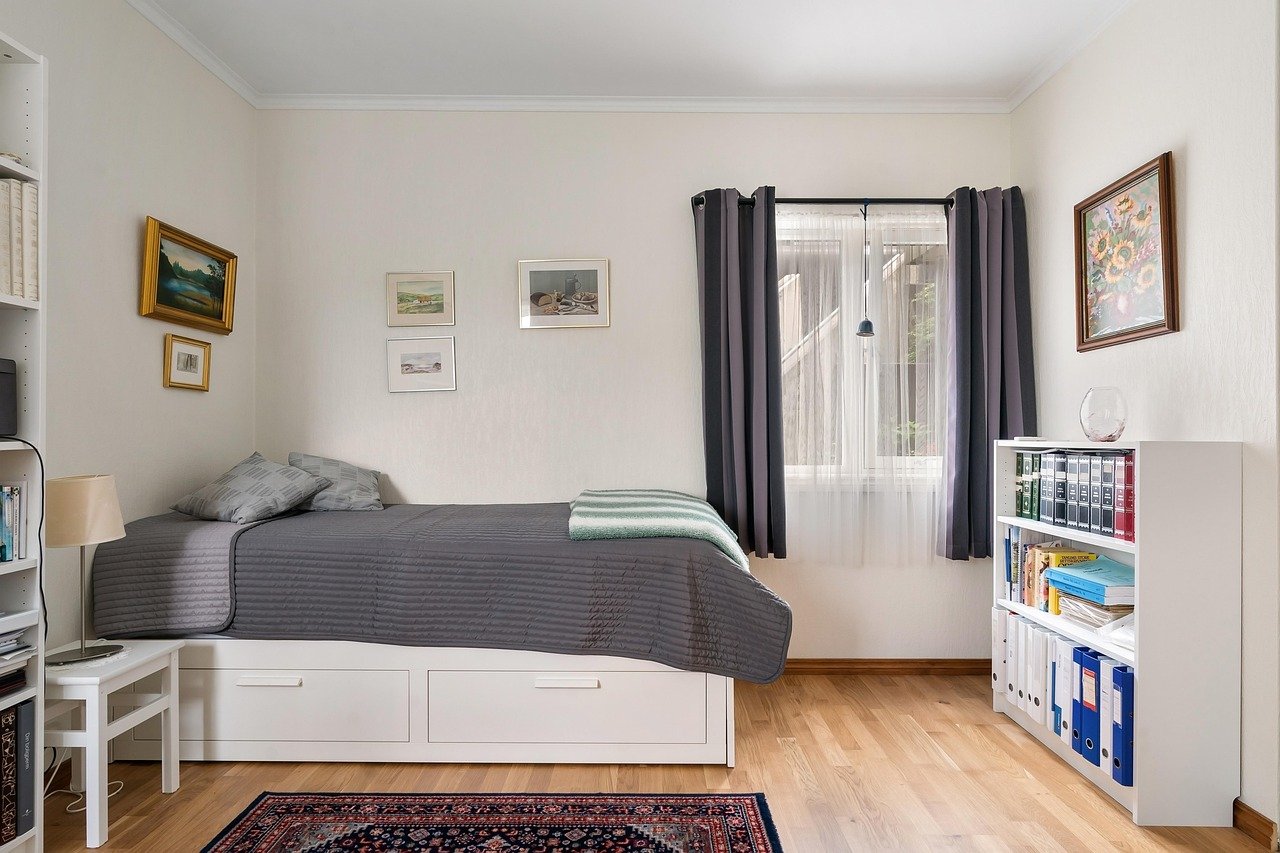
A third of your life happens in the bedroom, yet it is usually the last room anyone decorates properly. Most people throw a bed in, add a nightstand, and call it done. A modern bedroom that actually feels beautiful takes a little more thought, but not much more money. It comes down to a few deliberate choices: layered lighting, a restrained palette, honest materials, and the discipline to leave empty space empty.
This guide walks through what modern bedroom design actually means, where people go wrong, and the small moves that separate a hotel-calm room from a furniture showroom. (Modern warfare 4 vault edition vs standard 2026)
What “modern” really means in a bedroom
Modern and contemporary get used interchangeably, and in casual conversation that is fine. In design scholarship they are not the same thing. Modern usually refers to a specific movement rooted in early-to-mid twentieth-century principles: clean lines, honest materials, function before ornament. Contemporary just means “of the moment” and shifts every few years.
For a bedroom, the practical difference matters less than the shared logic. Both favor:
- Low, horizontal lines rather than tall, ornate furniture
- A neutral base with one or two accent tones
- Matte finishes over high gloss
- Negative space treated as a design element, not a gap to fill
- Concealed storage so surfaces stay clear
If a room has those five qualities, most people will read it as modern regardless of which label a designer would apply.
Start with the bed, then build outward
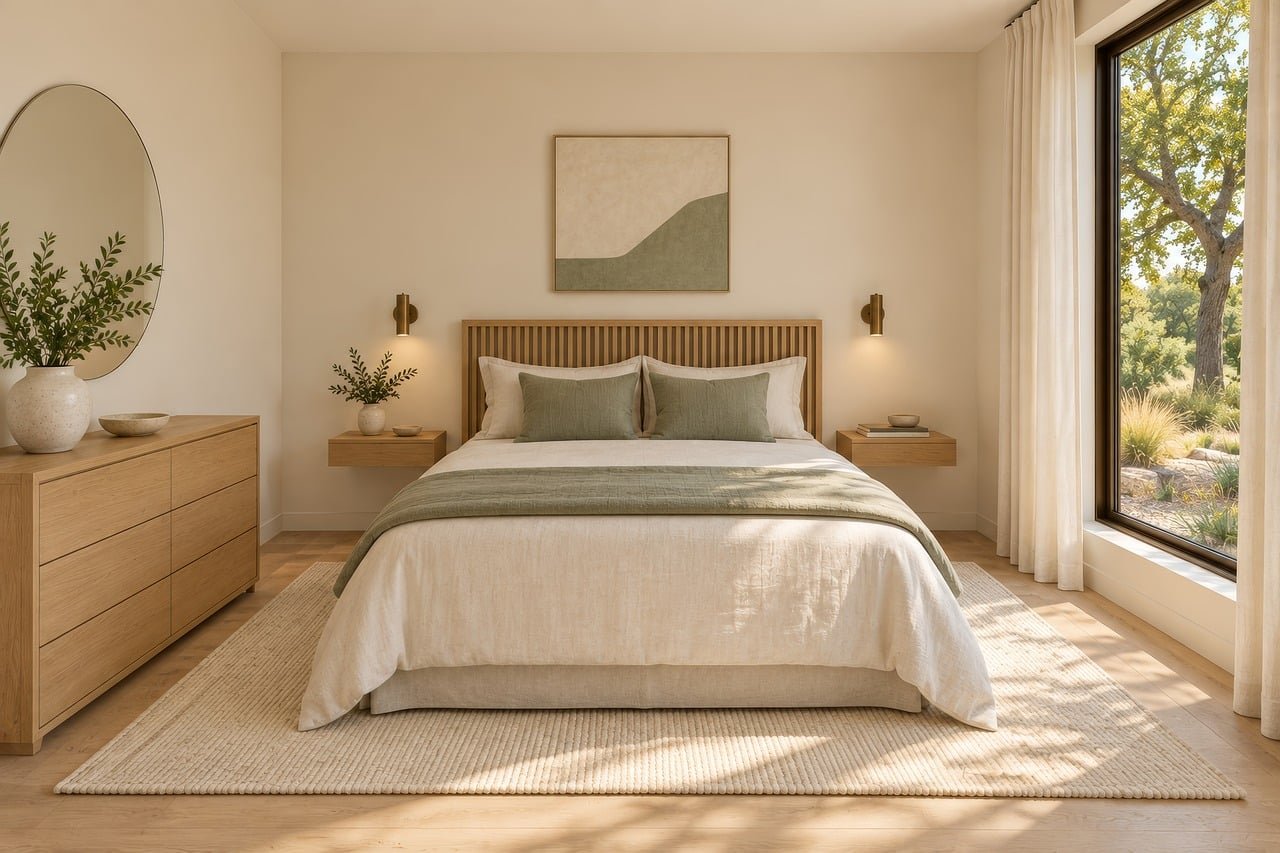
The bed is the anchor. Everything else negotiates with it. A low-profile platform bed with an upholstered or wood frame is the most common modern choice because it keeps sightlines low and makes ceilings feel taller.
Three practical notes from experience:
- Measure the walkway before you buy. A king bed in a small room can leave less than 60 cm on each side, which turns getting up at night into an obstacle course. Tape the footprint on the floor first.
- Skip the tall headboard if the room is short. A headboard that stops below the window line keeps the wall feeling open.
- Upholstered frames show wear. Linen and bouclé look wonderful but collect dust and body oils. Look for removable covers or choose a tight-weave performance fabric.
Once the bed is placed, resist the urge to fill the rest of the room immediately. Live in it for a week. You will notice which corners you actually use and which ones just collect things.
Build a palette that survives trends
The most common mistake in modern bedrooms is a palette so neutral it reads as unfinished, or so bold it dates within two years. The fix is a 60-30-10 split: roughly 60 percent base, 30 percent secondary, 10 percent accent.
| Layer | Typical choice | What it does |
|---|---|---|
| Base (60%) | Warm white, greige, soft charcoal | Walls, bedding, large surfaces |
| Secondary (30%) | Oak, walnut, taupe, muted sage | Bed frame, rug, curtains |
| Accent (10%) | Matte black, terracotta, deep olive | Hardware, lamps, one cushion or throw |
Two rules keep this from going flat. First, add texture wherever you remove color. Linen, wool, bouclé, and matte ceramic all read as intentional in a neutral room; smooth surfaces alone read as empty. Second, repeat each accent at least twice. A single brass lamp in an otherwise all-grey room looks like a mistake. Two brass touches look like a decision.
If you are also updating other rooms, the same palette logic carries over well to broader projects like these home remodeling ideas, which helps the whole house feel related rather than assembled room by room.
Layer the lighting like a designer would
Lighting is where modern bedrooms most often fail. One ceiling fixture throws flat, unflattering light and casts shadows exactly where you do not want them. Good bedrooms use three layers on separate controls:
- Ambient: a ceiling fixture or recessed lights, dimmable
- Task: reading sconces or bedside lamps, ideally with adjustable arms
- Accent: an LED strip behind the headboard, a picture light, or a low floor lamp
The detail that changes everything is dimming. A dimmer on the ambient layer costs very little and turns a bright room into a calm one at night. Wall sconces free up nightstand space, but they require wiring, so plan them before the walls are painted. Plug-in sconces are a reasonable compromise for renters.
Color temperature matters too. Warm bulbs in the 2700K range flatter skin tones and wood; anything above 3000K starts to feel clinical in a bedroom. Put task and accent lights on warm bulbs and keep the ceiling layer slightly cooler only if you use the room for dressing and need accurate color.
Choose window treatments that make the window look bigger
The single most effective trick in modern bedrooms is hanging curtains high and wide. Mount the rod close to the ceiling and extend it well past the window frame on both sides. The window reads as larger, the ceiling reads as taller, and the wall looks finished.
Floor-to-ceiling curtains in a linen-blend or a soft wool keep the look modern. If you prefer shades, roller or Roman shades mounted inside the frame give a cleaner line. Blackout lining is worth the upgrade in a bedroom; light control affects sleep quality more than most decor decisions.
One mistake worth naming: buying curtains that just clear the floor and puddle awkwardly. Either let them kiss the floor or break by a centimeter. Anything in between looks like a measuring error.
Get the rug size right the first time
Undersized rugs are the most common and most expensive-looking error in modern bedrooms. A rug that floats in the middle of the floor with bare boards all around makes the room feel smaller, not cozier.
The convention most designers follow: the rug should extend at least 50 to 60 cm beyond each side of the bed, and sit roughly two-thirds under it, with the front legs of the nightstands on the rug. In a small room, a runner on each side works better than one cramped rectangle.
Flat-weave wool and low-pile options suit modern rooms better than deep shag, which fights with clean lines and traps dust.
Style the surfaces, then stop
Nightstands, dressers, and shelves are where modern bedrooms either come together or fall apart. The instinct is to fill them. The better move is to style in threes and leave the rest bare: a lamp, one book, and a small ceramic or plant. That is the whole formula.
A few practical habits that hold up over time:
- One object per surface that is purely decorative; everything else should be useful.
- A tray or shallow bowl corrals keys, glasses, and chargers so the surface still reads as clear.
- Closed storage over open shelving in a bedroom. Open shelves invite clutter and dust.
- Cable management behind the nightstand. Visible cords undo an otherwise polished room faster than almost anything.
If you want a faster way to test furniture and color arrangements before committing, an AI interior design generator for room ideas can produce quick visual variations, though treat the output as a starting point rather than a final plan. (Interior design)
Hang art at the right height
Above the bed, a single large piece or a tight grid of two to four smaller frames works best. The rule of thumb most stylists use is to hang the bottom edge roughly 15 to 20 cm above the headboard, and to keep the arrangement narrower than the bed itself so it does not spill past the frame.
Two cautions. First, this is a convention, not a standard; sources vary and tall headboards change the math. Second, glass over a bed is a real risk in earthquake zones or homes with children. Canvas, wood panel, or framed textile art avoids the issue entirely.
Add texture and warmth so neutral does not read as cold
A modern bedroom in all-white and grey can look stunning in photographs and sterile in person. The correction is almost always textural, not colorful.
Layering works better than any single statement piece:
- Bedding: a linen duvet over cotton sheets, plus a wool or cotton throw folded at the foot
- Pillows: two sleeping pillows, two shams, one accent cushion. More than that becomes daily labor.
- Window layers: curtains plus a woven shade
- Floor: a flat-weave rug plus a small sheepskin or runner at the bedside
- Walls: a matte paint finish hides imperfections better than eggshell
Warm wood tones and matte black hardware are a reliable pairing in modern rooms because they add depth without adding color noise.
Control the clutter, or the design will not hold
No amount of good furniture survives a cluttered bedroom. Storage discipline is the least glamorous and most consequential part of modern bedroom design.
What actually works in practice:
- A closed drawer for every surface item. If it does not have a home, it lives on the nightstand forever.
- Under-bed storage for out-of-season bedding, but only if the bed frame allows airflow.
- A single basket for clothes that are not dirty enough to wash. It is the compromise that keeps chairs clear.
- A weekly two-minute reset. Surfaces cleared, cushions squared, throw folded. It takes less time than scrolling and does more for the room.
Should you follow trends at all?
Selectively, yes. Trends give a room a sense of time and personality. The trick is to apply them to replaceable layers: cushions, throws, a lamp, a rug, a piece of art. Keep the fixed elements (bed, flooring, window treatments, wall color) in timeless territory so a trend cycle does not force a renovation.
It helps to know how much of your budget is going where. A rough split that works for most bedrooms:
| Category | Share of budget | Notes |
|---|---|---|
| Bed and mattress | 40% | Buy once, buy well |
| Window treatments | 15% | Blackout lining is worth it |
| Lighting | 15% | Dimming is non-negotiable |
| Rug | 15% | Size over luxury |
| Textiles and decor | 15% | Where trends live |
That structure keeps the room functional for a decade while still letting it evolve.
Conclusion
A beautiful modern bedroom is not the result of one dramatic purchase. It is the sum of small, deliberate decisions: a low bed with breathing room around it, a palette with enough texture to feel warm, three layers of dimmable light, curtains hung high and wide, a rug that is genuinely big enough, and surfaces that stay mostly empty.
Get those right and the room will feel calm, finished, and quietly expensive, even on a modest budget. Get them wrong and no amount of styling will fix it. Start with the bed and the lighting, live in the room for a week, and let the rest follow.
Frequently asked questions
What is the most important element in a modern bedroom?
Lighting. It is the element most often skipped and the one that changes how every other choice looks. Three dimmable layers (ambient, task, accent) will do more for a bedroom than any single piece of furniture.
How much space should be around a bed?
Aim for at least 60 cm of walkway on each side of the bed, and around 90 cm at the foot if a dresser faces it. Tape the footprint on the floor before buying to confirm the room can take the size.
Do modern bedrooms have to be neutral?
No, but the base usually is. A neutral foundation in warm white, greige, or soft charcoal lets one or two accent tones carry the personality, and it makes the room far easier to update later without repainting.
How high should curtains be hung?
Mount the rod close to the ceiling and extend it 15 to 30 cm past the window frame on each side. This makes the window and the ceiling read as larger, and it is the cheapest visual upgrade in the room.
How big should a bedroom rug be?
The rug should extend at least 50 to 60 cm beyond each side of the bed and sit roughly two-thirds under it, with the front legs of the nightstands resting on it. Undersized rugs make rooms feel smaller, not cozier.
How do you keep a neutral bedroom from looking cold?
Add texture rather than color. Linen bedding, a wool throw, a flat-weave rug, matte ceramics, and warm wood tones all add depth. Repeating each metal or accent tone at least twice also makes the room read as intentional rather than unfinished.