
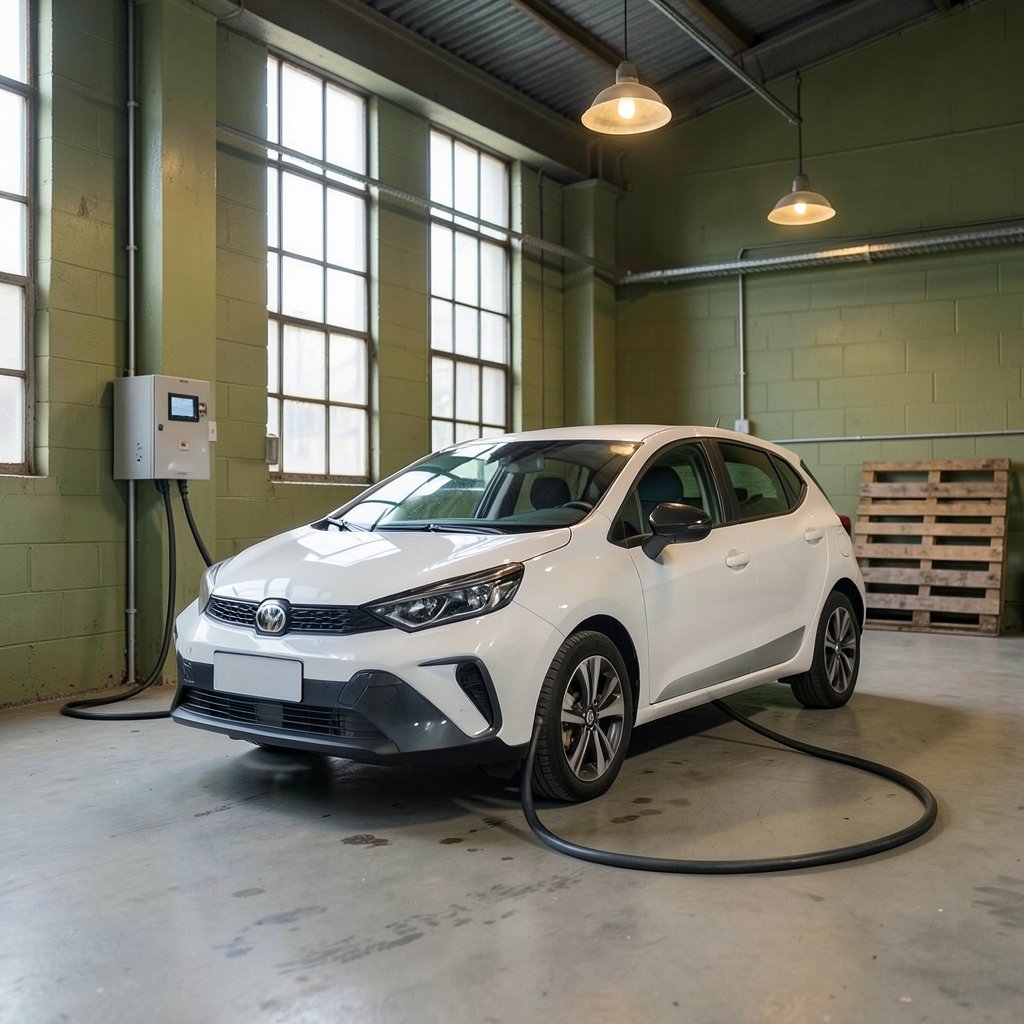
Quick Answer: What is vehicle to grid technology?
Vehicle-to-grid (V2G) technology lets electric vehicles send electricity from their batteries back to the power grid, or adjust their charging, to help balance supply and demand. Owners can act on it through V2G-capable cars, bidirectional chargers, and an aggregator that pools many vehicles into one sellable grid resource.
It differs from ordinary smart charging, which only slows or shifts charging, and from home backup systems that keep power on-site. True V2G exports power off the vehicle and pays the owner for grid services. (Green Vehicle Guide)
Before signing up, check bidirectional hardware support, charger costs, battery warranty terms, aggregator contracts, local market rules, and payout rates.
The numbers are startling. A mid-size electric car carries a 60 to 75 kWh battery, roughly two to three days of electricity use for a typical home. Now multiply that by the millions of EVs that sit parked most of the day. That idle storage is the idea behind vehicle-to-grid technology, usually shortened to V2G, and it has quietly moved from university labs into commercial pilots.
How V2G Actually Works
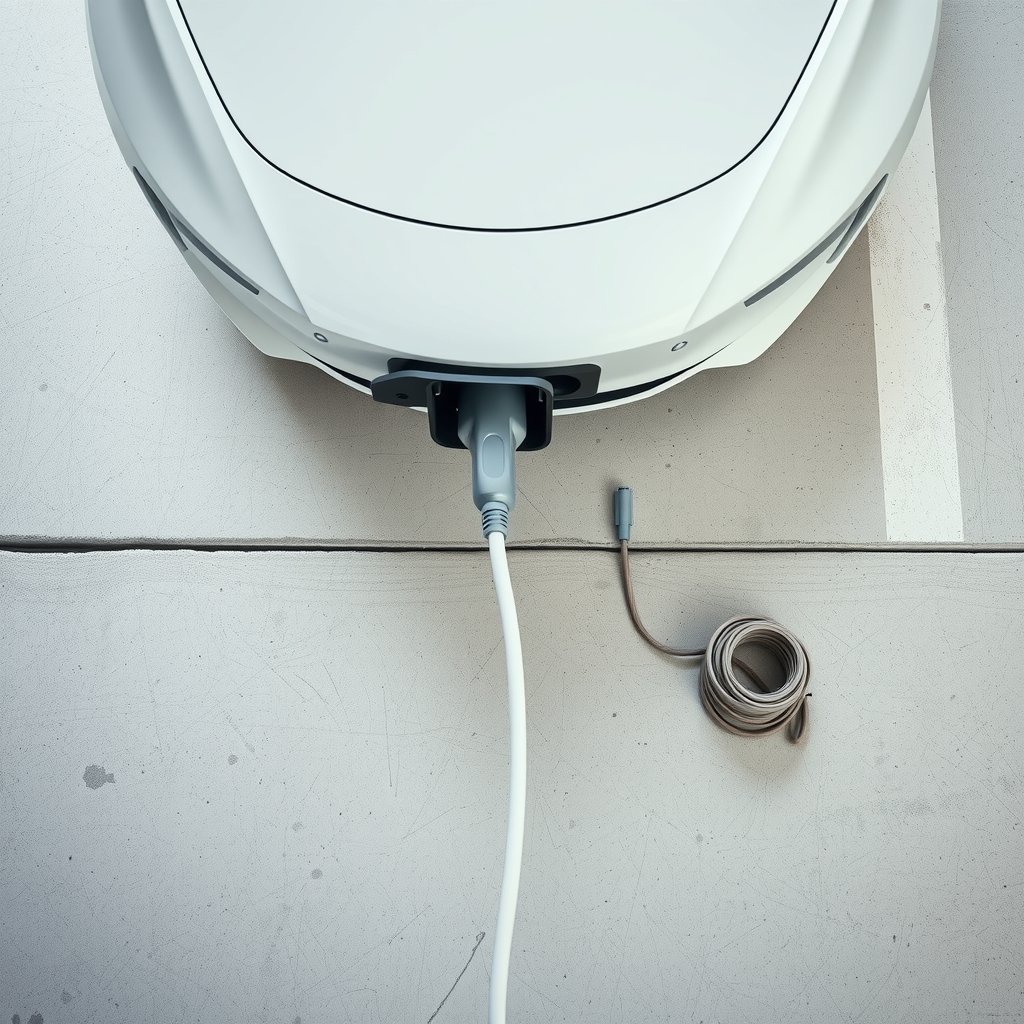
The core idea is simple. An EV battery is a big, mobile energy store. Most cars sit unused for hours at a time, often plugged in. V2G lets that stored energy flow in two directions: from the grid to the car, and from the car back to the grid.
Three things must line up for this to happen.
First, the car needs bidirectional charging capability: an onboard charger or inverter that can push power out as well as pull it in. Second, the charging station must support two-way flow. Third, a software layer, usually run by an aggregator, must decide when each car charges or discharges and bid that combined capacity into electricity markets.
A single car is too small to matter to a grid operator. A thousand cars acting together, controlled to the second, start to look like a small power plant. That aggregation step is what turns V2G from a neat demo into a business.
The Four Main Grid Services
| Service | What it does | Why EVs fit |
|---|---|---|
| Frequency regulation | Fine-tunes grid frequency second by second | Batteries respond in milliseconds |
| Peak shaving | Cuts demand during high-load hours | Cars discharge when the grid strains |
| Spinning reserve | Stands ready to supply sudden demand | Plugged-in cars are already connected |
| Demand response | Shifts charging away from crunch times | Charging is flexible by nature |
Frequency regulation is the service most often cited as the near-term money-maker, because it rewards fast, short bursts of response rather than long discharges. That plays directly to a battery’s strengths.
Where the Idea Came From
V2G is not new. Researchers were sketching the concept in the late 1990s, and early demonstrations followed in the early 2000s. Work at the University of Delaware, associated with researcher Willett Kempton, is widely credited as the first grid-regulation V2G deployment, and a company called Nuvve later spun out of that effort to run V2G aggregation commercially.
Since then, pilots have multiplied. Nissan has run V2G trials in Japan and Europe. School-bus V2G projects have operated in California, where buses sit idle for long stretches and have big batteries. The pattern is consistent: fleets with predictable schedules and large batteries make the strongest early candidates.
What You Need to Participate
For an individual driver, the practical path looks like this.
- Check the car. Confirm the model supports bidirectional power export; bidirectional-ready hardware by itself is not enough. Many EVs advertise “V2G ready” but need software activation or a specific charger.
- Price the charger. Bidirectional wallboxes cost much more than standard ones, and installation can add wiring or panel upgrades.
- Find an aggregator. In most markets you cannot sell power yourself; a third party pools vehicles and handles market rules and payments.
- Read the warranty. Battery coverage terms vary widely on how much cycling is allowed before coverage is affected.
- Confirm local rules. Market participation rules differ by country and region, and not every grid operator allows it yet.
The most common mistake is buying a bidirectional charger before confirming the car can actually export. A second frequent error is assuming the payout will be large. In practice, early V2G revenue tends to be modest, and the value case often depends on fleet-scale deployment rather than a single household.
The Standards Behind the Plug
Interoperability is the quiet make-or-break issue. Two protocols dominate: CHAdeMO, which supported bidirectional flow early, and ISO 15118, whose newer parts define bidirectional power transfer for modern connectors. The CCS standard has moved more slowly toward two-way charging, and China runs its own GB/T bidirectional standard.
For drivers, the takeaway is blunt: the plug on the car and the plug on the charger must speak the same language, and that language is still evolving. Anyone buying hardware today should check which standard version the equipment supports and whether a firmware update path exists.
The Honest Downsides
V2G is not free money, and the skeptics have fair points.
Battery wear tops the list. Every extra cycle adds stress, though the effect depends heavily on depth of discharge, temperature, and battery chemistry. Shallow, well-managed discharges are far gentler than deep ones.
Cost is the second barrier. Bidirectional chargers remain expensive, and most vehicles on the road today simply lack the onboard hardware.
Regulation is the third. Wholesale electricity markets were not designed with millions of cars in mind, and rules on aggregation, metering, and compensation are still being written in many jurisdictions.
Warranty ambiguity is the fourth. Owners reasonably worry that grid export could void coverage, and manufacturers have been slow to publish clear terms.
None of these is permanent. Costs are falling, standards are maturing, and several governments have funded V2G innovation programs to push the market along. The direction of travel is clear even if the timeline is not.
V2G Versus the Alternatives
It helps to separate V2G from technologies that sound similar.
Smart charging (sometimes called V1G) only controls when and how fast a car charges. It never sends power back. It is cheap, widely available, and delivers much of the grid benefit with none of the battery-export concerns.
Vehicle-to-home (V2H) sends power to a house, not the grid, typically during an outage. It is a backup-power product rather than a market product.
Vehicle-to-load (V2L) runs appliances from the car’s battery through an onboard outlet. Useful for camping and job sites, irrelevant to grid balancing.
Stationary storage competes with V2G for the same grid services but requires buying separate batteries. V2G’s advantage is that the battery is already paid for; its disadvantage is that the car may drive away.
Why It Matters Beyond the Grid
The stakes stretch past electricity markets. Grids are absorbing growing shares of wind and solar, both of which fluctuate. Flexible demand and fast-responding storage smooth those swings. If a meaningful share of the vehicle fleet can respond to grid signals, the need for dedicated peaker plants and standalone batteries shrinks.
There is a consumer angle too. As the technology matures, the economics of ownership shift: a car that earns money while parked partly pays for itself. That logic is already reshaping fleet purchasing decisions, and it echoes the way other industries are rethinking assets and idle capacity, from the AI trends that could shape the future of technology reshaping energy analytics to the way car dealer services like financing and trade-ins increasingly factor resale value and battery health into the deal.
For buyers comparing models, the practical question is no longer just range and price. It is whether the vehicle can participate in the grid at all. Shoppers weighing deals on wheels across different price ranges should check bidirectional capability the same way they check charging speed, and anyone browsing a Cadillac dealer’s new and used inventory can ask directly whether the model supports export. The broader tech sector is watching closely, because V2G sits at the intersection of automotive hardware, software platforms, and energy markets.
What Actually Works in Practice
Experience from pilots points to a few practical lessons.
Fleets beat households. Buses, delivery vans, and company cars have predictable schedules, central parking, and large batteries. They also have someone whose job is managing energy costs.
Small discharges beat deep ones. Programs that nudge charging up and down, or export briefly for frequency regulation, tend to preserve battery health far better than draining a pack to empty every evening.
Software matters more than hardware. The charger is a commodity; the aggregation platform and its market access are the real product.
Contracts deserve scrutiny. Payout structures, minimum availability commitments, and exit terms vary enormously between providers.
And patience helps. V2G is a long game. The infrastructure is being built now, but mass adoption depends on standards settling and market rules catching up.
Conclusion
Vehicle-to-grid technology turns parked electric cars into a distributed energy resource. It works by combining bidirectional charging hardware, an aggregator, and market rules that pay for flexibility, and it delivers services like frequency regulation, peak shaving, and demand response. The concept has been proven in pilots for two decades, and commercial deployments now exist, though costs, standards, and warranty questions still hold it back from the mainstream.
For drivers, the sensible move is to check whether a car supports bidirectional export before buying, price the charger honestly, and read the aggregator contract closely. For everyone else, the bigger story is what V2G represents: a shift from vehicles as pure consumers of energy to vehicles as participants in the grid. That shift will not happen overnight, but it is already underway.
Frequently Asked Questions
Can any electric car do V2G?
No. The vehicle needs bidirectional charging hardware, and often software activation as well. Most EVs sold today support one-way charging only. Buyers should confirm export capability for the specific model and model year before assuming it works.
Does V2G damage the battery?
It can add wear, but the effect depends on how the program is run. Shallow, well-managed discharges for frequency regulation are far gentler than deep cycling. Many pilots report minimal degradation, though long-term data is still limited.
How much money can a driver earn from V2G?
Early programs tend to pay modest amounts per vehicle, and revenue varies widely by market and aggregator. Fleet operators with large batteries and predictable schedules see the strongest returns. Household earnings are usually small.
What is the difference between V2G and V2H?
V2G sends power back to the wider grid and earns payments for grid services. V2H sends power to a single home, usually as backup during an outage. V2H does not require market participation, but it also does not generate grid revenue. (Vehicle-to-grid)
Do I need a special charger for V2G?
Yes. A bidirectional charger or wallbox is required, and it must support the same standard as the vehicle. These units cost more than standard chargers, and installation may require electrical panel upgrades.
Is V2G available where I live?
It depends on local market rules and whether an aggregator operates in your area. Some regions allow V2G participation in wholesale markets; others do not yet. Checking with your grid operator or a V2G provider is the fastest way to find out.
Looking ahead, the next few years will likely decide whether V2G stays a niche fleet tool or becomes a mainstream feature. Automakers are already designing bidirectional capability into new platforms, and regulators in several markets are drafting explicit rules for aggregation and metering. If those pieces land together, the economics improve quickly: cheaper chargers, clearer warranties, and standard market access would let ordinary drivers participate without specialist knowledge. The technology is proven; what remains is the unglamorous work of aligning standards, contracts, and grid codes. For now, the best advice is to watch the standards, ask hard questions about warranties, and treat early V2G revenue as a bonus rather than a guarantee.



