

Quick Answer: What is cloud edge orchestration?
Cloud edge orchestration is the automated placement, deployment, and lifecycle management of workloads across both cloud data centers and edge locations, usually through a central control plane that treats distributed edge nodes as an extension of cloud infrastructure. (Apple private cloud compute Google cloud 2026: Explained) (Edge computing)
In plain terms, it is the “air traffic control” for software that runs close to users, devices, and sensors. Teams act on it through managed platforms such as AWS IoT Greengrass, Azure Arc, or Google Distributed Cloud Edge, or through open-source tools built on Kubernetes. (Aws vs azure vs google cloud 2026)
It differs from standard cloud orchestration because edge nodes face intermittent connectivity, limited hardware, and physical security risks. Before choosing an approach, compare connectivity patterns, hardware heterogeneity, offline behavior, update mechanisms, security attestation, and fleet size.
Global mobile data traffic keeps climbing year over year, and a growing share of it is now processed at the network edge rather than in distant data centers. That shift explains why cloud edge orchestration has moved from a niche telecom topic to a mainstream IT concern. This guide breaks down what it is, how it works, and where it goes wrong in practice.
The core idea: one control plane, many locations
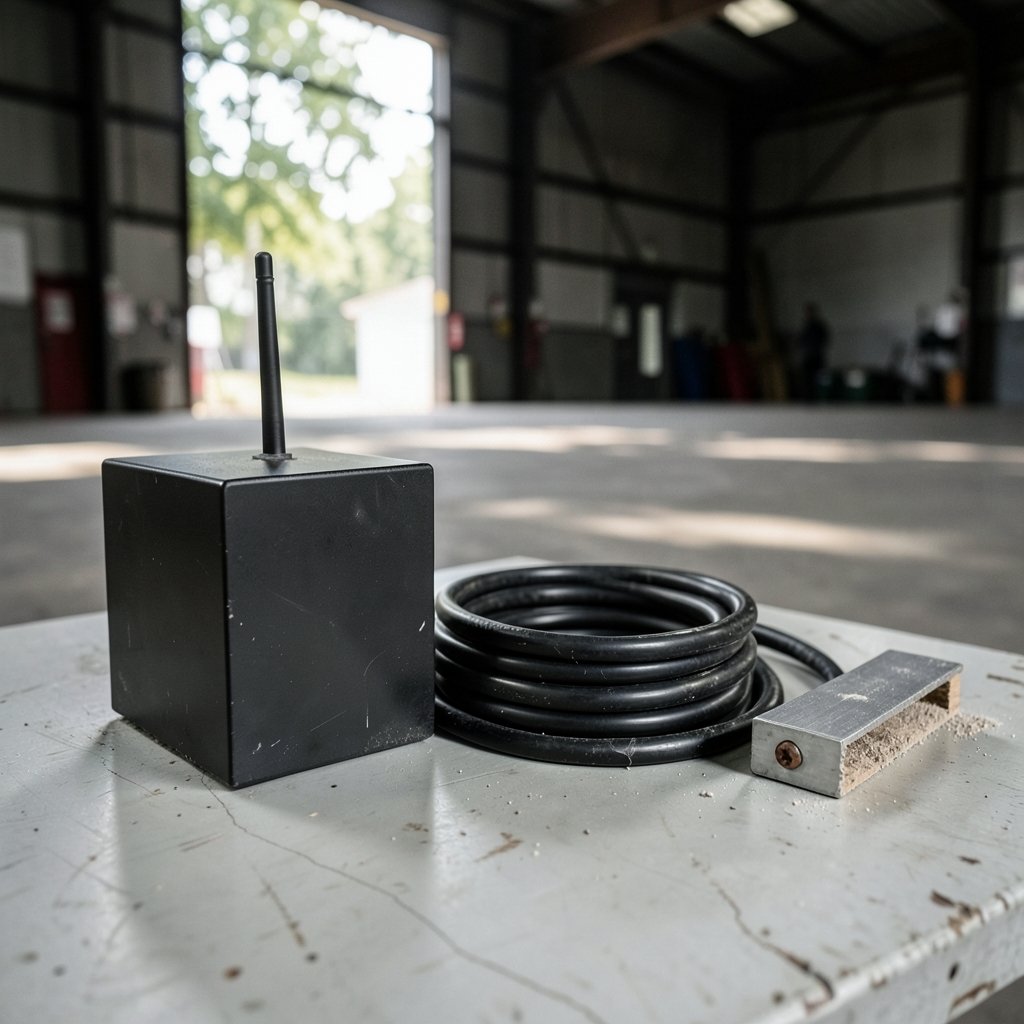
Traditional cloud orchestration assumes a cozy reality: fast networks, abundant power, and technicians who can walk over to a rack. Edge orchestration assumes the opposite. A node might sit in a warehouse, a cell tower, a retail store, or a wind turbine, with a flaky 4G link and nobody on site.
The central promise is simple. Operators define what should run and where, and the orchestration layer handles the rest: scheduling, configuration, updates, health monitoring, and rollback. The edge becomes an extension of the cloud rather than a separate island of servers.
That distinction matters because many organizations start with manual deployments and quickly drown. A fleet of 50 edge sites managed by hand is annoying. A fleet of 5,000 is impossible without automation.
Where the concept came from
The idea did not appear overnight. Telecom standards bodies were early movers. The ETSI Multi-access Edge Computing group, formed in 2014, defined an orchestration layer for edge applications and published early specifications from around 2016.
Then Kubernetes changed the game. Most modern cloud edge orchestration products extend Kubernetes to edge clusters. KubeEdge joined the Cloud Native Computing Foundation as a sandbox project in 2019 and reached incubation status in 2020. (Cloud storage vs local storage key differences) (NIST Cloud Computing Program)
The Linux Foundation Edge initiative, formed in January 2019, added another layer by hosting open edge projects such as EdgeX Foundry and Akraino, several of which tackle orchestration directly.
How cloud edge orchestration actually works
Most platforms follow a similar architecture, even when the marketing language differs.
- A central control plane runs in the cloud and holds the desired state for every application and every site.
- Edge agents sit on each node, receive instructions, and report health back to the control plane.
- A scheduling layer decides which workloads fit which hardware, based on CPU, memory, accelerators, and latency needs.
- A delivery pipeline pushes container images or updates, often in staged rollouts across the fleet.
- An observability layer collects logs and metrics, frequently buffering them locally when connectivity drops.
The hard part is not deploying once. It is doing it ten thousand times, reliably, while some sites are offline and others run three-year-old hardware.
Pull versus push
A common mistake is designing the control plane to push commands to edge nodes. That works until a site loses connectivity mid-update and ends up in an unknown state. Mature platforms use a pull model instead: the edge agent checks in, fetches its desired state, applies it, and reports back. If the link dies, the node keeps running its last known good configuration and reconciles later.
This single design choice separates platforms that survive real networks from those that only work in demos.
Why the edge differs from a small data center
It is tempting to treat edge orchestration as cloud orchestration with smaller servers. That framing causes most early failures. The constraints are genuinely different.
| Concern | Data center | Edge location |
|---|---|---|
| Connectivity | Reliable, high bandwidth | Intermittent, metered, sometimes satellite |
| Hardware | Standardized | Heterogeneous, often ARM or low-power |
| Physical security | Controlled access | Public spaces, retail floors, cell sites |
| Staff on site | Skilled technicians | Usually none |
| Update windows | Scheduled | Must tolerate offline nodes |
| Failure impact | Service degradation | Safety, revenue, or compliance risk |
These differences shape everything from image size to rollback strategy. A 2 GB container image that downloads instantly in a data center can take hours over a congested link at a remote site, so teams often strip images down and cache them locally.
Many edge failures trace back to storage assumptions rather than compute, so it pays to ground yourself in how distributed storage behaves across these environments before designing a deployment.
The major platforms and what they offer
The three hyperscalers all sell managed edge orchestration, each with a different flavor.
AWS offers IoT Greengrass for device-level runtime, Outposts for AWS hardware in your building, and EKS Anywhere for running Kubernetes on your own infrastructure. The pitch is consistency: the same APIs and identity model, extended outward.
Azure leans on Azure Arc, which brings servers, Kubernetes clusters, and data services under a single management plane regardless of where they run. Azure IoT Edge handles the device tier.
Google positions Anthos and Distributed Cloud Edge as a way to run its container platform in telco and on-premises settings.
Choosing between them is less about features and more about where your existing identity, networking, and CI/CD investments already sit. Edge platforms inherit the strengths and quirks of their parent clouds.
Open-source alternatives
Not everyone wants a hyperscaler control plane. KubeEdge, OpenYurt, and similar projects let teams build orchestration on their own Kubernetes distributions. The trade-off is familiar: more control and lower licensing cost, but you own the operational burden.
Where cloud edge orchestration earns its keep
Real deployments cluster around a handful of use cases.
Retail runs point-of-sale and computer vision at store level so checkout keeps working when the WAN link fails. Manufacturing runs quality inspection models next to production lines, where a 50-millisecond round trip to the cloud is too slow. Telecom places workloads at cell sites to cut latency for 5G services. Healthcare and energy run monitoring workloads in facilities with strict data residency rules.
In each case the pattern repeats: the workload must run locally, but it must be managed centrally. That is the entire value proposition.
A related trend is edge AI, since AI inference is now one of the heaviest drivers of edge orchestration demand. Models need frequent updates, hardware accelerators vary by site, and a failed rollout can silently degrade accuracy. Orchestration is what keeps that fleet honest.
Practical tips and common mistakes
Experience from real rollouts suggests a few rules of thumb.
Design for offline first. Assume every node will lose connectivity weekly. If the workload cannot survive that, the architecture is wrong.
Keep images small and cached. Strip base images, use multi-stage builds, and pre-stage large artifacts at sites with slow links.
Stage rollouts by ring. Push to a lab, then a pilot store, then 5 percent, then the rest. Never update the whole fleet at once.
Automate rollback as well as deployment. The most valuable feature in any orchestration platform is the ability to return a node to its last known good state without a technician.
Watch the certificate lifecycle. Expired certificates on remote nodes are a classic outage cause, and they are painful to fix when nobody is on site.
Budget for observability egress. Sending every log line to the cloud gets expensive fast. Sample aggressively and buffer locally.
The most common mistake, though, is organizational rather than technical. Teams treat edge sites as a separate IT silo with its own tooling, then wonder why deployments drift. Orchestration works best when it extends existing pipelines rather than replacing them.
Consistency beats sophistication. A boring platform applied uniformly outperforms a clever one applied inconsistently.
Security and compliance at the edge
Every edge node is a potential entry point. Physical access alone changes the threat model: a device in a public space can be tampered with in ways a data center rack cannot.
Orchestration platforms address this with hardware-backed attestation, signed workloads, and encrypted communication between the control plane and agents. The orchestrator becomes the enforcement point: if a node fails attestation, it does not receive workloads.
Data residency adds another layer. Some jurisdictions require that certain data never leave the country or the facility. Orchestration policies can pin workloads to specific locations, which is far easier than auditing manual deployments after the fact.
For teams already thinking about where their data physically lives, it helps to understand the underlying storage model that edge policies build on.
How it fits with AI orchestration and the wider stack
Cloud edge orchestration rarely stands alone. It sits beneath higher-level systems that decide which model or service should run where. That is essentially AI orchestration: coordinating models, data pipelines, and compute across environments. Edge orchestration handles the infrastructure layer; AI orchestration handles the intelligence layer.
The two are converging fast. A retailer running vision models across 2,000 stores needs both: one system to place and update the containers, another to route inference requests, manage model versions, and fall back gracefully when a site goes dark.
Conclusion
Cloud edge orchestration is less a product than a discipline: treating thousands of distributed, unreliable, physically exposed locations as a single manageable fleet. The tools are maturing quickly, from hyperscaler control planes to open-source Kubernetes extensions, and the standards work that began with ETSI in 2014 now underpins mainstream enterprise deployments.
The organizations that get it right tend to share habits. They design for offline operation, automate rollback as carefully as deployment, keep images lean, and resist the urge to build a separate edge silo. They also accept that the edge is not a smaller data center, and stop trying to manage it like one.
If you are starting out, pick one workload, one pilot site, and one control plane. Prove the update and rollback loop works before scaling to a hundred locations. The rest is repetition, and repetition is exactly what orchestration is for.
FAQ
How is cloud edge orchestration different from cloud orchestration?
Cloud orchestration manages workloads inside data centers with reliable networks and standardized hardware. Edge orchestration adds constraints: intermittent connectivity, heterogeneous devices, no on-site staff, and physical security risks. The tooling overlaps heavily, but the design priorities differ, especially around offline operation and update rollback.
Do I need Kubernetes to do edge orchestration?
No, but it helps. Most modern platforms extend Kubernetes to edge clusters because it provides a proven scheduling and reconciliation model. Alternatives exist, including proprietary agents and lightweight runtimes for very small devices. The right choice depends on your team’s existing skills and the size of the devices you are managing.
Can edge nodes keep working when they lose connectivity?
Yes, and they should. Well-designed orchestration uses a pull model where each node stores its desired state locally and keeps running the last known good configuration during an outage. When the link returns, the agent reconciles with the control plane. Designing for this from day one avoids painful retrofits later.
What is the biggest mistake teams make with edge orchestration?
Building a separate edge silo with its own tools and pipelines. That creates drift, duplicated effort, and gaps in security policy. The stronger approach extends existing CI/CD and identity systems outward to edge sites, so there is one pipeline and one policy model regardless of location.
How do you handle updates across thousands of edge sites?
Use staged rollouts, often called rings. Start with a lab, move to a small pilot group, then expand gradually while monitoring health signals. Pair every rollout with automated rollback so a failed update returns nodes to their previous state without a technician visiting the site.
Is cloud edge orchestration only for large enterprises?
No. Small fleets benefit too, because manual management breaks down quickly once you pass a handful of sites. Managed platforms lower the entry cost, and open-source options reduce licensing spend. The deciding factor is usually how often workloads change, not how many nodes you run.



