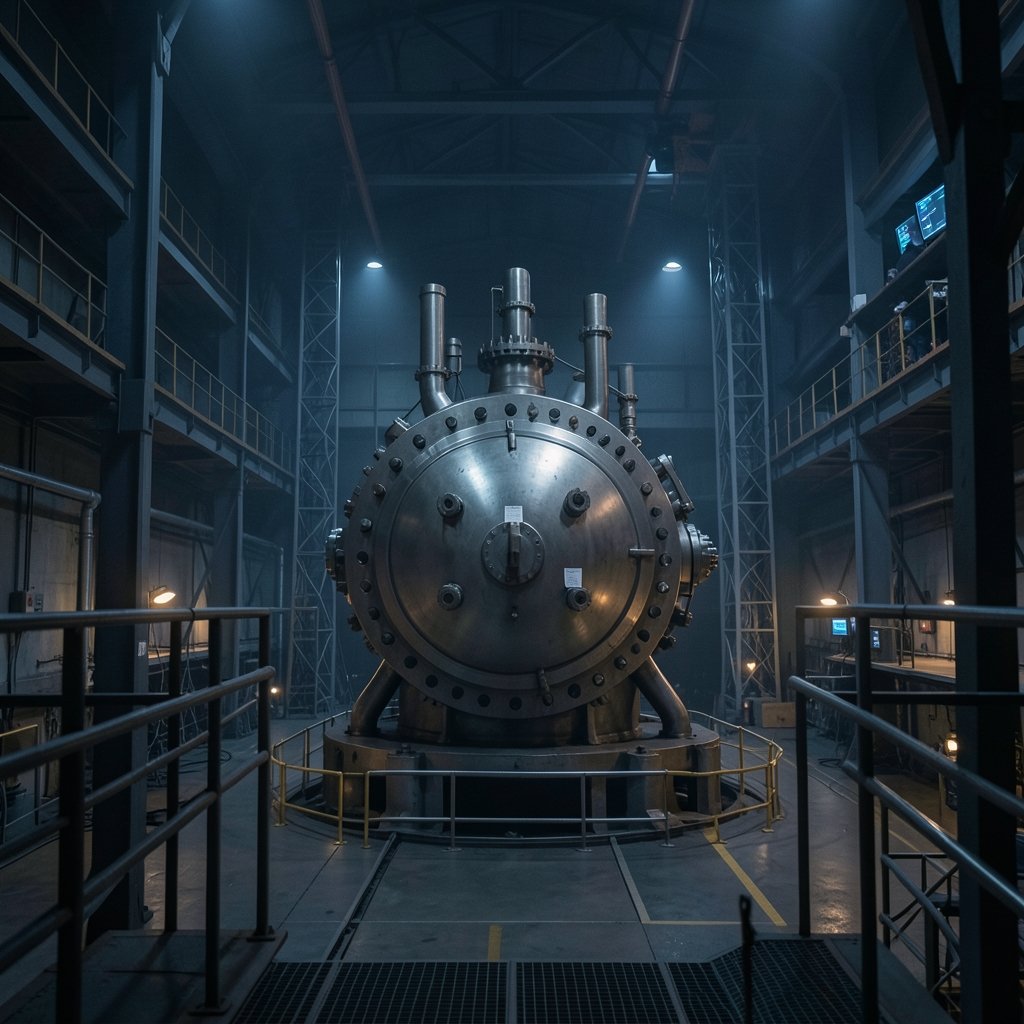
Quick Answer: How does small modular reactors work step by step for beginners?
A small modular reactor, or SMR, makes electricity through the same basic process as a giant nuclear plant: fuel undergoes fission, that heat boils water into steam, and the steam spins a turbine connected to a generator. The difference is scale and construction style. SMRs are designed to produce roughly tens to a few hundred megawatts of electricity instead of the 1,000-plus megawatts of a traditional plant, and their parts are largely built in a factory and assembled on site.
That “modular” label is the heart of the pitch. Instead of building one enormous reactor over many years, developers want to manufacture standardized modules and stack several of them at a single site. Some designs also swap water cooling for gas, liquid metal, or molten salt, which changes the engineering but not the underlying physics.
Before trusting any vendor claim, compare the reactor type, fuel enrichment, cooling method, passive safety features, licensing status, and projected cost per megawatt.
Nuclear power has been generating commercial electricity since the 1950s, yet the basic recipe inside a reactor has barely changed: split atoms, capture heat, make steam, spin a turbine. What is changing is the packaging. Small modular reactors take that decades-old recipe and shrink it, then try to mass-produce it like industrial equipment rather than hand-build it like a cathedral. For a beginner, the appeal is easy to grasp once you see the machine as a chain of seven linked steps, each doing one job before handing off to the next.
What Makes a Reactor “Small” and “Modular”?
Size is the obvious part. A conventional large reactor typically cranks out around 1,000 megawatts of electricity or more, enough to power a big city. SMR designs generally sit in the tens to low hundreds of megawatts. The International Atomic Energy Agency has historically used roughly 300 megawatts electric as an upper boundary for the category, though definitions wobble depending on who is counting.
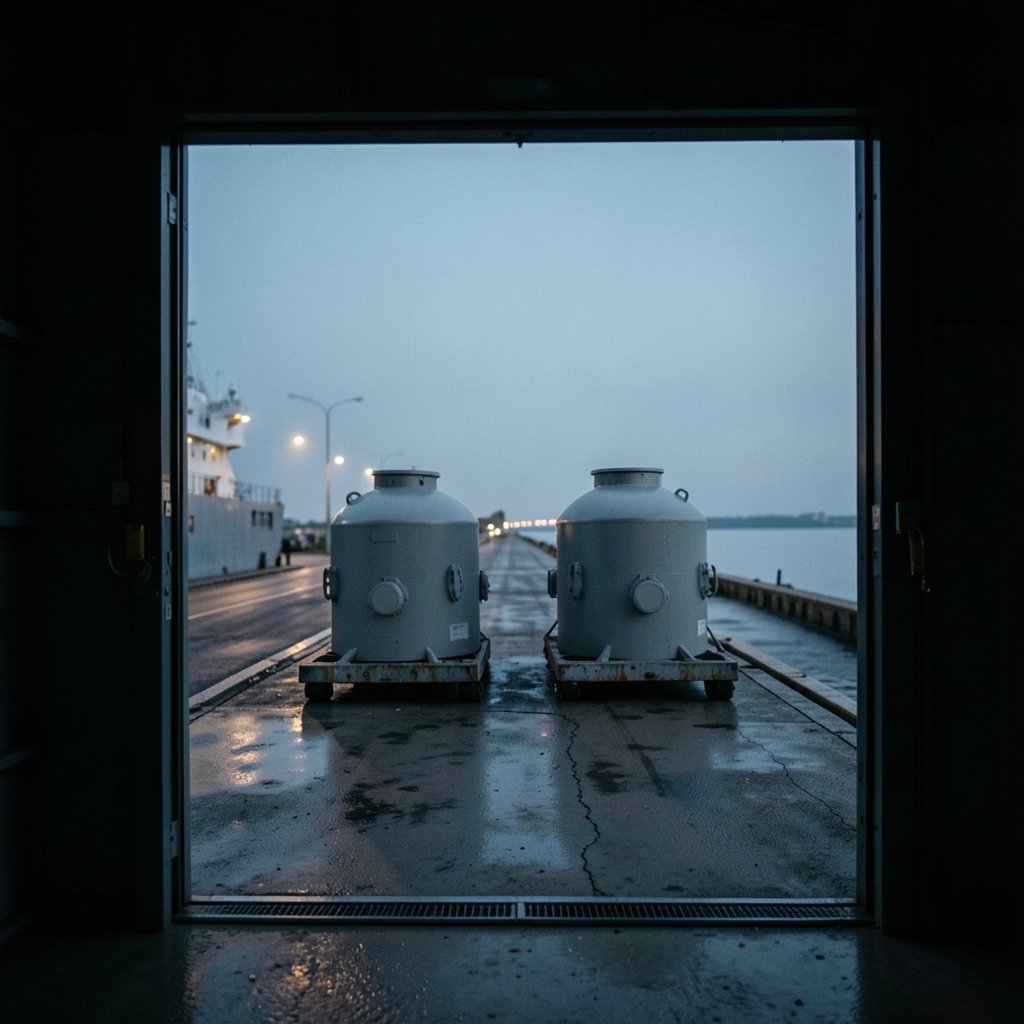
The “modular” half matters just as much. It means the reactor’s components are built in factories as standardized units and shipped to the site for assembly. Supporters argue this factory approach could cut construction timelines and costs, since building a one-off mega-project on site has repeatedly run over budget and schedule. That argument is plausible but not yet proven at commercial scale, which is why regulators and independent analysts keep pressing vendors for hard numbers.
Step 1: Fuel Goes In
Everything starts with fuel. Most SMR designs use low-enriched uranium, typically kept below 20 percent uranium-235, the same enrichment ceiling that governs most commercial reactor fuel worldwide. Some advanced concepts push enrichment higher, which immediately becomes a regulatory and nonproliferation talking point.
The physical form of the fuel varies by design. Some reactors use conventional fuel rods bundled together. Others use TRISO particles — tiny kernels of uranium wrapped in layers of ceramic and carbon — packed into pebbles or compacts. TRISO fuel is engineered to hold fission products inside even under extreme conditions, which is one reason it shows up in so many advanced designs. If you want a feel for how granular technical choices shape a whole system, it is a bit like comparing beginner instruments: the best ukulele for beginners and a concert-grade model play the same notes, but the build quality changes everything downstream.
Step 2: Fission Releases Heat
Inside the core, neutrons strike uranium-235 nuclei and split them. Each split releases energy plus more neutrons, which split more nuclei, sustaining a chain reaction. A moderator — water, graphite, or another material depending on design — slows the neutrons so they are more likely to trigger further splits. Control rods or other mechanisms absorb neutrons to manage the reaction rate.
The heat from fission is the product here. Everything else in the plant exists to move that heat somewhere useful and keep it under control.
Step 3: Coolant Carries the Heat Away
A primary coolant flows past the fuel and absorbs the heat. The choice of coolant defines much of a reactor’s personality. Water is the familiar option. Gas, liquid metal, and molten salt appear in other designs, each with trade-offs in temperature, efficiency, and complexity. Molten salt coolants, for instance, can operate at higher temperatures and lower pressure, but they bring their own materials challenges.
This is the step where SMR designs diverge most sharply from conventional plants, and where beginners should slow down. Two reactors with the same power rating can behave very differently depending on what is flowing through the core.
Step 4: Heat Becomes Steam, Steam Becomes Electricity
The hot coolant transfers its energy to water, turning it into steam. That steam drives a turbine, and the turbine spins a generator to produce electricity. Some designs use a gas turbine or another thermodynamic cycle instead of a classic steam loop. A few concepts skip electricity entirely at first and send their heat straight to industrial processes or district heating.
The power conversion end of the plant is the least exotic part of the whole story. Steam turbines have been spinning for over a century, and that maturity is a quiet advantage.
Step 5: Safety Systems Rely on Physics, Not Pumps
Many SMR concepts lean hard on passive safety. The idea is that cooling can happen through natural circulation, that the core has enough heat capacity to ride out problems, and that shutdown can occur through physics rather than operator action or powered pumps. Fewer moving parts, fewer failure points.
Treat this as a design claim, not a universal guarantee. Passive safety features are real engineering, but each one has to survive regulatory scrutiny and independent review. When a vendor says “walk-away safe,” the honest follow-up question is: safe according to whom, and tested how?
Step 6: Factory-Built Modules, Assembled on Site
This is the modular promise in action. Reactor modules are fabricated in factories, shipped, and assembled at the site. A single site could host several modules, adding them one at a time as demand grows. That incremental approach is meant to reduce the financial risk of betting billions on one giant build.
In practice, factory fabrication is harder than it sounds. Nuclear-grade manufacturing demands extreme precision, and supply chains for specialized components are thin. The gap between a slick rendering and a certified, operating module is where most SMR timelines have quietly stretched. The same lesson shows up in consumer tech: the best 3D printer for beginners looks simple in the ad, but real results depend on calibration, patience, and parts that actually arrive.
Step 7: Licensing, Then Operation
Before construction, a design must be certified by a national regulator — the US Nuclear Regulatory Commission, the UK’s Office for Nuclear Regulation, or an equivalent body. This is the slowest and least glamorous step. As of recent years, very few SMR designs have completed full design certification, and almost none are operating commercially. Licensing status changes quickly, so check regulator dockets directly rather than relying on vendor press releases.
Once licensed and built, the reactor operates like any power plant: monitored, maintained, refueled on a schedule, and eventually decommissioned.
How SMRs Compare With Conventional Reactors
| Feature | Large conventional reactor | Small modular reactor |
|---|---|---|
| Typical output | Around 1,000+ MWe | Tens to a few hundred MWe |
| Construction | Largely on-site, one-off | Factory-built modules, site assembly |
| Site footprint | Large | Smaller, more flexible siting |
| Capital risk | Concentrated in one huge bet | Spread across incremental modules |
| Licensing track record | Mature, well-established | Limited; few full certifications |
| Cost competitiveness | Known but often over budget | Claimed, largely unproven |
The table makes the trade-off visible. SMRs trade economies of scale for economies of repetition. Whether that math works is the central open question in the field, and serious analysts on both sides disagree.
Where SMRs Might Actually Get Built First
Electricity grids are not the only customer. Remote communities, industrial sites needing high-temperature heat, and data centers hungry for reliable power all show up on SMR marketing decks. The logic is straightforward: a smaller unit fits places a gigawatt plant never could.
The comparison with other fast-moving technologies is instructive. Just as the debate over small language models vs large language models hinges on whether smaller, cheaper systems can do enough of the job well, SMRs hinge on whether smaller reactors can deliver enough power at a price that makes sense. In both cases, the small option wins on flexibility and loses on raw scale — and the outcome depends on the specific use case. (Small Modular Reactors)
Common Beginner Mistakes to Avoid
The first mistake is treating “SMR” as one technology. It is a category containing water-cooled, gas-cooled, molten salt, and liquid metal designs that share almost nothing beyond size.
The second is confusing a announced project with a built one. Announcements, memoranda of understanding, and artist renderings are not concrete. Ask whether a design has regulatory approval, a construction permit, and a customer with a signed contract.
The third is assuming modular means cheap. Factory production can cut costs, but it can also add them if supply chains stay thin and each module needs bespoke engineering. Independent cost studies have repeatedly flagged this uncertainty.
The fourth is ignoring waste. SMRs produce spent fuel like any reactor, and waste handling remains a political and technical question that no reactor design solves on its own.
What to Check Before Believing a Claim
Anyone evaluating an SMR proposal should verify the reactor type and coolant, the fuel enrichment level, the passive safety features and who validated them, the licensing status with the relevant regulator, the projected cost per megawatt and who produced that estimate, and the waste management plan. Cross-check vendor numbers against regulator filings and independent analyses rather than marketing material. The same discipline applies to any hyped technology — whether it is AI video generator from images tools or next-generation hardware — the demo is never the product.
Conclusion
Small modular reactors work by following a chain any physics student would recognize: fuel, fission, heat, coolant, steam, turbine, generator. The novelty sits in steps five through seven, where passive safety, factory fabrication, and a still-young licensing pathway try to turn a proven physics trick into a manufacturable product. That is genuinely interesting engineering, and it deserves attention.
It also deserves skepticism. The technology’s central promise — cheaper, faster nuclear power through repetition — remains largely unproven at commercial scale. Beginners who understand the seven steps, ask hard questions about licensing and cost, and check claims against regulators rather than renderings will be well ahead of most of the room. Nuclear power rewards patience, and so does understanding it.
FAQ
How much electricity does a small modular reactor produce?
Most designs target tens to a few hundred megawatts of electricity, compared with roughly 1,000 megawatts or more for a conventional large plant. Exact figures vary widely by design, and some vendors quote thermal output rather than electrical output, so check which number is being cited.
Are small modular reactors safer than traditional reactors?
Not automatically. Many SMR designs emphasize passive safety features that rely on natural circulation and physics rather than powered pumps, which can reduce certain failure modes. But safety is established through design review and regulatory testing, not marketing language, and each design must be assessed on its own merits.
Why are SMRs built in factories instead of on site?
Factory fabrication is meant to cut construction time and cost by standardizing components and repeating the same build many times. Whether that works at nuclear-grade quality and scale is still being tested, and thin supply chains for specialized parts remain a real obstacle.
Do small modular reactors produce nuclear waste?
Yes. Like all fission reactors, SMRs generate spent fuel that must be stored, managed, and eventually disposed of. Some designs produce different waste volumes or characteristics than conventional reactors, but no design eliminates waste entirely.
Can SMRs be used for anything besides electricity?
Yes. Several concepts are designed to supply industrial heat, district heating, or process heat for manufacturing, and some pair with desalination. That flexibility is one reason remote and industrial sites appear frequently in SMR proposals.
How long does it take to get an SMR licensed and built?
Timelines vary enormously by country and design. Regulatory review alone can take years, and very few designs have completed full certification. Construction schedules depend on whether modules are truly factory-ready, so treat any projected completion date as an estimate rather than a commitment.