
A first ukulele should feel comfortable in your hands and fit the way you want to start playing, not simply have the lowest price. Good choices exist at different price points, and this roundup includes options for adults and younger players. Laminated wood is wood made from layers bonded together rather than one solid piece.
Your first instrument can help you enjoy music sooner when it suits your hands and learning plans. Some players want a simple way to practice chords; others want lessons or useful accessories in the kit. You do not need the most expensive option to start playing. A few practical checks can help you avoid a poor fit.
Key Takeaways
- Choose a size that feels comfortable to hold and fret.
- Consider both the instrument price and useful accessories.
- Adults and younger students can use the same beginner options.
- Check tuner quality, string feel, and included learning tools.
- Keep your shortlist focused on a comfortable size, a reliable setup, and the accessories you will actually use.
Which Ukulele Size Feels Right for a Beginner?
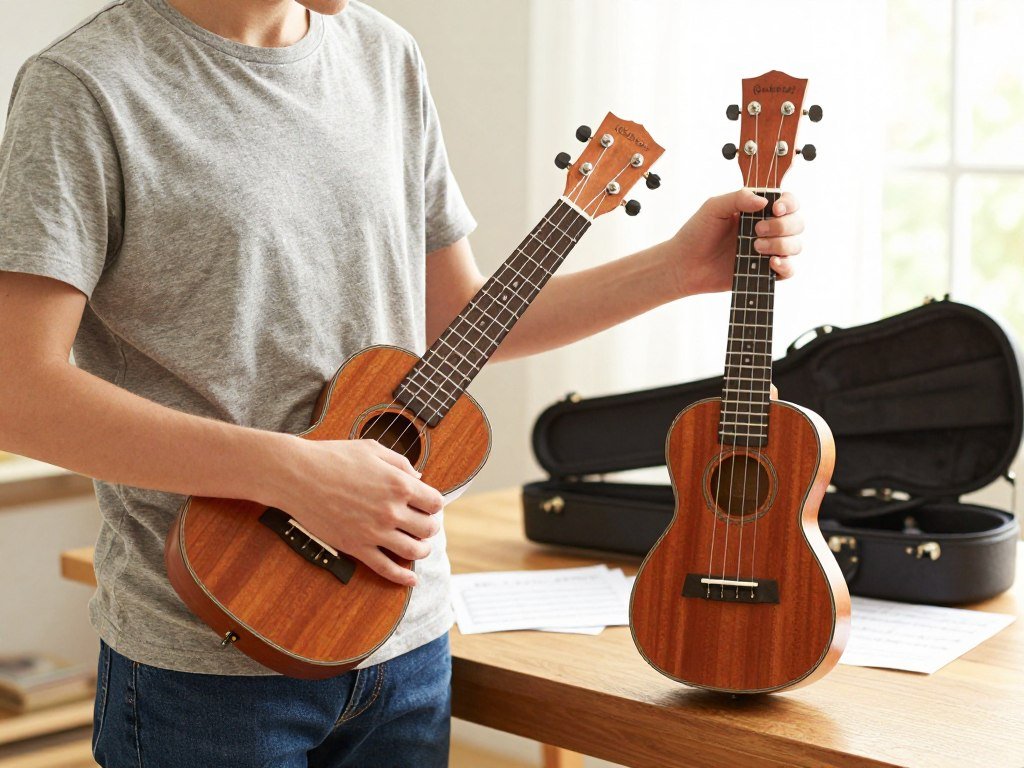
A concert is a practical middle-ground size for many beginners who want a little more room than a soprano. Hand comfort is the best place to start, since a fretboard that feels cramped can make early chords harder. A soprano ukulele is about 21 inches long, a concert about 23 inches, a tenor about 26 inches, and a baritone about 30 inches.
Tenor ukuleles suit beginners who prefer a larger fretboard and more room between frets. A tenor ukulele can feel less crowded for larger hands, while the soprano stays small and easy to carry. Standard soprano, concert, and tenor tuning uses G4-C4-E4-A4, while baritone tuning uses D3-G3-B3-E4, as this ukulele tuning overview explains.
Baritone tuning differs from the other common sizes, so a baritone is not a recommended first ukulele.
Soprano and concert sizes for smaller hands and everyday play
The soprano is the smallest common size and has the classic compact feel many players expect. Its short neck can suit smaller hands, though some beginners find the frets close together. Try a soprano ukulele if portability and a familiar, bright sound matter most to you.
A concert offers a modest step up without feeling as large as a tenor. The extra room can make chord shapes easier to manage, and its size still works well for everyday practice. Students and adults can both start on a concert ukulele.
Tenor and baritone sizes for a roomier feel
A tenor has a longer neck and more fretboard space than a concert. Choose this size if your fingers feel crowded on a smaller neck or you want more room to shape chords. A tenor ukulele remains tuned like a soprano or concert.
The baritone is the largest common size, with a lower range and a different tuning pattern. That difference can make it harder to follow lessons and chord guides written for other sizes. If you are unsure, try holding a soprano and a concert in playing position before choosing. Keep the baritone’s different tuning in mind if this is your first instrument.
How Much Should You Spend on a Beginner Ukulele?
Plan on roughly $50-$80 for a reliable laminate ukulele from a mainstream brand, then budget separately for any accessories you need. That range is a useful starting point for beginner ukuleles, not a promise that every instrument will feel the same. A reliable $50-$80 laminate ukulele can offer a sound setup without pushing a new player toward costly extras.
Buying a kit makes sense when its included accessories are useful to you. A gig bag, tuner, strap, or chord guide can help you start playing, but only if you will use it. Buying starter-kit accessories separately can add $30-$50, so compare the full cost rather than the instrument price alone.

Very low prices can bring real trade-offs. Ukuleles under $50 may have serious playability or construction problems, while minor finish flaws are common at entry-level prices. A small mark on the finish usually matters less than whether the neck, bridge, and strings work as they should.
Check that the strings sit at a comfortable height and that the tuners turn smoothly. If the instrument has a structural issue or feels difficult to fret, ask for an exchange rather than trying to work around it. Do not let a small cosmetic flaw distract you from the more important checks of tuning stability and comfortable fretting.
Best Ukulele for Beginners: 7 Picks by Budget and Playing Style
For most beginners who want a simple, compact first instrument, the Kala KA-15S is the clearest starting pick among these seven. Its straightforward design suits players who want a soprano without extra features. The choices below cover different sizes, kits, and materials, with 2026 prices stated for each model.
The best ukuleles for a new player match the way that person plans to practice. Kala, Donner, Cordoba, and Enya are the brands represented in these picks. Adults looking for the best ukulele for beginners can choose based on hand comfort and whether they prefer a smaller soprano or more room on a concert.
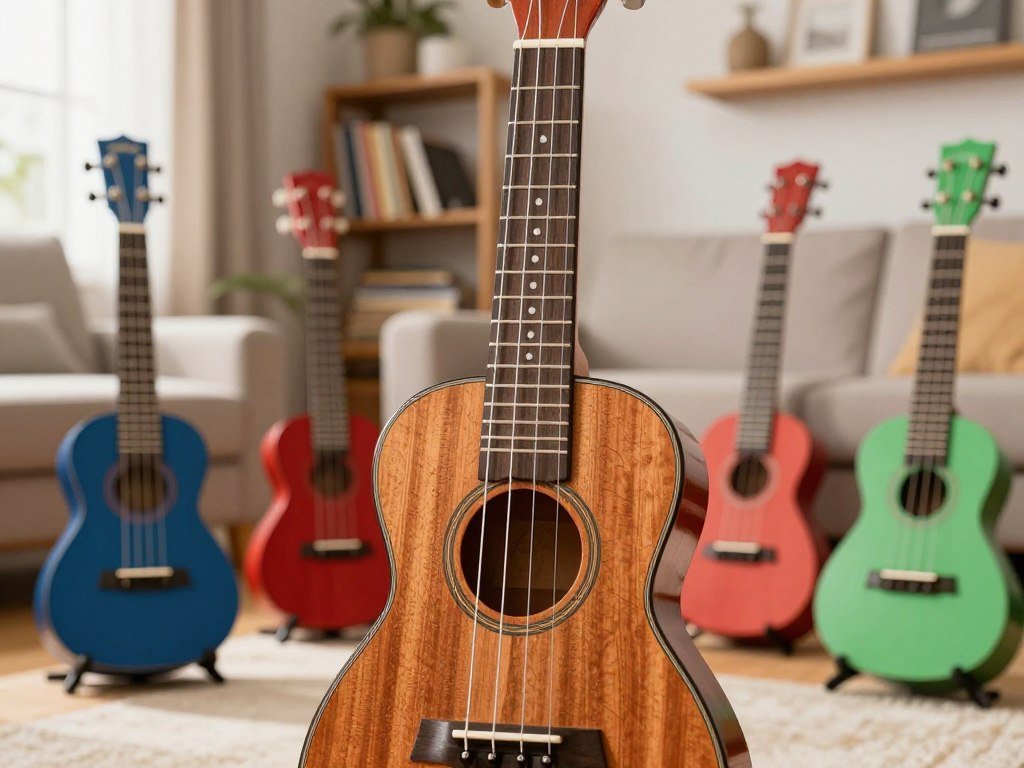
- Kala KA-15S Black Satin Mahogany Soprano: at a $69 MSRP in 2026, this is a simple soprano choice for a beginner who wants a compact first instrument.
- Kala Soprano Waterman: with a $59 MSRP in 2026, this is a lower-cost, simple option for players who want a soprano.
- Kala Adobe Red Watercolor Meranti Soprano: its $79 MSRP and $69 price in 2026 make it another compact choice with a distinct finish.
- Donner DUC-1 concert beginner bundle: listed at $70-$90 in 2026, this Donner concert ukulele suits beginners who want a concert-size bundle.
- Cordoba 15CM: listed at $100-$130 in 2026, this concert option fits players seeking a higher-priced model with a solid mahogany top.
- Enya Nova U Carbon Fiber Concert: listed at $80-$100 in 2026, its carbon-composite frame is described as resistant to temperature and humidity damage.
- Kala Learn to Play Soprano Kit: listed at $65-$85 in 2026, this kit includes a lesson DVD and printed chord guide for players who want learning materials.
| Model | Size | 2026 price basis |
|---|---|---|
| Kala KA-15S | Soprano | $69 MSRP |
| Kala Adobe Red Watercolor Meranti | Soprano | $79 MSRP; $69 listed price |
| Donner DUC-1 | Concert | $70-$90 listed range |
| Cordoba 15CM | Concert | $100-$130 listed range |
| Enya Nova U Carbon Fiber | Concert | $80-$100 listed range |
The Kala Adobe Red Watercolor Meranti Concert has an $89 MSRP and a $79 price in 2026. The Kala Concert Recycled Waterman has a $69 MSRP, while the Soprano Recycled Waterman and Kala Soprano Waterman each have a $59 MSRP.
For built-in electronics, the Kala Amara Tri-Top Concert with cutaway and EQ has a $129 MSRP in 2026. The Tenor version has a $159 MSRP, and the Baritone version has a $189 MSRP. Each offers a cutaway and EQ, while the Kala KA-15T Tenor is listed at $110-$140 in 2026.
Prices and features can help narrow a shortlist, but your hands should have the final say. A soprano keeps the instrument compact, while a concert gives you more room without moving to a tenor. Before ordering, compare the final instrument price with the accessories or learning materials you would otherwise need to buy separately.
Which Features Make a Beginner Ukulele Easier to Play?
A comfortable setup matters more to a beginner than a decorative finish or an unusually long feature list. Comfortable fretting, tuners that hold pitch, and useful accessories are the main checks when you choose a good ukulele. A solid top is a construction feature, not a guarantee that every player will prefer its sound.
Check how the instrument feels in your hands before judging it by its finish. Laminate construction can be a sensible entry-level choice, while a solid top uses a different build. Neither feature alone tells you how easy the strings will feel or whether the sound suits your taste.
Materials, strings, and the sound you can expect
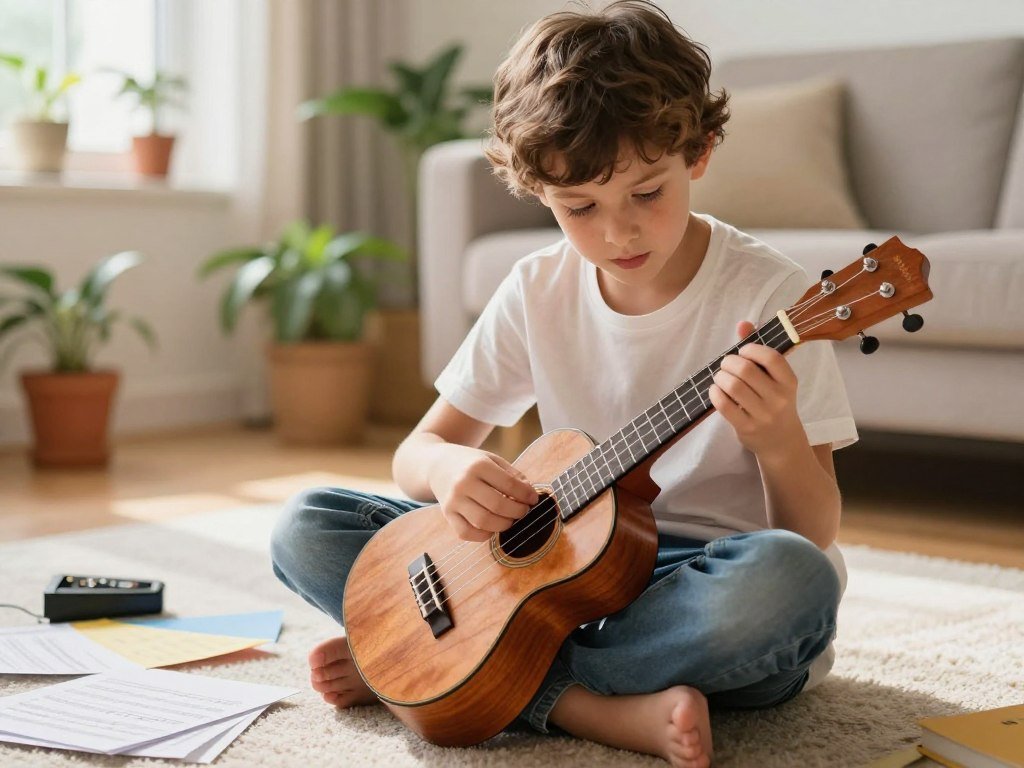
The Kala KA-15S has a laminated mahogany top, back, and sides, plus a satin finish. It has a walnut fretboard and factory Aquila Super Nylgut strings. The Cordoba 15CM has a solid mahogany top, factory-installed Aquila Nylgut strings, and a satin finish.
Concert ukuleles can feel roomier, but the build and string feel still matter. The Kala KA-C is another concert-size option with mahogany construction and Aquila strings. Listen for a clear tone, then see whether the strings feel manageable under your fingers.
Setup, tuners, and useful included accessories
Geared tuners turn in small steps and make tuning easier to control. A gig bag helps carry the instrument, while an included tuner can save a separate purchase. An accessory only adds value when it fits your routine.
| Model | Scale length | Tuners | Included strings or accessories |
|---|---|---|---|
| Kala KA-15S | 13.625 inches | Geared | Aquila Super Nylgut strings |
| Cordoba 15CM | 15 inches | Geared | Aquila Nylgut strings |
| Donner DUS-1 | 13.5 inches | Geared | Gig bag and tuner |
Try a few basic chord shapes if you can. If the strings seem too high or your fingertips struggle to press them, the setup may make practice frustrating. If possible, test whether your fingers can press the strings cleanly without excessive effort before choosing.
What Songs Can a New Player Start With?
“I’m Yours,” “Stand By Me,” and “You Are My Sunshine” tie for the lowest listed difficulty rating, at 2. There is no single easiest song among these choices. Pick one melody you know and work through its chord changes at a steady pace.
Practice one song slowly before adding another. Lessons or a printed chord guide can help when a transition feels awkward. You can also listen to a song you want to learn through free music apps for iPhone before you start playing.
Slow chord changes give your fingers time to find each shape cleanly.
- “I’m Yours” by Jason Mraz: difficulty 2
- “Stand By Me” by Ben E. King: difficulty 2
- “You Are My Sunshine”: difficulty 2
- “Riptide” by Vance Joy: difficulty 2.7
- “Somewhere Over the Rainbow” by Israel Kamakawiwo’ole: difficulty 2.9
- “Can’t Help Falling in Love With You” by Elvis Presley: difficulty 3
- “Count on Me” by Bruno Mars: difficulty 3.17
Students and adult players can use the same easy songs to start learning basic chords. Choose music you enjoy, since regular practice feels easier when the tune keeps you interested. Start with the song whose melody you already know, since familiarity makes it easier to notice when a chord change is late.
Conclusion
A comfortable, well-set-up instrument is a better first choice than a model chosen for looks alone. The right size should feel natural in your hands, and a useful kit can make it simpler to begin lessons or practice at home.
Try a soprano and concert in playing position, or check the listed scale length and included accessories when shopping online. A good fit can keep early practice fun and help you focus on music instead of discomfort. Try holding your preferred size today, then choose the option that feels easiest to fret.
FAQ
How much is a good beginner ukulele?
A reliable laminate model from a mainstream brand typically costs $50-$80. A kit can change the total, depending on which items it includes and whether you need them. Buying accessories separately can add $30-$50, so compare the full cost with the price of a useful starter package. Small cosmetic flaws can occur at entry-level prices.
What is the easiest song to play on the ukulele for beginners?
“I’m Yours,” “Stand By Me,” and “You Are My Sunshine” tie at a difficulty rating of 2 among these beginner songs. That means none is rated easier than the others here. Choose the melody you know best, then practice each chord change slowly. Familiar tunes make it easier to hear when a change comes late.
Is the ukulele the easiest instrument to play?
The ukulele is approachable for learning basic chords, but no instrument is easiest for every learner. Its compact shape and four strings can make early chord practice feel manageable. Your hand comfort, musical goals, and interest in the sound all affect how easy it feels. Steady practice matters more than picking a so-called easiest instrument.
Can I teach myself to play the ukulele?
Yes, you can teach yourself by starting with a tuner, a few basic chords, and steady practice. Learn one chord shape at a time, then practice moving between two shapes. A lesson or chord guide can help when a transition stalls. Short, regular sessions can build control without making practice feel like a chore.
How long does it take to fully learn ukulele?
Basic chords and simple songs can come within weeks of regular practice, while broad fluency takes ongoing work. Your pace depends on how often you practice and what you hope to play. Try a short session most days, and add new chord shapes when the ones you know feel steady. Learning music continues as your skills grow.
Is ukulele tougher than guitar?
Many beginners find the four strings and compact size less daunting than a six-string guitar. That does not make the ukulele easier for every person. Hand comfort, the sound you enjoy, and the songs you want to play all matter. If you like both, try holding each instrument and learning one simple chord on each.
Which should I learn first, the guitar or the ukulele?
Start with the ukulele if you want a compact instrument and straightforward chord accompaniment. Choose guitar first if its sound and song choices are what you want to pursue. Both instruments take regular practice, and skills do not transfer perfectly between them. Think about the music you want to play, then choose the instrument you feel eager to pick up.



