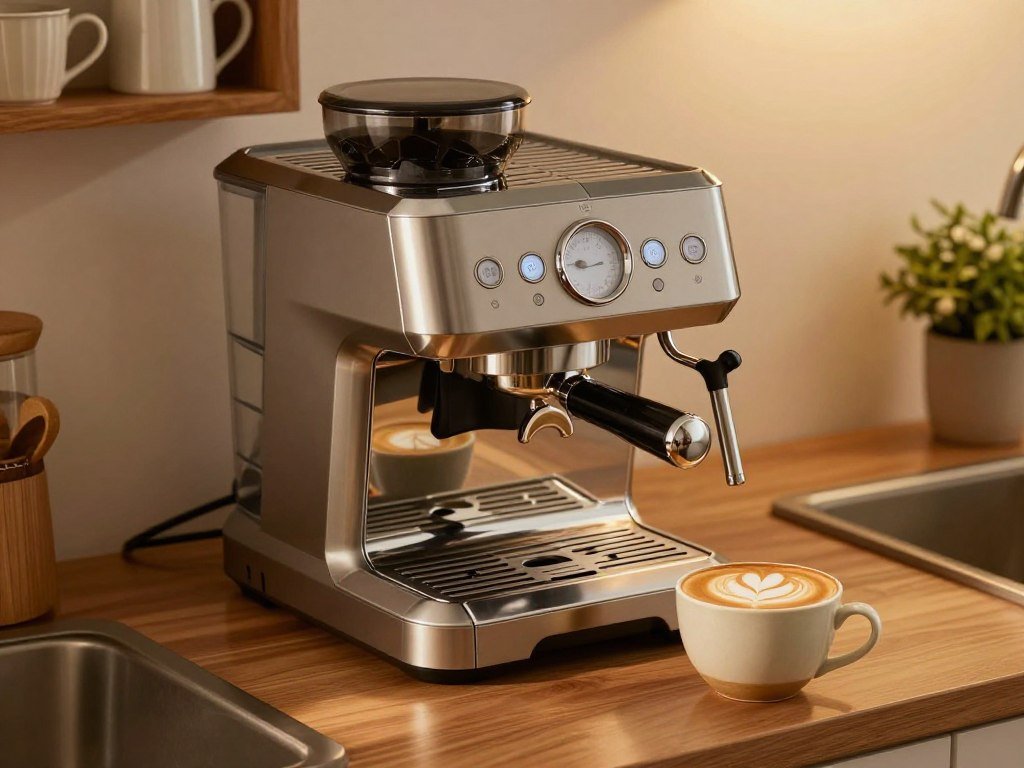
A home setup can make a quick latte, a carefully dialed-in espresso, or something in between. The best home espresso machines fit your budget, favorite drinks, and appetite for hands-on work. You can choose from compact beginner models, prosumer machines with more control, and push-button systems. Each pick here serves a different kind of coffee routine, rather than claiming one machine suits everyone. A PID is a proportional-integral-derivative controller that adjusts heating to keep brew water near a chosen temperature. That control can help keep shots more consistent as you learn. Your routine matters as much as the machine’s features. Set a total budget that includes both the machine and any grinder you need.
Key Takeaways
- Choose a machine that fits your preferred level of effort.
- Plan for a grinder if your setup does not include one.
- Think about milk drinks and how often you make them.
- Check the workflow before paying for advanced controls.
- Measure your counter before choosing a larger machine.
What should you decide before choosing a machine?
Start with your morning routine, not the machine’s feature list. The best home espresso machines for home use depend on how much effort you want, how often you make milk drinks, and whether you want to adjust shots. Your routine sets the right balance between convenience and control.
A semi-automatic machine requires you to prepare and tamp coffee in a portafilter. A super-automatic machine grinds, tamps, and brews at the touch of a button. A manual espresso machine asks you to generate brewing pressure yourself, usually around 9 bars.
Espresso is typically brewed at about 8-10 bars and around 200°F. A higher pressure number does not automatically make a better shot. Grind, dose, and even water flow affect what ends up in your cup.
Boiler design changes how you make milk drinks. A single-boiler machine needs a temperature change between brewing and steaming. A dual-boiler machine can brew and steam at the same time, which helps when you make several drinks.
Use these four checks to narrow the field before comparing coffee machine details:
- Preferred drinks: espresso, milk drinks, or both.
- Hands-on time: quick buttons or a portafilter routine.
- Counter space: room for the machine and daily access.
- Total setup budget: machine, grinder, and needed accessories.
These choices affect your daily workflow more than a long feature list. If you expect to make several milk drinks back-to-back, favor a workflow that avoids a long brew-to-steam wait.

Best Home Espresso Machines for Different Budgets
A compact semi-automatic is the best starting point for many first-time buyers, while automation and prosumer control suit different routines. These espresso machines cover distinct budgets and goals. Start with the workflow, then judge whether the price and features match your needs.
Use this shortlist as a starting point, not a ranking that overrides your budget or preferred workflow. The 2026 picks span beginner-friendly, premium, built-in-grinder, and one-touch options.
| Buyer priority | Recommended machine | Reason to shortlist it |
|---|---|---|
| Overall pick | Fellow Espresso Series 1 | Premium all-around option |
| Budget | Breville Bambino Plus | Compact beginner choice |
| Built-in grinder | Breville Barista Pro | Grinder integrated |
| Durable prosumer | Lelit MaraX | Hands-on higher-end option |
| One-touch automation | Bosch 800 Series | Super-automatic convenience |
The Fellow Espresso Series 1 is Bon Appétit’s overall pick in 2026. It sits in a premium range, so it may not suit a first setup with a tight budget. The Bambino Plus is the budget choice for a compact entry point.
The Barista Pro integrates a grinder, while the MaraX gives you a higher-end, hands-on path. The Bosch 800 Series suits buyers who want drinks with less preparation. Each label points to a different strength, not a promise that every buyer will prefer it.
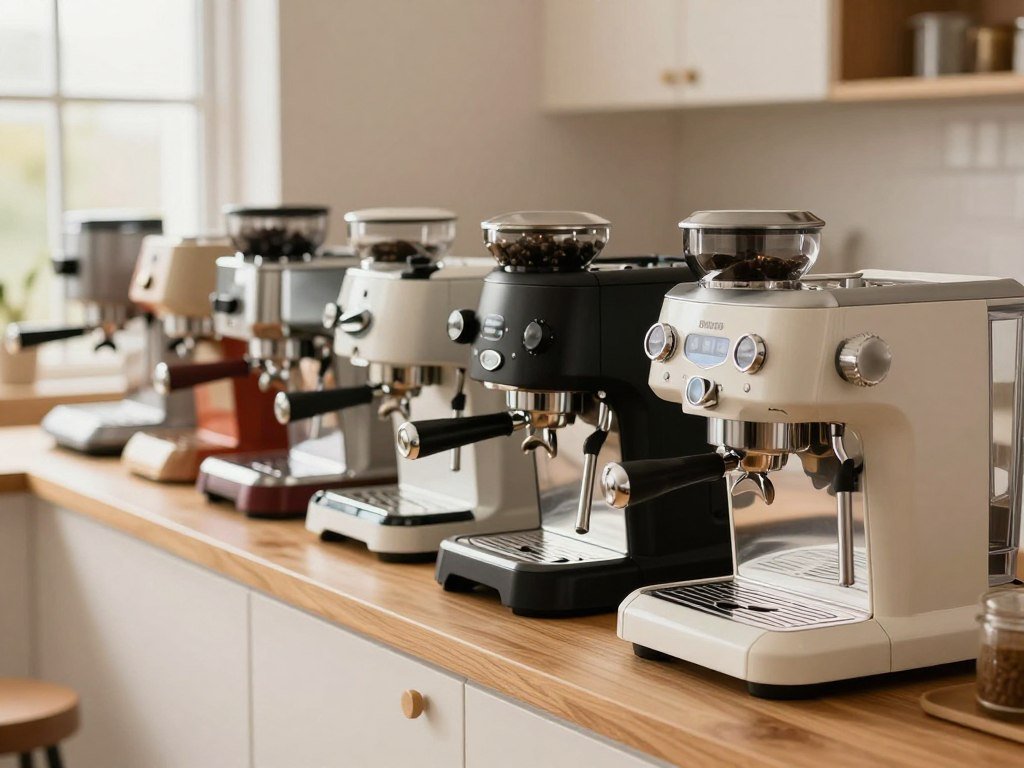
Compare the daily steps as carefully as the price and quality. Treat the category label as a shortlist, then check that machine’s daily workflow against your own.
Which espresso machine is easiest for beginners?
The Bambino Plus is an especially straightforward first choice if you want espresso and milk drinks without a long warm-up. Its short startup, guided milk steaming, and temperature control make practice less fussy. For a simpler entry, the De’Longhi Stilosa offers a more basic workflow.
The Bambino Plus combines a 3-second warm-up with PID temperature control. Preinfusion can be held for up to 12 seconds, helping you start a shot gently before full brewing pressure. The machine also includes single-wall and double-wall baskets.
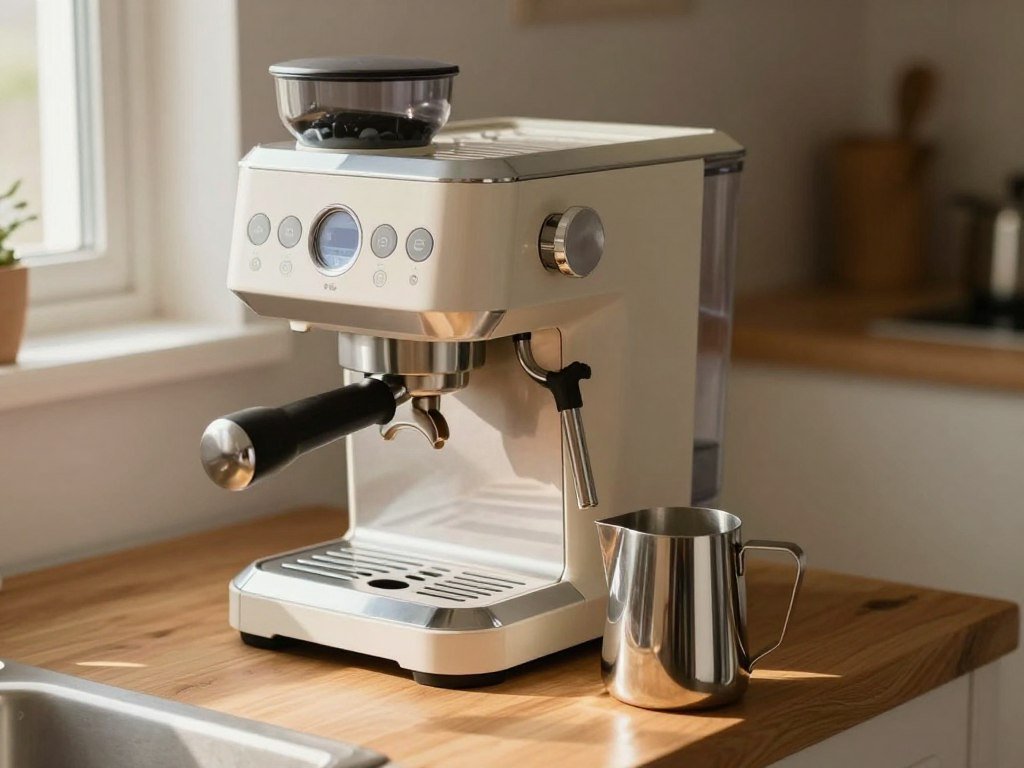
Breville Bambino Plus for quick, forgiving shots
The machine is listed at $500 in 2026 and measures 7.7 x 12.6 x 12.2 inches. Its 64-ounce water reservoir means you can make several drinks before refilling. The compact size helps when counter space is limited.
Automatic milk frothing can reduce the practice needed to make a latte or cappuccino. You can still learn shot preparation with the single-wall basket, while the double-wall basket offers a more forgiving route. That mix suits households with different skill levels.
De’Longhi Stilosa for a low-complexity entry point
The Stilosa uses a basic single-boiler workflow and suits buyers who want fewer controls. Regional versions differ: the US model has a Panarello-style wand, while versions in Europe and Asia include a non-pressurized basket.
Before ordering a first machine, work through these four checks:
- Decide between automatic and manual milk steaming.
- Check the included basket type.
- Budget for a grinder if needed.
- Confirm the machine fits your counter.
Basket choice affects how much control you have over a shot. Check which basket type is included in the exact regional version before buying.
Is the MiiCoffee Apex V2 the best budget espresso machine for home?
Choose the Apex V2 when learning extraction matters more than switching on and brewing immediately. It suits buyers who want manual control, a pressure gauge, and a standard-size portafilter. Its appeal is control, not the fastest startup.
The Apex V2 has adjustable PID temperature control, adjustable preinfusion, and an externally adjustable over-pressure valve. Its dedicated stainless-steel brewing boiler works with a thermoblock for steaming. That setup gives you separate systems for brewing and milk preparation.
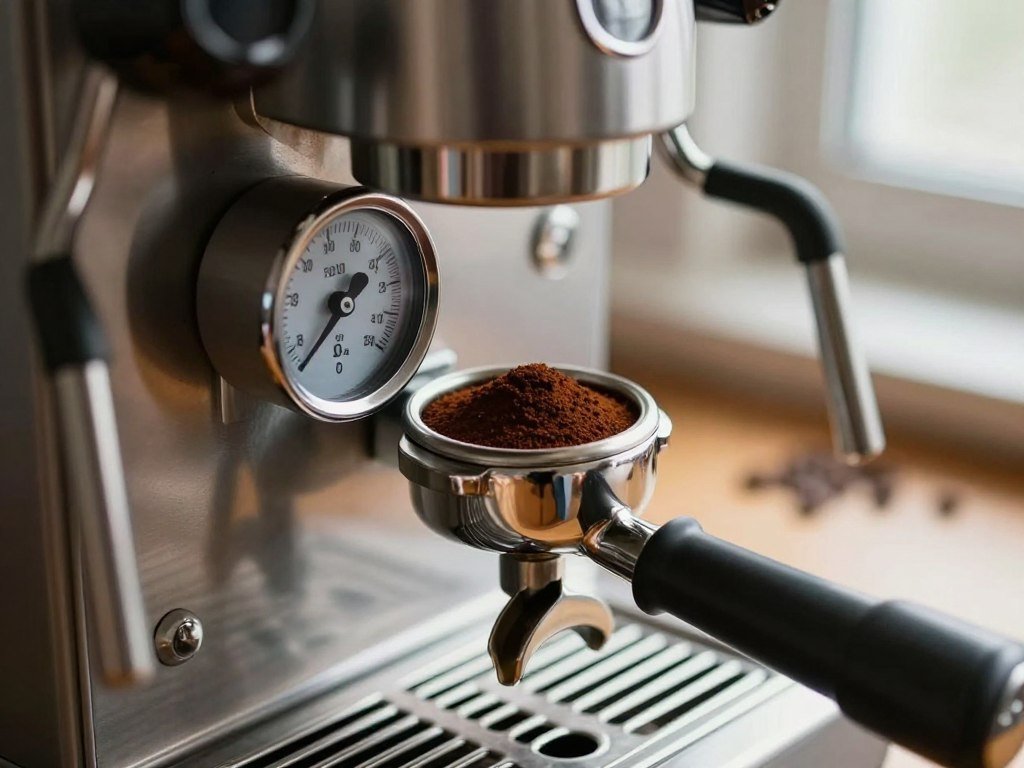
The external valve is easier to reach than an internal modification. In 2026, you can adjust it to 9 bars, around 6-7 bars, or higher. That range lets you choose a target for your coffee and technique.
A pressure gauge helps you see how the machine behaves during extraction. The 58 mm portafilter also uses a common size among hands-on espresso machines. Coffee Chronicler names the Apex V2 and Breville Bambino among its top espresso-machine picks, noting the Apex V2’s gauge and portafilter.
Expect a warm-up of around 7-10 minutes. That is slower than the Bambino Plus, so the Apex V2 is less suited to rushed mornings. In return, you get more room to learn how settings affect a shot.
Think about how much you want to adjust temperature and pressure before choosing this model. Its separate brew boiler and steaming thermoblock support a distinct workflow, but they do not remove the need to prepare coffee by hand.
Set the pressure to a deliberate target instead of treating the highest available setting as an advantage.
Which home espresso machine has a built-in grinder?
An integrated grinder removes one purchase and one separate workflow, but it does not automatically make a better setup. The Breville Barista Express is a strong all-in-one semi-automatic choice. Separate equipment can offer more flexibility over time.
The Barista Express pairs a built-in grinder with a 54 mm portafilter, low-pressure preinfusion, and PID temperature control. Its grinder has 16 settings, and its current models have a 9 bar over-pressure valve.
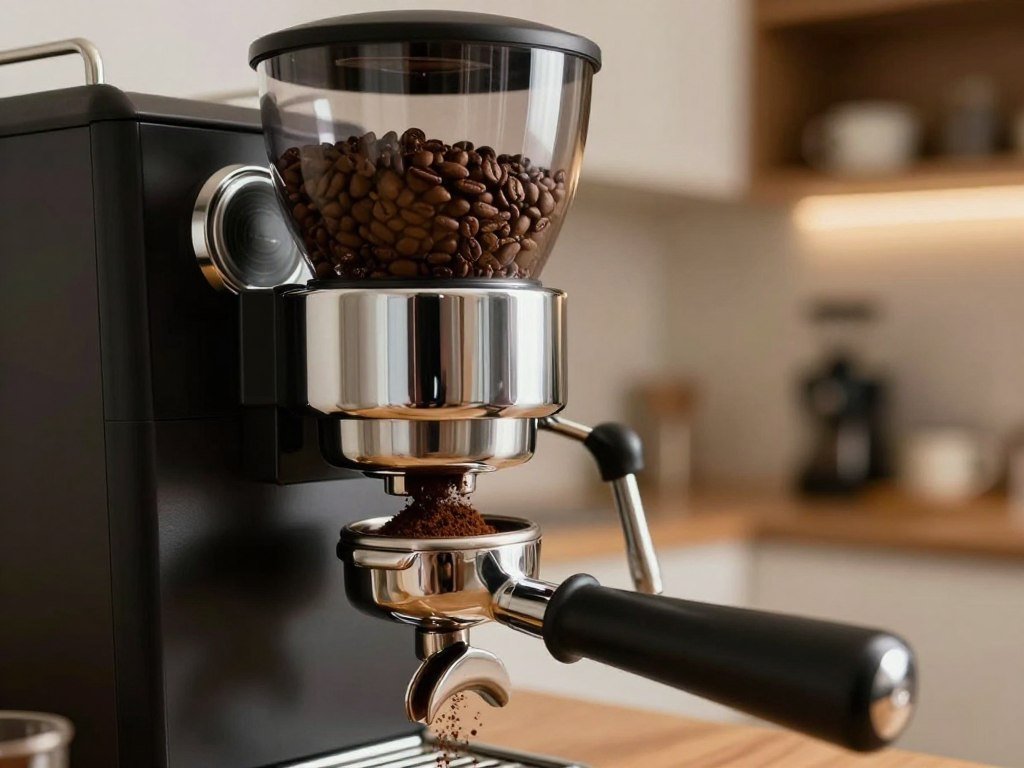
Breville Barista Express as the all-in-one semi-automatic
The machine is listed at $699 in 2026. Its thermocoil and PID system deliver water at 200°F, and the water tank holds 2 liters. Breville lists an approximately 30-second heat-up time.
The integrated conical burr grinder keeps grinding and brewing in one routine. Its 54 mm stainless-steel portafilter comes with single- and double-wall baskets. The machine measures 15.9 x 13.1 x 12.4 inches, so plan for a substantial countertop footprint.
| Setup | Grinder | Portafilter | Heat-up |
|---|---|---|---|
| Barista Express | Integrated, 16 settings | 54 mm | About 30 seconds |
| Bambino Plus | Separate purchase | Size not stated here | 3 seconds |
| Bambino Plus with a standalone grinder | Separate grinder | Size not stated here | 3 seconds |
A separate grinder for more flexibility
A standalone grinder is easier to replace or service without changing your espresso machine. Some models also give you more grind adjustment for dialing in different beans. That matters when you want to tune shot flow rather than accept one grinder’s range.
The trade-off is managing two appliances, with separate cleaning and counter needs. A separate setup does not always take less room; the grinder adds its own footprint. Choose the all-in-one route for a simpler countertop routine, not on the assumption that every built-in grinder will suit every bean.
Is the Gaggia Classic Pro E24 right for hands-on espresso?
The Gaggia Classic Pro E24 is a strong fit if you value a traditional portafilter workflow and are willing to learn its timing. It has a brass single boiler, a 58 mm stainless-steel portafilter, and a 9-bar over-pressure valve calibration. Its character is hands-on, rather than guided by built-in temperature control.
The single boiler needs a temperature change between brewing and steaming. You will need to manage that transition as you make milk drinks. This is part of the machine’s traditional feel, but it adds steps to the workflow.
The E24 is listed at $549.00 in 2026. Its lead-free brass boiler holds 3.5 ounces and is rated at 1370 watts. The machine’s overall power rating is 1425 watts, with a 110V-120V supply specification.
The 58 mm portafilter gives you access to a broad range of compatible tools. Its baskets hold 7-18 grams, allowing different doses within the machine’s basket range. The over-pressure valve is calibrated to 9 bars, a typical target for espresso.
The 72-ounce water reservoir reduces the need for frequent refills in many home routines. The machine measures 14.2 inches high, 8 inches wide, and 9.5 inches deep. Those figures help you check whether the portafilter and water access fit your setup.
The brass boiler and serviceable traditional design may appeal if you want to understand each step. The E24 does not offer the same built-in temperature control as a machine with PID. You should expect to build familiarity with its timing.
Check your available counter height and kitchen outlet against the listed dimensions and electrical specifications.
Is the Fellow Espresso Series 1 worth considering?
The Fellow Espresso Series 1 is a premium step-up for a buyer who values fast readiness and a more substantial machine. It is listed at $1,500 in 2026. That price makes it a considered upgrade, not the default choice for a first espresso setup.
The Series 1 reached temperature in well under five minutes during testing. Its 67.6-ounce water reservoir supports multiple drinks before a refill. A two-year warranty adds a clear period of coverage.
The machine measures 10 x 17 x 12.25 inches. That footprint may suit a counter where a wider appliance can fit, though depth still matters near a wall. The reservoir size is useful if you make drinks throughout the day.
A quick warm-up can make a premium machine easier to use on busy mornings. It does not mean you can skip choosing a grinder or learning the portafilter routine. The value comes from the experience you want each time you brew.
The price is a substantial step up from the Bambino Plus. You may find that spend easier to justify if you make espresso often and care about a more refined daily setup. An occasional weekend shot may not call for the same investment.
Compare the extra spend with how often you will use the machine’s higher-end experience.
Which professional espresso machine fits a home kitchen?
For a professional-style home setup, choose the Mara X for heat-exchanger value, the Bianca V3 for pressure profiling, or the Dual Boiler for repeated milk drinks. Each machine suits a different kind of control. Your drink pace can help separate them.
Heat exchangers and dual boilers support near-simultaneous brewing and steaming. A heat exchanger uses one boiler system to serve both tasks, while a dual boiler has separate brew and steam boilers.
Lelit Mara X for heat-exchanger performance
The Mara X costs $1,700 and has a 58 mm basket with 4.5 inches of cup clearance. Its heat-exchanger design allows brewing and steaming close together. You can select brew temperatures of 197°F, 201°F, or 205°F.
From cold, it takes about 18 minutes to heat, or about 10 minutes from sleep. That wait is worth planning into your morning routine. The machine comes with a two-year warranty.
Lelit Bianca V3 for advanced pressure control
The $3,000 Bianca V3 offers two programmed pressure-modification modes and manual pressure control. Those options suit enthusiasts who want to experiment with how pressure shapes extraction. You can choose a preset or make adjustments by hand.
Breville Dual Boiler for back-to-back milk drinks
The Breville Dual Boiler has separate brew and steam boilers. That design helps when you need to prepare several milk drinks without waiting for one boiler to switch temperatures. It fits households that value drink pace and repeated steaming.
| Machine | System | Listed price | Defining control |
|---|---|---|---|
| Mara X | Heat exchanger | $1,700 | Selectable brew temperatures |
| Bianca V3 | Dual boiler | $3,000 | Programmed and manual pressure control |
| Breville Dual Boiler | Dual boiler | Price not included in this comparison | Separate brew and steam boilers |
Measure the full machine footprint and leave room for the hands-on workflow before committing to a prosumer model.
When is a super-automatic machine the better choice?
Choose a super-automatic machine when pressing a button matters more than controlling each step of extraction. A true automatic coffee machine has a built-in grinder and an internal brewing unit that grinds, tamps, and brews. That is different from a portafilter machine with an integrated grinder.
A built-in grinder alone does not make a semi-automatic machine fully automatic. You still prepare and tamp coffee in its portafilter. Super-automatic models handle those steps inside the machine.
De’Longhi Magnifica S and Beko CaffeExperto under $500
Coffee Kev identifies the De’Longhi Magnifica S and Beko CaffeExperto as two automatic-machine picks under $500 in 2026. Both suit buyers who want to reduce preparation. Check the drink options that matter to you before choosing between them.
Automation can shorten the path from beans to a cup, but it does not remove upkeep. Internal brewing parts and milk systems still need cleaning. Some machines also limit how much control you have over each shot.
Breville Barista Touch Impress and Oracle Jet for assisted espresso
Coffee Kev names the Breville Barista Touch Impress and Breville Oracle Jet as semi-automatic picks. They assist with preparation but still use a portafilter workflow. That can suit you if you want guidance without handing over every step.
Consider these three trade-offs before choosing a push-button system:
- Less preparation before each drink.
- Less hands-on control over extraction.
- Cleaning for internal brewing and milk systems.
The word “automatic” can cover very different levels of help. Before buying, confirm which drinks and cleaning steps the machine actually automates.
Which machine makes both drip coffee and espresso?
A dual-purpose coffee maker makes sense when drip coffee and espresso both have a regular place in the household. The De’Longhi All-in-One can brew both at once, while the Cuisinart Barista Bar offers several coffee formats. Choose for variety, not advanced espresso control.
The De’Longhi uses a dual heating system for simultaneous drip and espresso brewing. That can help when one person wants a carafe and another wants an espresso drink.
De’Longhi All-in-One for simultaneous brewing
The De’Longhi All-in-One Combination Coffee Maker & Espresso Machine measures 11 x 14.5 x 12.8 inches. Its water tank holds 32 ounces. Drip coffee takes about five minutes, and its espresso showed an even crema in testing.
Crema can vary with the coffee and preparation, so the same result is not guaranteed in every cup. The main draw is the ability to brew drip coffee and espresso at the same time. That makes the model useful for households with different morning habits.
Cuisinart Coffee Center Barista Bar for multiple formats
The Cuisinart Coffee Center Barista Bar 4-in-1 brews up to 12 cups of drip coffee. It also supports single-serve sizes of 6, 8, and 10 ounces. Its appeal is choice across brew formats, rather than professional espresso control.
| Model | Coffee formats | Capacity | Simultaneous brewing |
|---|---|---|---|
| De’Longhi All-in-One | Drip and espresso | 32-ounce tank | Yes |
| Cuisinart Barista Bar | Drip and single-serve | Up to 12 cups, plus 6-, 8-, and 10-ounce servings | Not stated |
| KitchenAid KF8 | Espresso drinks | Capacity not compared here | Not a drip-and-espresso combination |
Choose a combination model for format flexibility, not as a substitute for a dedicated espresso setup.
Are capsule machines a good fit for home espresso?
A capsule machine is a practical choice when quick, repeatable drinks matter more than barista-style adjustment. The Nespresso Vertuo Plus uses a barcode system to set brew size, temperature, pressure, and brew time for each capsule. Preparation stays simple, with no loose coffee to grind or tamp.
Capsules trade control over coffee and extraction for a preset brewing routine. You choose from the capsule range, place one in the machine, and start the cycle. The barcode guides the machine’s settings for that capsule.
This approach differs from learning to grind, dose, and tamp fresh beans. Those steps let you adjust the coffee and shot as you build skill. Capsule brewing offers fewer ways to change the result yourself.
The system can suit a household that values speed and repeatability. It may frustrate you if you want to test different beans or fine-tune extraction. Consider how often you drink espresso-style coffee and how much variety you expect.
Capsule choice also shapes the drink sizes you can make. Check that the capsule range and drink sizes match what your household actually orders.
Which espresso machine is best for milk drinks?
If cappuccinos and lattes are the daily order, steam performance deserves as much attention as shot quality. A manual steam wand gives you control over milk texture, while automatic frothing makes the process easier. For latte art, a manual wand can create the rolling vortex needed for smooth milk.
Choose a manual wand for practice and an automatic frother for ease and repeatability. The Gaggia Classic Pro E24 has a rotating, commercial-style stainless-steel wand with a two-hole tip. The KitchenAid KF8 uses an automatic milk frother.
Manual steaming lets you guide the milk as it warms and moves. With practice, you can aim for smooth microfoam that blends into espresso. A wand also asks you to learn timing and pitcher position.
Automatic frothing needs enough milk in the jug or container to work as intended. In Good Housekeeping’s tests, the KitchenAid KF8 produced excellent foam. An automatic system can reduce technique demands, but the result may not match the texture you want for every drink.
Airy foam suits some cappuccinos, while smooth microfoam works better for a latte’s blended texture. Machine design and milk volume both affect what you get. Do not assume every automated frother makes the same foam.
Decide whether you want to practice milk texture or have the machine do that work for you.
Do you need a separate grinder for espresso?
A separate grinder is often the better route for a buyer who wants to improve shot consistency over time. Espresso needs a fine grind range and small adjustments to help tune how quickly a shot flows. The grinder matters as much as the machine for dialing in.
Include grinder cost in the same total budget as your espresso machine. A manual espresso maker can lower the machine cost, but it still needs a suitable grinder and more effort from you.
Entry-level grinder for a first setup
Coffee Chronicler identifies the Baratza Sette 30 as an entry-level espresso grinder. It is an option to research if you are building your first setup. Check that its adjustment range fits the coffee and machine you plan to use.
Grind changes affect shot flow, so tiny steps can help you tune a dose without making a large jump. A grinder with too few useful espresso settings can make dialing in harder. Bean freshness and the machine also shape the result.
A higher-adjustment grinder for dialing in
The Eureka Mignon Specialita is a higher-priced option to consider for more adjustment. It may suit you if you want finer control while testing different beans. You do not need the highest-priced grinder to start, but you do need one that can grind for espresso.
Use this three-point checklist when comparing standalone grinders:
- Confirm adjustment into the espresso range.
- Make sure changes are fine enough to tune flow.
- Decide whether one grinder will serve multiple brew methods.
A manual Nanopresso recipe uses 8 grams of coffee and 80 milliliters of water heated to 190-200°F. That method still relies on a suitable grind and hands-on effort. Put grinder performance in the budget before choosing a machine tier.
How much counter space and water capacity do these machines need?
Measure the available counter area, including overhead clearance, before comparing appliance footprints. Height matters under cabinets, while depth matters when a machine sits near a wall. Fit includes access, not just the space beneath the machine.
Leave room to fill the reservoir, remove the drip tray, and open the bean hopper. A machine can fit on paper yet feel awkward if you cannot reach its daily-use parts.
| Machine | Listed dimensions | Water capacity |
|---|---|---|
| Breville Barista Express | 15.9 x 13.1 x 12.4 inches | 2 liters |
| KitchenAid KF8 | 10.2 x 18.5 x 14.3 inches | 74.3 ounces |
| Nespresso Vertuo Plus | 9.1 x 13.2 x 12.8 inches | 40 ounces |
Water capacity affects how often you refill, especially if several people make coffee each day. A larger reservoir can reduce refill trips, though it also takes up room inside the machine. Match the size to your routine.
Remember to check the counter depth against the machine’s full footprint. A wall, backsplash, or cabinet can limit access to a rear-mounted water reservoir. Leave space to lift or pull out the parts you need.
The Gaggia Classic Pro E24 weighs 19 pounds and has a 16-ounce drip-tray capacity. Its weight matters if you often move the machine, while the tray size affects how often you empty it.
Leave reachable clearance for refilling and cleaning, not just enough space to set the machine down.
Which machine should you choose for your routine?
Match the machine to the amount of work you actually want to do each morning. Choose the MiiCoffee Apex V2 for hands-on control, the Breville Bambino Plus for quick beginner use, or the Bosch 800 Series for push-button drinks. Those three paths cover very different routines.
The best fit is the one whose effort level you will accept every day. The Apex V2 lets you adjust temperature, preinfusion, and pressure. The Bambino Plus favors fast warm-up and beginner-friendly milk steaming.
The Bosch 800 Series suits you if you want one-touch drink preparation. You give up some hands-on control in exchange for less work before each cup. That trade may be useful when convenience matters more than tuning shots.
Use this five-item checklist before you decide:
- Total setup budget, including the grinder.
- Preferred drink formats, such as espresso or lattes.
- Grinder plan, built-in or separate.
- Counter fit, including access around the machine.
- Acceptable preparation effort on a busy morning.
These checks can help you avoid paying for features that do not suit your routine. They also make it easier to compare machines with different workflows. A familiar morning habit is a better guide than a long feature list.
Product details and electrical needs can change across models and regions. Confirm current product details and local electrical compatibility before ordering.
Before placing an order, verify the machine’s current specifications and that your grinder plan is settled.
Conclusion
The right setup is the one you will enjoy using, not the one with the longest feature list. A good match fits your real routine and includes the accessories you need. Keep the choice practical, especially if you are still learning espresso.
Measure your counter and write down the complete setup budget before making a final choice. Include the grinder and any needed accessories, not only the machine. A clear total makes it easier to judge value without being distracted by extra features.
Measure the space, settle the grinder decision, and compare the final setup against your budget before buying.
FAQ
Can I use pre-ground coffee in a home espresso machine?
Yes, some pressurized baskets can accommodate pre-ground coffee. These baskets help create resistance even when the grind is less suited to espresso. For better control, use a suitable grind and dose, then adjust them to the machine and basket. A non-pressurized basket usually gives you more room to shape the shot through grind changes.
Do I need a 58 mm portafilter to make good espresso?
No, both 54 mm and 58 mm machines can make good espresso. Portafilter size alone does not set shot quality; grind, dose, water, and preparation matter too. A 58 mm portafilter offers broad accessory compatibility, which can make it easier to find tools. Choose a machine based on its workflow, not size alone.
Can a machine with a built-in grinder be considered fully automatic?
No, a built-in grinder alone does not make a machine fully automatic. A semi-automatic model may grind coffee but still requires you to prepare and tamp it in a portafilter. A true super-automatic also tamps and brews through an internal brewing unit. Check how much preparation remains before choosing a machine.
Can a home espresso machine brew and steam milk at the same time?
Yes, dual boilers and some heat-exchanger designs support near-simultaneous brewing and steaming. A dual-boiler machine has separate brew and steam boilers, while a heat exchanger uses a different system to handle both tasks. A single-boiler machine needs a temperature change between brewing and steaming. That can add waiting time when you make milk drinks.
Does higher pump pressure make better espresso?
No, higher pump pressure alone does not guarantee better espresso. A typical espresso target is about 8-10 bars, and many machines are set near that range. Grind size, dose, and shot flow also affect the cup. Treat pressure as one control to manage, not a number to maximize.
How much water capacity should I look for in an espresso machine?
Choose a reservoir that matches how often you want to refill. A larger tank can help if several people make drinks through the day, while a smaller machine may suit occasional use or limited counter space. The right capacity also depends on drink volume and machine format. Check whether you can remove or fill the reservoir easily.