
Quick Answer: What are the best free alternatives to ai detection tools for beginners?
The best free alternatives to AI detection tools for beginners are writing-process methods rather than more detectors: drafting logs, version history, citation practice, and transparent disclosure. Instead of chasing a tool that guesses whether text is machine-made, beginners can build a visible record of how their work was produced, which is what most schools and editors actually ask for. These approaches differ from detectors because they document authorship rather than estimate probabilities from patterns in word choice. Before relying on any method, compare its accuracy claims, false-positive risk, privacy terms, cost, and whether the institution you answer to accepts it as evidence.
Detection tools promise certainty they cannot deliver, and beginners often learn that the hard way. A student runs a draft through a free checker, sees a scary percentage, and rewrites a perfectly good paragraph until it sounds worse. That cycle is common, and it is avoidable. The better path is to understand what detectors actually measure, then adopt free habits and tools that prove your process instead of gambling on a score.
This guide walks through practical, no-cost alternatives, from browser history and document versioning to peer review and plain disclosure. It also covers where detectors genuinely help and where they quietly fail.
Why Beginners Should Treat AI Detectors With Caution
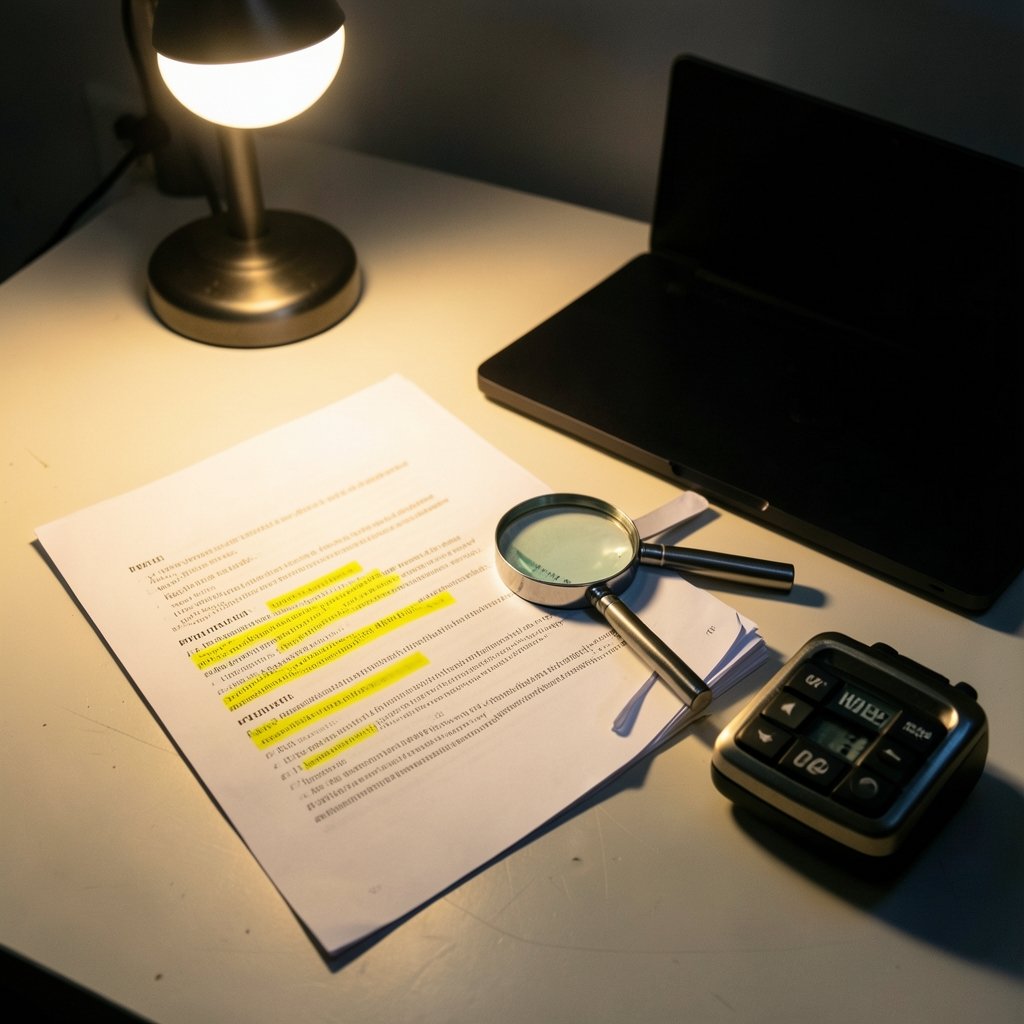
Every AI detector is a probability machine. It looks at patterns such as sentence rhythm, word predictability, and phrase frequency, then outputs a likelihood. It does not know who typed the words. That gap between “statistically typical” and “machine-generated” is where false accusations begin.
The risk is not hypothetical. Research has documented that detectors can flag human writing, and the effect is not evenly distributed. OpenAI retired its own classifier in 2023 after acknowledging low accuracy, which is a telling admission from the company building the models. Turnitin, meanwhile, has said its AI-writing indicator should not be the sole basis for misconduct decisions. If the vendors themselves hedge, beginners should too.
There is also a practical trap. Free detectors often cap word counts, store submitted text, or upsell a “full report” the moment a result looks alarming. A score is not evidence. Treat any percentage as a prompt to check your process, not a verdict on your integrity.
Alternative 1: Keep a Drafting Log That Shows Your Process
The simplest free alternative is a written record of how a piece came together. A drafting log is a short file, often just a few lines per session, noting what you wrote, what you researched, and what you changed. It costs nothing and takes two minutes.
In practice, the log works best when it captures specifics. Note the date, the section you worked on, the sources you consulted, and any AI assistance you used, even if that was just brainstorming titles. Editors and instructors rarely demand perfection; they want a trail they can follow.
Common mistakes here are vague entries (“worked on essay”) and backfilling the log the night before a deadline. A log written after the fact looks exactly like one written after the fact. Keep it live, and keep it honest.
Alternative 2: Use Version History as Your Evidence
Most writing tools already store revision history for free. Google Docs, Word online, and many note apps keep timestamped snapshots that show text appearing gradually, sentences being reordered, and paragraphs getting cut. That timeline is more persuasive than any detector score because it shows how the text was built, not merely the final output.
Beginners often disable this by pasting a finished block of text into a blank document. If the entire essay appears in one paste, the version history proves nothing. The fix is simple: draft inside the document from the start, even messily. Messy drafts are evidence; clean pastes are not.
A quick comparison helps clarify what each free method actually delivers.
| Method | Cost | What it proves | Best for |
|---|---|---|---|
| Drafting log | Free | Your working process over time | Students, freelancers |
| Version history | Free with most editors | Text was built incrementally | Anyone drafting online |
| Peer review notes | Free | A human read and responded | Classrooms, small teams |
| Disclosure statement | Free | You are transparent about tools | Professional writing |
| Free detector check | Free, limited | A probability estimate only | A rough second opinion |
Alternative 3: Build a Citation and Source Trail
A strong source trail does more than any detector. When every claim links to a named source with a date, readers can verify the work directly. That is a higher standard than “this text looks human.”
For beginners, the practical habit is to save sources as you go, not after. Keep a running list with author, title, date, and the specific claim each source supports. When a sentence cannot be traced to a source, that is the real problem to fix, not the detector score.
This habit pairs well with learning how writing tools behave. If you use assistants to draft or rephrase, guides on the best ai paraphrasing tools for writers explain how output quality varies and why citations still need manual checking. Similarly, creators building a public voice will find the best ai writing tools for content creators useful for understanding where assistance ends and authorship begins.
Alternative 4: Get Human Eyes on the Draft Early
Peer review is free, fast, and stubbornly effective. A classmate, colleague, or writing group can tell you within minutes whether a paragraph sounds like you. Detectors cannot make that judgment because they have never met you.
The trick is timing. Feedback requested a day before a deadline produces panic edits. Feedback requested a week out produces real revision. Ask reviewers two questions: does this sound like my usual writing, and can you follow the argument without my explanation? Both answers are more useful than a percentage.
Common mistake: asking only for proofreading. Grammar fixes do not test whether the thinking is yours. Ask about structure and voice instead.
Alternative 5: Disclose Your AI Use Clearly
Disclosure is the cheapest alternative of all. A single sentence stating which tools you used and for what purpose removes most suspicion before it forms. Many workplaces and courses now publish AI policies, and a short statement aligns your work with them.
A workable format: name the tool, describe the task, and note what you verified yourself. For example, “Used an AI assistant to outline sections; all sources checked and all final wording written by me.” That sentence is more credible than any detector report because it is specific and falsifiable.
Transparency beats detection every time. Institutions that receive a clear disclosure have little reason to run a checker at all.
Where Free Detectors Still Help
None of this means detectors are useless. They can serve as a rough second opinion, especially on text you did not write and need to assess, such as submissions from unknown contributors. A flag is a reason to ask questions, not a reason to accuse.
They also help beginners learn how models write. Running your own draft through a free checker and reading the flagged sentences teaches you which patterns read as generic. That lesson is genuinely useful for improving clarity, even when the score itself is meaningless.
The key is proportion. Use detectors as a smoke alarm, not a judge. When the alarm sounds, investigate the process, not the person.
Practical Tips, Common Mistakes, and What Actually Works
In practice, the beginners who stop worrying about detectors share a few habits. They draft in the open, they keep notes, they cite as they go, and they disclose early. None of that requires a subscription.
The mistakes repeat just as reliably. People paste finished text into blank documents and destroy their own version history. They rewrite good sentences to satisfy a score. They trust free tools with confidential drafts without reading the privacy terms. They treat a single check as proof of anything. (Artificial Intelligence)
What actually works is boring and durable: a visible process, verifiable sources, and honest disclosure. Those three things survive scrutiny from any instructor, editor, or client. A detector score does not.
Beginners exploring other free tool categories often notice the same pattern. Guides such as the best ai automation tools for small businesses and the best e discovery tools for litigation stress verification and audit trails over raw automation. The principle carries over: documentation is the product.
How to Choose Your Approach
Match the method to the stakes. A short blog post needs a source trail and a disclosure line. A graded essay needs a drafting log and version history. A workplace report needs peer review and a clear statement of tools used.
If you must use a detector, pick one with published accuracy information, check whether it stores your text, and never submit anything confidential to a free tier without reading the terms. Then pair the result with one process method from this guide. The combination is far stronger than either alone.
Conclusion
The best free alternatives to AI detection tools are not tools at all. They are habits: drafting in the open, logging your work, citing sources as you go, inviting human review, and disclosing AI use plainly. These methods cost nothing, survive scrutiny, and never produce a false positive. Detectors estimate; documentation proves. For beginners, that distinction is the whole game, and it is one you can act on today with nothing more than a document you already have open.
Frequently Asked Questions
Are free AI detectors accurate enough to rely on?
No. Free detectors produce probability estimates, not proof, and their accuracy varies widely by text type and length. Even paid detectors have documented false positives, which is why vendors themselves caution against using results as sole evidence. Treat any score as a prompt to check your process.
Can teachers tell if I used AI without a detector?
Often they can, but not through a score. Instructors notice sudden shifts in voice, missing drafts, unexplained citation gaps, and writing that does not match earlier work. A drafting log and version history answer those questions directly, which is why they work better than any checker.
What should I do if a detector flags my human-written essay?
First, do not rewrite good sentences to chase a lower score. Gather your version history, drafting notes, and sources, then share them with whoever raised the concern. A calm, documented explanation resolves most cases quickly. If the flag came from a free tool with unclear terms, stop submitting text to it.
Is it ethical to use AI writing tools at all?
It depends on the rules you answer to and how you disclose. Many courses and workplaces permit brainstorming, outlining, or editing assistance while requiring disclosure and human verification of facts. The ethical line is usually transparency, not the tool itself.
Do I need paid software to prove my writing process?
No. Free version history in common editors, a plain text log, and saved source lists cover nearly every situation. Paid tools add convenience, not credibility. What persuades readers is a consistent trail, not a subscription receipt.
How long should I keep drafts and notes?
Keep them until the work is graded, published, or accepted, and ideally for the length of any appeal window your institution publishes. Storage is cheap and the record is small. Deleting drafts early removes the exact evidence you would need later.