
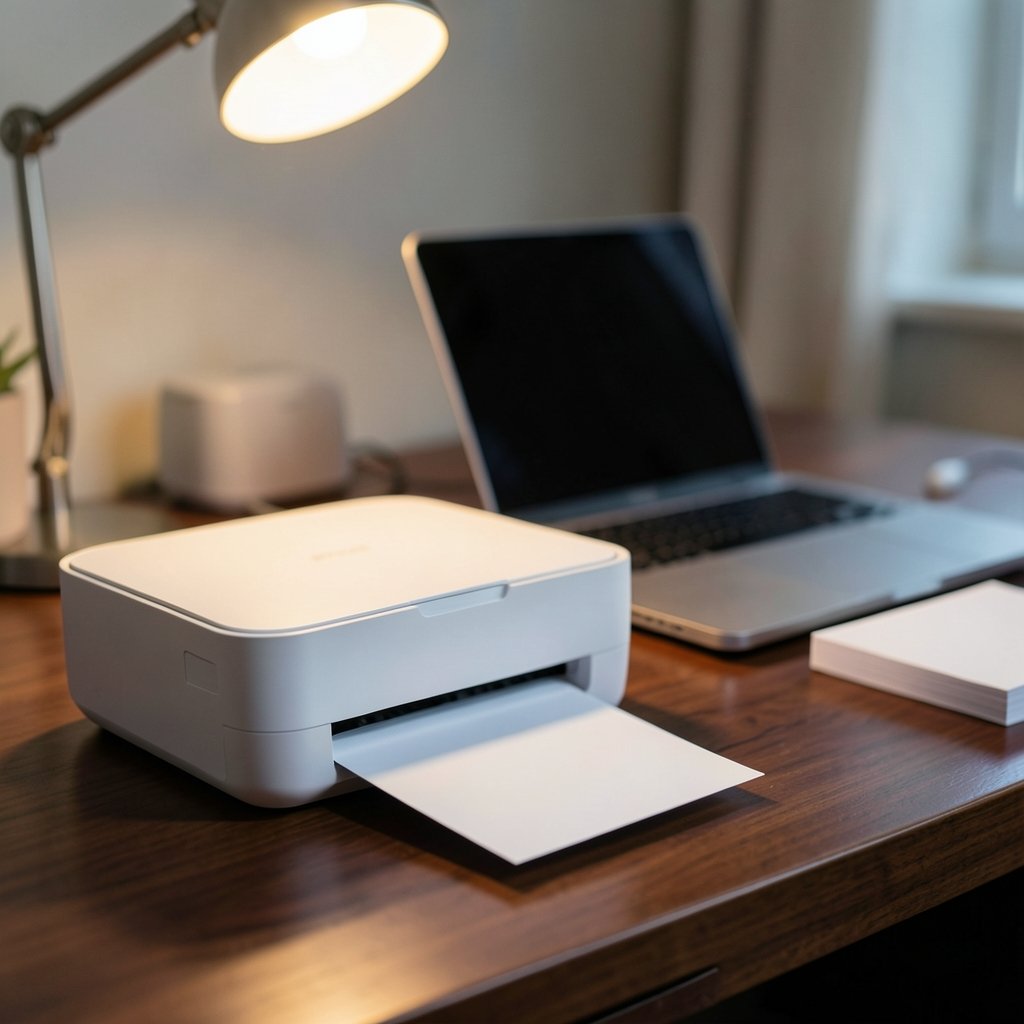
Why does a task that should take ninety seconds so often turn into a scavenger hunt through menus, driver downloads, and mystery IP addresses? Adding a printer to a Mac is one of those jobs that is either trivially easy or weirdly stubborn, and the difference usually comes down to one detail: whether the printer speaks AirPrint. This guide walks through every realistic path, from the plug-and-play case to the network printer that refuses to show up, plus the fixes that actually resolve the common failures.
Where Printer Setup Lives in Modern macOS
Everything starts in one place. On macOS Ventura (released October 24, 2022) and later, open System Settings and go to Printers & Scanners in the sidebar. On macOS Monterey and earlier, the same panel sits inside System Preferences. The layout changed with Ventura, when Apple renamed System Preferences to System Settings and reorganized the panes, which is why older tutorials send people hunting in the wrong spot. (CUPS (Common Unix Printing System))
Inside that panel, the Add Printer, Scanner, or Fax button opens a browser window with a default view that lists discovered devices. That window is where nearly all setup decisions get made, so it is worth understanding what it shows rather than clicking the first entry that appears.
The Easiest Case: AirPrint and Driverless Setup
AirPrint is Apple’s driverless printing standard, introduced in 2010 and shipped to devices with iOS 4.2 in November of that year. A printer that supports AirPrint needs no downloaded driver at all. The Mac finds it over the local network using Bonjour, Apple’s zero-configuration discovery protocol, and the device simply appears in the add-printer list.
For the reader who wants the background, the history and technical scope of Apple’s AirPrint standard are worth a few minutes, because knowing whether a printer is AirPrint-capable predicts almost everything about how smooth setup will be.
In practice, the AirPrint path looks like this:
- Turn the printer on and connect it to the same Wi-Fi network as the Mac.
- Open System Settings, then Printers & Scanners.
- Click Add Printer, Scanner, or Fax.
- Select the printer from the Default list and confirm the “Use” field shows AirPrint or Secure AirPrint.
- Click Add.
That is the whole job. No manufacturer software, no installer packages, no reboot. If the printer appears with a generic name and the Use field offers only a strange driver, that is the first hint the device is not AirPrint-certified and the Mac is falling back to something else.
Adding a USB Printer
A USB printer is even simpler in theory: plug the cable in, power the printer on, and macOS usually detects it and adds it automatically, often within a few seconds. If it does not appear, use the Add button and look for it under the Default or USB list.
Two practical notes from experience. First, use a data cable, not a charge-only cable, because a surprising number of “the Mac can’t see my printer” cases turn out to be a cable that carries power but no data. Second, try a different port before assuming a software fault, especially on a laptop where a hub or dock sits between the Mac and the printer. Docks introduce their own quirks, and the same connectivity troubleshooting mindset applies as when a VPN kill switch blocks the local network and your printer disappears from discovery entirely.
Adding a Network Printer by IP Address
Older network printers, office laser units, and anything without AirPrint can be added manually through the IP tab of the add-printer window. You will need the printer’s address, which is usually printed on a configuration page or visible on the device’s own display panel.
The IP tab asks for a protocol. The most common choices are IPP, LPD, HP Jetdirect (sometimes called socket), and generic line printer variants. IPP, the Internet Printing Protocol, is the modern standard and the one to try first; its transport and encoding rules are defined in the IETF specification for Internet Printing Protocol/1.1 encoding and transport, published in 2017 as RFC 8010 and superseding the 2000-era RFC 2910. The matching model and semantics document is RFC 8011.
A reliable routine for the IP route:
- Give the printer a static IP address or a DHCP reservation so the address does not change and break the queue later.
- In the IP tab, enter the address in the Address field.
- Set Protocol to IPP, then let the Use field auto-select a driver.
- If auto-select fails, choose a generic PostScript or PCL driver that matches the printer’s language.
- Add the printer and print a test page.
The static address point matters more than people expect. A printer that gets a new address from the router after a power cut will leave a dead queue behind, and the Mac will happily keep sending jobs into nothing.
When You Actually Need a Driver
For non-AirPrint printers, macOS may use a manufacturer-supplied driver or a generic PostScript or PCL driver. Apple has progressively stripped bundled third-party drivers out of macOS; since macOS Catalina (released October 7, 2019), many older drivers are no longer included, and the fix is to download the current driver from the printer maker’s own support pages.
A few rules that save time here:
- Match the driver to the exact model rather than only the brand family.
- Prefer the manufacturer’s current release over any ancient installer found on a disc or a forum.
- Uninstall the old driver before installing a new one if the printer is misbehaving.
- If the manufacturer offers a “full” driver package and a “basic” one, the basic package is usually enough for printing.
If the driver installs but the Mac still will not talk to the printer, the problem is almost always connection, not software. That is also why a quick look at the best code editor for Mac is a useful reminder of how much macOS printing depends on well-behaved software: the same principle of clean, current, model-matched installs applies to printer drivers.
Sharing a Printer With Other Devices
A Mac can share a printer it is connected to with other Macs, iPhones, and iPads on the same network. The setting lives in System Settings → General → Sharing → Printer Sharing. Turn it on, tick the printer you want to share, and other devices on the network can add it the same way they would add any network printer.
This is a genuinely useful trick in a home office with one good printer and several laptops. Two caveats: the sharing Mac must be awake, and the shared printer inherits that Mac’s connection, so if the host machine sleeps, the queue stalls.
The Fixes That Actually Work
When a printer will not appear or will not print, work through these in order. They resolve the large majority of real-world failures.
Confirm the network. The Mac and the printer must be on the same subnet. A printer on a guest Wi-Fi network, or on a 5 GHz band that the router isolates from the Mac, will never be discovered. This trips up more people than any other single cause.
Reset the printing system. In the Printers & Scanners list, Control-click or right-click an empty area and choose Reset printing system. This removes all printers and their queues and starts fresh. It is the closest thing to a clean slate macOS offers, and it fixes corrupted queues that cause jobs to hang in “paused” or “held” states.
Remove and re-add the printer. Deleting the queue and adding it again forces macOS to renegotiate the driver and connection. It takes thirty seconds and clears a surprising number of odd behaviors.
Check the Use field. If the printer was added with the wrong driver, printing may fail with garbled output or a “printer not responding” error. Remove it and re-add with the correct driver selected manually.
Restart the print service. Sometimes a stuck job blocks everything behind it. Clearing all jobs from the queue, then restarting the Mac, is a blunt but effective reset.
Try a different cable or port. For USB printers, this eliminates the most common hardware cause in one step.
Check for firmware updates on the printer itself. Network printers with outdated firmware can drop off discovery or fail IPP negotiation.
Setting a Default Printer and Saving Presets
Once a printer is installed, the Printers & Scanners panel lets you set a default printer and a default paper size, so the print dialog opens with the right device already selected. This is a small setting that saves a click every single time you print.
The print dialog itself lets you save presets: combinations of paper size, orientation, duplex mode, quality, and other options stored under a name. For anyone who prints the same kind of document repeatedly, a preset removes the need to re-tune settings on every job.
Common Mistakes Worth Avoiding
A handful of habits cause most printer grief on macOS. Installing driver packages downloaded from unofficial sites is the worst offender, because mismatched or bundled installers can leave stray components that confuse the system later. Adding a printer by IP without reserving the address is another, since the queue silently breaks the next time the router reassigns it. And skipping the “Use” field check means the Mac may pair a printer with a generic driver that prints garbled pages or refuses duplex jobs.
There is also a broader lesson about keeping a Mac’s peripheral setup tidy. The same discipline that keeps a split screen Mac setup working smoothly applies to printers: fewer moving parts, current software, and settings you actually understand beat any amount of troubleshooting after the fact. (Apple Support: Printers on Mac)
Conclusion
Adding a printer to a Mac comes down to one question: does the printer support AirPrint? If it does, setup is a thirty-second job through System Settings, with no drivers and no drama. If it does not, the IP route with a reserved address and a correctly matched driver handles almost everything else. The failures that remain are nearly always network-related or queue-related, and the reset printing system option clears most of those. Work through the connection first, the driver second, and the queue third, and the printer will behave.
Frequently Asked Questions
Why doesn’t my printer show up in the add printer list?
The most common cause is that the Mac and printer are on different networks or subnets. Guest Wi-Fi networks and isolated bands frequently block discovery. Check that both devices are on the same network, then confirm the printer is awake and connected. If it still does not appear, add it manually using the IP tab with the printer’s address.
Do I need to install drivers for an AirPrint printer?
No. AirPrint is a driverless standard, so the Mac uses built-in support and discovers the printer automatically over the local network. You only need a manufacturer driver when the printer lacks AirPrint support, and even then macOS may offer a suitable generic PostScript or PCL driver.
How do I find my printer’s IP address?
Most network printers will print a configuration page from their own control panel that lists the current IP address. Many also display it on a small screen on the device. Once you have it, set a DHCP reservation in your router so the address stays the same and the print queue does not break later.
What does reset printing system do?
It removes every installed printer and its associated print queue, returning the Mac’s printing configuration to a clean state. It does not delete files or documents. It is the standard fix for corrupted queues, jobs stuck in a paused state, and printers that have stopped responding after working fine previously.
Can I share a printer connected to my Mac with other devices?
Yes. Enable Printer Sharing under System Settings, General, then Sharing, and select the printer you want to share. Other Macs and iOS devices on the same network can then add it like any network printer. The host Mac needs to stay awake for the shared printer to remain available.
Why does my printer print garbled pages or fail mid-job?
A wrong or outdated driver is the usual culprit. Remove the printer, then add it again and check the Use field to make sure the correct driver is selected rather than a generic fallback. If the problem persists, update the printer’s firmware and reinstall the current driver from the manufacturer’s support pages.



