
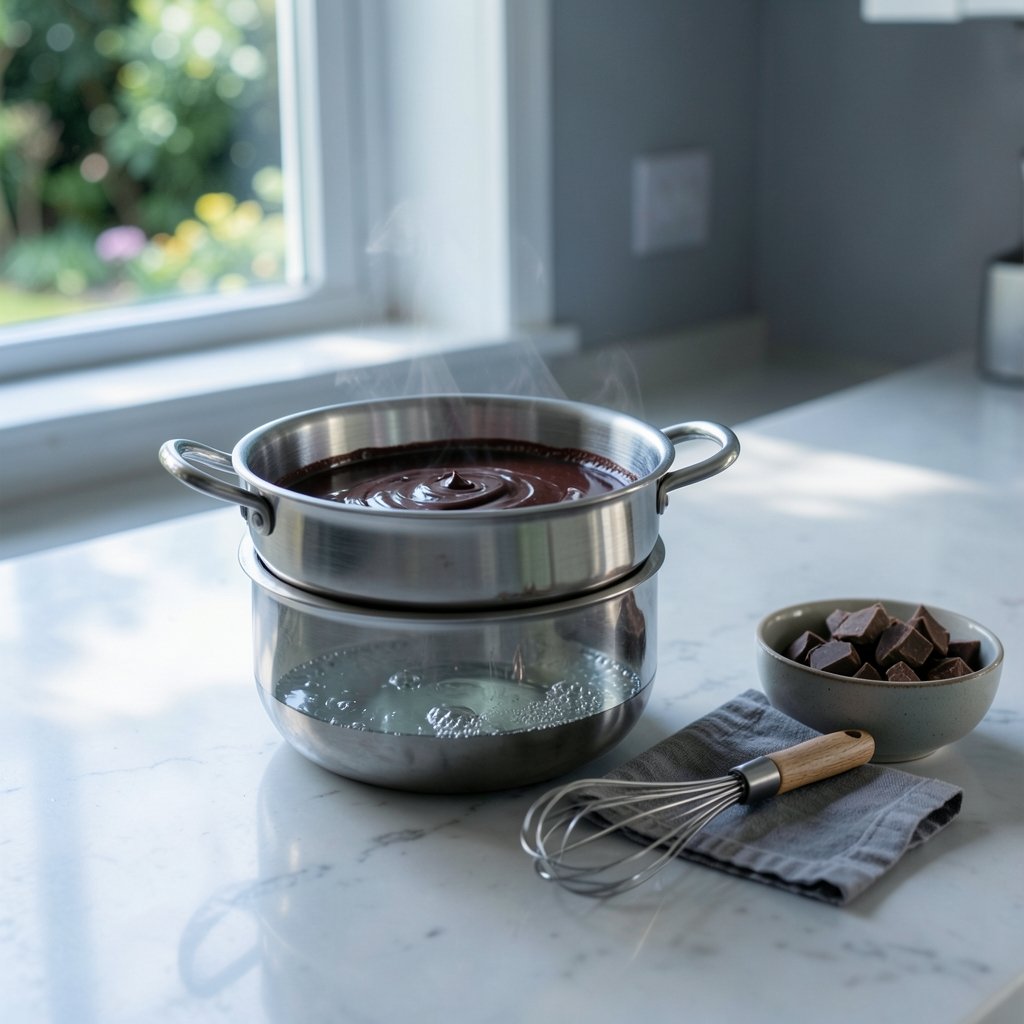
Quick Answer: What is a double boiler?
A double boiler is a two-pot setup where a lower pot of simmering water heats an upper bowl or pot with steam, so delicate foods never touch direct flame. Home cooks use it to melt chocolate, cook custard, and whisk up hollandaise or lemon curd without scorching. The same water-bath principle shows up in food service hot-holding and in laboratory heating, though the exact terminology varies between sources. Before buying or improvising one, check the pot material and fit, whether the upper bowl’s base clears the water, the capacity you need, how steady your stovetop heat runs, and whether a heatproof bowl over a saucepan will do the job. (Mesh Wi-Fi Double NAT Fix: Why It Breaks Your Network and How to Solve It)
A Pot of Water That Quietly Does All the Work
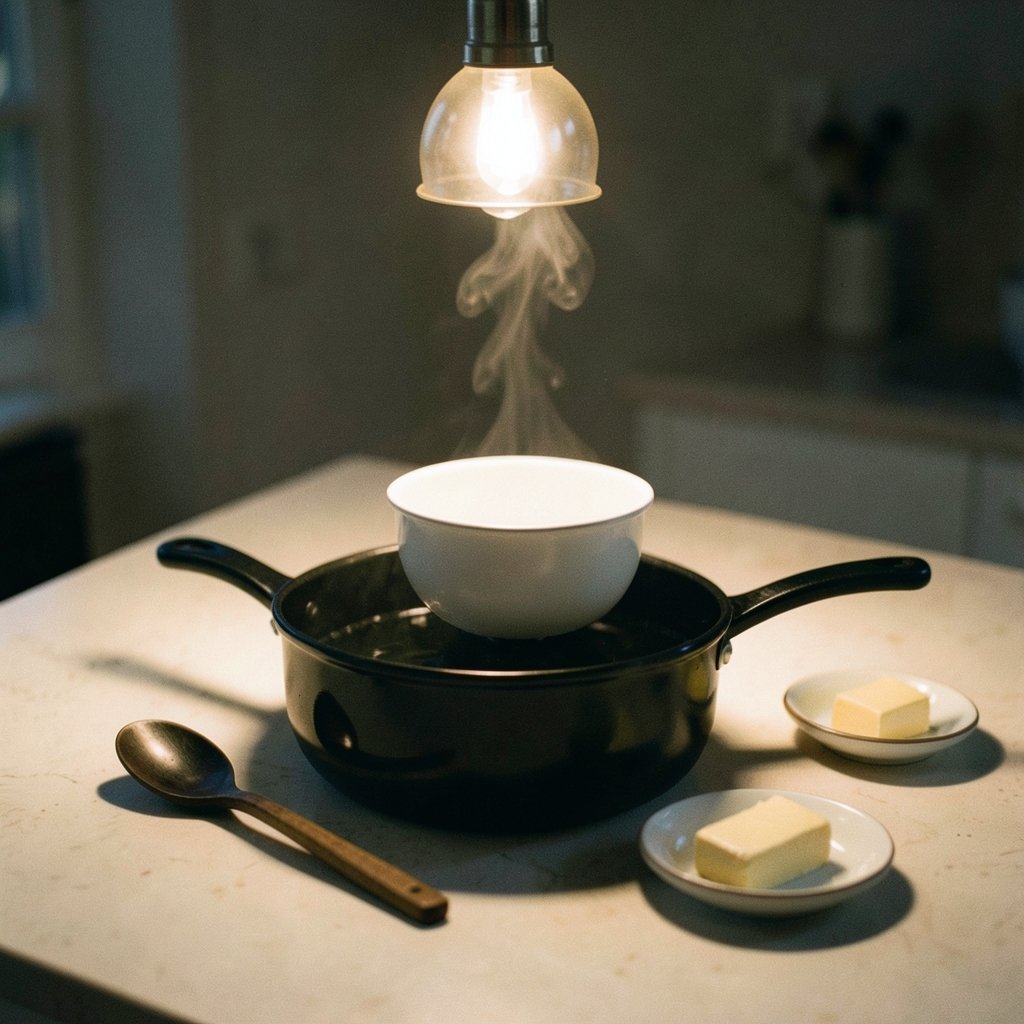
Ever watched chocolate turn from glossy silk to a grainy, chalky lump in about four seconds? That is what direct heat does to delicate ingredients. A double boiler exists to stop that from happening. (Double counter discord bot breach 28 million accounts 2026)
The idea is almost embarrassingly simple. Water boils in a bottom pot. Steam rises. An upper bowl or pot sits in the steam, and whatever is inside it warms slowly, evenly, and gently. The upper vessel never touches the water, and the food never touches the burner. That small gap of steam is the whole trick.
It is one of those kitchen tools that looks like a unitasker but quietly earns its cabinet space. Once cooks understand why it works, they start reaching for it far more often.
How a Double Boiler Works
A double boiler (also called a bain-marie or water bath) has two parts: a lower pot that holds simmering water and an upper bowl or pot that rests above it. Steam from the water heats the upper vessel. Because the upper pot is heated by steam rather than a flame, its contents stay near the boiling point of water, roughly 100 °C (212 °F) at sea level, instead of climbing toward the far hotter surface temperature of a dry pan on a burner. (Safe Minimum Internal Temperature Chart)
That temperature ceiling is the entire point. A dry saucepan on medium heat can easily exceed 150 °C (300 °F) at the base, which is scorch territory for chocolate and enough to curdle a custard. Steam simply cannot get much hotter than boiling water under normal kitchen conditions, so the food inside the bowl is protected by physics rather than by the cook’s reflexes.
The parts, in plain terms
| Part | Job | What to look for |
|---|---|---|
| Bottom pot | Holds simmering water | Sturdy base, snug lid if sold as a set |
| Upper bowl or pot | Holds the food | Base sits above the water line, rim rests on the pot |
| Lid (optional) | Traps heat for slow melting | Fits the upper vessel, not the bottom pot |
Double Boiler vs. Bain-Marie vs. Water Bath
Here is where things get fuzzy, and it is worth knowing before a recipe confuses you. Terminology is not fully standardized. Some sources use double boiler strictly for the nested-pot set sold as a unit, while bain-marie describes the broader water-bath method, including hot-holding trays in restaurants and heated baths in laboratories. A water bath is the same principle applied to baking, as when a cheesecake pan sits inside a larger pan of hot water.
In practice, the three terms overlap so heavily that most cooks treat them as synonyms. If a recipe says “set over a bain-marie,” it means the same gentle steam heat. If it says “water bath,” check the context, because it might mean the oven setup instead.
The one place the distinction matters is food safety and lab work, where “bain-marie” has a specific technical meaning. More on that below.
What You Can Actually Make in One
The double boiler shines whenever an ingredient is more sensitive than the heat source. Common jobs include:
- Melting chocolate for truffles, ganache, and brownies
- Cooking custard for crème anglaise, pastry cream, and ice cream bases
- Whisking hollandaise and béarnaise sauces
- Making lemon curd, lime curd, and fruit curds of every stripe
- Melting butter without browning it
- Softening cream cheese or marshmallows for frostings
- Heating milk for yogurt-making without scalding it
- Tempering eggs in some recipes, though the bowl-and-whisk method usually wins there
It is also handy for warming baby bottles, melting wax for candle-making, and softening honey that has crystallized in the jar.
How to Set One Up, Step by Step
Most kitchens do not need a dedicated double boiler. A heatproof bowl and a saucepan cover nearly every job. Here is the practical sequence that avoids the usual mistakes: (Double vpn do you actually need one)
- Pick a bowl that fits. The bowl’s rim should rest on the saucepan’s rim so steam is trapped but the bowl’s base hangs clear of the water. A bowl that touches the water is just a pot of boiling water with extra steps.
- Add water to the bottom pot. An inch or two is plenty. Too much water means the bowl sits in it; too little means you will run dry mid-recipe.
- Bring the water to a simmer, not a rolling boil. Vigorous boiling splashes water into the bowl and sends steam everywhere. A gentle simmer is all you need.
- Set the bowl on top and add your ingredient. Let the steam do the work. Stir occasionally, and keep a spatula handy.
- Check the water level. If a recipe runs long, top up with hot water from a kettle rather than cold, which drops the temperature and stalls the melt.
- Use oven mitts to lift the bowl. Steam burns are sneaky. The bowl gets hot all the way up the sides.
Common mistakes people make
The biggest one is walking away. Chocolate melts fast once the steam gets going, and a bowl left unattended can overheat at the edges even in a double boiler. The second is skipping the wipe-down: even a drop of water in the bowl can cause melted chocolate to seize, turning stiff and grainy. The third is using a bowl that does not seal against the pot, which lets steam escape and slows everything down.
Double Boiler vs. Microwave vs. Direct Heat
| Method | Best for | Risk | Control |
|---|---|---|---|
| Double boiler | Chocolate, custard, curd, hollandaise | Water in the bowl, steam burns | Very high, gentle and steady |
| Microwave | Quick chocolate melting, small batches | Hot spots, scorching, seizing | Medium, needs short bursts |
| Direct heat | Sauces, soups, anything forgiving | Scorching, curdling, burning | Low for delicate foods |
| Electric melter | Repeated chocolate work | Uneven cheap models | Medium to high |
The microwave is faster and perfectly fine for a bowl of chocolate chips headed into brownies, if you use short bursts and stir between them. Direct heat is fine for a béchamel. But for anything where a few degrees decide success, the double boiler wins.
The Bain-Marie Beyond the Kitchen
The same gentle-heat principle shows up in places most home cooks never think about.
In food service, a bain-marie is the hot-holding water bath on a buffet line. Health agencies describe it as a way to keep already-cooked food hot, and they warn it is not suitable for reheating food or cooking raw food, because it heats too slowly and too unevenly to be safe for that job. That is a useful distinction for anyone planning a party: hold cooked food hot in a water bath, but cook it properly first.
In laboratories and industry, water baths heat substances gently and evenly, including flammable materials, since there is no open flame under the sample. The bain-marie is also the traditional name for the water bath used in alchemy and early chemistry, which is why the term keeps turning up in old texts and technical glossaries.
The recurring theme is control. Whether the goal is melted chocolate or a stable chemical reaction, surrounding a vessel with warm water or steam is a simple way to cap how hot things get.
Choosing a Double Boiler: What Actually Matters
Dedicated double boilers come in stainless steel, enamel, and ceramic sets, and prices range from budget to boutique. A few practical filters cut through the noise.
Fit matters more than brand. The upper pot should nest securely without wobbling. A loose fit means escaping steam and a slow melt.
Check the base. A heavy bottom on the lower pot resists hot spots. Thin stainless can warp over high heat.
Consider how often you will use it. Once a month? A bowl and saucepan are fine. Weekly chocolate work? A dedicated set or an electric melter earns its keep.
Think about cleanup. Chocolate and curd set like cement in narrow seams. Smooth, rounded interiors rinse far more easily.
Skip the gimmicks. Silicone inserts and novelty shapes rarely beat a plain stainless set. Simple tools last.
One more practical note: if the double boiler lives on a gas stove, keep the flame low enough that it never licks up the sides of the bottom pot. A flame creeping around the pot heats the upper bowl directly and defeats the purpose. Electric and induction stoves are more forgiving here, though induction needs a magnetic base on the bottom pot.
Frequently Asked Questions
Can I use a double boiler to reheat leftovers?
No, not safely. A water bath heats too slowly and unevenly to bring cold food through the temperature danger zone quickly. Reheat leftovers on the stovetop or in the microwave until steaming hot, then use a water bath only to keep them hot.
Why did my chocolate seize even though I used a double boiler?
A single drop of water likely got into the bowl. Steam condensation, a damp spoon, or a splash from the pot can all do it. Wipe the bowl completely dry before adding chocolate, keep the water at a simmer rather than a boil, and never cover the bowl with a lid that drips.
Is a double boiler the same as a bain-marie?
Mostly, yes, in home cooking. Strictly speaking, some references reserve “double boiler” for the nested-pot set and use “bain-marie” for the broader water-bath method, including hot-holding and lab use. Definitions vary, so follow the recipe’s intent rather than the label.
Can I make a double boiler with a metal bowl?
Yes, and it works well as long as the bowl is heatproof and its rim rests on the saucepan so steam stays trapped. Stainless steel and heatproof glass are the usual picks. Avoid thin plastic, which can warp, and make sure the bowl’s base does not touch the water.
Do I need a special pot, or will any saucepan work?
Any saucepan with a stable base works, provided you have a bowl that fits its rim. The one thing to avoid is a pot so wide that the bowl sinks into the water. Measure the rim before you start melting.
How much water goes in the bottom pot?
An inch or two is the sweet spot. Enough to keep producing steam for the length of the recipe, but not so much that it touches the upper bowl. Check the level partway through long jobs and top up with hot water if needed.
Conclusion
A double boiler is one of those rare tools whose simplicity is the feature. Two vessels, a gap of steam, and a hard ceiling on how hot the food can get. That ceiling is why chocolate melts without scorching, custard thickens without curdling, and hollandaise holds together instead of breaking.
Most cooks do not need to buy anything. A heatproof bowl, a saucepan, an inch of simmering water, and a little patience cover almost every job. The rest is technique: keep the water at a simmer, keep the bowl dry, and stay nearby while the chocolate melts.
Once that clicks, the double boiler stops being a specialty gadget and becomes a habit. It is the calm, reliable option for the ingredients that punish impatience, and that is a category most kitchens deal with every week.



