
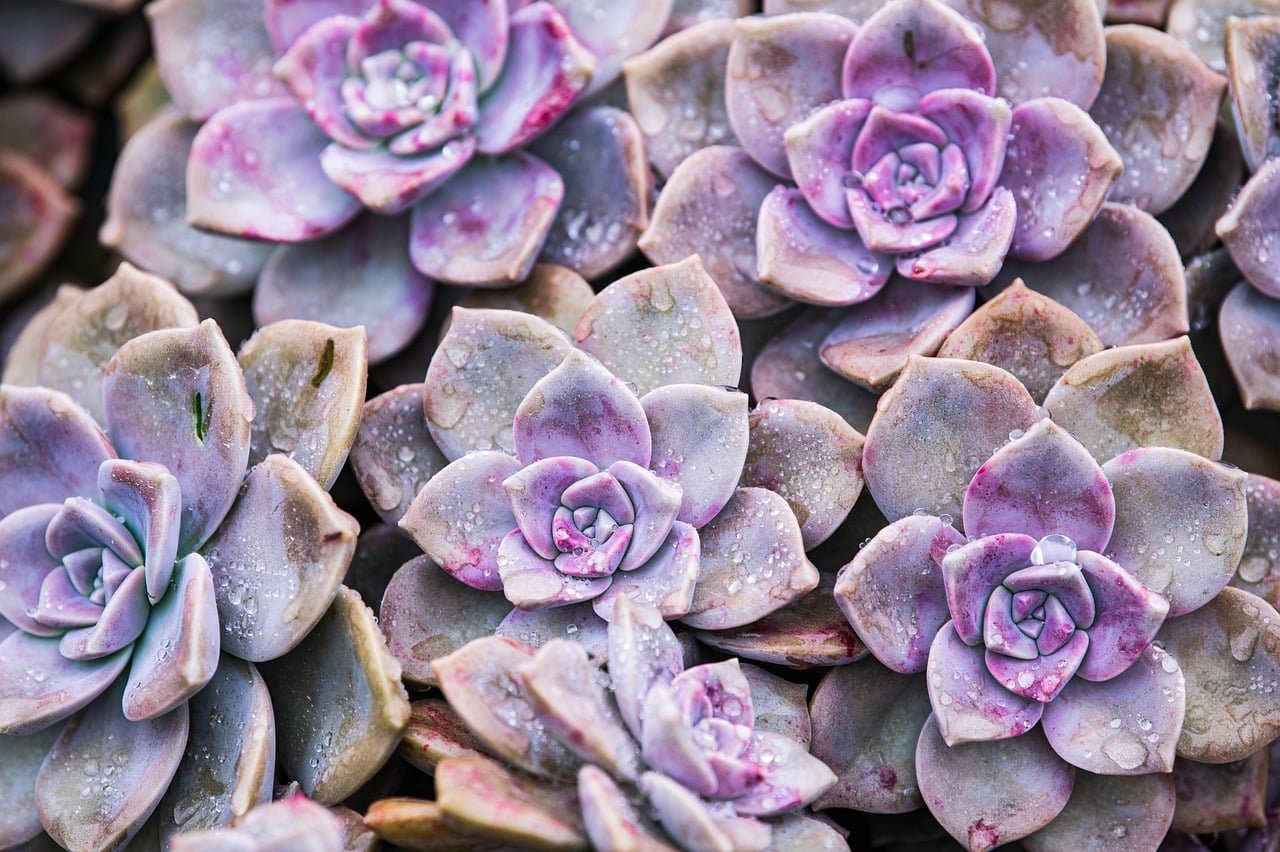
What if the plant everyone calls “impossible to kill” is actually dying of kindness, one gentle splash at a time? That is the strange truth about succulents. Most of them do not fail because their owner forgot them. They fail because their owner watered them the way you would water a fern: a little sip every few days, always keeping the soil a bit damp. For a succulent, that routine is slow torture. The good news is that once you understand how these plants work, watering becomes one of the easiest parts of caring for them. This guide walks through the soak-and-dry method, the signs to read, the pots and mixes that matter, and the mistakes that quietly kill more succulents than any pest ever will.
Why Succulents Play by Different Rules
Succulents store water in fleshy leaves, stems, or roots, which lets them survive long dry spells that would finish off a typical houseplant. Many of them also run on CAM photosynthesis, a water-saving strategy in which the plant opens its leaf pores at night instead of during the heat of the day, cutting moisture loss dramatically. The Crassulacean acid metabolism explainer on Wikipedia covers the full biochemistry if you want the deep version, but the practical takeaway is simple: these plants are built to be wet occasionally and dry most of the time.
That biology has a direct consequence. A succulent sitting in soil that never fully dries stays in a state its roots were never designed for. Roots need oxygen, and waterlogged soil squeezes it out. When that goes on for days, root tissue starts to break down, and rot moves up into the stem. By the time the plant looks sick, the damage is often well advanced.
The Core Method: Soak, Then Dry

The standard approach taught by horticultural institutions and university extension services is what growers call soak and dry. You water thoroughly until moisture runs out of the drainage holes, then you leave the plant alone until the potting mix is nearly dry all the way through. Then you repeat. This cycle mimics the wet-then-dry rhythm of the arid habitats where succulents evolved.
The Missouri Botanical Garden’s plant care resources are a useful reference point for container culture and watering expectations, and they echo the same principle: deep watering followed by a real drying period.
What “Soak” Actually Means
Soaking does not mean flooding the pot until the saucer overflows and stays full. It means applying enough water to moisten the entire root ball, rather than only the top inch. A slow, steady pour over the surface works better than a fast dump, because dry potting mix can become hydrophobic and shed water down the sides of the pot. If water rushes straight through, give it a minute and water again.
What “Dry” Actually Means
Dry means dry. Not “dry on the surface.” Not “dry for the last two days.” Push a finger or a wooden chopstick two or three inches into the mix, or lift the pot and judge its weight. A dry pot is noticeably lighter. For most indoor succulents in a normal room, that full drying cycle takes somewhere between one and three weeks, depending on pot size, mix, light, and humidity. There is no universal number of days, and any article that hands you a fixed schedule is oversimplifying.
How Often Should You Water Succulents?
The honest answer is: less often than you think, and on a rhythm set by the plant rather than the calendar. Growing conditions swing so widely that a fixed interval is almost meaningless. A succulent in a small terracotta pot on a sunny windowsill might dry out in five days. The same plant in a large glazed pot in a dim corner might stay damp for three weeks. (Succulent plant)
| Situation | Typical drying time | Practical approach |
|---|---|---|
| Small terracotta pot, bright light, warm room | 5–10 days | Check weekly; water when fully dry |
| Medium plastic pot, average indoor light | 2–3 weeks | Check every 10 days |
| Large glazed pot, low light, cool room | 3–4 weeks or more | Check every 2 weeks; water sparingly |
| Outdoors in summer heat and wind | 3–7 days | Check often; soak deeply |
| Winter, indoors, most species | 3–6 weeks | Water lightly and rarely |
Treat those ranges as starting points, not rules. The plant and the soil are the authority.
Reading the Plant: Thirst vs. Overwatering
Succulents send clear signals, but the two most common problems look confusingly similar to a beginner. Here is how to tell them apart.
Signs of thirst: leaves look slightly wrinkled, deflated, or less plump than usual; the lowest leaves may feel soft and bendy; the potting mix is dry all the way through. A thirsty succulent usually recovers within a day or two of a proper soak.
Signs of overwatering: leaves turn soft, mushy, and translucent; lower leaves yellow and drop while still plump; the stem feels squishy near the soil line; the mix stays wet for a long time. This is an emergency, not a watering cue. Stop watering, get the plant out of wet soil, and let it dry.
The single most useful habit is to check the soil before the leaves. Leaf wrinkles tell you the plant has already used up its reserves, which is fine. Wet soil tells you the roots are in danger, which is not.
The Mistakes That Actually Kill Succulents
Most succulent deaths trace back to a handful of avoidable errors. These come up again and again in extension guidance and in the experience of anyone who has kept a collection for a few years.
- Watering on a schedule instead of checking the soil. “Every Sunday” is how root rot starts.
- Using a pot with no drainage hole. Water pools at the bottom with nowhere to go. For beginners, drainage is effectively mandatory.
- Planting in ordinary potting soil. Standard mixes hold far too much moisture. A fast-draining cactus or succulent mix, often amended with pumice, perlite, or coarse grit, is the right base.
- Watering the leaves instead of the soil. Water trapped in the center of a rosette, especially indoors with still air, invites rot and fungal problems. Water the mix.
- Leaving the pot sitting in a full saucer. Empty the saucer after watering. A pot that stands in water is a pot that never dries.
- Watering “just a little” every few days. Light, frequent sprinkling keeps roots permanently moist, which is the classic route to rot.
- Panicking and watering a plant that is already rotting. More water makes it worse. When in doubt, wait.
If you keep several plants and want to remove the guesswork, tools help. A cheap moisture meter takes the drama out of the finger test, and if you are the type who worries about hidden drips and spills around plant shelves, a smart leak detector setup that catches water damage early is a reasonable safeguard for the area around a watering station.
Pots, Soil, and Drainage: The Setup Does Half the Work
You can water perfectly and still lose a succulent if the container works against you. Three factors matter most.
Drainage holes. Non-negotiable for anyone starting out. Unglazed terracotta is a forgiving choice because the clay itself wicks moisture and the walls breathe, so the mix dries faster than in glazed ceramic or plastic. If you love a decorative cachepot with no hole, keep the plant in a plastic nursery pot inside it and take it out to water.
Soil mix. The goal is a mix that drains fast but still holds a little moisture. Commercial cactus and succulent blends are formulated for this. Many growers improve them further with extra perlite or pumice. Note that sources genuinely disagree on exact ratios, so treat any recipe as a starting point and adjust based on how fast your pots dry.
Pot size. A pot that is far too large holds a big reservoir of wet soil around a small root system. Size up gradually rather than dropping a small plant into a huge container.
Watering by Season and Species
Succulents are not all the same, and treating them as one group is where blanket advice breaks down. Desert cacti and many members of the Crassulaceae family want long, emphatic dry periods. Some plants sold as succulents, including certain Haworthia and snake plants, tolerate or even prefer more regular moisture. Species, light, temperature, and pot size all shift the answer, so learn the needs of what you actually own.
Season matters just as much. In winter, when light is low and growth slows, most indoor succulents need far less water, often every few weeks to once a month. In summer, actively growing plants in bright light may need a deep soak every week or two. Outdoors in intense heat and wind, some will dry out in days. The principle never changes: water deeply, then wait for dry.
There is a useful parallel with other water-dependent appliances in the home. Just as a coffee maker’s performance depends on the mineral content of the water going in, as this guide to the best coffee maker for hard water that survives and brews well explains, a succulent’s health depends far more on the water regime around its roots than on any single feeding or product. Get the water cycle right and most other problems shrink.
Practical Tips That Make It Easier
A few small habits make succulent watering almost foolproof.
- Water in the morning. Any splashes on the plant have the day to evaporate.
- Use room-temperature water. Cold water on warm roots is an unnecessary shock.
- Water until it runs out the bottom, then stop. That is your signal the whole root ball is wet.
- Empty the saucer within an hour. Standing water defeats the purpose of drainage.
- Skip the misting. Succulents do not need humidity; they need dry air and dry soil between drinks.
- Keep a simple log. A note on your phone about when each pot was last watered and how heavy it felt teaches you your own plants’ rhythm faster than any article can.
- Handle the pot as well as the plant. Weight is the most reliable free moisture test there is.
If you are also managing water quality elsewhere in the house, the same mindset applies: understand what the water is doing, then adjust. That is the logic behind approaches like stopping white dust from a humidifier on hard water, where the fix is about controlling the water rather than fighting the symptoms.
Conclusion
Watering succulents well comes down to one idea repeated in different forms: give a lot, then give nothing. Soak the mix until water runs through the drainage holes, then wait, patiently, until the soil is genuinely dry before you do it again. Read the plant for wrinkles and the soil for moisture. Choose a pot with drainage and a mix that drains fast. Water the soil, not the leaves. Ease off in winter. Do those things and the plant that everyone calls impossible to kill will finally stop proving them wrong. The kindest thing you can do for a succulent is often to leave the watering can where it is.
Frequently Asked Questions
How often should I water my succulents?
There is no fixed schedule. Water when the potting mix is dry all the way through, which indoors usually means every one to three weeks in the growing season and every three to six weeks in winter. Check the soil with a finger, a chopstick, or the weight of the pot rather than counting days.
Should I water succulents from the top or the bottom?
Either works, but top watering until water runs out of the drainage holes is the simplest way to ensure the whole root ball gets wet. Bottom watering, where the pot sits in a shallow tray of water and soaks it up, is a good option for plants with tight rosettes because it keeps leaves dry. Either way, never leave the pot standing in water afterward.
What does an overwatered succulent look like?
Leaves turn soft, mushy, and translucent, often starting at the bottom. They may yellow and drop while still plump. The stem can feel squishy near the soil line, and the mix stays wet for days. This is different from thirst, where leaves look wrinkled and deflated and the soil is bone dry.
Can I save a succulent that has already started to rot?
Sometimes. Remove the plant from wet soil, trim away soft, brown, or black roots and stem with clean scissors, and let the cut end dry and callus for a few days. Then replant in fresh, dry, fast-draining mix and do not water for about a week. If the rot has reached the crown, take healthy leaf or stem cuttings to propagate before discarding the parent plant.
Do succulents need less water in winter?
Yes, generally. Shorter days and weaker light slow growth for most indoor succulents, so they use far less water. Reduce both how often and how much you water, and expect the mix to stay damp much longer. Keep them cooler and drier rather than warm and wet.
Is it better to underwater than overwater a succulent?
Underwatering is almost always the safer mistake. A thirsty succulent typically recovers within days of a good soak, while overwatering damages roots and stems in ways that are often permanent. When you are unsure whether a plant needs water, waiting a few more days is nearly always the right call.



