The best phone for family snapshots is not automatically the best one for concerts, night scenes, or video. A phone can take lovely everyday photos and still struggle when the lights dim, the action speeds up, or your subject sits far away.
This comparison looks at current and older iPhones through the shots you might actually take. A high price does not guarantee the best fit: zoom needs, screen size, battery life, and your budget all shape the value you get.
You will find options for casual photos, longer-distance shooting, and hands-on video, along with choices at different price points. Keep your usual subjects and spending limit in mind as you compare the options.
Key Takeaways
- iPhone 18 Pro and iPhone 18 Pro Max share the strongest camera system.
- Choose a Pro Max for its larger screen, not for better photos than its Pro pair.
- The standard iPhone 17 offers a capable dual-camera system.
- Older Pro models can deliver useful camera features at a lower refurbished price.
- Match telephoto reach and video controls to the subjects you shoot most.
Which iPhone Has the Best Camera for Your Budget?
For the strongest overall iPhone camera, choose either the iPhone 18 Pro or iPhone 18 Pro Max. They have identical camera systems, and CNET rates both 9.3 as its best iPhone cameras in 2026.
The iPhone 18 Pro pair is the top choice when camera performance matters most. Both excel in low light and at night, while Focus Tracking helps keep children, pets, and other moving subjects in focus.

The iPhone 18 Pro gives you the same camera system in a smaller phone. If screen size and easy handling matter more than extra battery capacity, that can be the better fit. The Pro Max suits you if you prefer its larger display and longer battery life.
The iPhone 17 Pro is a strong used alternative when camera capability matters more than owning the newest model. It gives you a Pro camera system without paying for the latest generation.
If your photos are mostly everyday daylight shots, you may not need a Pro. The standard iPhone 17 costs less and has a strong dual-camera setup for common scenes.
For a wider look at screen size, camera features, and battery needs, compare these iPhone picks for different budgets. If your photos are mostly everyday snapshots, compare the standard iPhone 17 before paying for a Pro.
Which camera features make the biggest difference?
A camera’s lens options and image processing usually matter more to your photos than a headline megapixel count. The useful question is how each camera handles your framing, light, and subject.
A higher megapixel count alone does not promise better low-light photos. Lens quality, image processing, and how much light reaches the sensor also shape the result.
Main and front cameras in everyday shooting
The main camera handles most everyday shots, from family meals to street scenes. An ultra-wide camera fits more of a room or landscape into the frame, while the selfie camera captures you and the people beside you.
The iPhone 17 Pro shows how a front camera can offer flexible framing. Its square 24-megapixel sensor creates 18-megapixel landscape or portrait crops, so you can change the frame without turning the phone.
Optical telephoto versus a sensor crop
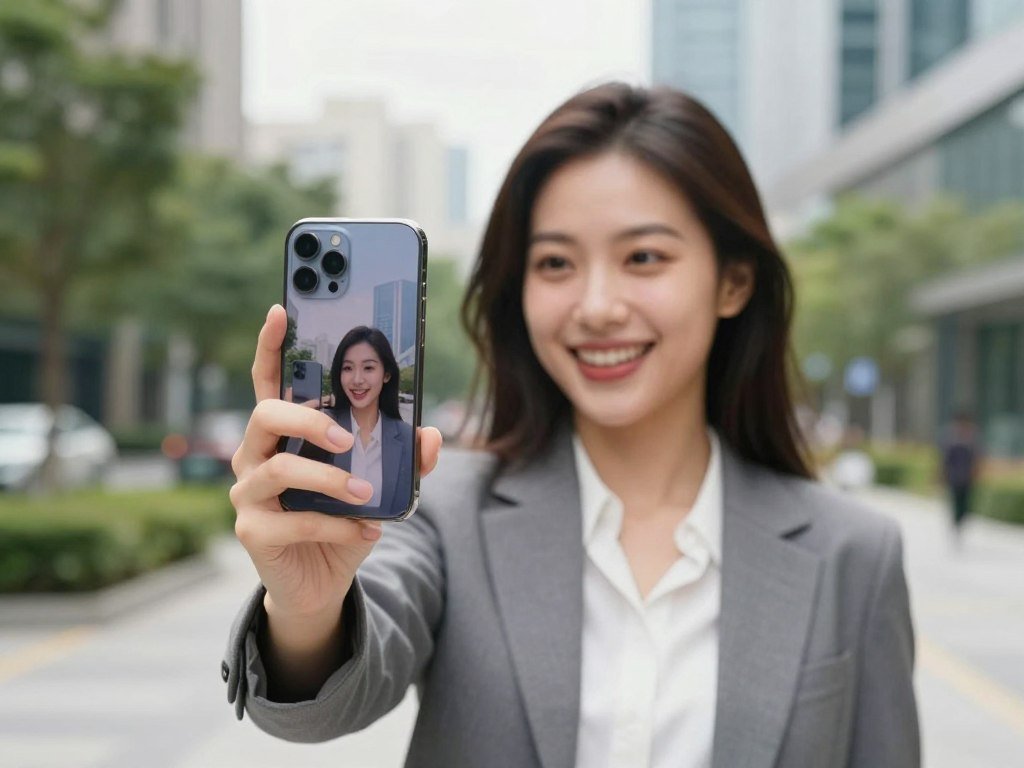
A dedicated telephoto lens brings distant subjects closer through a separate physical lens. A center crop uses the middle of a high-resolution sensor to create a tighter-framed image without a separate telephoto lens.
A center crop works well when you want to tighten the frame a little. It does not add a physical lens, and a deep crop can show less detail than a dedicated telephoto camera.
Variable aperture and manual controls
Variable aperture changes how much light enters the lens. It also changes how much of the scene appears in focus, giving you more control over the look of a shot.
The iPhone 18 Pro and iPhone 18 Pro Max offer variable aperture, manual camera controls, and focus tracking. Manual controls let you make hands-on choices about a shot instead of leaving every setting to automatic processing.
These features matter most when you want to shape light, focus, or framing with care. Match the feature to the shot you actually take, rather than paying for a specification you will rarely use.
How do the top iPhone cameras compare?
A useful shortlist starts with the most versatile camera systems, then weighs older Pro models against newer standard models. The top five below also answers the shorter shortlist request, while all ten picks show where older phones still fit.
This ranking measures camera flexibility, not lab scores. A standard iPhone may still make more sense if you rarely use telephoto.
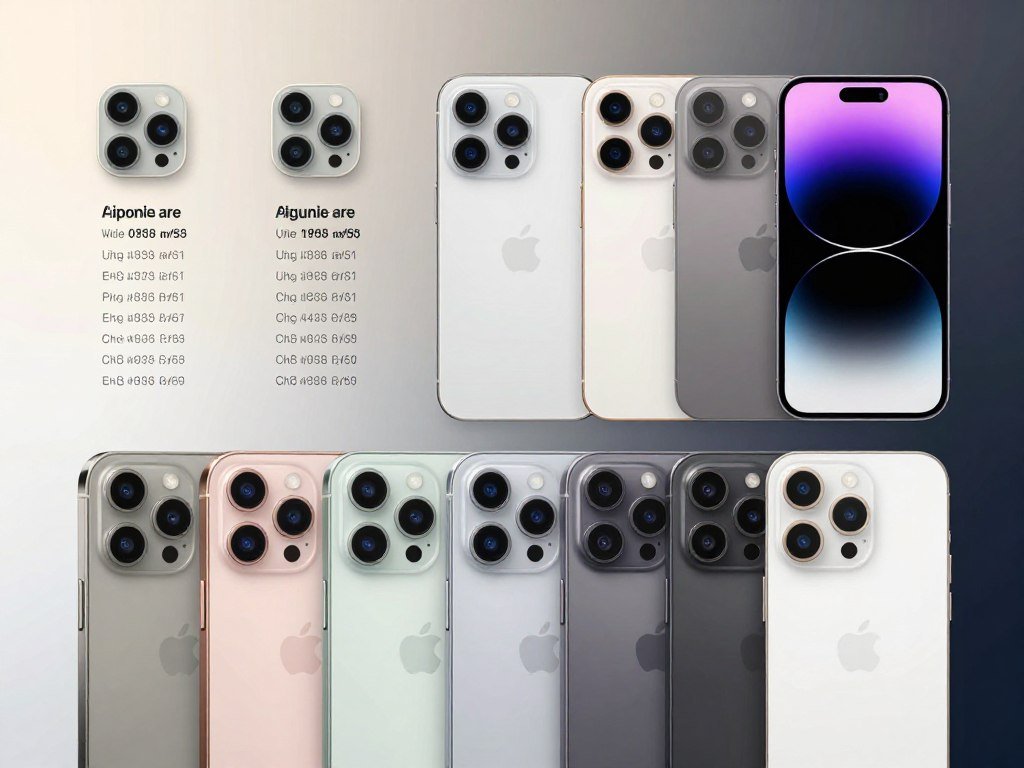
- iPhone 18 Pro: Newer controls and a versatile three-camera system.
- iPhone 18 Pro Max: The same camera system with a larger screen.
- iPhone 17 Pro: Three rear cameras with well-matched color and smoother lens changes than earlier models.
- iPhone 17 Pro Max: Pro camera flexibility in the larger Pro Max body.
- iPhone 16 Pro: A 5x telephoto and a strong main and ultra-wide camera setup.
- iPhone 16 Pro Max: The same camera setup as the 16 Pro in a larger phone.
- iPhone 15 Pro Max: A 5x telephoto camera gives it longer optical reach.
- iPhone 14 Pro: A 48-megapixel main camera and dedicated telephoto offer an older Pro setup.
- iPhone 17: Its dual rear cameras take strong photos without a Pro price.
- iPhone 13 Pro: A lower-cost older Pro with three rear cameras and 3x optical zoom.
The iPhone 17 Pro’s three rear cameras produce well-matched colors and color temperatures. Transitions between its lenses also look smoother than on earlier models.
The standard iPhone 17 is a sensible pick if you mostly use the main camera and rarely need distant framing. Treat the ranking as a guide to camera flexibility, not as a promise that every shot will look better on a Pro.
Does the Pro Max take better photos than the Pro?
The Pro Max is not automatically the better camera, since the iPhone 18 Pro and Pro Max share the same camera system. Screen size, handling, and price are the main reasons to choose between them.
Pay extra for the larger phone only if its screen and battery benefits suit you. In 2026, the iPhone 18 Pro lists at $1,199 and the Pro Max at $1,299.
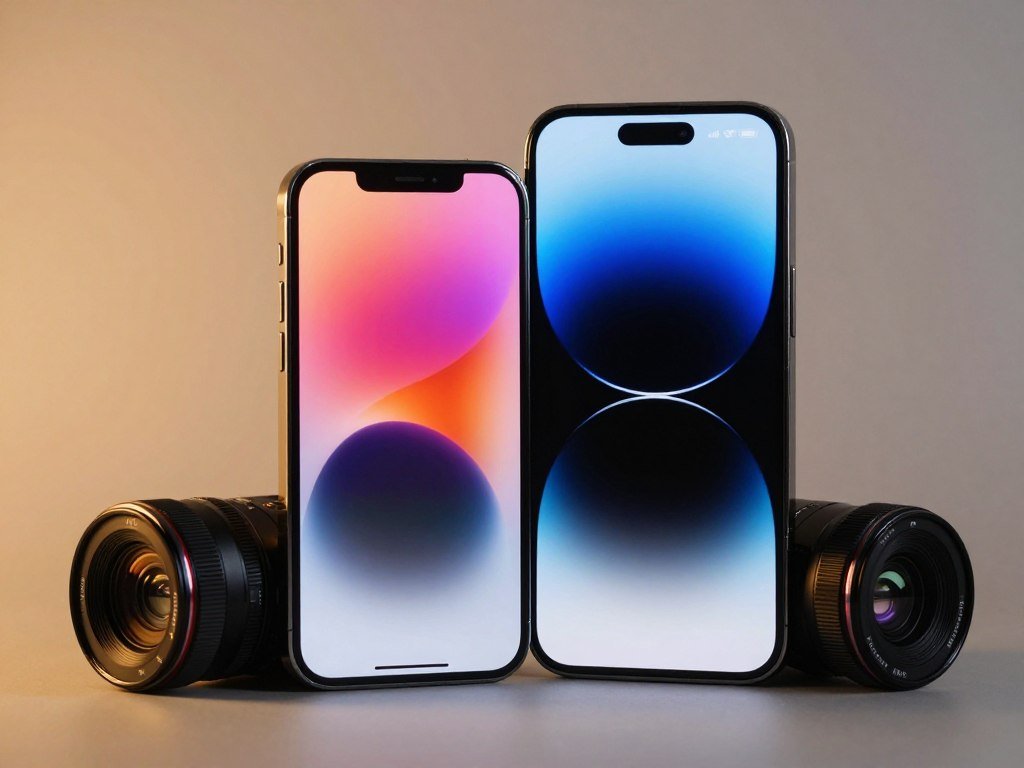
iPhone 18 Pro and iPhone 18 Pro Max
Both models have the same camera system, so their photo quality does not change with the size. The 6.3-inch Pro is easier to handle for some people, while the 6.9-inch Pro Max gives you more screen space.
If you are weighing display size and camera features together, compare the iPhone 18 Pro and Pro Max before deciding. The larger screen can help when framing or reviewing a shot, but it does not add a camera advantage.
The iPhone 16 Pro camera choice
The iPhone 16 Pro and iPhone 16 Pro Max are the strongest camera options in that family. Both offer 5x telephoto capability, and the Max is not a camera-quality upgrade over the smaller Pro.
The iPhone 16 Pro Max has a 48-megapixel main camera, a 48-megapixel ultra-wide camera, and a 12-megapixel 5x telephoto camera. Its larger body changes the screen experience, not the shared camera setup.
| Model | Rear camera setup | Telephoto | Camera difference by size |
|---|---|---|---|
| iPhone 18 Pro | 48MP main, ultra-wide, and telephoto | 4x optical | Same system as Pro Max |
| iPhone 18 Pro Max | 48MP main, ultra-wide, and telephoto | 4x optical | Same system as Pro |
| iPhone 16 Pro | 48MP main, 48MP ultra-wide, 12MP telephoto | 5x | Same system as Pro Max |
| iPhone 16 Pro Max | 48MP main, 48MP ultra-wide, 12MP telephoto | 5x | Same system as Pro |
Pay the larger-model premium only if its screen and battery benefits matter to you.
Is the iPhone 17 camera better than the iPhone 16?
The iPhone 17 has the stronger standard-model camera, especially if you use the ultra-wide lens or crop to 2x. Its higher-resolution ultra-wide and improved-looking 2x crop make it the better camera choice for most standard-model buyers.
Neither the iPhone 17 nor the iPhone 16 has a dedicated telephoto lens. The iPhone 17’s 2x crop looks better in a reviewer comparison, with improved image processing credited for the difference.

The ultra-wide and 2x crop
The iPhone 17 has a 48-megapixel ultra-wide camera, compared with 12 megapixels on the iPhone 16. That gives you more detail to work with when you photograph a wide room, group, or landscape.
A 2x crop tightens the view without adding a telephoto lens. The iPhone 17’s processing makes those cropped shots look noticeably better than the iPhone 16’s in the comparison.
Storage and battery comparison
The iPhone 17 starts with 256GB of storage, while the iPhone 16 starts with 128GB. More starting space can help if you keep many photos and videos on your phone.
In the same three-hour streaming test, the iPhone 17 battery fell from 100% to 89%; the iPhone 16 fell to 86%. This measures video streaming, not camera shooting or battery life during a photo session.
| Comparison | iPhone 17 | iPhone 16 |
|---|---|---|
| Ultra-wide resolution | 48 megapixels | 12 megapixels |
| Base storage | 256GB | 128GB |
| Battery after three-hour streaming test | 89% | 86% |
In 2026, the iPhone 17 lists at $929 and CNET names it its best iPhone overall. If your current iPhone 16 already covers your everyday shots, the upgrade is less compelling than the specification gap suggests.
Which older iPhone Pro is the best camera value?
A refurbished iPhone 14 Pro is the best balance of camera capability and price for many budget-minded buyers. It combines a 48-megapixel main camera with a dedicated telephoto lens at a lower cost than a current Pro.
The 14 Pro is the best balance in the listed refurbished range, while the 13 Pro costs less. Choose the 15 Pro Max instead if you need its 5x telephoto reach.
iPhone 15 Pro Max for 5x reach
The iPhone 15 Pro Max suits buyers who want longer optical reach in an older Pro. It was the first iPhone with a tetraprism 5x telephoto camera.
The smaller iPhone 15 Pro has a 3x telephoto camera, so the Pro Max is the better fit when you often frame distant subjects. The main camera sensor and lens have stayed the same across the iPhone 15 Pro, 16 Pro, and 17 Pro.
iPhone 14 Pro for a 48MP main camera
The iPhone 14 Pro is a strong refurbished choice if you want a high-resolution main camera and a dedicated telephoto. It has a 48-megapixel main camera, 12-megapixel ultra-wide and telephoto cameras, and 3x maximum optical zoom.
In 2026, refurbished iPhone 14 Pro models typically sit in the $400-$500 range. The iPhone 17 Pro also shares its 48-megapixel ultra-wide camera with the iPhone 16 Pro, while its main camera sensor and lens match the 16 Pro’s.
iPhone 13 Pro for a lower refurbished price
The iPhone 13 Pro has 12-megapixel main, ultra-wide, and telephoto cameras, plus 3x maximum optical zoom. It gives you a three-camera Pro layout at a lower price, and refurbished models often cost under $400 in 2026.
| Model | Main and ultra-wide cameras | Telephoto | 2026 refurbished price condition |
|---|---|---|---|
| iPhone 15 Pro Max | Main and ultra-wide cameras | 5x optical | Under $700 in most U.S. sales channels |
| iPhone 14 Pro | 48MP main, 12MP ultra-wide | 12MP, 3x optical | $400-$500 |
| iPhone 13 Pro | 12MP main and ultra-wide | 12MP, 3x optical | Often under $400 |
Compare condition and storage before treating a refurbished asking price as a like-for-like deal.
Which iPhone is best for concerts and long-distance zoom?
For concerts and distant subjects, prioritize a dedicated telephoto lens over relying on a deep digital crop. An iPhone 17 Pro model offers the greatest cited zoom reach, while the iPhone 15 Pro Max gives you a lower-cost refurbished route to 5x.
For a show from far back, choose 5x or greater reach when you can. The iPhone 17 Pro has a 48-megapixel telephoto sensor, 56% larger than the prior telephoto sensor.
Center-crop imaging can create 12-megapixel images at 8x “optical quality” zoom on the iPhone 17 Pro. That can help when you cannot move closer, but it is not the same as having a dedicated lens for every level of zoom.
- Concerts or sports from farther back: prioritize 5x or greater reach.
- Pets and events at moderate distances: consider a 3x lens.
- Portraits and everyday framing: a 2x crop can be useful.
Lighting, stage distance, and subject movement all affect the result. A dark venue or fast-moving performer can make even a strong zoom system work harder.
Digital zoom cannot preserve the same detail as a dedicated telephoto lens. Check the exact Pro or Pro Max model before buying, because telephoto reach differs between generations and sizes.
Which iPhone is best for video and Cinematic mode?
Choose an iPhone 18 Pro if you want the most extensive manual controls for Cinematic video. Cinematic mode keeps a video subject in focus while blurring the foreground and background.
You can adjust or remove the Cinematic focus and blur effect later in Photos. The available controls vary by model, so a familiar mode name does not mean every iPhone records it the same way.
Cinematic focus and editing
Cinematic mode shifts focus to keep attention on a person or object. The effect can make a clip feel more like a film scene than ordinary video.
After recording, open the clip in Photos to change the focus or reduce the blur. You can also remove the effect if it does not suit the scene.
Recording controls and supported models
iPhone 18 Pro models and iPhone Duo can add the Cinematic effect to eligible footage recorded in Video mode with the Main camera. That differs from recording directly in Cinematic mode.
On the iPhone 18 Pro models, manual controls include shutter speed, lens aperture, white balance, and a histogram. You can also adjust depth and exposure while recording.
The iPhone 15 Pro, iPhone 16 Pro, iPhone 17 Pro, iPhone 18 Pro, and iPhone Duo support 2x zoom during Cinematic recording. Focus tracking and variable aperture add further control on the iPhone 18 Pro and Pro Max.
Choose an 18 Pro for the broadest hands-on control, not just the blurred-background look. If you only share unedited clips, decide whether those extra controls are worth carrying and paying for.
What is the cheapest iPhone with a good camera?
The iPhone 17E is the cheapest current iPhone, but its single rear camera is a real limit for photography. It starts at $799 in 2026 and has no ultra-wide camera.
Choose the iPhone 17E only if one rear camera covers your usual framing. It also lacks Cinematic video mode and has a 60Hz display.
- iPhone 17E: the lowest current starting price, with one rear camera.
- iPhone 17: a more versatile dual-camera setup.
- Refurbished iPhone 13 Pro or 14 Pro: older Pro camera features for buyers open to used phones.
The standard iPhone 17 costs more than the 17E, but its extra ultra-wide camera gives you more framing choices. That difference matters for group shots, tight rooms, and broad views.
The iPhone Air is not a camera-value pick just because its design is thin. Its single rear camera offers neither an ultra-wide nor a dedicated telephoto camera, and it lists at $1,099 in 2026.
For a camera-first buyer, an older refurbished Pro may offer more lens options than a new entry-level phone. Choose the lowest price only if the missing ultra-wide and video features will not affect your usual shots.
What should you check before buying a used iPhone camera?
Test each lens and focus behavior yourself instead of relying on listing photos to judge a used iPhone camera. Hands-on checks can reveal faults that a clean product photo hides.
Do not keep a phone with a blurry, shaky, or visibly damaged camera. Buzzing, rattling, or a shaky preview can point to a stabilization fault.
- Tap through every available camera lens and check that each one focuses.
- Inspect the lens covers for scratches or chips that may cause haze or flare.
- Record a short video, then test Portrait and Night modes.
- On iPhone 12 and later, open Settings > General > About and review Parts and Service History for camera replacement details.
The iPhone 18 Pro’s variable-aperture camera has a moving part. Step through its aperture settings and watch for a smooth change as you test that model.
Do not keep a device with a blurry, shaky, or visibly damaged camera until the seller has addressed the fault.
Conclusion
The right pick is the one whose lenses and video features match the way you actually shoot. The iPhone 18 Pro or Pro Max suits you best for the strongest camera system; the iPhone 17 is a capable standard model.
An older Pro can give you more camera features for a lower refurbished price. Your next step is to decide whether you need an ultra-wide, telephoto, or manual video controls, then compare the exact model and condition before buying.
Choose the model that covers your most common shots, then verify its condition and storage before checkout.
FAQ
Which version of iPhone has the best camera quality?
The iPhone 18 Pro and iPhone 18 Pro Max tie for the best iPhone camera quality in 2026, with the same camera system and a 9.3 rating. Choose between them by screen size, handling, and battery needs, not photo quality. The smaller Pro is easier to carry, while the Pro Max gives you a larger display.
Is the iPhone 17 camera better than the 16?
Yes, the standard iPhone 17 has a better camera setup than the standard iPhone 16. Its ultra-wide camera has 48 megapixels, compared with 12 megapixels on the iPhone 16. The iPhone 17 also produces improved-looking 2x crop shots. Neither standard model has a dedicated telephoto lens, so the 2x view comes from cropping.
Which iPhones have Cinematic mode?
The iPhone 15 Pro, iPhone 16 Pro, iPhone 17 Pro, iPhone 18 Pro, iPhone 18 Pro Max, and iPhone Duo support 2x zoom while recording in Cinematic mode. The iPhone 18 Pro models and iPhone Duo can also add the Cinematic effect to eligible Video-mode footage from the Main camera. These are different recording options.
Is 2x zoom optical on the standard iPhone 17?
No, 2x zoom on the standard iPhone 17 is not optical zoom from a dedicated telephoto lens. The phone crops the high-resolution sensor to create a tighter view. Its image quality can look strong, but lighting and image processing affect the result. For distant subjects, a model with a dedicated telephoto lens offers a different tool.
Can you change the Cinematic effect after recording?
Yes, you can adjust or remove the Cinematic effect after recording in the Photos app. The effect keeps a subject in focus and blurs the foreground or background, but you can change the focus or reduce the blur later. That gives you room to fix a focus choice that did not suit the final clip.
Should I choose iPhone 17E or iPhone 17 for better camera flexibility?
Choose the iPhone 17 for better camera flexibility because it adds a 48-megapixel ultra-wide camera. The iPhone 17E is cheaper, but its single rear camera cannot take an ultra-wide view. If you mostly take standard photos and rarely need a wide frame, the 17E may still cover your needs.