
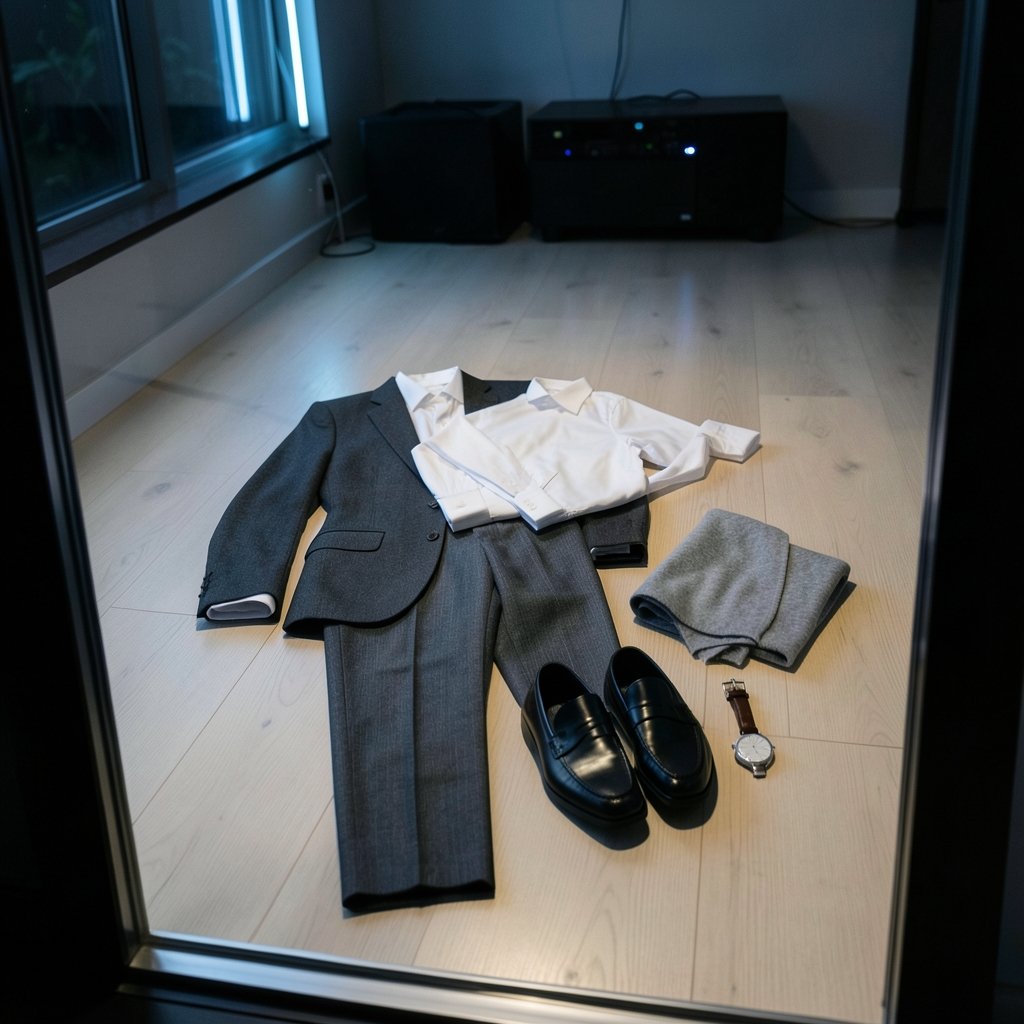
What makes a man in a plain navy blazer and grey trousers look expensive, while another man in a logo-covered outfit worth five times as much looks like he is trying too hard? That question drives the old money style trend, and the answer is less about money than most people think. (Identity threat detection really costs where money goes)
The look has become one of the most searched menswear aesthetics of the past few years. It is also one of the most misunderstood. This guide breaks down what the style actually is, where it came from, what to buy, and which mistakes give the whole thing away.
What Old Money Style Actually Is
Old money style is a fashion-media label for a specific visual language: muted colors, natural fabrics, quiet fit, and almost no visible branding. It is often grouped with quiet luxury and stealth wealth, two phrases that spread through fashion and business press around 2022 and 2023.
Here is the important caveat. The term describes an aesthetic, not a documented dress code of wealthy families. No peer-reviewed study shows that people with inherited wealth dress in a particular way. The style is a cultural idea, popularized by television and trend coverage, and it borrows heavily from older, real clothing traditions.
Those traditions are worth knowing, because they explain why some outfits read as “old money” and others read as costume. (Gift card scam works victims rarely get their money back)
The Ivy League Connection
The clearest ancestor of today’s look is Ivy style, which emerged at Northeastern American universities in the early and mid-twentieth century. Button-down Oxford shirts, khakis, penny loafers, natural-shoulder jackets, and wool crewnecks all came from that world. The preppy culture that followed turned those campus clothes into a broader American uniform.
One concrete garment worth knowing is the sack suit: a jacket with a natural shoulder line and no front darts, cut straight through the body. It is a genuinely different construction from British structured tailoring, which builds in a shaped chest and a nipped waist. When people say a jacket looks “relaxed but correct,” they are often describing the sack silhouette without knowing its name.
The Sociology Behind It
There is a classic theoretical frame for why status dressing works at all. Thorstein Veblen, writing in 1899, argued that clothing functions as visible proof of wealth and leisure, and that people imitate the dress of those above them in status. His book, The Theory of the Leisure Class, introduced the idea of conspicuous consumption and remains the standard reference for anyone thinking seriously about dress and class.
Veblen’s argument helps explain the paradox at the center of this style. If the goal is to signal that you do not need to signal, then loud logos fail by definition. Quiet clothes succeed because they imply the wearer has nothing to prove.
Why the Trend Exploded

Television did a lot of the work. The HBO series Succession, which ran from 2018 to 2023, put understated luxury dressing in front of millions of viewers, and fashion coverage spent the following years dissecting it. Around the same time, brands known for logo-free, high-quality basics saw a surge of attention in business press.
That coverage is worth reading carefully. Most of it is brand marketing journalism, not evidence about how wealthy people actually dress. A story about a cashmere brand avoiding logos is a story about a company’s positioning. It is not a study of class behavior.
The practical takeaway for a man building a wardrobe is simpler than the trend discourse suggests. The aesthetic works because the underlying clothing rules are old, sensible, and easy to copy at almost any budget.
The Core Rules That Make It Work
Strip away the marketing and five principles do most of the heavy lifting.
| Principle | What It Looks Like | What It Replaces |
|---|---|---|
| Muted color | Navy, charcoal, olive, cream, brown, mid-grey | Bright primaries, neon, large prints |
| Natural fiber | Wool, cotton, linen, cashmere, leather | Shiny synthetics, technical fabrics |
| No visible logos | Blank chest, no monograms, small or hidden labels | Branded graphics, monogram prints |
| Relaxed tailoring | Clean shoulder, slight room in the body, correct sleeve length | Skin-tight cuts, oversized slouch |
| Fewer, better items | A small rotation worn often | A large rotation worn rarely |
None of these rules require money. All of them require attention. That is the honest core of the style: it rewards fit, fabric knowledge, and restraint, which are free, rather than spending, which is not. (Cbdc digital currency central bank money going digital)
Building the Wardrobe, Item by Item
A workable starting wardrobe is shorter than most men expect. The goal is a set of pieces that all combine with each other, so getting dressed takes thirty seconds.
- Two pairs of trousers. One mid-grey wool, one stone or khaki cotton. Flat front, straight or slightly tapered leg, hem breaking just at the shoe.
- Three shirts. Two Oxford button-downs in white and light blue, one plain white poplin for dressier days.
- One navy blazer. Natural shoulder, half-lined if possible, patch pockets for a more casual feel.
- One grey or navy wool suit. This is the anchor piece. Buy it once, fit it properly, and it will outlast three cheap suits.
- Two knitwear pieces. A navy or oatmeal crewneck in lambswool, plus a fine-gauge turtleneck for winter.
- One pair of leather shoes. Brown derbies or penny loafers cover most situations. Black Oxfords only if you genuinely need formality.
- One overcoat. A camel or charcoal wool coat, knee length, worn over everything.
That is roughly a dozen items. It will handle work, dinners, weddings, and weekends. Most men own far more and wear far less.
Where to Spend and Where to Save
The money question comes up constantly, and the answer is not intuitive. Spend on the items closest to the body and hardest to fake: shoes, tailoring, and outerwear. Save on shirts, knitwear, and trousers, where the gap between a good mid-priced option and a luxury one is smaller than the price difference suggests.
A well-fitted blazer from a mid-range brand will look better than a poorly fitted designer one every single time. This is not a platitude. It is the single most reliable rule in menswear, and it is why the aesthetic reads as expensive even on a modest budget.
If cost planning is part of your broader financial picture, the same discipline applies elsewhere. Budgeting for a wardrobe is not so different from other planned expenses, whether that is a major life event or a long-term purchase; the practical guide to choosing a wedding venue that saves money and stress makes a similar point about planning ahead rather than improvising under pressure.
Common Mistakes That Ruin the Look
Most failed attempts at this style fail in predictable ways. Here are the ones that show up again and again.
Buying the label instead of the fit. A logo-free jacket that does not fit is still a jacket that does not fit. Get the shoulders right first, then tailor everything else.
Overdoing the accessories. A signet ring, a watch, a pocket square, a tie bar, and a scarf at once reads as costume. Pick one or two.
Confusing “relaxed” with “oversized.” The style is comfortable, not sloppy. Trousers should stay up without a belt. Sleeves should end at the wrist bone.
Ignoring the shoes. Worn, square-toed, or overly casual shoes undo an otherwise clean outfit faster than anything else. Keep leather clean and rotate pairs so they last.
Wearing the wrong season. Linen in December and heavy flannel in July both look off, no matter how good the garment is.
Treating it as a uniform. The aesthetic is a set of principles, not a costume. It should look like the wearer got dressed, not like he assembled a look from a mood board.
Old Money Style vs. Other Aesthetics
It helps to see the style next to its neighbors, because the boundaries are often blurry in practice.
| Style | Signature | Main Difference |
|---|---|---|
| Old money / quiet luxury | Muted colors, no logos, natural fabrics | Restraint is the point |
| Preppy | Bright colors, critter prints, boat shoes | Louder and more playful |
| Streetwear | Logos, sneakers, oversized fits | Branding is the point |
| Business formal | Dark suits, ties, structured tailoring | More rigid and formal |
| Minimalist | Monochrome, clean lines, few textures | Less emphasis on classic garments |
The closest relative is preppy, and the split is mostly about volume. Preppy turns up the color and the pattern. Quiet luxury turns it down.
Practical Tips That Actually Work
A few habits separate men who wear this style well from men who merely buy the clothes.
Tailor everything, even cheap items. A twenty-dollar hem and a fifteen-dollar waist adjustment transform how a garment hangs. Find a local tailor and use them regularly.
Learn two fabric names. Knowing the difference between worsted wool and flannel, or between cotton poplin and oxford cloth, will improve your shopping more than any trend article.
Build in one color family first. Navy, grey, and white combine endlessly. Add brown and olive once the base works.
Buy slowly. The aesthetic rewards patience. A wardrobe assembled over two years will fit better and last longer than one bought in a weekend.
Check the details. Loose threads, plastic buttons, and visible lining pulls all read as cheap. Small repairs are cheap and worth doing.
Technology is changing how people shop and research, and it is worth being clear-eyed about it. Tools can help you compare fabrics or plan purchases, but they cannot judge fit. If you use AI assistants for research or writing, the same care applies as anywhere else; there are established conventions for how to cite AI tools in academic work without breaking style rules, and the principle of verifying before trusting carries over to shopping advice too.
Does Any of This Reflect Real Wealth?
This is the question the trend coverage rarely asks directly, and it deserves a straight answer.
Old money as a social category means inherited wealth and established family networks. Old money style means an aesthetic. They are not the same thing, and conflating them is the most common error in lifestyle writing on the subject.
There is no empirical evidence that wealthy families dress in a uniform way. What exists is a long tradition of status dressing, described theoretically by Veblen and observed in countless cultural settings, plus a fashion industry that has learned to sell restraint as a product.
That does not make the style worthless. It makes it honest. The clothes are comfortable, durable, and versatile. They age well. They do not go out of fashion because they were never really in it. Those are good reasons to dress this way, and none of them require pretending to be someone you are not.
Conclusion
Old money style for men is less mysterious than the trend coverage makes it sound. It is a set of old clothing rules, borrowed from Ivy League campuses and traditional tailoring, dressed up in new marketing language. The core is simple: muted colors, natural fabrics, no visible logos, relaxed but correct fit, and a small wardrobe worn well.
The style rewards attention over spending. Get the shoulders right, learn what your fabrics are, buy fewer things, and tailor what you own. Do that, and the look takes care of itself, whatever your bank balance happens to be.
Frequently Asked Questions
What is old money style for men?
It is a fashion aesthetic built on muted colors, natural fabrics like wool and cotton, minimal branding, and relaxed but well-fitted tailoring. The term became popular in fashion media around 2022 and 2023, often grouped with quiet luxury and stealth wealth. It describes a look, not an actual dress code followed by wealthy families.
Do you need to be rich to dress this way?
No. The style depends more on fit, fabric choice, and restraint than on price. A mid-priced blazer that fits well will look better than an expensive one that does not. Spending priorities should go to shoes, tailoring, and outerwear, while shirts and knitwear can come from more affordable brands.
What are the key items in an old money wardrobe?
A navy blazer, a grey or navy wool suit, Oxford shirts in white and light blue, grey wool and khaki cotton trousers, a lambswool crewneck, brown leather shoes, and a wool overcoat. Roughly a dozen pieces cover most situations and combine with each other easily.
How is old money style different from preppy style?
They share the same Ivy League roots, but preppy turns up the color, pattern, and playful accessories, while old money style turns them down. Preppy includes critter prints and bright pastels; the quieter aesthetic sticks to navy, grey, cream, olive, and brown.
What are the biggest mistakes men make with this style?
Buying for the label instead of the fit, overloading on accessories, confusing relaxed with oversized, neglecting shoes, and wearing the wrong fabrics for the season. Another common error is treating the aesthetic as a rigid uniform rather than a set of principles to adapt.
Is old money style still in fashion?
The trend cycle around the term has cooled since its peak, but the underlying clothing rules are old and stable. Classic items like the sack suit, the Oxford shirt, and the penny loafer have survived decades of trend changes. That durability is the main argument for building a wardrobe around them.



