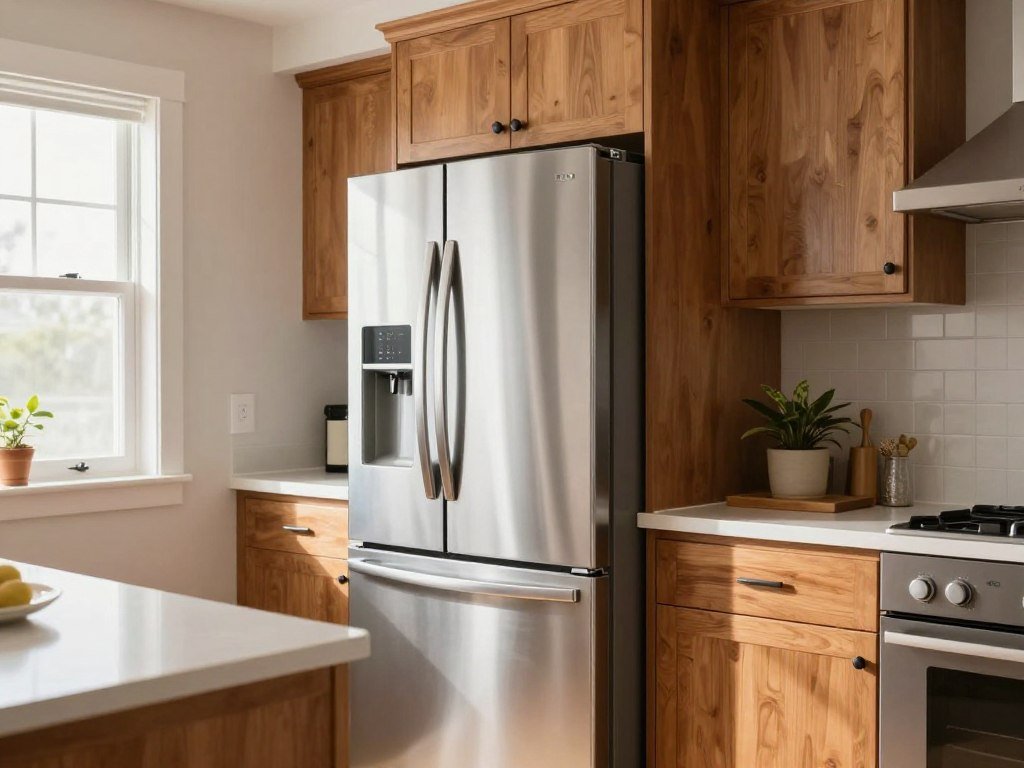
A refrigerator that sits closer to kitchen cabinets can make a tight layout feel more considered, but the right choice still has to fit your storage needs. Your kitchen may call for a closer fit, more room for groceries, or daily features that save time. Food-preservation performance matters, too. The best counter depth refrigerator depends on which tradeoffs work for your home, not just how the appliance looks. The Bosch B36CT80SNS is a specifications-based pick for shoppers who want a French-door layout and ENERGY STAR certification. That makes it a useful option to compare, not a claimed winner in lab testing. A good choice should suit your space and the way your household shops, cooks, and stores food. Start by deciding which matters most in your kitchen: a closer fit, more usable storage, or the features you will use every day.
Key Takeaways
- Measure the opening and door clearance before choosing a model.
- Compare fresh-food and freezer space with your shopping habits.
- Choose a configuration that suits your kitchen routine.
- Check the exact model’s ice setup and efficiency label.
- Use model-level ratings to compare performance and reliability.
How Do Counter-Depth Refrigerator Dimensions Fit Your Kitchen?
Yes, some counter-depth refrigerators measure as little as 24 inches deep, while kitchen cabinets are typically 24 inches deep before the countertop overhang. That number alone does not show how far the refrigerator will project, since doors and handles add depth.
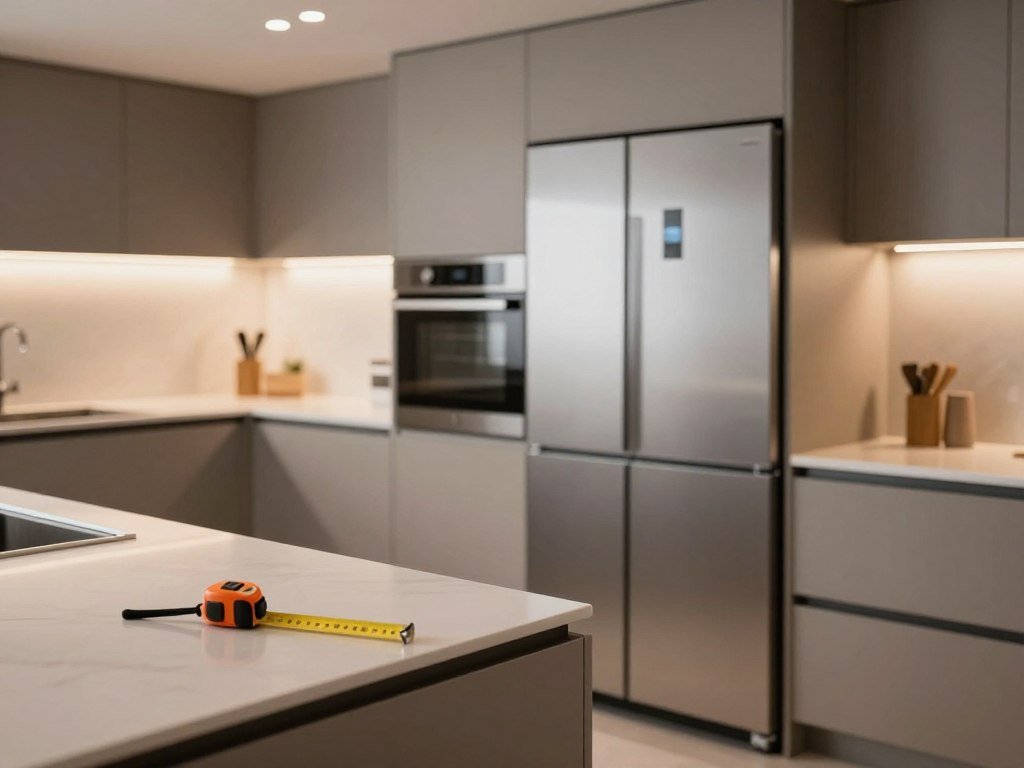
Measure the opening and the path the appliance must take to reach it. A countertop usually overhangs the cabinets by 1 inch, and the refrigerator door needs room to open. A model labeled counter depth may still extend beyond the counter when installed.
Counter-depth refrigerator dimensions to check
Counter-depth refrigerators are less than 30 inches deep, with some as little as 24 inches. Check the listed depth carefully, since models may list depth with or without doors and handles. The counter depth label is a helpful starting point, not a promise of a flush fit.
| Reference point | Depth | What to measure |
|---|---|---|
| Kitchen cabinet | 24 inches | Cabinet face to wall |
| Countertop overhang | 1 inch | Cabinet face to counter edge |
| Counter-depth refrigerator range | Less than 30 inches; some as little as 24 inches | Depth with doors and handles noted |
Measure the opening, not just the cabinet
The appliance must fit the space, but it also needs room to operate. Measure all four points before comparing refrigerators:
- Opening width at the top, middle, and bottom.
- Opening height from floor to the lowest obstruction.
- Available depth from the wall to the counter edge.
- Door or handle clearance beside walls and nearby cabinets.
Doors may need extra space to swing wide enough for drawers to slide out. Include trim, molding, and nearby walls in your plan. Measure the narrowest point of the opening, including any trim or wall that could obstruct installation.
Best Counter Depth Refrigerator Picks for Different Needs
For a shopper who wants a French-door layout and ENERGY STAR certification, the Bosch B36CT80SNS is the specifications-based overall pick; a bottom-freezer configuration is a strong alternative for reliability-minded households. The Bosch choice reflects its stated features, not a comparative lab ranking.
Pick the configuration before choosing a brand. The best counter-depth refrigerators include top-freezer, bottom-freezer, French-door, and side-by-side designs. Each gives you a different balance of access, storage, and depth.

| Configuration | Depth range | Best fit | Tradeoff |
|---|---|---|---|
| Top-freezer | 29 inches or less | Smaller footprint | Less convenient freezer access |
| Bottom-freezer | 28 inches or less | Reliability-oriented shoppers | Freezer sits lower |
| French-door | 29 inches or less | Shoppers who want split doors | Wide drawers need room to open |
| Side-by-side | 25-29 inches | Vertical freezer and fresh-food access | Narrower shelves may limit bulky items |
Top-freezer models can suit a smaller kitchen or a household that wants a simple layout. Bottom-freezer refrigerators tend to be more reliable than French-door and side-by-side refrigerators. That pattern can help if reliability is high on your list, though it does not predict how one model will perform.
French-door refrigerators put fresh food at eye level and split the doors across the front. A side-by-side model gives you a tall freezer and fresh-food section, which can help organize smaller items. Consider how often you reach for each compartment.
Brands represented across counter-depth models include Fisher & Paykel, Forno, Frigidaire, GE, Haier, LG, Miele, Samsung, Thermador, and Whirlpool. The range gives you several options, but brand name alone does not settle fit or performance. Choose a configuration first, then compare the individual model’s fit and storage before settling on a brand.
How Much Storage Capacity Can You Expect?
A counter-depth refrigerator trades some interior depth for a closer fit, so compare the fresh-food and freezer compartments against what your household actually stores. Gross capacity is the overall volume measure used for a refrigerator, not a count of usable shelf space.
The Bosch B36CT80SNS lists total gross capacity of 20.8 cubic feet. Its refrigerator gross capacity is 14.8 cubic feet, and its freezer gross capacity is 6.1 cubic feet. Those are separate listed specifications, so do not add them to create a new total.

Why a shallower cabinet changes storage
A shallower format can leave less interior room than a standard-depth refrigerator. That difference may matter if you buy large trays, stack food containers, or store wide cartons. Shelves and bins also shape how much you can fit, so capacity figures cannot tell the whole story.
Think about your usual grocery load rather than an ideal week. Bulky groceries need open shelf space, while smaller items may fit well in door bins or drawers. If you shop in large batches, compare the interior layout with the size of your usual bags and containers.
Compare fresh-food and freezer space
Fresh-food space matters most if you cook often with produce, dairy, and leftovers. Drawer count and shelf arrangement can affect access as much as the gross capacity number. Look for room to separate foods you use daily from items you rarely reach.
Freezer habits can change the choice, too. Frozen meals, bulk meat, and bags of vegetables all need different kinds of space. A freezer that looks roomy on paper may feel cramped when shelves or bins do not match your food.
Compare the refrigerator and freezer figures separately, then picture where your regular groceries would go. Check whether the freezer compartment alone can hold the frozen items you buy most often.
What Does the Bosch B36CT80SNS Offer?
The Bosch B36CT80SNS gives shoppers a specific set of installation, ice, and efficiency details to compare against their own kitchen and budget. The key distinction is between the refrigerator’s exterior size and the cutout required for installation.
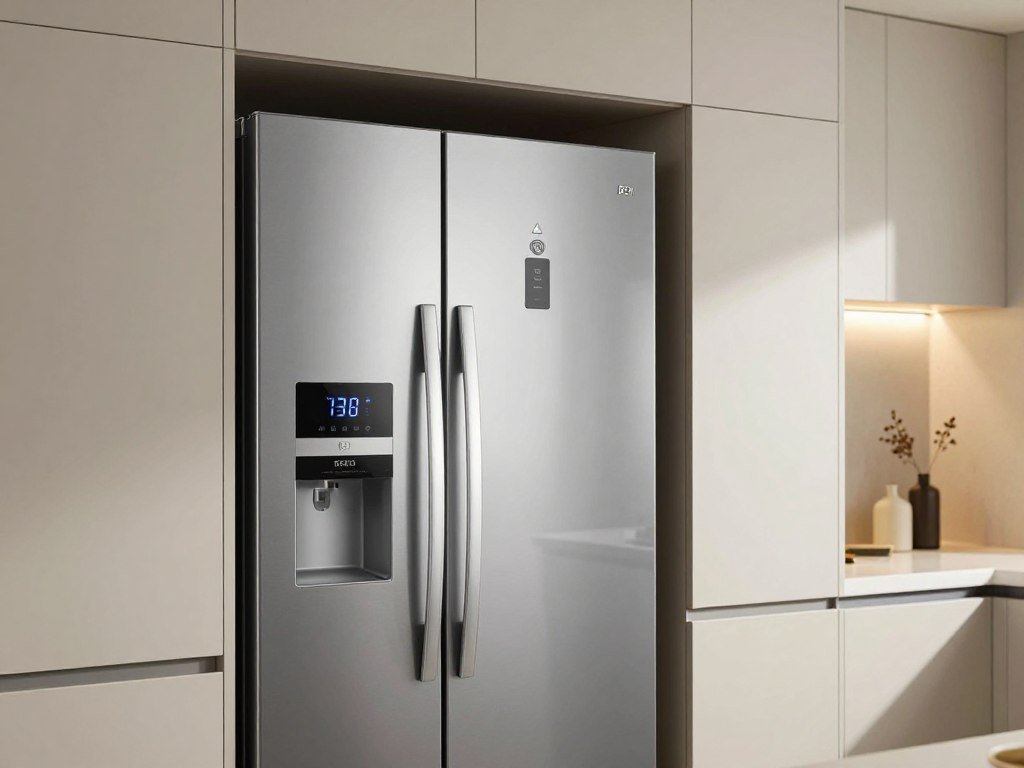
Its exterior measures 72 x 35 5/8 x 27 13/16 inches, listed as height x width x depth. The required cutout measures 72 x 36 x 25 inches in the same order. Those figures describe different things, so use the cutout dimensions when checking the prepared opening.
Fit and installation dimensions
The cutout is slightly wider than the refrigerator’s stated exterior width. A wall or cabinet beside the door can still limit how far it opens. Allow for the path into the kitchen as well as the final space, especially around tight corners.
Installation needs more than a close match between the listed numbers and your opening. Check how the refrigerator sits beside cabinets, and whether the doors can open without hitting nearby surfaces. A door that cannot swing far enough may make interior drawers harder to use.
Ice output, certification, and listed price
The Bosch stores 9 pounds of ice and produces 3.5 pounds per 24 hours. Storage and output are different measures: one describes how much ice it holds, while the other describes daily production.
It is ENERGY STAR certified, which gives efficiency-minded shoppers a clear label to compare. AHAM’s verification program guide explains how adjusted volume and energy use are checked through testing.
The model was listed at $3,999.00 in October 2026. That is a time-specific price, and prices can change. Compare the cost with the features you will use and the installation needs of your kitchen.
Before ordering, verify the cutout dimensions and door clearance against the actual installation space.
Which Refrigerator Features Matter in Daily Use?
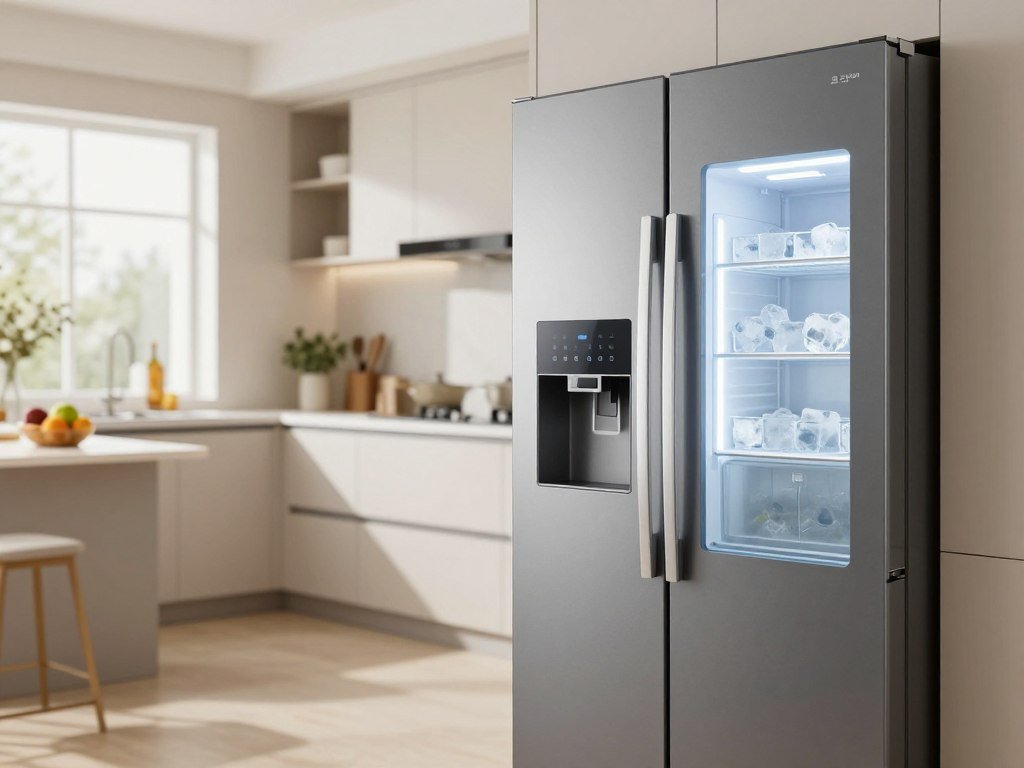
An ice maker is most useful when its type, output, and storage match how often your household uses ice. More options do not always make a refrigerator a better fit.
The best counter-depth refrigerator with an ice maker is the one that fits your routine. A household that fills water bottles may value steady cubed ice, while someone who hosts often may want more output or a second maker.
Smart controls and maintenance alerts
Many LG counter-depth refrigerators include ThinQ smart technology. It can support remote control, temperature adjustment, and maintenance alerts. Those tools are useful if you want to check settings while away or get a reminder about upkeep.
Smart features work best when they solve a task you already have. Remote temperature adjustment can help after a large grocery trip, while alerts can call attention to maintenance needs. Skip connected controls if you prefer a simple system and will not use the app.
Ice options and efficiency labels
LG models may have automatic ice makers, dual ice makers, or up to four ice types: cubed, crushed, mini-cubed, and Craft Ice. Availability varies by model. Many LG counter-depth models are ENERGY STAR certified, but certification also varies by exact model.
Compare these four details before choosing an ice maker:
- Ice type, such as cubed, crushed, or specialty shapes.
- Ice storage and daily output.
- Smart controls, including temperature and maintenance alerts.
- ENERGY STAR certification for the exact model.
Use the exact model number when you check features, since options can differ within one product line. Confirm that the exact model includes the dispenser, ice type, and connected features you intend to use.
How Can You Judge Refrigerator Performance and Reliability?
A refrigerator’s performance is more than whether it feels cold: temperature consistency, noise, ease of use, energy efficiency, and storage features all matter. Temperature uniformity means how consistently temperatures hold across different areas inside the refrigerator.
Consumer Reports rates more than 300 refrigerator models. Its evaluations cover thermostat performance, temperature uniformity, noise output, ease of use, energy efficiency, crisper performance, and icemaker performance when applicable.
What laboratory testing measures
Each refrigerator is tested with 15 temperature sensors for more than a month. Testing takes place in one of three temperature-controlled chambers, where sensors track conditions in different areas.
That process collects more than 5.4 million temperature readings per refrigerator. The many readings help show whether a model keeps food at a steady temperature, rather than relying on one spot or one moment.
Ratings also cover practical tasks. A refrigerator may hold steady temperatures yet still be noisy or awkward to use. Crisper and icemaker results matter if those features play a large role in your daily routine.
How to think about reliability and satisfaction
Member surveys from thousands of people inform brand reliability and satisfaction results. Those findings help you compare a refrigerator brand, but a brand result is not a guarantee for an individual model.
Model ratings and brand surveys answer different questions. A model score reflects the refrigerator’s tested performance, while reliability and satisfaction results reflect member reports across a brand’s products. Both can inform your choice, but neither replaces a fit check.
If you want the best counter-depth refrigerator according to Consumer Reports, filter for counter depth and your preferred configuration. Then compare model-level scores and the available reliability information. A brand-versus-model ratings guide can help explain that distinction for another appliance category.
Compare models within the same configuration so a strong score in one category does not hide a weakness that matters to your household.
When Is the Best Time to Shop for a Refrigerator?
July, September, and November are useful months to watch when planning a refrigerator purchase. Those months can give you a seasonal window for comparing models, but no calendar date guarantees a deal.
A model’s price depends on its configuration, capacity, finish, and included features. A French-door model with extra options may cost more than a simpler layout, even when both suit the same opening.
Keep your search focused with this four-point purchase checklist:
- Confirm the cutout and the available door clearance.
- Compare capacity with your regular grocery and freezer needs.
- Verify ice and dispenser features on the exact model.
- Review model-specific performance and reliability information.
Reviews can help you spot concerns about day-to-day use, while model ratings offer a more direct comparison of tested performance. Read both with the model number in hand. Similar names can hide different sizes or features.
Seasonal buying windows do not guarantee a particular price or available stock. If you find a model that fits your needs, compare its current offer with the same requirements you set for other refrigerators. Keep your dimensions and must-have features together so you can compare a live offer against the same requirements.
What Are the Downsides of Counter-Depth Refrigerators?
Counter-depth models reduce how far a refrigerator projects, but they do not guarantee a flush, built-in look or maximum interior storage. The tradeoff is a closer fit against the kitchen cabinets, with less depth available for food.
A counter-depth fridge can still project past the counter and hold less than a standard-depth model. The deepest refrigerator tested measures 37 inches deep and extends 12 inches beyond a standard 25-inch-deep countertop.
A built-in is a different option that fits closer to the surrounding cabinets, but it can cost thousands more. A full-height counter-depth refrigerator is also not the same as an under-counter refrigerator. The compact under-counter kind is designed to fit beneath a counter.
Storage can be a concern if you buy large packages or keep many frozen items on hand. A narrow area beside a wall can also limit the door swing, which may stop drawers from opening fully. Consider how you use the door, shelves, and drawers before settling on this style.
A counter-depth model can make a kitchen feel less crowded without giving the fully flush look of a built-in. That difference matters most when cabinets and counters form a tight line or when the appliance sits near an island.
If a flush installation or the largest possible interior matters most, compare a built-in or standard-depth model before choosing.
Conclusion
The right choice is the model that fits the opening and supports the way your household shops, stores food, and uses ice. Fit and routine matter more than a long feature list.
The Bosch B36CT80SNS is a specifications-based option for shoppers drawn to its stated layout and features, not a universal winner. Other counter-depth refrigerators may suit your storage needs or kitchen better.
Measure the space, write down your must-have features, and compare models that meet both requirements.
FAQ
Which refrigerator is the best-rated?
The best-rated refrigerator depends on the configuration and features you value. Consumer Reports evaluates more than 300 models across areas such as temperature control, noise, and energy use. The Bosch B36CT80SNS is a specifications-based editorial pick for a certain set of needs, not a verified top-scoring model. Compare current scores for the exact configuration you want.
Which brand of 33 inch refrigerator is best?
No brand is best based on a 33-inch width alone. Compare the exact model’s width and required cutout with your kitchen opening, then check its features and model-level performance. Reliability and satisfaction information can help you compare brands, but it does not predict every unit. A close width match also does not ensure enough door clearance.
What refrigerator brand to stay away from?
A blanket brand blacklist is not a sound way to choose a refrigerator. Brand reliability and satisfaction results can point to patterns, while model-level ratings show how a specific refrigerator performs. Check both, then weigh the results against your needs and budget. One brand may offer models with different layouts, features, and ratings.
Which brand of counter-depth refrigerator is best?
No single brand is best for every counter-depth refrigerator shopper. Match a brand and model to the configuration, fit, storage, and features you need. Then compare model-level performance and reliability information rather than relying on the name alone. Brands such as LG, GE, and Whirlpool offer different models, so exact specifications matter.
What brand of refrigerator has the least problems?
Brand reliability and satisfaction comparisons can help you find brands with fewer reported problems, but they cannot guarantee an individual model. Bottom-freezer refrigerators tend to be more reliable than French-door and side-by-side formats. Use that pattern as one factor, then compare the model’s ratings and layout with your household’s needs.
What is the best counter-depth refrigerator according to consumer reports?
Consumer Reports rates more than 300 refrigerator models, so the best choice depends on your desired layout and priorities. Filter the ratings for counter depth and your preferred configuration, then compare model-level scores. Look at temperature control, noise, and other ratings that matter to you. A broad refrigerator score may not reflect your needs as well as a focused comparison.