
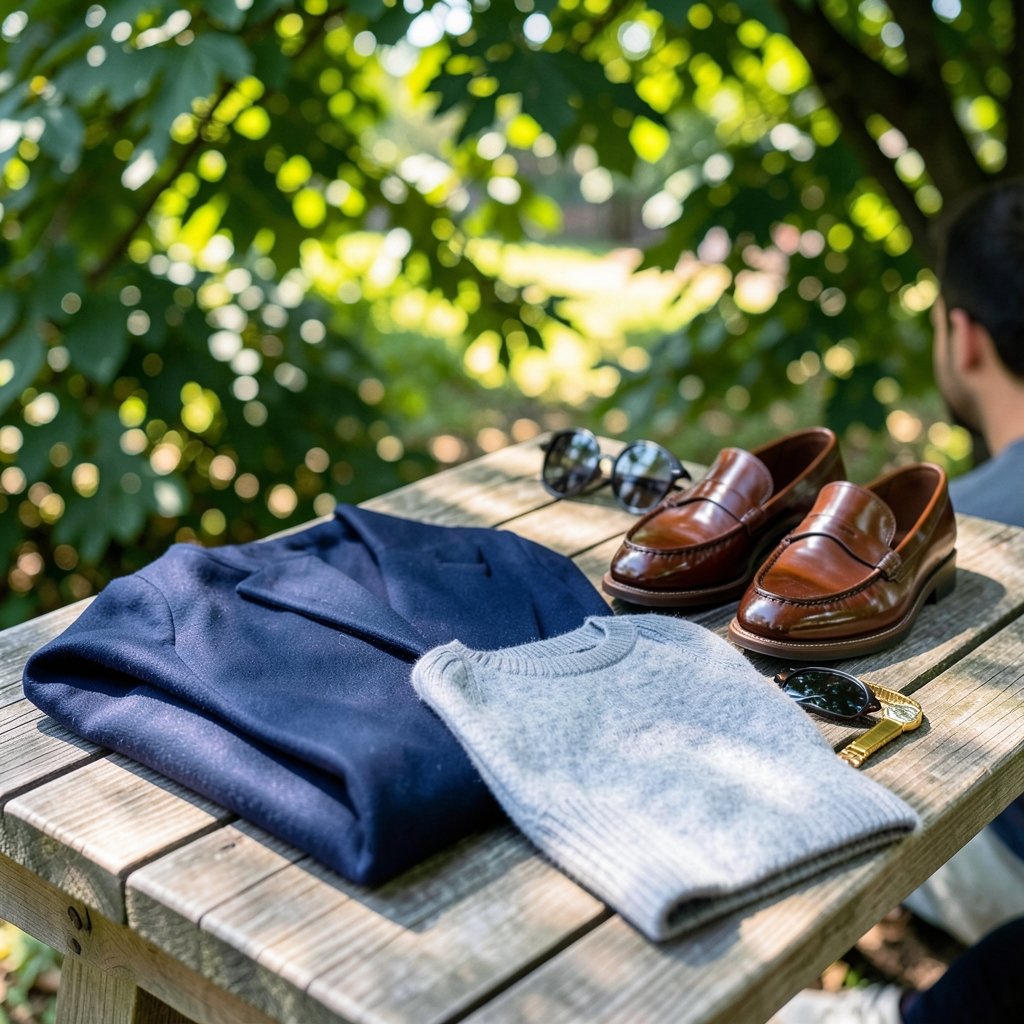
What makes a plain gray sweater look “expensive” while a logo-covered jacket looks cheap? That question sits at the heart of the money aesthetic, one of the internet’s most durable style obsessions. It is not a single look. It is a family of visual codes that signal wealth, and the codes keep shifting. One season the message is quiet cashmere. The next it is fur coats and gold chains. (The Concept of the Aesthetic)
This article breaks down what the money aesthetic is, where its main branches came from, why it spreads so fast online, and how to use it without wasting money or falling for scams that dress themselves up in the same language.
What the money aesthetic actually means
The money aesthetic is an umbrella label for styles that communicate financial comfort through appearance. It covers clothing, grooming, interiors, and the way photos are framed and edited. The point is rarely to show a price tag. It is to show the confidence that supposedly comes with never worrying about money.
That distinction matters. A person can wear an inexpensive outfit that reads as wealthy if the fit is right, the colors are restrained, and the fabric looks cared for. Meanwhile, heavy branding often reads as trying too hard. The aesthetic is about signals, not receipts.
Sociologists have studied this for over a century. Thorstein Veblen’s 1899 book The Theory of the Leisure Class introduced the idea of conspicuous consumption, the practice of buying and displaying goods mainly to prove status. Veblen’s work is available in full through the Project Gutenberg edition of The Theory of the Leisure Class, and it explains why status display keeps reappearing in new forms. Later, Pierre Bourdieu argued in Distinction (1979) that taste itself functions as a class marker. Knowing which brands to avoid can matter as much as knowing which to buy.
The main branches of the trend
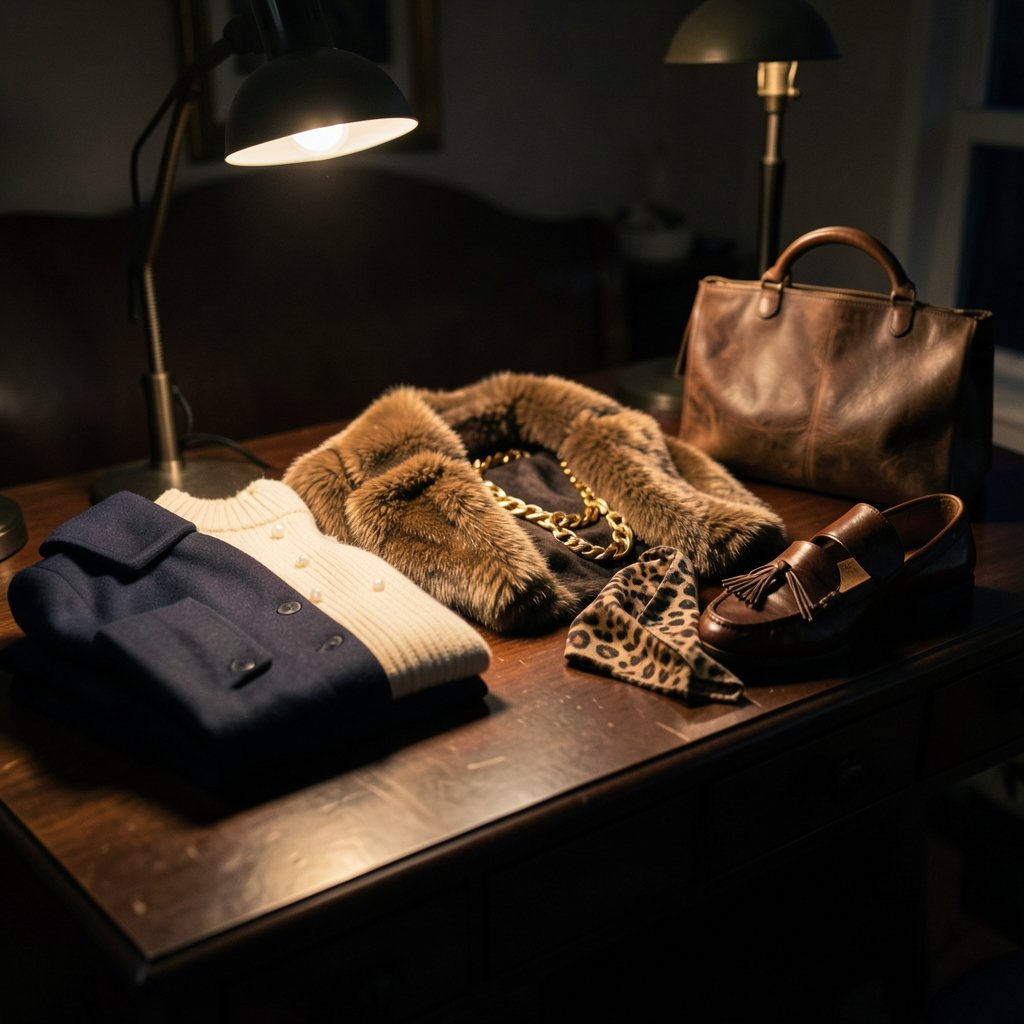
The money aesthetic splits into recognizable sub-styles. Each has its own rules, and mixing them carelessly is one of the most common mistakes people make.
| Style | Core signals | Typical pieces | Common mistake |
|---|---|---|---|
| Old money aesthetic | Restraint, tailoring, neutral colors | Knitwear, loafers, structured blazers | Over-accessorizing |
| Quiet luxury | No visible logos, high-quality fabric | Cashmere, silk, plain leather bags | Assuming price equals quality |
| Mob wife aesthetic | Bold glamour, visible wealth | Fur, gold jewelry, dark sunglasses | Going costume-like |
| Cash-core | Literal money motifs | Green tones, printed notes, gold accents | Wearing it to a job interview |
Old money and quiet luxury
The old money aesthetic took off on short-video platforms around 2022 and 2023, built on images of tennis clubs, sailing, and inherited-looking knitwear. Quiet luxury is its close cousin and reached mainstream attention in 2023, helped along by discussion of the television series Succession, whose final season aired that year. Both styles favor garments without visible branding.
In practice, quiet luxury works through three things: fabric, fit, and color discipline. A well-cut wool coat in navy will outperform a trendier piece every time. The trap is assuming that “quiet” means “expensive.” Plenty of affordable brands make excellent plain knitwear.
Mob wife and cash-core
The mob wife aesthetic trended in early 2024, reportedly from January of that year. It is loud where quiet luxury is silent: animal print, oversized fur, layered gold, heavy makeup. It is fun, theatrical, and easy to get wrong by going too literal.
Cash-core is the smallest branch, built around money imagery itself, from banknote prints to deep green palettes. It works best in small doses, as an accent rather than a full outfit.
Why the trend spreads so fast
Three forces keep the money aesthetic cycling.
First, aspiration sells. Content that looks wealthy attracts attention, and attention attracts advertisers. Creators learn quickly that a beige-toned kitchen and a linen shirt generate more engagement than a cluttered room.
Second, the aesthetic is cheap to imitate. You do not need real wealth to shoot a convincing photo. Good lighting, a tidy background, and one well-fitted item do most of the work. That accessibility is exactly why the trend spreads.
Third, the trend feeds a purchase loop. Every sub-style arrives with a shopping list. If you are not careful, chasing the look becomes its own expense, and the money aesthetic quietly drains the money it is supposed to signal. Anyone budgeting for a wardrobe upgrade should treat trend spending the same way they would treat any other recurring cost, with the same discipline described in this guide to using AI business automation without wasting money — the principle of paying only for what genuinely delivers value applies to clothes too. (Old money)
How to build the look without overspending
What actually works in practice is boring, and that is the point. People who look effortlessly wealthy tend to own fewer things and maintain them well.
- Audit before you buy. Lay out what you own. Most people already have the neutral base pieces the aesthetic requires.
- Fix fit first. A tailor can transform a mid-priced blazer for a fraction of the cost of a designer one.
- Buy fabric, not labels. Check composition tags. Wool, cotton, linen, and silk age better than synthetic blends that pill after three washes.
- Limit your palette. Two or three neutral colors plus one accent will make every combination work.
- Care for what you own. Shoe polish, a clothes brush, and proper storage do more for the “wealthy” impression than any single purchase.
- Shop secondhand for statement pieces. Quality outerwear and leather goods appear constantly on resale platforms at a fraction of retail.
A useful rule: if a purchase only makes sense in a photograph, skip it. The aesthetic is meant to be worn in daylight, not just in a ring light.
The scams that borrow the language of wealth
Here is where the money aesthetic gets genuinely dangerous. The same signals that say “success” also say “trust me,” and fraudsters know it. Fake investment advisors, fake luxury resellers, and fake “financial freedom” coaches all borrow the visual vocabulary of wealth: the rented car, the borrowed watch, the hotel lobby that looks like a home.
One especially common scheme targets people who are already thinking about money. In a gift card scam, the victim is told to pay with gift card codes, and the money is almost never recovered. The pitch often arrives from an account styled to look affluent and generous.
The broader pattern is expensive. Research and industry reporting on where identity threat detection money actually goes shows that fraud and identity crime carry costs far beyond the stolen sum, including time, stress, and repair work. A polished feed is not a credential. Verify any financial offer through independent sources before sending a cent.
Money, status, and the digital currency shift
The money aesthetic is also changing because money itself is changing. Central banks around the world are researching and piloting central bank digital currencies, or CBDCs, which would be digital versions of national currency. If you want to understand how CBDC digital currency works as central bank money going digital, the short version is that it would change how payments settle, not just how they look.
Why does that matter for a style trend? Because status symbols follow the payment rails. When cash was king, a thick wallet signaled something. When cards took over, the metal card became the flex. In a fully digital system, the visible markers of wealth may shift again, toward access, exclusivity, or things that cannot be screenshotted. Expect the money aesthetic to adapt, as it always has.
The AI layer behind the trend
A growing share of the images shaping the money aesthetic is generated or heavily edited. Creators use AI tools to produce idealized interiors, perfect lighting, and outfits that were never actually made. Some of these accounts monetize through courses and coaching, which raises an obvious question about how AI companies make money from the tools that produce this content in the first place.
For readers, the practical takeaway is simple: assume that a striking image may not be real, and judge advice by whether it works offline. If someone claims a system for building wealth, ask what they sell. There are legitimate ways to make money with AI, and they rarely involve a rented sports car in the background.
Common mistakes people make
Even well-intentioned attempts at the money aesthetic go wrong in predictable ways.
- Buying the logo instead of the fit. A branded item that does not fit looks worse than a plain one that does.
- Mixing every branch at once. Quiet luxury and mob wife pull in opposite directions. Pick one lane per outfit.
- Ignoring grooming and maintenance. Scuffed shoes undo an entire look.
- Treating it as a personality. The aesthetic is a visual style, not evidence of character or financial skill.
- Overspending to signal stability. The irony is brutal: debt is the least wealthy-looking thing there is.
- Trusting wealthy-looking strangers. Style is easy to fake. Credentials are not.
What the trend says about us
Strip away the shopping lists and the money aesthetic is a story about anxiety. In a period of rising costs and uncertain careers, looking secure becomes a way of feeling secure. That is understandable, and it is also exactly why the trend is so commercially powerful.
The healthiest relationship with it is playful. Wear the navy coat because it fits well and lasts. Enjoy the mob wife drama for a night out. Skip the parts that require you to pretend. Real financial comfort is quiet for a reason, and it rarely needs a photographer.
Conclusion
The money aesthetic is not one look but a shifting set of signals, from the restrained tailoring of old money and quiet luxury to the loud glamour of the mob wife trend and the novelty of cash-core. Its appeal is easy to understand: it promises that appearance can stand in for security. The practical path through it is unglamorous. Buy fewer, better-fitting pieces. Care for them. Question anyone whose wealth exists only on a screen. And remember that the most convincing wealth signal of all is not a sweater or a watch. It is the calm that comes from spending less than you earn.
Frequently asked questions
What is the money aesthetic?
It is an umbrella term for visual styles that signal wealth through clothing, grooming, interiors, and photography. It includes old money, quiet luxury, mob wife, and cash-core looks. The common thread is communicating financial comfort, often without visible logos.
Is the old money aesthetic the same as quiet luxury?
They overlap heavily but are not identical. Quiet luxury focuses on logo-free, high-quality clothing. The old money aesthetic adds a broader lifestyle picture, including settings and activities like tennis or sailing. In practice, most outfits blend the two.
Do you need expensive clothes to pull off the money aesthetic?
No. Fit, fabric quality, color discipline, and good maintenance matter more than price. A tailored mid-priced blazer often reads as more expensive than an ill-fitting designer one. Secondhand shopping is a practical shortcut for quality outerwear and leather goods.
Why did the mob wife aesthetic become so popular?
It offered a release from the restraint of quiet luxury. After months of beige knitwear, bold fur, gold, and dark sunglasses felt fun and expressive. Its popularity in early 2024 fit a broader pattern of style trends swinging between minimal and maximal.
Is the money aesthetic harmful?
It can be, in two ways. It encourages overspending on things bought purely for appearances, and it creates a visual language that fraudsters exploit to build false trust. Treating it as a styling game rather than a status measure keeps it harmless.
Will digital currencies change what wealth looks like?
Probably. Status symbols have always followed payment technology, from cash to cards to phones. As central bank digital currencies develop, visible markers of wealth may shift toward access and exclusivity rather than physical objects. The aesthetic will adapt, as it has before.



