
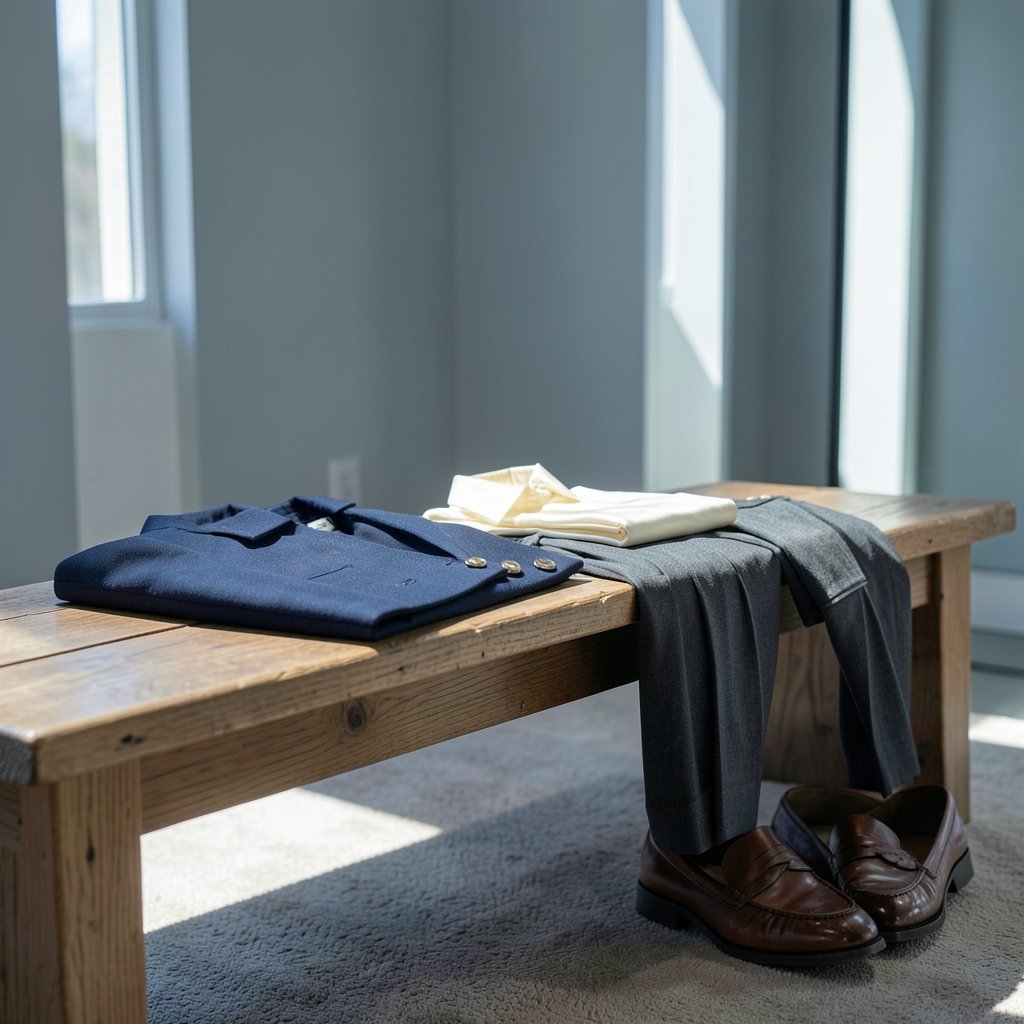
What if the most expensive-looking outfit in the room had no logo, no flashy pattern, and nothing new about it? That is the strange promise of the old money outfit — a style built on restraint, good fabric, and clothes that look like they have been in the family for years. It is also one of the most talked-about aesthetics online, and one of the most misunderstood. This guide breaks down what the look actually is, where it came from, how to build it without wasting money, and where the idea starts to fall apart. (Identity threat detection really costs where money goes)
What an Old Money Outfit Actually Means
The term is not a historical dress code. It is a recent internet label that spread across TikTok and Instagram around 2022 and 2023, alongside the phrase quiet luxury. Nobody issued a rulebook, and there is no official definition. What exists instead is a shared set of conventions that most people roughly agree on.
In practice, the look means neutral and muted colors — navy, cream, beige, gray, forest green. It means natural fabrics: wool, cotton, linen, cashmere, silk. It means tailored but unfussy cuts, and few or no visible logos. The point is to look put-together without appearing to have tried.
That last part is the tricky bit. The aesthetic borrows from older upper-class dress codes: British country and equestrian wear, Ivy League and preppy style, and mid-century resort wear. These are reference points, not one codified tradition, which is why two people can both claim to dress “old money” and look nothing alike.
Where the Trend Came From

The overlap with quiet luxury got wide attention in early 2023, around the final season of HBO’s Succession, which aired from March to May 2023 and became famous for its “stealth wealth” costumes. How much credit the show deserves is debatable, but it certainly pushed the vocabulary into the mainstream.
The underlying idea is older. The “stealth wealth” concept is often traced to a 2021 New York Times piece by Nick Haramis titled “The Triumph of the Logo-Less Luxury Item.” And the academic roots go back much further. Thorstein Veblen’s The Theory of the Leisure Class (1899) introduced the idea of conspicuous consumption — spending on visible goods to signal status. Pierre Bourdieu’s Distinction (1979; English translation 1984) argued that taste itself works as a class marker. Both ideas sit right underneath this trend, whether or not the people posting about it have read either book. (Gift card scam works victims rarely get their money back)
There is also a useful counterpoint. Economists and marketers have documented inconspicuous consumption: spending on things people cannot see, like education and health. That is arguably closer to how actual wealthy households behave than any specific outfit.
The Core Pieces of the Look
Most “old money” capsule lists recycle the same items. That repetition is useful, because it tells you what the aesthetic actually depends on.
| Category | Commonly cited pieces | What makes them work |
|---|---|---|
| Tailoring | Navy or tweed blazer, houndstooth jacket | Structured shoulders, no loud lining |
| Knitwear | Cashmere crewneck, cable sweater | Natural fiber, muted color |
| Shirts | Oxford button-down, Breton stripe tee | Simple collar, no graphics |
| Bottoms | Wool trousers, straight-leg jeans, pleated skirt | Clean line, proper hem |
| Shoes | Penny loafers, ballet flats, leather boots | Real leather, low profile |
| Accessories | Pearl studs, thin gold chain, structured leather bag | Small scale, no monogram |
| Outerwear | Trench coat, wool overcoat | Classic silhouette, neutral tone |
Notice what is missing: logos, trend-driven silhouettes, neon, heavy distressing, and anything that screams its price tag. The look rewards pieces that would have looked reasonable in 1995 and will look reasonable in 2035.
How to Build the Look Without Wasting Money
Here is where most people go wrong. They treat “old money” as a shopping list and buy ten new items in a weekend. That is the opposite of the aesthetic’s logic, and it usually produces outfits that look like costumes.
What actually works is slower and cheaper.
- Start with fabric, not labels. A plain wool blazer from a secondhand shop beats a synthetic fast-fashion version every time. Feel the garment. If it pills, shines, or feels thin, walk away.
- Pick a tight color palette. Three neutrals plus one accent is plenty. Navy, cream, gray, and a single forest green will cover almost every combination you need.
- Buy the shoes first. Footwear carries more of this look than people expect. A clean pair of leather loafers or ballet flats instantly upgrades jeans and a plain shirt.
- Get one thing tailored. A blazer that fits your shoulders but is slightly long at the sleeve is a cheap fix at any alterations shop. Fit is the whole game.
- Skip the logo entirely. If a piece only reads as “old money” because of a visible brand mark, it is not doing the job.
- Shop secondhand and vintage first. The aesthetic is built on clothes that look lived-in. New items often look too crisp to pull it off.
A common mistake is over-accessorizing. Pearls, a watch, a silk scarf, a structured bag, and gold hoops all at once reads as trying too hard. Pick one or two.
Another mistake: buying “quiet luxury” pieces that are actually just beige fast fashion. Color alone does not create the look. Fabric and fit do.
Why the Look Reads as Expensive
The psychology here is well documented, even if the trend itself is new. Veblen’s work on conspicuous consumption explains why visible spending signals status. But the old money aesthetic flips that logic: it signals status by appearing not to need to signal at all. That is a subtle move, and it is exactly why the look feels powerful to people who grew up without it.
There is a financial angle too. Style trends like this one drive real spending behavior, and the way people chase an aesthetic often mirrors how they chase other status symbols. The same psychology shows up in everything from how people spend on identity protection to how they approach making money with AI — the visible signal matters more than the underlying substance. If you are curious how those patterns play out in other areas, the connection between appearance and spending is worth exploring.
The Honest Critique
Not everyone buys the premise, and the critics have a point. The aesthetic is frequently described as costume-like — a way of performing a class you were not born into. That sits awkwardly with its anti-logo stance, because the look still requires spending money to achieve. You are just spending it on different signals.
There is also the question of who gets to wear it. A linen blazer on a wealthy person reads as casual. The same blazer on someone else can read as trying too hard, which is a real and uncomfortable double standard.
And the practical reality: there is no authoritative definition of an “old money outfit.” Claims about “what old money actually wears” are almost always anecdotal. Real wealthy people wear whatever they like, including logos, sneakers, and things that would fail every checklist in this article. (Cbdc digital currency central bank money going digital)
Practical Tips That Hold Up
If you want the look without the theater, a few habits matter more than any single purchase.
- Buy fewer, better pieces. One good coat beats four mediocre ones.
- Learn basic care. Wool needs brushing, cashmere needs folding, leather needs conditioning. Clothes that look maintained look expensive.
- Ignore seasonal drops. The aesthetic is inherently out of season. That is the point.
- Check the seams and lining. Visible shortcuts inside a garment show up outside eventually.
- Wear the clothes, do not let them wear you. Confidence is the one thing no checklist can supply.
For anyone comparing this to other spending decisions, it helps to think in the same terms as any other budget question — what you get for the money, and whether the signal is worth the cost. The same logic applies whether you are choosing a wardrobe or evaluating where your money actually goes.
Old Money vs. Quiet Luxury vs. Preppy
These three get used interchangeably, but they are not the same.
| Style | Core signal | Typical pieces |
|---|---|---|
| Old money | Inherited ease, no effort | Tweed, loafers, pearls, trench |
| Quiet luxury | Expensive but unbranded | Cashmere, silk, fine tailoring |
| Preppy | Collegiate, sporty | Polo shirts, rugby stripes, boat shoes |
Old money leans on heritage and tradition. Quiet luxury leans on quality and price. Preppy leans on school and sport. They overlap heavily, which is why the boundaries blur online.
Conclusion
The old money outfit is less a wardrobe than a set of habits: buy natural fabrics, keep colors quiet, get things tailored, and let the clothes look lived-in. It borrows from real historical dress codes, but the version most people see online is a recent invention with no official rules. That is freeing, if you let it be. You do not need a trust fund or a designer label to dress with restraint. You need a few good pieces, a little patience, and the willingness to skip the logo.
Frequently Asked Questions
What counts as an old money outfit?
There is no official definition, but most people mean a combination of neutral colors, natural fabrics like wool and cashmere, tailored but simple cuts, and few or no visible logos. Common pieces include a navy blazer, penny loafers, an Oxford shirt, and a trench coat.
Is the old money aesthetic the same as quiet luxury?
They overlap heavily but are not identical. Quiet luxury focuses on expensive, unbranded quality. Old money leans more on heritage and tradition, borrowing from British country wear and Ivy League style. Most outfits blend both.
Do you need expensive clothes to dress old money?
No. Fabric and fit matter far more than price. A well-tailored secondhand wool blazer often looks better than a new synthetic one. The aesthetic actually rewards clothes that look worn and maintained rather than brand new.
Where did the old money trend come from?
It spread on TikTok and Instagram around 2022 and 2023, alongside quiet luxury. It got a big push from the final season of Succession in 2023 and its stealth wealth costumes. The underlying ideas about taste and status go back much further, to writers like Thorstein Veblen and Pierre Bourdieu.
What colors work best for this look?
Navy, cream, beige, gray, and forest green cover most of it. The rule is muted and neutral, with maybe one accent color. Bright neons, loud prints, and heavy contrast tend to break the effect.
Why do some people criticize the old money aesthetic?
Critics say it can look like a costume, that it performs a class you were not born into, and that it still requires spending money even though it claims to reject logos. Others point out that the same outfit can read differently depending on who is wearing it, which is a fair criticism worth taking seriously.
The takeaway is simpler than the trend suggests: dress for the life you actually have, not the one the algorithm is selling. A single well-kept coat, a pair of leather shoes you resole instead of replace, and a palette you can dress in the dark will outlast every seasonal checklist. If a piece makes you feel like you are wearing a costume, it is not working — no matter how many boxes it ticks. Style, in the end, is just maintenance plus restraint, repeated for years. Start small, buy once, and wear it until it looks like yours.



