
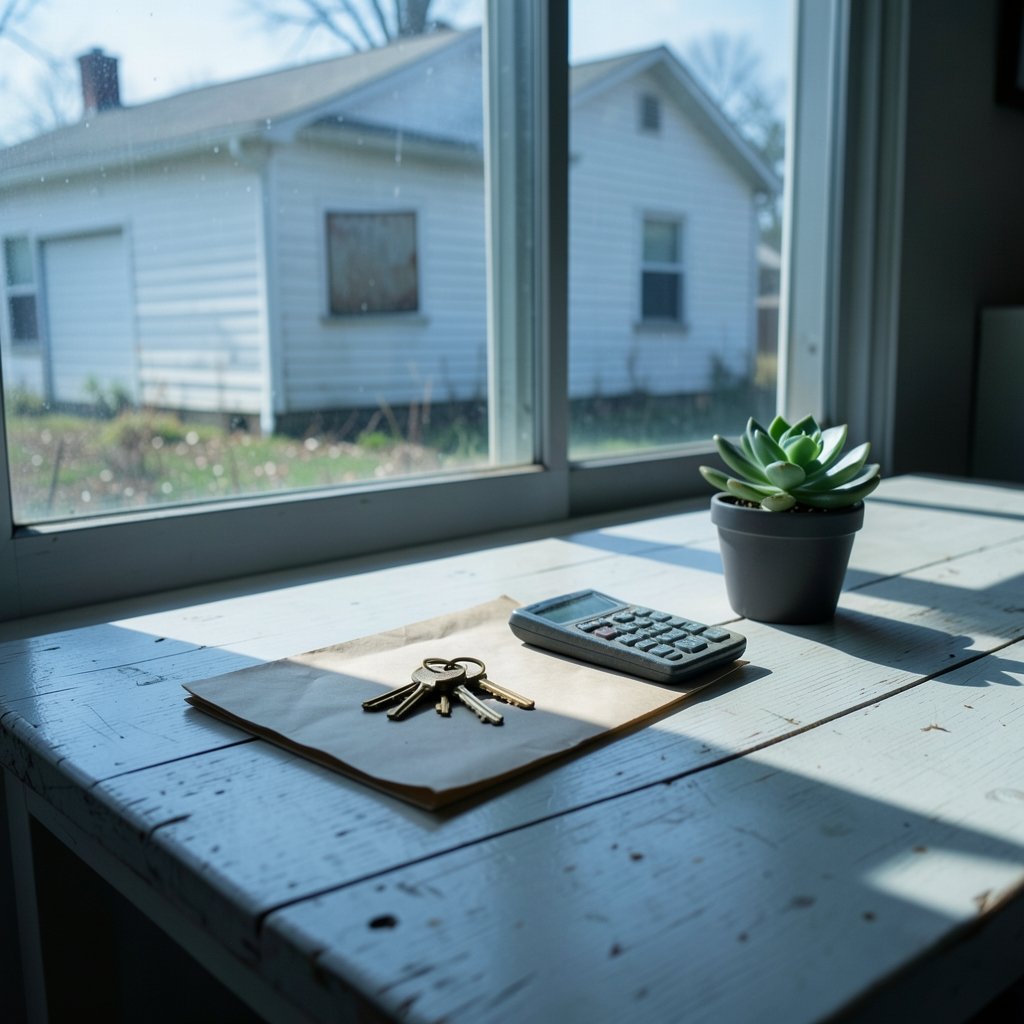
Can someone really buy a house without a single dollar in the bank? The short answer is yes, but not in the way late-night ads suggest. There is a real path to homeownership with little or no cash upfront, and it runs through government-backed loans, down payment assistance, and careful negotiation. The catch is that “no money down” almost never means “no cash needed at all.” Understanding the difference is the whole game. (Perfume mystery box blind buy fragrance bundles really work)
This guide walks through the programs that genuinely allow zero or near-zero down payments, the hidden costs that still show up at closing, and the practical moves that make the math work in your favor.
What “No Money Down” Really Means
Most people picture a down payment when they hear “no money down.” That is only half the story. A mortgage has two cash hurdles: the down payment (a percentage of the purchase price) and closing costs (fees for appraisals, title work, lenders, and prepaid taxes and insurance). (Identity threat detection really costs where money goes)
A few loan programs cover the first hurdle completely. Almost none cover the second. So even a true zero-down loan usually requires some cash on hand, unless the buyer stacks other tools on top.
There is a second meaning worth knowing too. Some buyers take the phrase literally and assume they can walk into a purchase with nothing but good credit. In practice, lenders want to see that a borrower can handle the monthly payment, and they want a paper trail. Having a small reserve, even a few thousand dollars, makes approval far easier.
Government-Backed Loans With Zero or Low Down Payments

Three federal programs do most of the heavy lifting for buyers with limited cash. Each has its own eligibility rules and trade-offs.
VA Loans: The Gold Standard for Zero Down
Loans backed by the U.S. Department of Veterans Affairs can require no down payment at all for eligible veterans, active-duty service members, and some surviving spouses. The VA’s own guidance on VA home loan eligibility and benefits explains who qualifies and how the funding fee works. That fee, which helps sustain the program, can often be rolled into the loan rather than paid upfront.
The trade-offs are real but manageable. VA loans usually require a Certificate of Eligibility, and the property must meet the VA’s minimum property requirements. Sellers sometimes balk at VA offers because of the appraisal process, though that resistance has softened in many markets. For those who qualify, this is the closest thing to a true no-money-down mortgage in the United States.
USDA Loans: 100% Financing in Rural Areas
The U.S. Department of Agriculture runs two single-family programs, Direct and Guaranteed, that can finance 100% of the purchase price in eligible rural areas. The USDA Rural Development single-family housing programs page publishes eligibility maps and income tables so buyers can check whether a property and household qualify.
Two limits trip people up. First, the property has to sit in a designated rural area, which surprises buyers who think of “rural” as farmland only. Many small towns and suburbs on the edge of metro areas qualify. Second, household income must fall under a program cap, which varies by region and family size. Buyers who assume they earn too much should check the actual table before ruling it out. (Best e readers 2026 actually matters before you buy)
FHA Loans: The 3.5% Workhorse
FHA-insured loans are not zero down, but they are the most accessible low-down-payment option for buyers without military or rural ties. Borrowers with credit scores of 580 or higher can put down as little as 3.5%, while scores between 500 and 579 require 10%. The FHA Single Family Housing Policy Handbook 4000.1 is the official rulebook covering minimum down payments, gift funds, and property standards.
The trade-off is mortgage insurance premium (MIP), which adds to the monthly payment and, in many cases, stays for the life of the loan. FHA loans also have property condition standards that can complicate a purchase of a fixer-upper.
| Loan Program | Minimum Down Payment | Who Qualifies | Main Trade-Off |
|---|---|---|---|
| VA | 0% | Eligible veterans, service members, some surviving spouses | Funding fee; VA appraisal standards |
| USDA | 0% | Rural-area buyers under income caps | Location and income limits |
| FHA | 3.5% (score 580+) | Most buyers with moderate credit | Mortgage insurance premiums |
| Conventional (HomeReady/Home Possible) | 3% | Low- and moderate-income buyers | Income limits; PMI until 20% equity |
Conventional Low-Down-Payment Options
Fannie Mae’s HomeReady and Freddie Mac’s Home Possible programs allow down payments as low as 3% for qualified low- and moderate-income borrowers. Both permit gift funds and certain down payment assistance sources. The official rules live in the Fannie Mae Selling Guide and the Freddie Mac Single-Family Seller/Servicer Guide, which spell out income limits and eligibility in detail.
These programs often get overlooked because buyers assume conventional loans demand 20% down. That myth costs people money. A 3% conventional loan with private mortgage insurance can sometimes beat an FHA loan on total monthly cost, especially for borrowers with strong credit. (Mortgage loan)
Down Payment Assistance: The Most Underused Tool
State housing finance agencies and hundreds of local nonprofits run down payment assistance (DPA) programs that supply grants or second mortgages covering part or all of a down payment. Some come as forgivable loans that disappear after a set number of years if the buyer stays in the home. Others are silent second mortgages with zero interest that get repaid when the home is sold or refinanced. (Owning a Home)
The frustrating part is discovery. DPA programs are scattered across thousands of agencies, each with its own income limits, purchase price caps, and application process. A good starting point is a HUD-approved housing counselor, who can walk a buyer through local options for free. Many buyers also find that their real estate agent has a preferred lender who knows which programs stack well together.
One practical tip from the trenches: apply for DPA before falling in love with a house. Approval can take weeks, and some programs require the buyer to complete a homebuyer education course first. Buyers who wait until they are under contract often lose the house to a competing offer.
Gift Funds and Family Help
Many loan programs allow gift funds for the down payment and closing costs, provided the money is properly documented. That usually means a signed gift letter stating the donor’s relationship to the buyer, evidence of the transfer, and sometimes bank statements from the donor. FHA rules on gifts appear in the handbook cited above.
A common mistake: buyers move money between accounts casually and then cannot explain the deposits to an underwriter. Lenders scrutinize large deposits, and undocumented money can delay or kill a loan. The fix is simple. Keep a clean paper trail, document every transfer, and tell the loan officer about gifts early rather than at the last minute.
The Costs That Still Show Up
Even with a zero-down loan, buyers face real cash needs. Closing costs typically run roughly 2% to 5% of the purchase price, according to the Consumer Financial Protection Bureau’s guide to closing costs. On a $300,000 home, that is $6,000 to $15,000.
There are also costs before closing. Earnest money, usually 1% to 3% of the price, is paid when the offer is accepted. Home inspections and appraisals cost several hundred dollars each. None of these disappear just because the down payment does.
The good news is that several tools can offset them:
- Seller concessions. Sellers can agree to pay some of the buyer’s closing costs, though loan programs cap how much.
- Lender credits. A lender may cover closing costs in exchange for a slightly higher interest rate.
- DPA programs. Many cover closing costs alongside the down payment.
- Negotiated repairs. A seller may credit the buyer for needed fixes found during inspection.
Stacking these tools is where experienced buyers separate themselves from first-timers. A patient buyer who asks for seller concessions and pairs them with a DPA grant can sometimes close with almost no cash out of pocket.
The Real Risks of Buying With Nothing Down
Zero-down buying is not free money. It comes with genuine risks that deserve honest attention.
Higher loan balances mean higher payments. Financing 100% of the price means paying interest on the full amount. Monthly payments will be larger than they would be with a down payment.
Mortgage insurance adds cost. FHA loans carry MIP, and conventional loans under 20% down carry PMI. Both protect the lender, not the buyer.
Little or no equity cushion. If home prices fall, a buyer who put nothing down can end up owing more than the house is worth. That situation, sometimes called being underwater, makes selling difficult and refinancing nearly impossible.
Tighter approval standards. Lenders often want stronger credit and documented reserves for zero-down loans. Applicants with thin credit files may struggle.
None of this means zero-down buying is a bad idea. It means the decision should rest on a realistic budget, a stable income, and a plan to stay in the home long enough to build equity.
Steps to Buy a House With Little or No Cash
Here is a practical sequence that works for most buyers pursuing a low-cash purchase.
- Check program eligibility first. Confirm military service for VA, look up the property address on the USDA eligibility map, and review income caps for HomeReady and Home Possible.
- Talk to a HUD-approved housing counselor. This is free, and counselors know local DPA programs that websites miss.
- Get pre-approved instead of stopping at pre-qualified. A pre-approval letter carries more weight with sellers and surfaces problems early.
- Save for closing costs as well as the down payment. Even $5,000 to $8,000 in reserves changes the conversation.
- Ask for seller concessions in the offer. Build them into the negotiation from the start.
- Document every gift and transfer. Clean paperwork speeds underwriting.
- Complete homebuyer education if required. Many DPA programs require it, and it often leads to better terms.
Buyers who treat the process like a research project rather than a rush tend to do well. The programs exist. The money is there. The work is in finding it and proving eligibility.
Conclusion
Buying a house with no money down is possible, but it rewards preparation over hope. VA and USDA loans can eliminate the down payment entirely, FHA and conventional programs bring it down to 3% to 3.5%, and down payment assistance can fill the remaining gap. Closing costs remain the stubborn reality, though seller concessions, lender credits, and DPA grants can shrink them.
The buyers who succeed are the ones who check eligibility before shopping, save a modest cash cushion, document every dollar, and lean on free counseling resources. Zero-down homeownership is not a loophole. It is a set of legitimate programs built for people who need a hand getting started, and they work best when the buyer understands exactly what they are signing up for.
Frequently Asked Questions
Can you really buy a house with zero dollars?
Yes, in specific circumstances. VA loans for eligible veterans and USDA loans in rural areas can finance 100% of the purchase price. However, buyers usually still need cash for closing costs, earnest money, and inspections unless seller concessions or assistance programs cover them.
What credit score do you need for a zero-down mortgage?
VA and USDA programs do not set a strict minimum, but lenders typically want scores around 620 or higher. FHA allows scores as low as 500 with a 10% down payment, or 580 with 3.5% down. Conventional 3% programs generally favor scores of 620 and above.
Does down payment assistance have to be repaid?
It depends on the program. Some DPA comes as a true grant that never needs repayment. Others are forgivable loans that vanish after a set period, often five to fifteen years, if the buyer stays in the home. Some are silent second mortgages repaid at sale or refinance. Always read the terms before signing.
Can I use gift money for a down payment?
Yes, most loan programs allow gift funds from family members or other approved donors. The money must be documented with a signed gift letter, proof of transfer, and sometimes donor bank statements. Undocumented deposits can delay or derail underwriting.
Is buying with no money down a bad idea?
Not inherently, but it carries risk. Higher loan balances mean bigger payments, mortgage insurance adds cost, and little equity leaves less cushion if prices fall. It works best for buyers with stable income, strong credit, and plans to stay in the home for several years.
How much cash should I have ready even with a zero-down loan?
Plan for closing costs of roughly 2% to 5% of the purchase price, plus earnest money of 1% to 3%, plus inspection and appraisal fees. A reserve of several thousand dollars gives breathing room. Assistance programs and seller concessions can reduce that figure significantly.



