
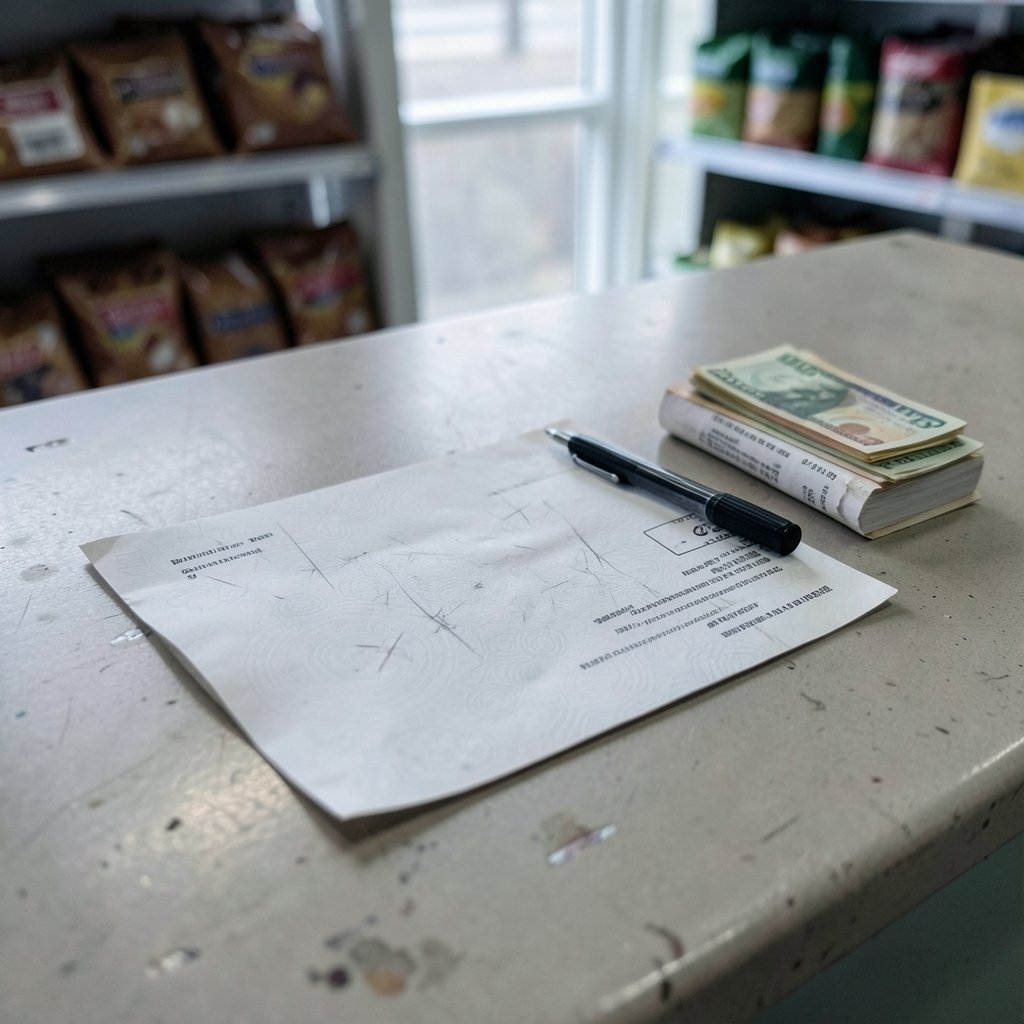
At a gas station counter, with a pen over a money order, do you put the date on the left or the right? Plenty of people have that question. Millions of people buy money orders every year because they are cheap, safe, and don’t require a bank account. The form still confuses almost everyone the first time.
The good news: a money order has only a handful of fields, and once you know what each one does, filling it out takes under two minutes. This guide walks through every line, the mistakes that cause payments to bounce back, and the habits that protect your money if something goes wrong.
What a Money Order Actually Is
A money order is a prepaid payment instrument. You pay the full face amount plus a small fee up front, and the issuer, whether that’s a bank, a credit union, a post office, or a retailer, guarantees payment up to a set limit. That’s the key difference from a personal check, which is a promise to pay later. With a money order, the money is already there.
That structure makes money orders popular with people who don’t have checking accounts, with landlords who want guaranteed funds, and with anyone sending money to someone they don’t know well. The trade-off is that money orders come with fixed maximum amounts. Limits and fees vary by issuer, so a bank, Walmart, Western Union, and MoneyGram will each set their own caps. The steps for filling one out are nearly identical everywhere, but the ceiling is not.
Read the Whole Form Before You Write Anything
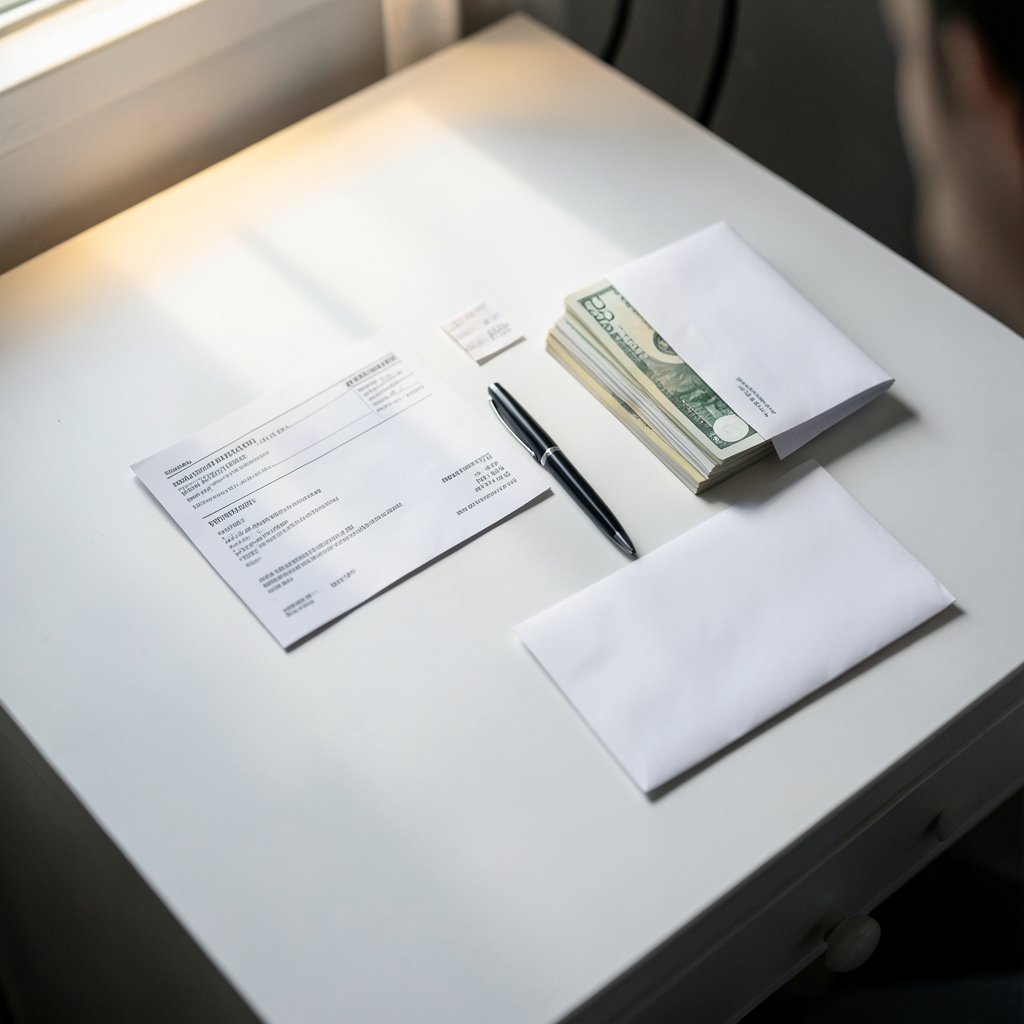
Here is the mistake almost everyone makes: they start writing immediately. Money orders are printed on security paper, and corrections are difficult or impossible. Some issuers will replace a spoiled money order, but you may pay a fee and wait weeks.
Before the pen touches paper, do three things:
- Confirm the exact name of the payee. If a company asks for “Acme Utilities LLC,” write that, not “Acme.”
- Count your cash twice. You are paying the face amount plus the fee in full.
- Find the receipt stub and set it aside. It carries the serial number, and it is your proof of purchase.
If you are buying several money orders at once, fill them out one at a time. Mixing up amounts across a stack is a classic error.
The Fields You Need to Complete
Most money orders share the same layout. The exact placement shifts slightly between issuers, but the fields are consistent.
| Field | What to Write | Common Mistake |
|---|---|---|
| Payee | The full legal name of the person or business | Nicknames or abbreviations |
| Amount in numerals | The dollar amount, e.g., 250.00 | Writing the fee into the amount |
| Amount in words | The same amount spelled out | Leaving it blank |
| Purchaser name and address | Your name and current address | Skipping the address line |
| Signature | Your signature, signed at the counter | Signing before you arrive |
| Receipt stub | Keep it, do not mail it | Throwing it away |
The Payee Line
Print the payee’s name clearly in the “Pay to the order of” field. Use the name exactly as the recipient uses it. If you are paying a bill, copy the name from the statement. If you are paying an individual, ask them how they want it written, because banks can be strict about matching names on deposits.
Never write “Cash” on the payee line. A money order payable to cash can be redeemed by anyone who finds it, which defeats the entire purpose.
The Amount in Numbers and Words
You will write the amount twice: once in figures and once spelled out. Do both. Fill in the numerals first, then spell the same amount out in words on the line below. Write “two hundred fifty dollars and 00/100” rather than just “two hundred fifty.”
Why bother with both? Because the law has a rule for what happens when they disagree. Under the Uniform Commercial Code, the written-out words control over the figures when the two conflict. If you write 250.00 in the box but “two hundred and five dollars” on the words line, a court would generally treat the words as the real amount. That rule protects people from altered numerals, but it also means a sloppy words line can turn a $250 payment into a $205 payment or worse.
Your Name, Address, and Signature
The purchaser section identifies who bought the money order. Print your name and current address. This matters if the money order is lost or stolen, because it links the instrument to you. (Z wave inclusion vs exclusion order matters every device)
Then sign it. But not yet, and this is the part people get wrong.
Do Not Sign Until You Hand It Over
An endorsed money order is like a signed blank check. If you sign the back before you reach the counter or the mailbox, anyone who picks it up can cash it.
The safe sequence is simple: fill out the front at home or in the car, keep the money order in your wallet, and only sign the back at the moment you hand it to the recipient or the clerk. If you are mailing it, sign the back right before it goes into the envelope, and consider sending it by a tracked method.
This habit matters even more in an era of sophisticated fraud. Scams that rely on fake payment instruments are widespread, and once money leaves your hands through an irreversible channel, recovery is rare. The same logic applies to other one-way payment methods: a gift card scam works because victims rarely get their money back, and a money order follows the same pattern. Prepaid value handed to a stranger is very hard to reclaim. (Money transfers and remittances)
Keep the Receipt Stub
The receipt stub is not junk. It holds the serial number, the date, and often the amount, and it is the single most important piece of evidence if the money order is lost, stolen, or never arrives.
Practical habits that actually work:
- Photograph the stub and the completed money order before you send it.
- Store the stub somewhere you will find it again, not loose in a bag.
- Note who you sent it to and when.
- If the recipient says it never arrived, do not immediately buy a replacement. Start a trace first.
Tracing procedures differ by issuer. The Postal Service, for example, offers a formal inquiry process for money orders it issues, with a fee, and it can tell you whether the instrument has been cashed. Banks and retail issuers have their own versions. The common thread is that you need the serial number, which lives on the stub.
Common Mistakes That Cause Problems
Even careful people trip on the same handful of errors. Watch for these.
Writing the fee into the amount. If the money order costs $1.50 and you want to send $100, the face amount is $100. The fee is separate. Writing $101.50 creates a mismatch with the words line.
Leaving the words line blank. Some clerks will not accept it, and some recipients will not deposit it. Fill in both amount fields every time.
Using pencil. Never. Use blue or black ink only, and press firmly enough to be legible but not hard enough to emboss the paper.
Signing the front in the wrong place. The front signature line is for the purchaser. The back is for endorsement. Signing the back at purchase time is the dangerous one.
Sending the stub with the money order. The recipient does not need it. You do.
Forgetting to check the limit. If you need to send $1,500 and the issuer caps money orders at $1,000, you will need two instruments, each with its own fee.
Money Orders vs Other Payment Methods
Knowing when a money order is the right tool saves both money and hassle.
| Method | Prepaid? | Typical cost | Reversible? | Best for |
|---|---|---|---|---|
| Money order | Yes | Small flat fee | Rarely | Unbanked payees, guaranteed funds |
| Personal check | No | Free to low | Yes, can be stopped | Known recipients |
| Cashier’s check | Yes | Higher fee | Rarely | Large amounts, home purchases |
| Wire transfer | Yes | Higher fee | No | Same-day large transfers |
| Digital payment app | Yes | Usually free | Sometimes | People you trust |
Money orders shine in a narrow but important lane: modest amounts, guaranteed funds, and recipients who may not accept personal checks. They are a poor choice for large sums, where a cashier’s check or wire is more practical, and a terrible choice for paying strangers who contacted you out of the blue.
That last point deserves emphasis. If someone you met online asks you to send a money order, especially after sending you a check for more than you asked, stop. Overpayment scams work by sending a fake instrument, then asking you to forward the difference through an irreversible channel. The fake instrument bounces days later, and your real money is gone. Understanding how fraud economies operate helps you spot the pattern: the same criminal networks that run payment fraud also chase digital assets, which is why central bank digital currency debates focus so heavily on fraud and settlement risk. The mechanics change; the pressure tactics do not.
Step-by-Step: Filling One Out in Order
Follow this sequence and you will not have to redo it.
- Check the issuer’s maximum amount and fee before you buy.
- Buy the money order and confirm the face amount matches what you intended.
- Print the payee’s full name on the “Pay to the order of” line.
- Write the amount in numerals in the dollar box.
- Spell the same amount out in words on the line below.
- Print your name and address in the purchaser section.
- Store the receipt stub somewhere safe and photograph it.
- Sign the front only if the issuer requires it at purchase; otherwise sign at the counter.
- Do not endorse the back until you are handing it over.
- If mailing, use tracking and tell the recipient to expect it.
If you are running a small business or side hustle and receiving money orders regularly, treat the stub like any other financial record. The same discipline that keeps a small operation solvent applies here: know where every dollar came from and where it went. Anyone learning how to make money with AI or any other venture will eventually meet a client who pays by money order, and clean records make tax time far less painful.
When Something Goes Wrong
Lost money orders are recoverable, but the clock matters. Contact the issuer as soon as you notice a problem, provide the serial number from your stub, and ask for a trace. If the money order was never cashed, issuers can often stop payment and issue a refund after a waiting period. If it was cashed fraudulently, the trace will show where and when, which is the starting point for a dispute.
Keep your expectations realistic. Refunds take weeks, not days, and fees may apply. This is exactly why the stub matters so much. Without the serial number, the process becomes far slower and sometimes impossible.
For anyone managing broader financial risk, the lesson generalizes. Identity fraud, payment fraud, and account takeover all cost more than the visible loss, because cleanup takes time and attention. Research into where identity threat detection costs really bite shows that the hidden labor of recovery often outweighs the stolen amount. A two-dollar money order mistake can cost you an afternoon; a pattern of careless payments can cost far more.
Conclusion
Filling out a money order is not complicated, but it rewards attention. Print the payee’s full name, write the amount twice, put your name and address in the purchaser section, keep the stub, and hold off on that signature until the moment of handover. Those five habits prevent nearly every problem people run into.
The bigger picture matters too. A money order is a tool for sending guaranteed funds to someone you trust, not a way to pay a stranger who found you online. Used well, it is one of the cheapest and most reliable payment methods available to people without a bank account. Used carelessly, it is cash with a paper trail you forgot to keep.
Frequently Asked Questions
What happens if the numbers and the written amount don’t match?
The written-out words generally control. Under the Uniform Commercial Code, when the figures and the words on a negotiable instrument conflict, the words are treated as the true amount. That protects against altered numerals, but it also means a careless words line can change what you actually pay. Always fill in both fields and double-check that they agree.
Can I fix a mistake on a money order?
Usually not by erasing or crossing out. Money orders are printed on security paper, and most issuers will not honor one that has been altered. If you make an error, ask the issuer whether they will void and replace it. Some charge a fee, and some require you to wait. This is why reading the whole form before writing is worth the extra thirty seconds.
Should I sign the back of a money order when I buy it?
No. Sign the back only when you are handing the money order to the recipient or the clerk. An endorsed money order with a blank payee line can be cashed by anyone who finds it, which is the same risk as carrying a signed blank check. Fill out the front at home, then sign at the moment of transfer.
How much can one money order be for?
It depends on the issuer. Postal money orders have a domestic cap of $1,000 each and a lower cap for international use, while banks, credit unions, and retail chains set their own limits. If you need to send more than the cap, you will buy multiple money orders, each with its own fee. Check the limit before you commit.
What do I do if my money order is lost or stolen?
Start with the receipt stub. It carries the serial number you need to request a trace from the issuer. The issuer can determine whether the instrument has been cashed and where. If it has not been cashed, they can often stop payment and refund you after a waiting period, sometimes for a fee. Report it quickly, because delay makes recovery harder.
Is it safe to send a money order to someone I met online?
Treat it as a red flag. Money orders are a favorite tool in overpayment scams, where a buyer sends an instrument for more than the asking price and asks you to return the difference. The instrument turns out to be fake days later, and the money you sent back is gone. Only send money orders to people and businesses you can verify through independent channels.



