
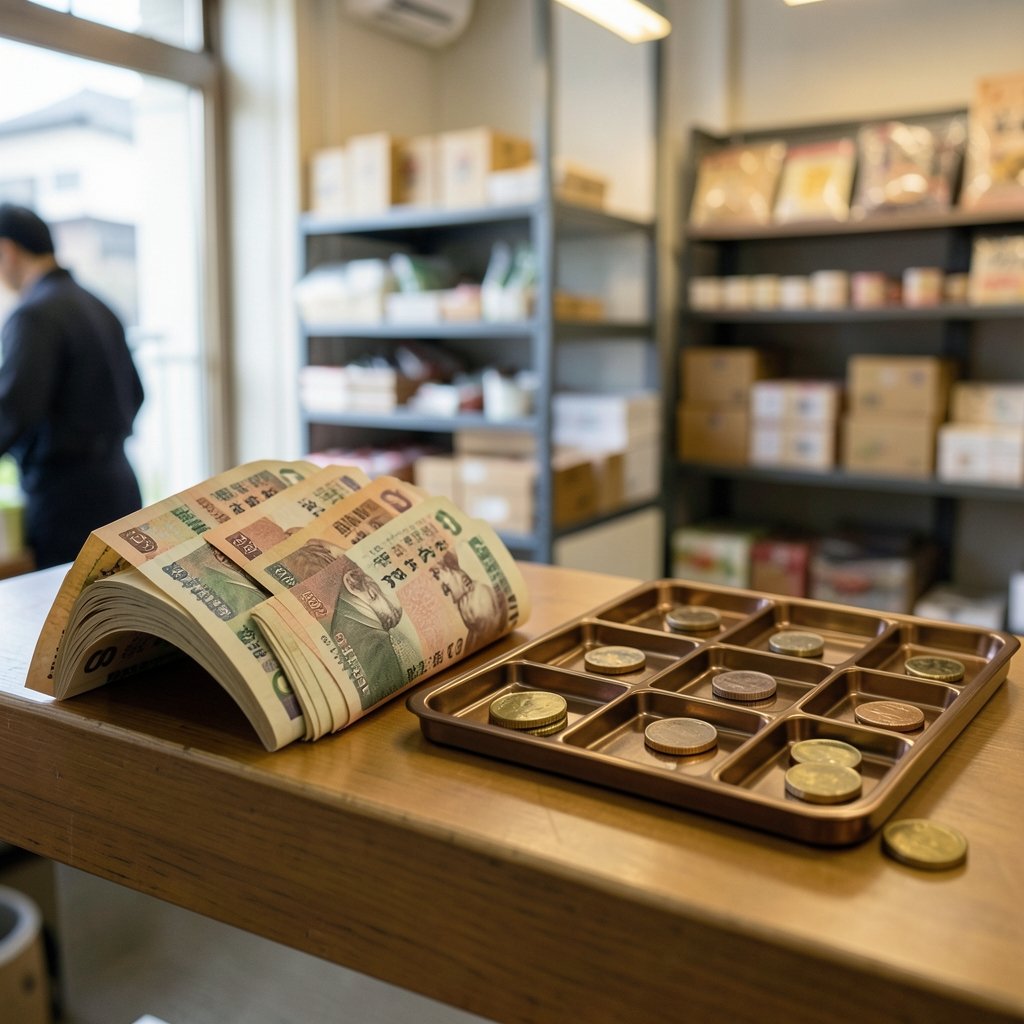
What makes Japanese money so different from the cash in your wallet? If you have ever landed in Tokyo with a pocket full of unfamiliar coins, watched a ¥10,000 note disappear on a single dinner, or wondered why so many shops still prefer paper bills to plastic, you have already bumped into the quiet peculiarities of the yen. Japan’s currency is one of the most traded in the world, yet it behaves in ways that surprise visitors and economists alike. This guide walks through the yen’s design, its role in daily life, its place in global finance, and the practical details that actually matter when you are counting coins at a register. (Japanese yen)
What Is the Yen and Why Does It Have Its Own Personality?
The yen (円, written en in Japanese) is Japan’s official currency, and its international code is JPY. The symbol ¥ does double duty for the yen and, confusingly, for China’s yuan, so serious documents always spell out the code instead of relying on the symbol.
The yen became Japan’s national currency in 1871 under the New Currency Act, replacing a patchwork of regional money issued by individual domains. That centralization did more than simplify trade. It gave a newly unified country a single unit of account, which mattered enormously as Japan industrialized and built modern banking.
The name itself comes from the Chinese yuan, meaning “round,” a reference to the shape of the coins. Early romanization turned that into “yen,” and the spelling stuck even as the pronunciation in Japanese remained en.
The Notes and Coins You Will Actually Handle
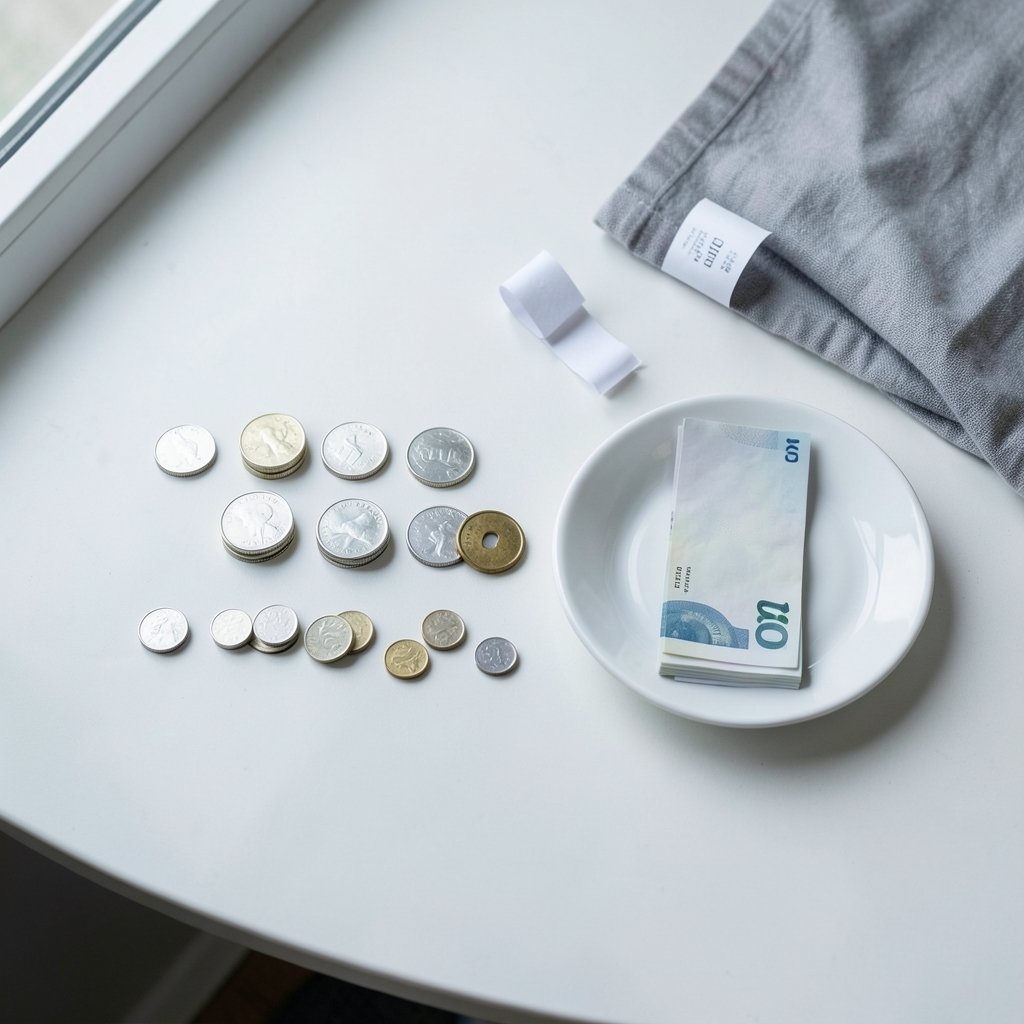
Japan keeps a compact set of denominations, which makes cash handling faster once you learn the lineup.
| Type | Denominations | Notes |
|---|---|---|
| Banknotes | ¥1,000, ¥2,000, ¥5,000, ¥10,000 | The ¥2,000 note exists but is rarely seen |
| Coins | ¥1, ¥5, ¥10, ¥50, ¥100, ¥500 | The ¥5 coin has a hole in the middle |
Banknotes are issued by the Bank of Japan, the country’s central bank, while coins are minted by the Japan Mint and issued through the government. That split matters when you are trying to understand who stands behind your money.
A practical tip that saves real time: sort your coins before you reach the register. Japanese shoppers routinely count out exact change while the cashier waits, and nobody finds it rude. The ¥5 coin with the hole is considered lucky by many people, so you may notice it set aside rather than spent.
The 2024 Redesign and Why It Matters
On 3 July 2024, Japan issued redesigned ¥1,000, ¥5,000 and ¥10,000 notes. The new bills feature Shibusawa Eiichi on the ¥10,000, Tsuda Umeko on the ¥5,000, and Kitasato Shibasaburō on the ¥1,000, along with sharper anti-counterfeiting features including 3D holograms.
Here is the part travelers get wrong: older notes remain legal tender. You do not need to rush to a bank to exchange the previous series. Shops will accept them. Some vending machines and ticket machines, however, may not have been updated to read the new designs, which is a small but real friction point in the first months after any redesign.
Is Japan Still a Cash Society?
Short answer: less than it used to be, but more than most wealthy countries. Japan built its retail economy around cash, and the infrastructure reflects that. Convenience stores have reliable ATMs. Trains accept cash at ticket machines. Restaurants that would never dream of a card-only policy in other countries happily run on bills and coins.
Cashless payments have grown steadily, and the government has actively encouraged that shift. Still, a meaningful share of small businesses, temples, local markets, and older establishments remain cash-first. The practical rule for visitors is simple: carry cash, but do not fear cards. Major hotels, chain stores, and department stores take plastic without complaint. The tiny ramen shop down the alley may not.
This cash-heavy habit shapes how people think about money in ways that go beyond convenience. It also makes fraud and theft patterns different from card-dominant economies. If you want to understand how payment habits connect to financial crime, a look at how a gift card scam works and why victims rarely get their money back shows how scammers adapt to whatever payment rails a country relies on.
The Yen in Global Finance: Funding Currency and Carry Trade
Here is where Japanese money gets genuinely interesting for anyone watching markets. Because the Bank of Japan held interest rates at or below zero for years, including a negative rate policy introduced in January 2016 and ended in March 2024, the yen became a favorite funding currency. Investors borrow cheaply in yen and invest the proceeds in higher-yielding assets elsewhere.
That practice is the engine of the carry trade, and it explains why the yen sometimes weakens even when Japan’s economy looks solid. When global risk appetite falls, those trades unwind quickly, and the yen can swing violently. For ordinary people, this shows up as sharp moves in exchange rates right before a trip.
The yen’s exchange rate has a dramatic history of its own. It was pegged at ¥360 per US dollar under the Bretton Woods system starting in 1949. The peg collapsed, the Smithsonian Agreement of December 1971 revalued the yen to ¥308 per dollar, and floating began in 1973. Then came the Plaza Accord of September 1985, which drove rapid yen appreciation and reshaped Japan’s export economy for a generation.
If currency design itself interests you, the broader question of how central banks are rethinking physical money is worth following. The debate over a CBDC, or central bank digital currency, and how central bank money is going digital covers the same questions Japan has been exploring in its own pilot programs.
Monetary Policy in Plain Language
The Bank of Japan’s monetary policy has been the subject of global fascination for over a decade. In January 2013, the BOJ adopted a 2% inflation target, and from 2013 onward it framed policy around price stability. Years of ultra-loose policy followed, including large-scale asset purchases and yield curve control.
Why should a traveler or small business owner care? Because BOJ decisions move the exchange rate, and the exchange rate moves your budget. A weaker yen makes Japan cheaper for visitors and more expensive for Japanese importers. A stronger yen does the reverse. Neither is simply “good” or “bad” — it depends entirely on which side of the transaction you sit.
For companies operating internationally, currency exposure is one cost among many that are easy to underestimate. The same is true of security spending, which is why breakdowns like this analysis of identity threat detection and where the money really goes are useful for budgeting realistically rather than guessing.
Practical Money Tips That Actually Work
Advice about Japanese money tends to be either obvious or wrong. These points come from the friction people genuinely hit.
- Withdraw from convenience store ATMs. Japan Post and the major convenience store chains have ATMs that accept foreign cards far more reliably than random bank machines. Bank branches often close at 3 p.m. on weekdays.
- Keep a coin purse. You will accumulate coins fast, and loose change in a pocket is how people end up paying with a ¥500 coin by accident.
- Do not tip. Tipping is not customary and can cause genuine confusion. Service is included in the price.
- Carry a small cloth or envelope for cash gifts. When money is given as a gift, presentation matters, and a bare handful of bills is not the norm.
- Check your change before you walk away. Cashiers count it back to you deliberately, and it is polite to confirm rather than pocket it blindly.
- Watch for the ¥2,000 note. It is real, it is legal tender, and some machines will reject it simply because they were never programmed for it.
One common mistake: assuming every ATM works with foreign cards. Many do not. Another: arriving with no cash at all because “everywhere takes cards now.” That is true in central Tokyo and false in plenty of other places.
Legal Tender Rules Most People Never Learn
Under Japan’s Currency Act, banknotes are unlimited legal tender — a shop cannot refuse them on the grounds that the bill is too large. Coins are different. They are legal tender only up to set limits: ¥20 for ¥1 coins and ¥100 for other coins. In practice, nobody enforces this at a register, but it explains why paying a large bill entirely in ¥1 coins is technically not something a merchant has to accept.
This is the kind of detail that rarely matters until it does. It also illustrates a broader point: legal tender rules define what a creditor must accept for a debt, not what a shop must accept for a purchase. Those are two different things, and confusing them is a common error.
The Digital Yen Question
The Bank of Japan has been running central bank digital currency pilots since 2021, testing a digital form of the yen that would sit alongside cash rather than replace it. The stated design goal has been a system that works for everyone, including people who do not use smartphones.
Whether a digital yen ever reaches everyday wallets is an open question. What is clear is that Japan’s approach has been cautious and deliberate, which fits a country that values payment reliability over novelty. For anyone building a business that touches money — whether it is automation, payments, or pricing — the practical lesson is to plan for a mixed environment. If you are weighing where technology genuinely pays off, this guide to using AI business automation without wasting money makes a similar point about matching tools to real needs.
Conclusion
Japanese money rewards a little preparation. The yen is a stable, well-organized currency with a small set of denominations, clear issuing authorities, and a cash culture that is softening but not disappearing. Learn the notes, sort your coins, keep some bills on hand, and do not panic when a machine rejects a bill it has never seen before. The bigger story — a currency shaped by a 1971 revaluation, a 1985 accord, years of negative rates, and a 2024 redesign — is a reminder that money is never just paper. It is policy, habit, and history pressed into a wallet-sized rectangle.
Frequently Asked Questions
What is the currency of Japan called?
It is the yen, written 円 in Japanese and coded as JPY in international finance. Its symbol is ¥, though that symbol is also used for China’s yuan, so official documents rely on the code instead.
Can I still use old Japanese banknotes?
Yes. Notes from earlier series remain legal tender after a redesign, including the bills replaced on 3 July 2024. The main catch is that some vending machines and ticket machines may not accept the newest designs until they are updated.
Is Japan still a cash-only country?
No, but it is more cash-oriented than most advanced economies. Cards and mobile payments work widely in cities and chain stores, while small restaurants, markets, and rural businesses often prefer cash. Carrying some bills is still the safest approach.
Why is the yen sometimes so weak against the dollar?
Years of very low interest rates made the yen a popular funding currency for carry trades, where investors borrow in yen to buy higher-yielding assets. That flow can push the yen down even when Japan’s economy is healthy, and it can reverse sharply when global markets turn.
What are the legal tender limits for Japanese coins?
Banknotes are unlimited legal tender. Coins are legal tender only up to ¥20 for ¥1 coins and ¥100 for other denominations under the Currency Act, which means a merchant is not obligated to accept a huge pile of small coins for a single purchase.
Do you tip in Japan?
No. Tipping is not part of the culture and can create awkwardness, since service is already included in the price. If you want to show appreciation, a simple spoken thank-you carries more weight than extra cash left on the table.



