
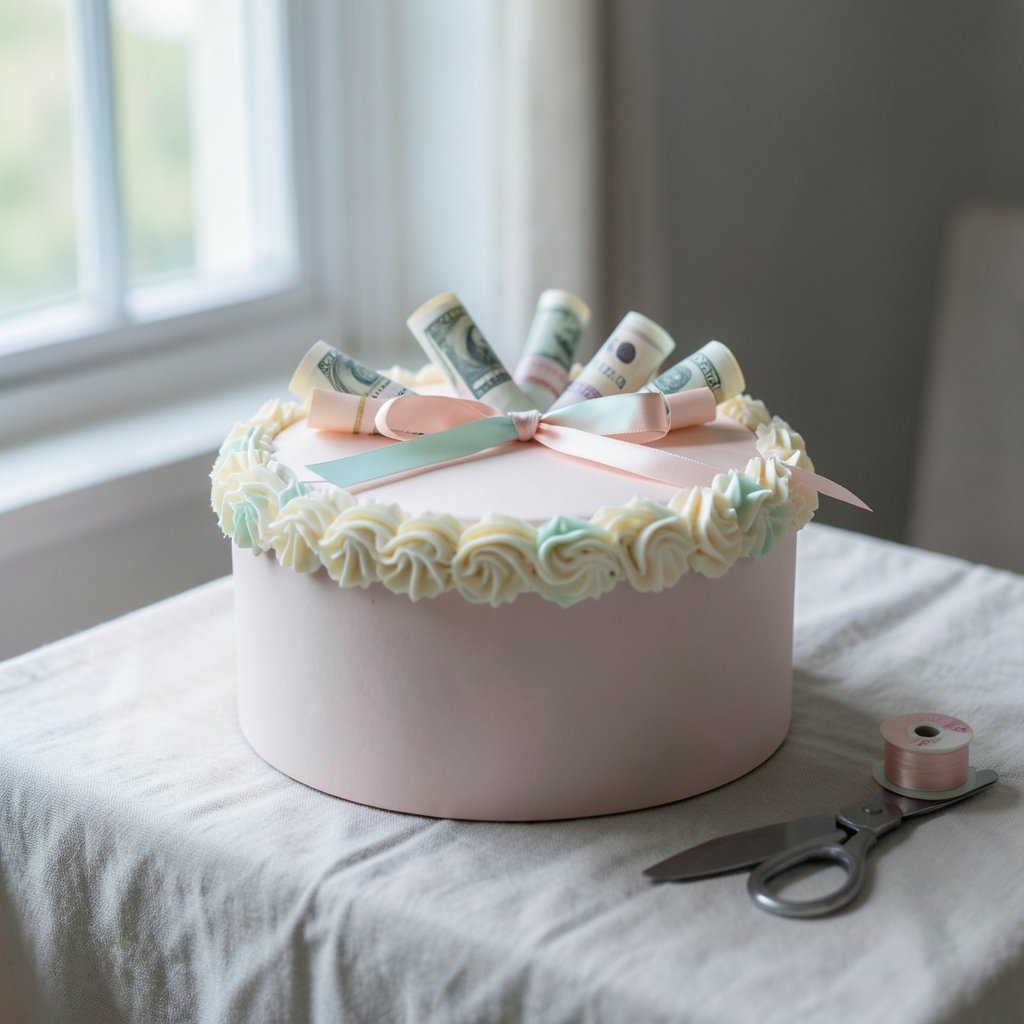
What do you give someone who already has everything, and who would rather have cash than another scented candle? A money cake. It turns a plain envelope of bills into an unwrapping moment people film, photograph, and talk about long after the party ends. But the term hides a few different objects, and the version you build matters. Some are simple rolled-bill towers. Others are pull-string boxes where guests tug ribbons until cash pops free. A few are actual baked cakes with coins hidden inside, an older tradition with its own rules.
This guide sorts out those versions, walks through what works in practice, and flags the mistakes that turn a cute idea into a sticky, awkward mess. Whether you are planning a graduation, a milestone birthday, or a wedding gift on a budget, the advice below is built to save you time, money, and at least one ruined batch of frosting.
What a Money Cake Actually Is
In everyday English, a money cake is a celebratory gift that hides cash inside a cake-shaped presentation. Most often the “cake” is not edible at all. It is a stack of rolled banknotes arranged to look like a layer cake, sometimes wrapped in ribbon, sometimes tucked into a cardboard or foam core, and sometimes built inside a lidded box with strings attached. (Cake)
There is no formal dictionary headword for the term. It lives in party-planning, craft, and gift-giving content, which is exactly why the definition drifts. If you search for tutorials, you will find three broad families:
| Type | What it is | Edible? | Best for |
|---|---|---|---|
| Rolled-bill cake | Banknotes rolled and stacked into tiers, often on a foam or card base | No | Birthdays, graduations, quick gifts |
| Pull-string money cake | A lidded box or tube with ribbons; pulling one releases cash | No | Parties with a reveal moment |
| Coin-in-cake tradition | A real baked cake with a coin or trinket hidden inside | Yes | Family traditions, holiday baking |
Knowing which one you mean before you start shopping is half the battle. A pull-string build needs a box, ribbons, and a plan for how the bills release. A rolled-bill cake needs a sturdy core and something to hold the rolls in place. A baked coin cake needs a coin, a warning to guests, and a steady hand.
There is also a looser, slangy use of “money cake” for a lucrative venture, as in a business that prints cash. That sense shows up occasionally in casual writing but has no firm dictionary backing, so treat it as conversational color rather than a definition.
Pull-String Money Cakes: The Reveal Version
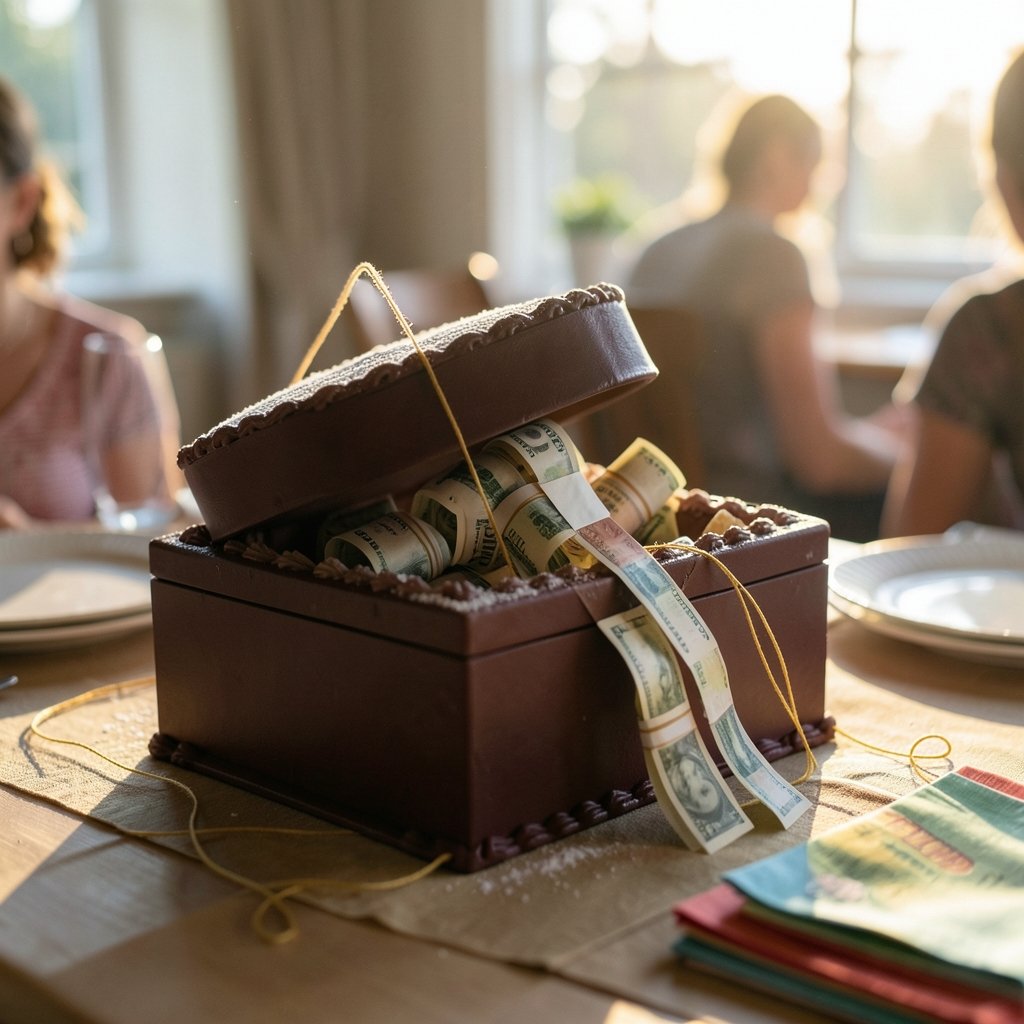
The pull-string cake is the version that dominates party videos, and for good reason. It creates suspense. Guests take turns tugging ribbons, nothing happens, then one pull sends a cascade of rolled bills out of the box. The build is part craft project, part engineering.
Here is the sequence that works in practice:
- Choose a round or square lidded box with a removable top and enough depth for folded bills.
- Cut a small slit or hole in the lid for each ribbon.
- Roll each bill tightly and secure it with a small piece of tape or a paper band.
- Tie one end of a ribbon to each roll and thread the other end up through the lid.
- Tape the lid shut so the whole thing lifts as one piece when pulled.
- Decorate the outside so it reads as a cake, not a box.
The common mistake is making the ribbons too short or too tight. If the bills are wedged in place, the reveal becomes a wrestling match, and someone ends up shaking the box upside down while the birthday person watches. Leave slack, test the pull before the party, and keep one ribbon as the “real” release so the moment lands.
A second mistake is using too many ribbons. Ten tugs with nothing happening gets old fast. Five or six is plenty, with one clearly tied to the payload.
Rolled-Bill Cakes: Simple, Sturdy, and Fast
If you want a money cake that survives a car ride and looks good on a table, the rolled-bill version is the reliable choice. You need a core, a base, and a way to keep the rolls upright.
A foam circle or a cardboard tube works as a core. Roll each bill into a tight cylinder, secure it with a small band, and stand the rolls in a ring around the core. Build upward in tiers, using a wider base for the bottom layer. Ribbon wrapped around each tier holds everything together and hides the bands.
Practical tips that save frustration:
- Use the same denomination throughout so the tiers look even. Mixed bills create a lumpy silhouette.
- Roll bills face out so the portraits and numbers are visible. A cake of blank paper edges looks like a craft fail.
- Keep the core hidden under the top tier. A visible foam block ruins the illusion.
- Skip tape directly on the bills when you can. Paper bands and ribbon do the job without adhesive residue.
One thing to consider before you commit: how the recipient feels about cash as a gift. Some people find it impersonal. Others prefer it to a fifth picture frame. If you are unsure, a money cake paired with a small meaningful item, like a handwritten note or a photo, softens the gesture. Gift-giving etiquette around cash varies by culture and family, and it is worth a quick read of the room.
Coin-in-Cake Traditions and the Hygiene Question
The older sense of money cake is a real baked cake with a coin or small trinket hidden inside. The finder is said to get good luck. Variants of this tradition appear in many cultures, often tied to holidays, New Year celebrations, or christenings.
It is charming, and it carries two real cautions.
First, choking and dental risk. A coin in a soft cake is easy to bite into by accident. Warn every guest, especially anyone with children at the table, and choose a coin large enough that it cannot be swallowed. Better yet, wrap it in foil or parchment so it is detectable.
Second, hygiene. Cash and coins are handled constantly and are widely treated as fomites, objects that can carry germs from one person to another. Food-safety guidance generally advises against letting currency touch food directly. If you want the tradition without the risk, wrap the coin thoroughly, or use a small ceramic charm made for the purpose instead of money.
The same logic applies to edible-print currency designs on cakes. A printed sugar sheet is food. A real bill pressed into frosting is not, and the frosting will not survive the encounter.
Cash Gifts, Scams, and the Money Side of the Equation
A money cake is a cash gift, which means the same practical rules apply: know how much you are giving, keep a record if it matters, and be careful with how the cash changes hands.
There is a less cheerful side to cash gifting worth knowing. Scam victims are often asked to pay in gift cards or cash because those methods are hard to reverse. Recovery rates are low, and the money usually disappears fast. Anyone pressured to turn cash into gift card codes for a “prize” or “fee” should stop and verify. Understanding how a gift card scam works and why victims rarely get their money back is useful context if a money cake conversation ever turns into a request for codes.
For the giver, the budgeting question is simple but easy to skip. Decide the total before you roll a single bill. A tiered cake looks impressive with small denominations, and no one counts from across the room. If you are weighing bigger financial decisions alongside gift spending, it helps to think about where money actually goes, whether that is a household budget or a business expense line. A clear look at where identity threat detection money really goes, for example, shows how easily security and fraud costs hide in plain sight, and the same instinct applies to gift budgets.
Money Cake Mistakes That Actually Happen
Most money cake failures are not dramatic. They are small, predictable, and avoidable. Here are the ones that come up again and again.
Using bills straight from a wallet. Creased, damp, or crumpled bills roll badly and look messy. Flatten them under a book for a day first.
Building too tall. A cake that leans is a cake that falls. Keep tiers wide and low unless you have a hidden support.
Skipping the test pull. Pull-string cakes need a dry run. Every time.
Forgetting the card. A money cake without a note leaves the recipient guessing who gave it. Tuck a card into the top tier.
Overdecorating the bills. Glue, heavy tape, and staples damage currency and make the cash awkward to spend. Ribbon and paper bands are enough.
Ignoring the recipient’s preferences. Some people love the spectacle. Others would rather have a plain envelope and no audience. Match the gift to the person, not the video you saw.
Legal and Practical Limits on Handling Cash
In the United States, altering or mutilating paper currency is restricted by federal statute. The relevant provision, found in the U.S. Code on mutilation of national bank obligations, addresses actions that render bills unfit to be reissued. Whether simply folding or rolling a bill into a gift counts is a question of interpretation rather than a clear rule, and rolling cash for a gift is common practice. (Cbdc digital currency central bank money going digital)
The safer principle is simple: do not glue, staple, laminate, or cut bills. Folding, rolling, and banding leave the note intact and spendable. If you are unsure about a particular technique, keep the modification reversible. A bill that can be unrolled and spent is a bill you have not damaged.
For large gifts, consider whether cash is the right form at all. A check or a bank transfer avoids the handling question entirely, and it is easier to replace if the cake gets knocked over. The trade-off is drama. A check does not cascade out of a box.
Making the Gift Land: Presentation and Timing
The best money cake is the one that fits the moment. A graduation party with a crowd calls for a pull-string reveal. A quiet family dinner calls for a neat rolled-bill cake on the table. A wedding or a religious celebration may call for something more formal, with the cash presented alongside a card rather than built into a novelty.
Timing matters too. Present the cake after the meal, not during it, so the recipient is not juggling cash and a plate. Have a bag or envelope ready for the bills once they are freed. And take the photo before the reveal, not after, because the tidy version is the one worth keeping.
If you are planning a bigger event and watching costs, the same discipline that keeps a money cake affordable applies elsewhere. A practical guide to choosing a wedding venue that saves money and stress makes the point well: decide the budget first, then design the moment around it, not the other way around.
For anyone building a side income to fund gifts like these, the mechanics of how AI companies make money or how to make money with AI can inform the plan, though neither replaces a simple savings habit. Small, steady amounts rolled into a cake beat a grand gesture that wrecks the month’s budget.
Conclusion
A money cake is less a single object than a family of gifts: the rolled-bill tower, the pull-string reveal, and the older coin-in-cake tradition. Each has its own build, its own risks, and its own audience. The version that works is the one matched to the recipient and the room, built with bills you have not damaged, tested before the party, and presented with a card that says who it came from.
Start with the simplest build that fits the occasion. Flatten your bills, keep the tiers low, leave slack in the ribbons, and test the pull. Skip the glue, warn the guests about any hidden coin, and decide the total before you roll the first note. Do that, and the cake does its job: it turns cash into a moment, without turning into a project that eats the evening.
Frequently Asked Questions
What is a money cake?
A money cake is a celebratory gift that hides cash inside a cake-shaped presentation. Most versions are not edible. They are built from rolled banknotes stacked into tiers, or from a lidded box with ribbons that release the bills when pulled. A separate, older tradition hides a coin inside a real baked cake for luck.
How much cash should go in a money cake?
There is no fixed rule. Decide the total before you start, then choose small denominations so the tiers look full without overspending. A cake built from single bills can look generous for a modest amount. Match the total to your relationship with the recipient and your budget, not to what you saw online.
Is it legal to put money in a cake?
Rolling or folding bills for a gift leaves the currency intact and spendable, and it is common practice. What you should avoid is gluing, stapling, laminating, or cutting bills, since U.S. law restricts mutilating paper currency. Keep any modification reversible, and skip adhesives that leave residue on the notes.
Can I bake a real cake with money inside?
You can hide a wrapped coin or charm in a baked cake, but putting raw cash in contact with food is a hygiene risk, since currency is handled constantly and can carry germs. Wrap the item thoroughly, choose something too large to swallow, and warn every guest before serving. Many families use a ceramic charm instead of a coin. (Food and Nutrition)
How do I make a pull-string money cake?
Use a lidded box deep enough for rolled bills. Cut a slit in the lid for each ribbon, tie one end of a ribbon to each roll, and thread the other end up through the lid. Tape the lid so it lifts as one piece, decorate the outside, and test the pull before the party. Five or six ribbons is enough.
What are common money cake mistakes?
The usual culprits are crumpled bills that will not roll, tiers built too tall to stand, ribbons tied so tight the bills will not release, and no test pull before the event. Forgetting a card is another common one. Flatten the bills first, keep the build low and wide, and do a dry run.



