A pod brewer can make a fast morning cup with almost no measuring or cleanup. That convenience suits busy mornings, shared kitchens, and anyone who wants one button between waking up and coffee. The tradeoffs are real: you may prefer the taste of freshly ground beans, and used pods create extra waste.
This roundup helps you match a machine to your counter space, drink preferences, and interest in ground coffee. Keurig accounted for 74 percent of single-serve coffee makers purchased by members from 2024 through the first half of 2025. That figure shows the brand’s reach, not that every Keurig fits every home. The best match is the one whose everyday convenience is worth its tradeoffs for your household.
Repeat-cup speed means the time a brewer takes to make another serving after the first cup. The picks cover compact use, milk drinks, dual brewing, and alternatives for people who put flavor first.
Key Takeaways
- Choose the K-Supreme Plus Smart for fast, consistent K-Cup brewing.
- The K-Mini Mate fits a simple, lower-cost setup in a small kitchen.
- The K-Café models suit milk drinks and added drink controls.
- The Instant Dual Pod Plus accepts K-Cups and Nespresso pods.
- Ground-coffee brewers may suit you better when fresh flavor matters most.
- Measure your counter and check the pod format you already buy.
How are K-Cup coffee makers tested?
A useful comparison checks both how quickly the first cup arrives and whether the next cup is just as dependable. Repeat-cup speed matters when more than one person needs coffee, while temperature and serving size affect each cup. A fast machine can still brew coffee that does not suit your taste.
Testing 15 Keurig machines in 2026 measured speed, consistency, convenience, and brew control. Those factors help you narrow a list of pod coffee makers before deciding which coffee maker fits your kitchen. A good score shows how a machine performed under set conditions, not how every blend will taste to you.
- Speed: time for the first cup and the next serving.
- Consistency: how closely temperature and serving volume stay alike.
- Convenience: how simple the controls and cleaning feel.
- Brew control: whether you can set size or strength.
Speed, temperature, and serving consistency
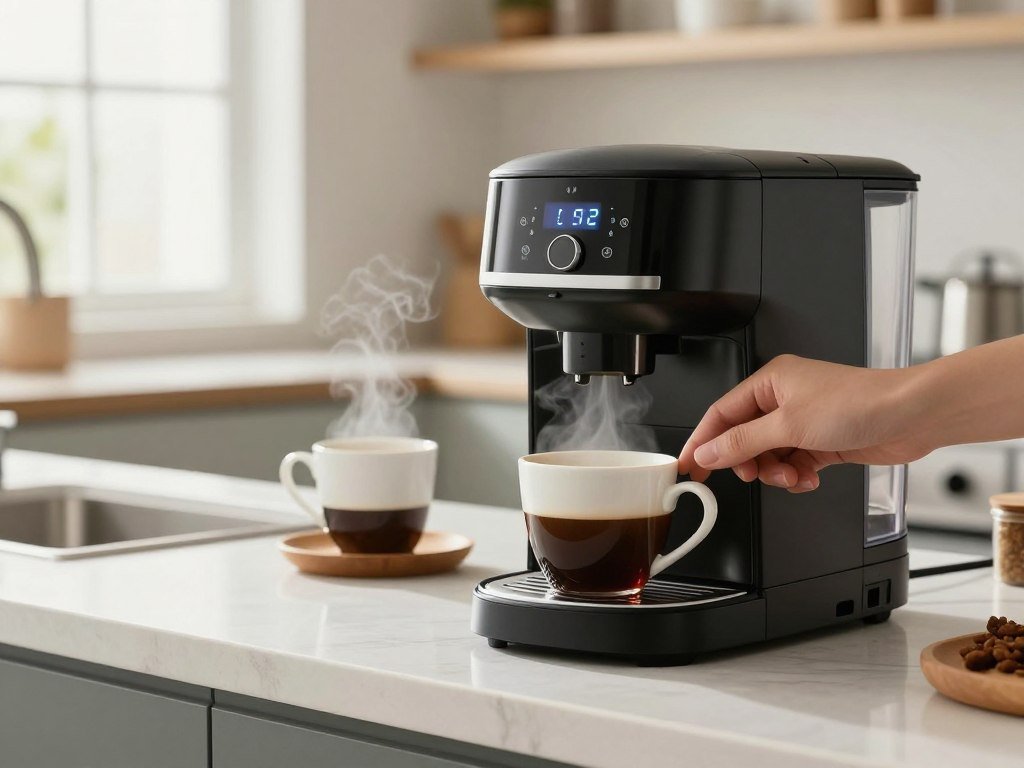
First-cup speed tracks the wait after a brewer starts from its resting state. Repeat-cup speed tracks the wait before another serving is ready. These results can differ, so a machine that starts quickly may slow down between cups.
Temperature checks show whether brewing water stays within a useful range. Serving-volume checks show whether a selected size delivers a similar amount each time. A cup that runs short can taste stronger, while one with extra water may taste weaker.
Temperature and volume do not tell the same story. Stable heat can support steady extraction, while stable volume helps keep the coffee-to-water balance alike. Neither measure can tell you whether a particular roast tastes pleasant.
Controls, cleaning, and everyday handling
Tests also look at brew-size and strength settings, button layout, and how much work cleaning takes. A removable water reservoir can be easier to fill at the sink than a fixed tank. A drip tray that lifts out can make room for taller travel mugs.
Think about the daily steps, not just the number of buttons. A machine with many settings may offer more control, but those choices can slow down a simple morning routine. Cleaning also matters if coffee splashes near the pod holder or grounds collect inside a reusable filter.
What lab scores do not tell you about taste
Lab measures can compare how a single-serve coffee maker works, but they cannot rank every person’s taste. Roast, brand, serving size, and whether you add milk can change your cup. A quick machine is no bargain if you dislike the coffee it makes.
Use performance results to remove weak fits, then consider the drinks you make most often. Treat test results as a way to narrow choices, then match the remaining options to your own taste and routine.
Best K Cup Coffee Maker for Most People
For a fast, consistent K-Cup cup, the Keurig K-Supreme Plus Smart is the clearest all-round choice. It earned excellent marks for first-cup speed and cup-size consistency, and it brewed later cups quickly. Choose it when dependable servings matter more than the simplest possible controls.
The model uses five needles in Keurig’s MultiStream system, which spreads water through the pod. Its performance makes it a strong fit for a household that values convenience but still wants control over brew strength. You can compare its settings with the Keurig coffee maker options before choosing.
| Model | Best fit | Concrete performance or feature |
|---|---|---|
| Keurig K-Supreme Plus Smart | Balanced speed and consistency | Excellent first-cup speed and cup-size consistency; quick later cups |
| Keurig K-Café Smart | Milk drinks and connected settings | Built-in milk frother and Wi-Fi |
| Keurig K-Mini Mate (K88) | Simplest compact choice | Very good overall rating |
| Instant Dual Pod Plus | Two capsule systems | Accepts K-Cup and Nespresso pods |
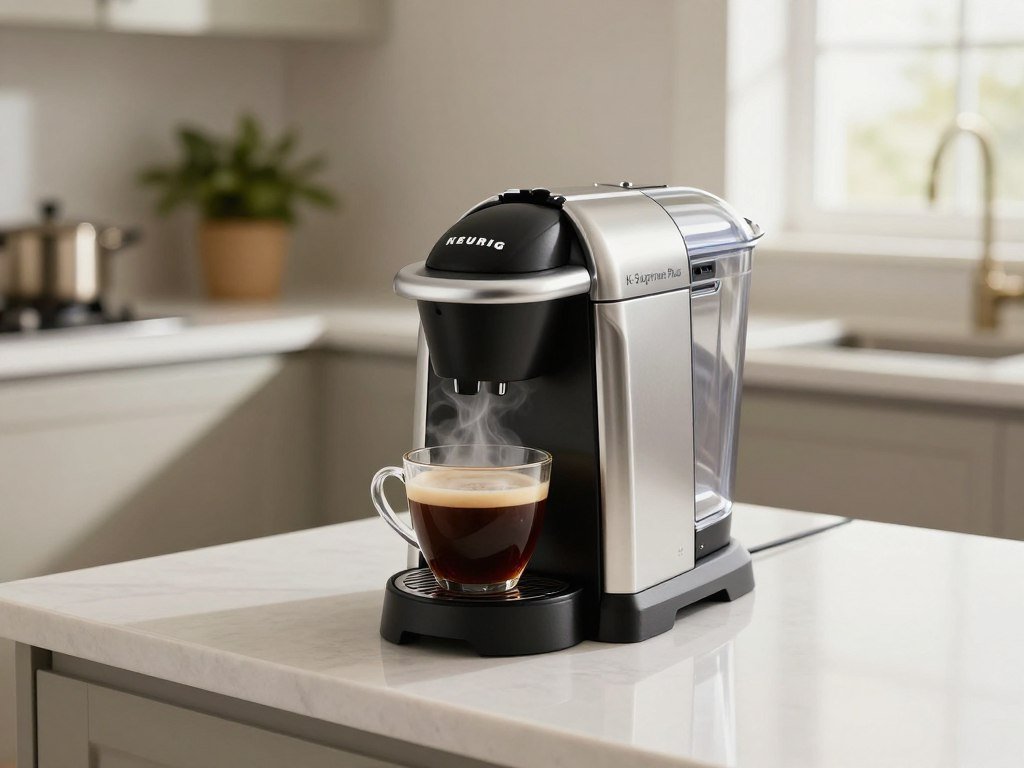
The K-Supreme Plus has a 78-ounce water reservoir and programmable favorites. A larger tank means fewer refills, though it also takes up more room than a compact coffee maker. Its extra settings can help if several people want different cup sizes.
The K-Café Smart is a strong overall performer, while the K-Mini Mate earns a very good overall rating. The K-Mini Mate was the least expensive of five listed Consumer Reports picks, making it a low-cost compact choice. The Instant Dual Pod Plus is the pick when you want two pod formats.
Searches for the best K-Cup coffee maker in 2025 deserve a current answer: these are 2026 choices, not a claim that older rankings still apply. The K-Supreme Plus Smart remains the overall pick here, but a small counter or a different capsule system can change your choice. Choose the K-Supreme Plus Smart if repeat servings and dependable cup size matter more than keeping the brewer as basic as possible.
Which compact Keurig fits a tight counter?
A narrow counter favors the K-Mini Plus, which is less than 5 inches wide. The K-Mini Mate is the simpler compact choice, while the Plus adds pod storage and a wider range of brew sizes. Measure first, because a small base does not guarantee easy access beneath cabinets.
The K-Mini Plus brews 6- to 12-ounce cups and stores up to nine K-Cups. The K-Mini Mate earned a very good overall rating, excellent first-cup speed, and very good repeat-cup speed. Both suit small spaces, but they do not offer the same storage or serving options.
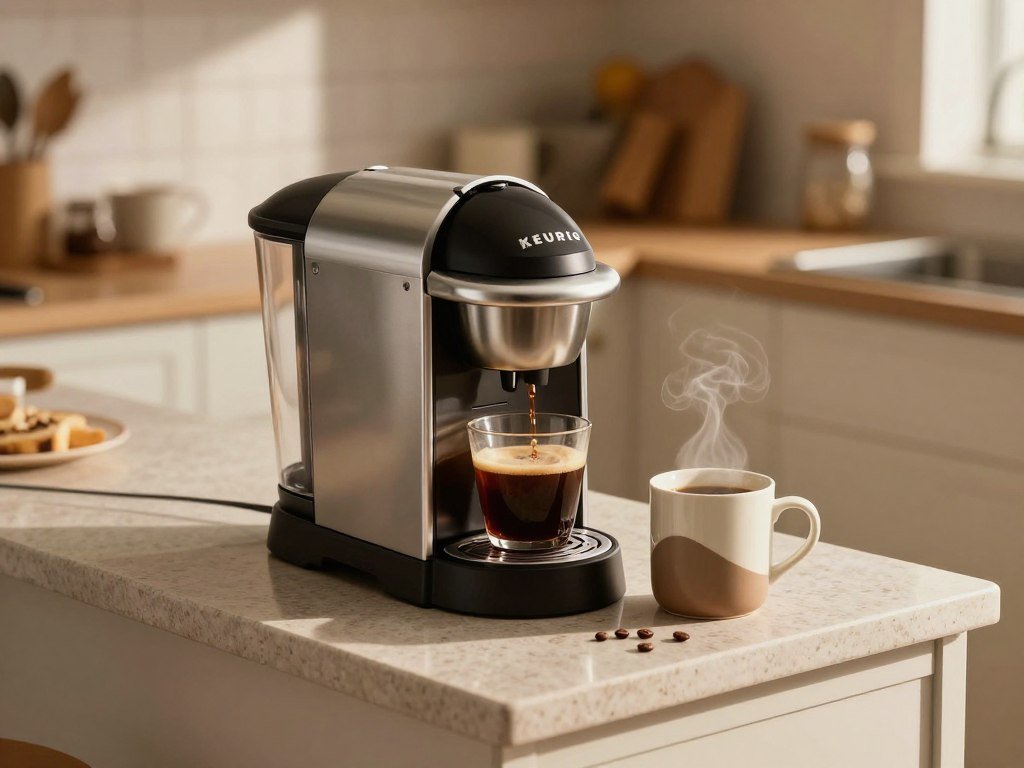
The K-Mini Mate uses fresh water for each brew rather than a larger shared water reservoir. That means you refill it before every cup, unlike a machine that stores water for several servings. The tradeoff is a simpler footprint and no standing tank to take up space.
- Width: check the brewer’s full base, not just its front view.
- Filling access: leave room to open the water area.
- Cup clearance: check space beneath cabinets for your tallest mug.
- Used pods: plan where the pod will go after brewing.
Access can be as important as width. A brewer may fit on a shelf but feel awkward if you cannot lift its handle or reach the filling area. The drip tray also affects whether your usual cup sits at a comfortable height.
Measure the counter and the space beneath cabinets before choosing. Include the room needed to open the brewer, set down a mug, and reach the water. Measure the full spot, including room to open the brewer and place a mug, before committing to a compact footprint.
Which Keurig suits lattes, iced coffee, or a larger reservoir?
For milk drinks with connected controls, the K-Café Smart combines a built-in frother with programmable Wi-Fi features. It earned very good to excellent overall performance and especially quick first-cup speed. Connected settings suit you if you like saving drink choices for later.
The K-Café Smart brews a uniform amount across cups and has a removable reservoir. The K-Cafe has a dedicated 2-ounce concentrated-coffee setting and a dishwasher-safe frother for hot or cold milk. Neither makes technically real espresso; a smaller serving is still brewed at Keurig pressure.
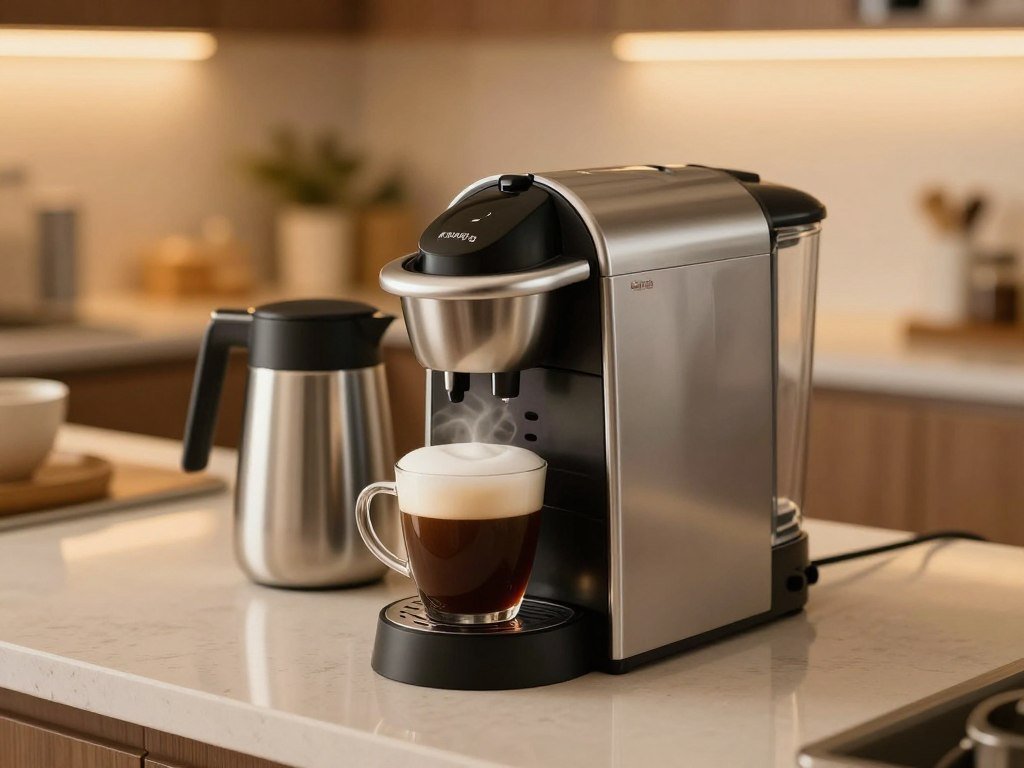
The K-Cafe Barista takes a different approach, with a separate milk frother and a 42-ounce reservoir. It offers shot, 8-, 10-, or 12-ounce brew sizes, so you can choose a smaller serving or a full mug. Its separate frother leaves the coffee machine free of a built-in milk unit.
The K-Elite fits a different routine, especially if you want a larger tank and iced-coffee setting. Its 75-ounce reservoir, five cup sizes, strong-brew setting, iced-coffee setting, and programmable timer give you several ways to set up a cup. The iced setting does not guarantee a stronger-tasting cold drink.
The removable drip tray makes room for a mug up to 7.2 inches tall. The K-Elite measures 12.7 by 9.9 by 13.1 inches, and reaches 16.5 inches when open. Check that open height under cabinets, and allow space for its 1,500-watt power use in your kitchen setup.
Some drinkers found the iced setting produced coffee that tasted too watery. Brewing hot coffee over ice can leave a cold drink weaker than expected, even when you select the iced option. If iced coffee is your priority, account for the possibility that the K-Elite’s setting tastes watery to you.
Which coffee maker brews both pods and a full pot?
The Hamilton Beach Advanced 5-in-1 is the clearest match if one appliance needs to brew pods, grounds, and a full pot. It makes a single cup from a K-Cup or ground coffee, then switches to a drip carafe for a group. One machine can cover different household routines.
Its first pod cup is very good for speed, but repeat-cup speed is mediocre. A quick first serving does not mean the next pod cup will be ready just as fast. This matters when several people want individual cups one after another.

A single brewer with two brewing styles
The Hamilton Beach Advanced 5-in-1 can brew a K-Cup, ground coffee, or a full pot of drip coffee. That range suits a home where one person wants a quick weekday mug, while guests need more coffee on weekends. You can use grounds for the carafe and keep pods for single servings.
It works as a drip coffee maker as well as a pod machine, but its repeat-cup pace is the main tradeoff. A household that needs three pod cups in a row may wait longer after the first. A carafe avoids making each guest’s serving separately.
The one-cup setting can also help when you want to use a favorite ground blend without brewing a whole pot. You still need to measure the coffee and clean the reusable filter. That extra task may matter more than the range of brew options on a busy morning.
A carafe brewer with a slower second pod cup
The Keurig K-Duo pairs a K-Cup option with a drip carafe. It uses one brewing mechanism, so it cannot brew a pod cup and carafe at the same time. Plan on making one drink style, then the other.
A couple could use the pod setting for one weekday mug, then brew a carafe when friends visit. That is a useful split if the carafe gets regular use, rather than sitting idle between occasional gatherings. The added carafe parts take more counter space than a one-cup brewer.
Compare how often you make a full pot with how often you brew one mug. A dual-use brewer earns its place when both jobs are part of your routine. Favor a dual-use brewer only if its carafe function will get regular use, since it takes more counter space than a one-cup machine.
Which brewer keeps cup-to-cup results consistent?
For predictable cup volume and temperature from one serving to the next, choose the Cuisinart SS-10. It delivers consistent coffee volume and temperature, with a removable reservoir and built-in water filter. Consistency matters when you want the same cup without changing settings.
The Nespresso CitiZ EN267BAE brews first and later cups quickly, though back-to-back brew temperatures may vary. The Hamilton Beach Advanced 5-in-1 keeps drip-brew water between 195°F and 205°F for 5 to 6 minutes. Volume consistency and heat consistency shape the cup in different ways.
| Model | Consistency or speed finding | Practical feature or exception |
|---|---|---|
| Cuisinart SS-10 | Consistent volume and temperature across cups | Removable reservoir and built-in filter |
| Nespresso CitiZ EN267BAE | Quick first and later cups | Back-to-back temperature may vary |
| Hamilton Beach Advanced 5-in-1 | Drip water stays 195°F to 205°F for 5 to 6 minutes | Very good first pod cup, mediocre repeat-cup speed |
Steady temperature affects how well brewing water draws flavor from the coffee. A steady serving volume keeps the amount of water alike from cup to cup. One brewer can do well on heat but vary in the amount it pours.
The SS-10’s removable water tank is easier to fill at a sink than a fixed reservoir. Its built-in filter also gives you a way to filter water inside the brewer. Those features may be handy if you use the machine several times a day.
The CitiZ suits a routine that values quick cups, but its heat can change between back-to-back servings. The Hamilton Beach holds drip-brew water in a set range for several minutes, yet takes longer to make another pod cup. If you often brew several cups back to back, weigh consistent temperature more heavily than a fast first pour.
Can one machine use K-Cups and Nespresso pods?
The Instant Dual Pod Plus is the straightforward choice when you want one machine to accept both K-Cups and Nespresso pods. It also lets you adjust brew strength, which gives you some control across the two capsule systems. Check the format before stocking up on coffee.
The Nespresso Vertuo Plus is for Vertuo capsules, not both formats. It brews 1.3-, 2.7-, 5-, and 8-ounce drinks, holds 40 ounces of water, and stores up to 10 used capsules. Its tank can pivot to the side or back, which helps when counter space is tight.
| Model | Pod format | Useful distinction |
|---|---|---|
| Instant Dual Pod Plus | K-Cup and Nespresso | Adjustable brew strength |
| Nespresso Vertuo Plus | Vertuo capsules | Barcode-guided brewing; 1.3- to 8-ounce drinks |
| Cuisinart SS-10 | K-Cup | Removable reservoir and built-in water filter |
The Vertuo Plus reads a barcode on each aluminum capsule to set its brewing steps. That feature belongs to its dedicated capsule system. If you want different drink sizes from Vertuo pods, it offers four listed sizes from 1.3 to 8 ounces.
Keurig K-Cups offer more variety in coffee blends and brands than Nespresso pods. The Instant is the direct answer when you want both formats, while the Vertuo Plus fits you when you prefer its dedicated capsule range. Bruvi is another separate system that uses its own proprietary pods.
Do not assume that a pod machine accepts every capsule with a similar shape. The Instant Dual Pod Plus handles the two named formats, while the Vertuo Plus is made for Vertuo capsules. Check the exact capsule format before buying pods, because a machine made for one system may not accept another.
What should you choose when coffee flavor matters more than pods?
If fresh grinding matters more than pod speed, the Cuisinart Custom Grind & Brew is the clearest all-in-one alternative. It has a built-in stainless-steel burr grinder, so it grinds beans before brewing them. Fresh grounds can give you a more lively cup than stored coffee in a pod.
Pod coffee generally does not taste as fresh or high-quality as coffee from a top-performing drip brewer. That difference may matter if flavor comes before one-button convenience. The Cuisinart Custom Grind & Brew is the best fit here for a machine that grinds and brews fresh beans.
Fresh grinding in a single-serving machine
The Cuisinart has a half-pound bean hopper and a 58-ounce water reservoir. Its settings make 8- to 24-ounce servings, so you can brew a smaller cup or a larger amount. That range makes it a choice for people who want fresh coffee without making a full carafe.
A built-in grinder means fewer steps before brewing, but it does not remove cleanup. You must wash the reusable filter after each use, and ground coffee can leave residue around the basket. Consider that task if your usual morning routine needs to be quick.
Fresh beans also ask you to choose a grind-and-brew setup instead of a pod-only system. That can suit you if taste is the main goal, and you do not mind handling beans or rinsing parts. It is a practical answer to the question of which coffee machine both grinds and brews.
A small drip brewer for better-tasting coffee
The Ratio Four offers a compact batch-brewing option for ground coffee. It brews up to four 5-ounce cups and averages 200°F. You can brew into a mug or use a carafe, depending on how much coffee you need.
A small drip coffee maker takes more measuring and cleanup than a pod brewer. Yet the fresh grounds and batch method may appeal if you care about the flavor in your cup. Pod convenience can come at the expense of freshness and taste.
Compare the task you want to avoid: measuring coffee, cleaning a filter, or accepting a less fresh cup. A single-serve coffee machine can save steps, while a drip coffee maker gives you more say in the coffee itself. Choose a ground-coffee brewer when better flavor is worth measuring and cleaning up after each batch.
Can a Keurig make real espresso?
No Keurig makes technically real espresso, because its roughly one bar of pressure is far below espresso’s around nine bars. Pressure is the difference, not the small serving size or dark roast. An espresso-labeled K-Cup remains a standard K-Cup brewed at Keurig pressure.
Espresso is a brewing method, not a bean or roast name. A smaller Keurig serving can taste stronger, but it does not create the high-pressure extraction used for espresso. The About Coffee guide to espresso explains the method and how it differs from brewed coffee.
What espresso pressure means for a K-Cup
A Keurig brewer produces roughly one bar of pressure, while espresso requires around nine bars. That gap means an espresso-style K-Cup cannot make a true espresso shot, even if its label says espresso. A small cup only changes how much water passes through the pod.
An espresso K-Cup usually has about 75 to 150 milligrams of caffeine, depending on the blend. That amount is not a promise of espresso strength. Roast, serving size, and the coffee blend all affect the cup’s taste.
Espresso-style K-Cups and the strongest small serving
For a stronger espresso-style K-Cup, start with the smallest serving your machine offers. Use 4 ounces if available, or 6 ounces otherwise, and turn on strong brew when the setting exists. Add milk or ice after brewing so you can judge the coffee first.
- Choose the smallest serving, 4 ounces if available or 6 ounces otherwise.
- Enable strong brew if your machine offers that setting.
- Adjust the amount of milk or ice after brewing.
Lavazza Espresso Italiano K-Cups use 100% Arabica beans with sweet-fruit and floral notes. San Francisco Bay Espresso Roast OneCup pods also use 100% Arabica, with dark-chocolate and smoky-spice notes. Café Bustelo Espresso Style Dark Roast blends Arabica and Robusta beans and lists 120 milligrams of caffeine per cup.
The three blends offer different flavors, not a single best choice for every coffee drinker. Lavazza leans toward fruit and flowers, while San Francisco Bay has deeper chocolate and smoke notes. Café Bustelo’s mixed beans make it a distinct option. Read the caffeine amount and roast description on the pod label, then start with a small serving to avoid a thin-tasting cup.
Which pods should you try, and how can you reduce pod waste?
A variety pack is a practical way to sample several roasts, but the pod name alone does not guarantee a satisfying cup. K-Cups include more brands and blends than Nespresso pods, so you can try a wider range of familiar coffees. Try before stocking up on a large box.
Familiar labels can still disappoint. Folgers Breakfast Blend Mild Roast ranked 26th of 26 K-Cup varieties in a 2026 taste test. IHOP Signature Blend was described as watery and bitter, while Walmart Great Value House Blend was called over-roasted and watery.
Pod convenience can reduce measuring, but it leaves a used pod after every cup. Keurig K-Cups generally need their parts separated before recycling, and the coffee pouch area needs cleaning. Check your local recycling rules for the plastic portion before sorting it.
- Separate the pod components.
- Clean the coffee pouch area before recycling.
- Check the power outlet and connection if the machine will not turn on.
- Run a water-only cycle or descale if debris may affect brewing.
A brewer that will not start may have a loose plug or a failed outlet, so check the power connection first. Brewing trouble can come from debris inside the tubing. A water-only cycle or descaling can help clear it.
Sample one serving at a time if you are unsure about a roast, then keep notes on the blends you like. Separate and clean used K-Cups before placing their recyclable plastic portion in the appropriate bin.
Conclusion
A reliable choice starts with the routine you want the brewer to make easier. The K-Supreme Plus Smart suits you if speed and consistency matter most, while a compact brewer may fit a crowded counter better.
Ground-coffee machines are a better match when fresh flavor matters more than pod convenience. Your drink preferences and interest in cleaning a reusable filter also shape that choice. Start by measuring the counter and naming the pod format you already buy.
Measure the available space and check your preferred pod format, then choose the machine that fits both.
FAQ
Are coffee pods healthy?
Coffee pods are not inherently unhealthy, though caffeine levels vary by blend. A pod can make regular coffee with different roasts and serving sizes, so check its label if you track caffeine. People who manage caffeine intake for health reasons should follow their clinician’s advice. The pod format itself does not decide whether a cup fits your diet.
What are the most common problems with Keurig coffee makers?
A failed power connection can stop a Keurig from starting, while debris in its inner tubing can disrupt brewing. Check the outlet and plug first if the machine stays dark. If water flow or brewing seems off, try a water-only cycle or descale the machine. These simple steps address common power and buildup issues.
Who makes the best espresso k cups?
Lavazza Espresso Italiano and San Francisco Bay Espresso Roast are two good choices, depending on the flavor you like. Lavazza uses 100% Arabica beans and has sweet-fruit and floral notes. San Francisco Bay also uses 100% Arabica, with dark-chocolate and smoky-spice notes. Neither pod makes true espresso in a Keurig brewer.
What is the highest rated K cup coffee maker?
The K-Café Smart is a strong all-round performer, with very good to excellent overall performance and a particularly fast first cup. The K-Mini Mate earns a very good overall rating and suits a simpler, smaller setup. Pick the K-Café Smart for its extra drink features, or the K-Mini Mate when you want a compact brewer.
Is there a machine that does K cups and espresso?
The Instant Dual Pod Plus accepts K-Cups and Nespresso pods, but those formats do not make the machine an espresso maker. Keurig brewers can make a concentrated espresso-style drink with a small serving, though they do not use espresso pressure. If you want a true espresso shot, choose a machine built for that brewing method.
Do any Keurig machines make espresso?
No Keurig makes technically real espresso. Keurig pressure is roughly one bar, compared with around nine bars for espresso. You can make a more concentrated cup by choosing the smallest serving and using strong brew if available. That changes the cup’s strength, not the brewer’s pressure or the type of brewing method.
Which pod machine is best for making espresso?
The Nespresso Vertuo Plus is a pod option for espresso-size drinks, with a 1.3-ounce serving among its available sizes. A Keurig’s espresso-labeled K-Cup is still brewed at standard Keurig pressure, so it is espresso-style coffee rather than real espresso. Choose based on the drink size and capsule system you want to use.
Are there real espresso K cups?
No K-Cup changes the pressure of the machine that brews it. “Espresso” on a K-Cup label describes the roast style, not a special espresso method. Espresso-labeled pods contain roughly 75 to 150 milligrams of caffeine, depending on the blend. Check the label for caffeine and roast details before choosing a pod.