
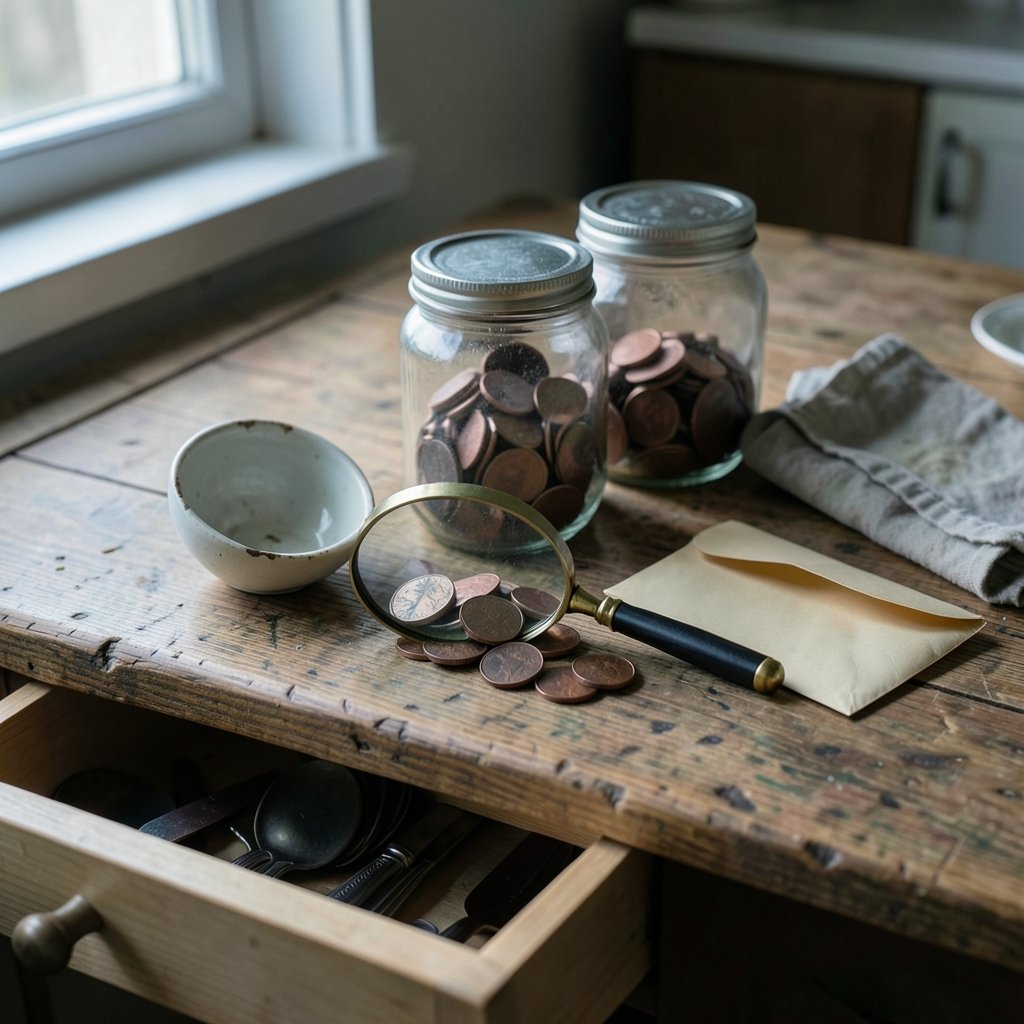
What if the loose change rattling around in your kitchen drawer is worth more than the coffee it would buy? The idea sounds like a scam email, but it happens to be true. A single Lincoln cent, struck more than a century ago, can sell for thousands of dollars, and the coins that carry that kind of value are not always locked in museum vaults. Some were spent by accident. Some sat in jars for decades. A few are still turning up in pocket change today.
The catch is that “rare penny” is one of the most abused phrases in collecting. Real rarities sit next to counterfeits, altered dates, and hopeful listings that never sell. Knowing which pennies actually matter, and why, is the difference between a fun afternoon with a magnifying glass and a wasted afternoon on an auction site. (Penny)
Why a One-Cent Coin Can Be Worth Thousands
Coin value comes down to a simple idea: scarcity plus demand. Millions of people collect Lincoln cents because they are affordable, familiar, and historically interesting. When a date is genuinely scarce, that large collector base pushes prices up fast.
The U.S. Mint has published a beginner-friendly overview of how collecting and authentication work, including why counterfeits are such a persistent problem in the hobby. The short version: the Mint never intended most of these coins to be rare. Accidents, die failures, and small production runs created the rarities by mistake.
There is also a grading factor that trips up almost every beginner. The same coin in “Good” condition and in “Mint State” condition can differ in value by orders of magnitude. The industry standard is the Sheldon 1–70 scale, which runs from barely identifiable to flawless. A collector who ignores grade will badly misjudge what a coin is worth, in either direction.
The 1909-S VDB: The Most Famous Penny in America
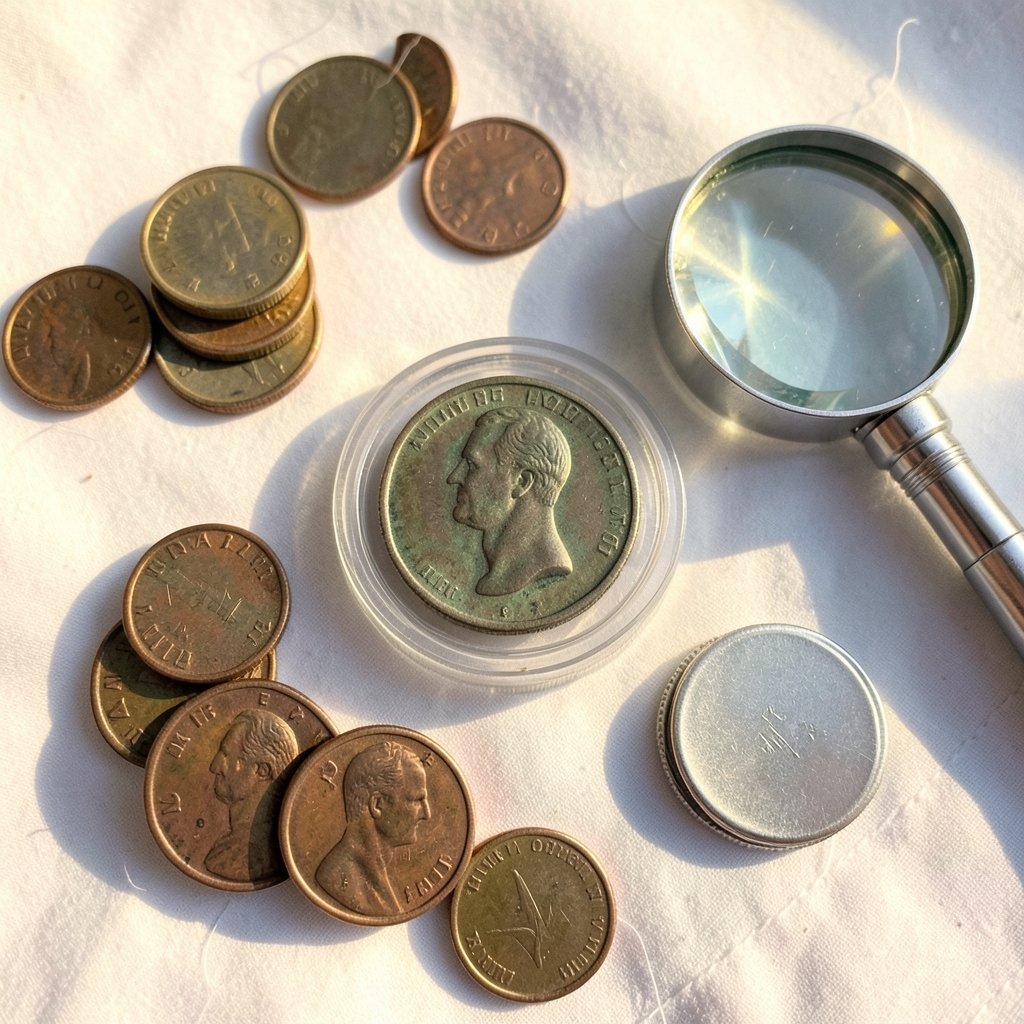
Ask any collector to name the first rare Lincoln cent, and you will hear the same answer. The 1909-S VDB was struck in San Francisco during the first year of the Lincoln cent, and only 484,000 were produced before designer Victor D. Brenner’s initials were removed from the reverse. That small mintage, combined with the story of the initials being pulled, made it the key date of the regular series.
Circulated examples have long traded in the high hundreds to low thousands of dollars. Uncirculated pieces go far higher. The 1909-S VDB is also heavily counterfeited, usually by adding an “S” mintmark to a common Philadelphia coin, so authentication matters.
The other key dates worth memorizing
The Lincoln series has a handful of dates that collectors call key dates and semi-key dates. These are the ones that carry real premiums even in worn condition:
| Date | Why it matters |
|---|---|
| 1909-S VDB | Lowest-mintage regular issue, initials removed |
| 1909-S | Scarce San Francisco issue without the VDB |
| 1914-D | Low mintage, frequently counterfeited |
| 1922 “no D” | Denver die missing its mintmark; a variety, not a separate date |
| 1931-S | Depression-era low mintage |
That 1922 plain is a good example of a trap. It is a variety created by a worn die, not a separate date, and it is routinely faked by grinding the mintmark off an ordinary 1922-D cent. Under magnification, the removal usually leaves tooling marks or a suspiciously flat field.
The 1943 Copper Cent: The Error Everyone Has Heard Of
During World War II, copper was needed for the war effort, so the Mint switched cents to zinc-coated steel. A small number of bronze planchets were struck by mistake, and those accidental 1943 copper cents became one of the most famous error coins in American history. The Mint’s historical documents collection is a useful place to understand the wartime transition that created the error.
Here is the practical warning. This is the single most counterfeited coin in the hobby. Common fakes include steel cents plated with copper and ordinary cents with altered dates. A magnet is a crude first test, since genuine steel cents stick and genuine bronze cents do not, but a magnet proves nothing about authenticity. Professional authentication by a grading service is the only reliable safeguard.
The 1955 Doubled Die: The “King of Errors”
A die error in 1955 produced dramatically doubled lettering on “LIBERTY” and the date, visible to the naked eye. Roughly 20,000 to 24,000 are believed to have escaped the Mint, a figure that is a commonly cited estimate rather than an official count. Collectors call it the King of Errors among Lincoln cents, and it is the error coin most often used to teach beginners what a doubled die actually looks like.
The distinction that matters: a doubled die is a die manufacturing error that stamps the same doubled image on every coin from that die. Machine doubling, by contrast, is a flat, shelf-like smearing caused by a loose die, and it is worth nothing extra. Beginners routinely confuse the two and overpay.
A word of caution about lists you find online. Some “most valuable pennies” roundups mix in the 1952 Washington–Carver half dollar “Superbird,” which is a famous error but not a penny at all. The genuine rare cent error from that era is the 1969-S doubled die. If a list cannot keep its denominations straight, treat its prices with suspicion.
What Actually Drives the Price of a Rare Penny
Four factors do most of the work, and they interact:
- Mintage and survival. A low mintage matters, but survival matters more. Many coins were melted during metal shortages.
- Grade. The Sheldon scale converts condition into money, and the jump between grades is not linear.
- Authenticity. A raw, unverified coin sells at a steep discount because buyers price in risk.
- Realized prices, not guide prices. The annual Red Book is a retail estimate, not a sale record. Auction archives are better evidence of what buyers actually paid.
That last point is where most people go wrong. They look up a number in a price guide, assume it is a payday, and list the coin for that amount. Guide values assume a problem-free, correctly graded coin and a retail buyer. A raw coin with an uncertain grade sells for less, sometimes much less.
How to Check a Penny Without Wasting Money
The practical workflow is boring, and that is exactly why it works.
- Sort by date first. Pull out anything before 1959, then check the key dates above. This takes minutes and eliminates most of the pile.
- Look at the mintmark. On Lincoln cents it sits below the date. A missing or suspiciously flat mintmark on a 1922 is a red flag, not a jackpot.
- Check for obvious errors. Doubled dates, off-center strikes, and wrong-planchet coins are worth a second look. Everything else is likely face value.
- Weigh suspicious coins. A 1943 cent should be steel, not bronze. A scale catches plated fakes fast.
- Do not clean anything. Cleaning strips the surface and destroys value. This is the most common and most expensive beginner mistake.
- Get key coins authenticated before selling. The fee is small compared with the discount you take selling raw.
If you enjoy this kind of cost-benefit thinking about small purchases, the same logic applies to subscription decisions, whether that is working out whether the Xbox game pass cost in 2025 reflects real value or weighing a streaming add-on against a one-off purchase. Collecting rewards the same habit: knowing what you are actually buying.
Where Beginners Get Burned
The pattern repeats often enough to be predictable. Someone inherits a jar of cents, finds a 1943 steel cent, searches online, and reads a headline about a six-figure copper error. They list the steel cent for a fantasy price. It never sells. The disappointment could have been avoided with five minutes of research.
The second common mistake is buying raw error coins from marketplace listings with blurry photos and no return policy. Reputable sellers disclose grading, offer returns, and provide certification numbers you can verify. If a listing has none of those, walk away.
The third is the altered date, where a common date is physically modified to resemble a rare one. Under a loupe, altered digits look uneven, the metal around them is disturbed, and the surface never quite matches the rest of the coin.
Grading services exist precisely because these tricks are so common. A certified coin carries a serial number and a grade assigned by a neutral third party, which is why certified examples command higher prices than identical raw coins.
Should You Actually Go Looking?
For most people, the honest answer is that the odds are low but the cost of checking is nearly zero. A few hours with a date list and a magnifying glass is a cheap hobby, and the historical detour is genuinely interesting. What is not worth doing is spending real money on raw “rare” pennies from unfamiliar sellers, or paying to grade coins that are worth face value. (Best games nintendo switch 2 whats worth your time money)
The realistic upside is modest: a semi-key date in decent condition, an interesting error, or a coin worth twenty dollars instead of one cent. The unrealistic upside, the one the internet sells, involves a coin that almost certainly is not in your drawer.
Where the hobby does pay off is in discipline. Collectors who learn grading, authentication, and realized auction prices make better decisions than collectors who chase headlines. That habit transfers. It is the same skepticism you would apply to a suspicious gift card scam offer or a too-good-to-be-true deal on anything else. The skill is recognizing when a number is real.
If you want a broader sense of how to judge whether a small purchase or subscription earns its cost, the same framework of real prices versus advertised prices applies, and it is worth reading up on how zero-based budgeting versus net worth tracking frames those decisions.
A Realistic Conclusion
Pennies that are worth money do exist. The 1909-S VDB, the 1943 copper error, the 1955 doubled die, and a short list of key dates are genuinely valuable, and some of them still surface in ordinary collections. But the gap between a valuable penny and a hopeful one is filled with counterfeits, altered dates, cleaned surfaces, and guide prices that never materialize at auction.
The sensible approach is unglamorous. Sort by date, learn the handful of key dates, check mintmarks and weights, never clean a coin, and authenticate anything valuable before selling. Do that, and you will avoid the expensive mistakes that catch most beginners. You probably will not find a fortune in the drawer. You might find a twenty-dollar coin, a good story, and a hobby that rewards patience over hype.
FAQ
What is the single most valuable penny?
The 1909-S VDB is the most famous and widely sought key date in the regular Lincoln cent series, with only 484,000 struck. Certain error coins, including genuine 1943 copper cents and high-grade 1955 doubled dies, can sell for more, but they are far rarer and much more heavily counterfeited.
How can I tell if a 1943 penny is real?
Genuine 1943 cents were made of zinc-coated steel, so they stick to a magnet, while a genuine bronze error coin does not. That test only rules out the crudest fakes. Copper-plated steel cents and altered dates fool magnets and eyes alike, so authentication by a professional grading service is the only reliable answer.
Are all wheat pennies worth money?
No. Millions of common wheat cents from the 1930s, 1940s, and 1950s are worth a few cents each in worn condition. Value concentrates in specific key dates such as 1909-S VDB, 1914-D, and 1931-S, plus genuine error coins. A date list is the fastest way to sort a jar.
Should I clean a dirty old penny before selling it?
Never. Cleaning removes the original surface, leaves hairline scratches, and can cut a coin’s value dramatically. Collectors pay for original surfaces and natural toning. A dirty coin with honest wear is worth more than the same coin scrubbed shiny.
What does a coin grade actually mean?
Grading describes condition on the Sheldon 1–70 scale, from barely identifiable to flawless Mint State. Because value rises steeply with grade, the same date can be worth a few dollars or thousands depending on condition. That is why certified grading exists and why raw coins sell at a discount.
Where should I check what a rare penny actually sold for?
Auction archives from established numismatic houses show realized prices, including the specific lot, grade, and date of sale. Price guides offer retail estimates rather than sale records, so they are a starting point, not proof. Always cite the specific auction lot rather than a general figure. (Numismatic Guaranty Company)



