
Quick Answer: How often to water money tree?
Most money trees need water every one to two weeks, but the calendar matters far less than the soil. The reliable rule is to let the top two to three inches (roughly five to seven centimeters) of potting mix dry out completely before watering again, then soak thoroughly until water runs out the drainage holes. In bright, warm rooms the soil dries faster; in winter, in low light, or in a large pot, the same plant may stretch to two or three weeks between drinks. Before you pick up the watering can, check soil moisture at depth, confirm the pot drains freely, note the season and light level, and look at the leaves for early warning signs of either thirst or rot.
Why the Calendar Is the Wrong Tool
Here is the question that trips up almost every new money tree owner: how often should I water it? The honest answer is that no fixed number exists, and anyone who tells you “every Sunday” is guessing about your home rather than reading your plant. Watering frequency is an outcome, not a rule. It falls out of four variables working together: how much light the plant receives, how warm the room runs, how big the pot is relative to the root ball, and what the potting mix is made of.
A money tree sitting in a south-facing window in July might dry out in five days. The same plant in a dim hallway in January might still be damp three weeks later. Water both on the same schedule and one gets thirsty while the other drowns. That is why horticultural guidance frames watering as a response to conditions rather than a routine, and why the most useful skill you can build is checking soil moisture with your finger or a cheap moisture meter before every watering.
There is also a transparency point worth making. Despite the confident-sounding advice all over the internet, there is no peer-reviewed standard for money tree watering intervals. The recommendations you see, including the one-to-two-week figure above, come from growers’ experience and extension-style horticultural practice, not from controlled trials. That does not make them wrong. It means you should treat them as a starting point to calibrate against your own plant, not as gospel.
Meet the Plant: A Swamp Tree in a Dry Living Room
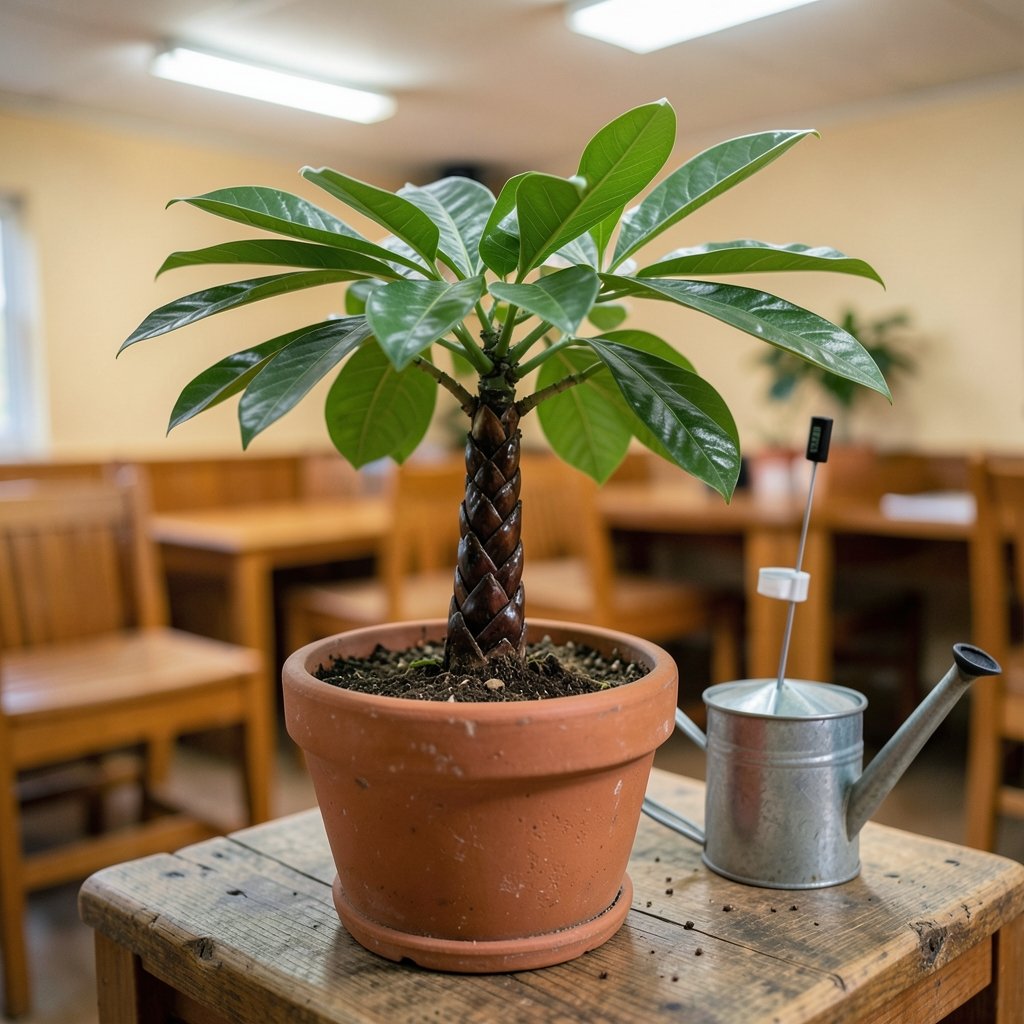
The braided-trunk houseplant sold as a money tree is Pachira aquatica, a species native to wetland and swamp habitats in Central and South America. In the wild it grows in consistently moist ground, which is why some owners assume it wants constant water. In a pot, the situation flips. A container holds a small volume of soil with limited air exchange, and roots need oxygen as much as they need moisture. Soggy soil suffocates roots, and that is the doorway to root rot, the single most common way these plants die indoors.
So the money tree is a plant caught between two identities: a moisture-loving swamp species and a houseplant that must dry out partially to breathe. The practical compromise is even moisture with a drying cycle, never bone-dry for long stretches and never waterlogged. Think of it as damp-then-breathe rather than wet-always.
Reading the Soil: The Only Test That Matters
Skip the schedule and learn the test instead. Push a finger, a wooden chopstick, or a moisture meter two to three inches into the mix, away from the trunk. If it comes out clean and dry, water. If it comes out cool and damp with soil clinging to it, wait.
A few practical refinements make this test far more reliable:
- Check in two or three spots. Watering channels through soil unevenly, so one dry corner does not mean the whole pot is ready.
- Weigh the pot in your hand before and after watering. A freshly watered pot is noticeably heavy; a dry one is light. Once you know the difference, lifting becomes a two-second check.
- Ignore the surface. The top half-inch dries within hours of watering while the root zone stays wet for days. Surface-dry soil is not the signal.
This is where most beginners go wrong. They touch the top of the soil, feel dryness, and water again, layering moisture on top of an already saturated root ball. Over weeks, that pattern produces the classic decline: yellowing lower leaves, soft or mushy stem near the soil line, and a sour smell from the pot. If you want to understand how small lapses compound into real losses, the way an overlooked leak under an appliance quietly wrecks a floor is a useful parallel; the same slow-burn logic applies to a plant sitting in water, as this piece on where to place a water leak sensor under a washing machine illustrates.
A Seasonal Watering Framework
While no calendar is universal, a seasonal framework helps you anticipate change instead of reacting to it. Use the table below as a starting hypothesis, then adjust based on what your soil test tells you.
| Season | Typical interval | What changes | What to watch |
|---|---|---|---|
| Spring | 7 to 10 days | Active growth, longer days | New leaves; soil dries faster |
| Summer | 5 to 10 days | Peak light and warmth | Thirst first, then heat stress |
| Autumn | 10 to 14 days | Growth slows, light fades | Falling light indoors |
| Winter | 14 to 21 days | Dormancy, short days, heating | Cold drafts and dry air |
Two cautions about this table. First, indoor heating in winter dries air but not necessarily soil, so do not assume a warm room means thirsty roots. Second, air conditioning in summer can slow drying even in bright light. The table is a compass, not a clock.
Light, Pot Size, and Soil: The Hidden Variables
Three factors quietly override every schedule you read.
Light drives water use more than anything else. Bright, indirect light means active photosynthesis and faster soil drying. A plant in deep shade uses very little water, so its soil stays wet for weeks, which is exactly how shaded money trees rot. If your plant dries slowly, the fix is often more light, not less water.
Pot size matters because a small root ball in an oversized pot sits surrounded by wet soil it cannot drink. When repotting, choose a container only one or two inches wider than the current one. Always confirm drainage holes exist; a decorative outer pot without holes is a rot trap unless you empty it after every watering.
Soil mix determines how long moisture lingers. A loose, chunky mix with bark, perlite, and coarse material drains and aerates far better than dense peat-heavy potting soil. If your plant stays wet for more than two weeks after watering, the mix is telling you something.
How to Water Properly, Step by Step
Frequency gets the headlines, but technique decides whether the plant thrives. Follow this sequence:
- Test the soil two to three inches down and water only when it is dry at that depth.
- Take the inner pot to a sink or shower if possible, so excess water drains freely away from the plant.
- Water slowly and evenly across the surface until water runs out the bottom holes.
- Let it drain completely, then return it to its spot. Never let the pot stand in a saucer of water.
- Empty any decorative cachepot within half an hour.
- Skip fertilizer on bone-dry soil; water first, feed later.
One more detail: the braided trunk is decorative, not functional. Do not water the braid or mist it in the belief that it feeds the plant. Roots drink; leaves and stems do not need a shower to stay hydrated.
Signs You Are Watering Too Much or Too Little
Leaves are a lagging indicator, so read them as confirmation rather than a first alert.
| Symptom | Likely cause | Response |
|---|---|---|
| Yellow lower leaves, soft stem | Overwatering, possible rot | Stop watering, check drainage, let soil dry |
| Crisp brown leaf tips, curling | Underwatering or dry air | Water thoroughly, raise humidity |
| Drooping despite damp soil | Soggy roots failing to take up water | Inspect root ball immediately |
| Leaf drop after a move | Shock, not thirst | Hold off watering until soil test says otherwise |
| New growth pale and small | Slow growth, often low light | Improve light before changing water |
If you suspect rot, unpot the plant, trim mushy roots with clean scissors, and repot into fresh, well-draining mix in a clean container. Recovery is possible if caught early.
Common Mistakes That Actually Harm Money Trees
The recurring errors are predictable, and each one is easy to fix once named. Watering on a fixed day without checking soil is the big one. So is watering “a little bit” frequently, which keeps the root zone damp without ever flushing salts or reaching the deeper roots. Misting the leaves as a substitute for watering does nothing for hydration. Using a pot without drainage holes is a slow-motion failure. And repotting into a much larger container “to give it room” creates a wet zone the roots cannot colonize.
There is a broader lesson here about small maintenance habits paying off over time. The same principle behind checking a plant’s soil before watering shows up in money matters too, where understanding where costs actually hide changes outcomes, as explored in this look at where identity threat detection really costs and where the money goes. Attention to the boring details beats reacting to a crisis. (Gift card scam works victims rarely get their money back) (Pachira aquatica (money tree plant))
Money Tree Watering at a Glance
For readers who want a compact reference before scrolling back, here is the short version. Water when the top two to three inches of soil are dry, which usually means every one to two weeks in the growing season and every two to three weeks in winter. Always water thoroughly until it drains, never let the pot sit in water, and adjust for light, pot size, and mix. When in doubt, wait a day and test again. A slightly thirsty money tree recovers quickly; an overwatered one often does not. (WaterSense: Start Saving)
Conclusion
How often you water a money tree is really a question about observation. The plant does not care what day it is; it cares whether its roots have moisture and air in the right balance. Learn the two-to-three-inch soil test, water deeply and let it drain, and let the seasons nudge your rhythm rather than dictate it. Do that, and the braided trunk in the corner stops being a source of anxiety and becomes what it should be: an easy, forgiving plant that rewards a little attention with years of glossy green leaves.
How often should I water a money tree in winter?
Less often than in summer, typically every two to three weeks. Shorter days and slower growth mean the plant uses less water, so the soil stays damp longer. Test two to three inches down before watering and expect the interval to stretch rather than shrink.
Can a money tree recover from overwatering?
Often, yes, if caught early. Yellowing lower leaves and soft stems are the warning signs. Stop watering, confirm the pot drains, and if the stem feels mushy, unpot the plant, trim damaged roots, and repot in fresh, well-draining mix. Recovery takes weeks, so patience matters more than intervention.
Should I mist my money tree’s leaves?
Misting does not hydrate the plant and is not a substitute for watering the roots. It can briefly raise local humidity, but it also invites fungal problems on leaves if air circulation is poor. If humidity is a concern, group plants together or use a pebble tray instead.
Why are my money tree’s leaves turning yellow?
Yellowing lower leaves usually point to overwatering and poor drainage, especially if the soil stays wet for more than two weeks. Less commonly, sudden cold drafts or a move can trigger leaf drop. Check soil moisture first, then drainage, then light before changing anything else.
Does a money tree need more water in bright light?
Yes. Brighter light drives faster growth and faster soil drying, so a plant in a sunny spot may need water every five to seven days in summer. The same plant in shade might go two weeks. Light is the strongest variable in the watering equation, stronger than the season alone.
What kind of soil and pot does a money tree need?
A loose, well-draining mix with bark and perlite, in a pot with drainage holes, sized only one or two inches wider than the root ball. Dense soil and oversized pots hold water too long and are leading causes of root rot. Empty any decorative outer pot after watering.



