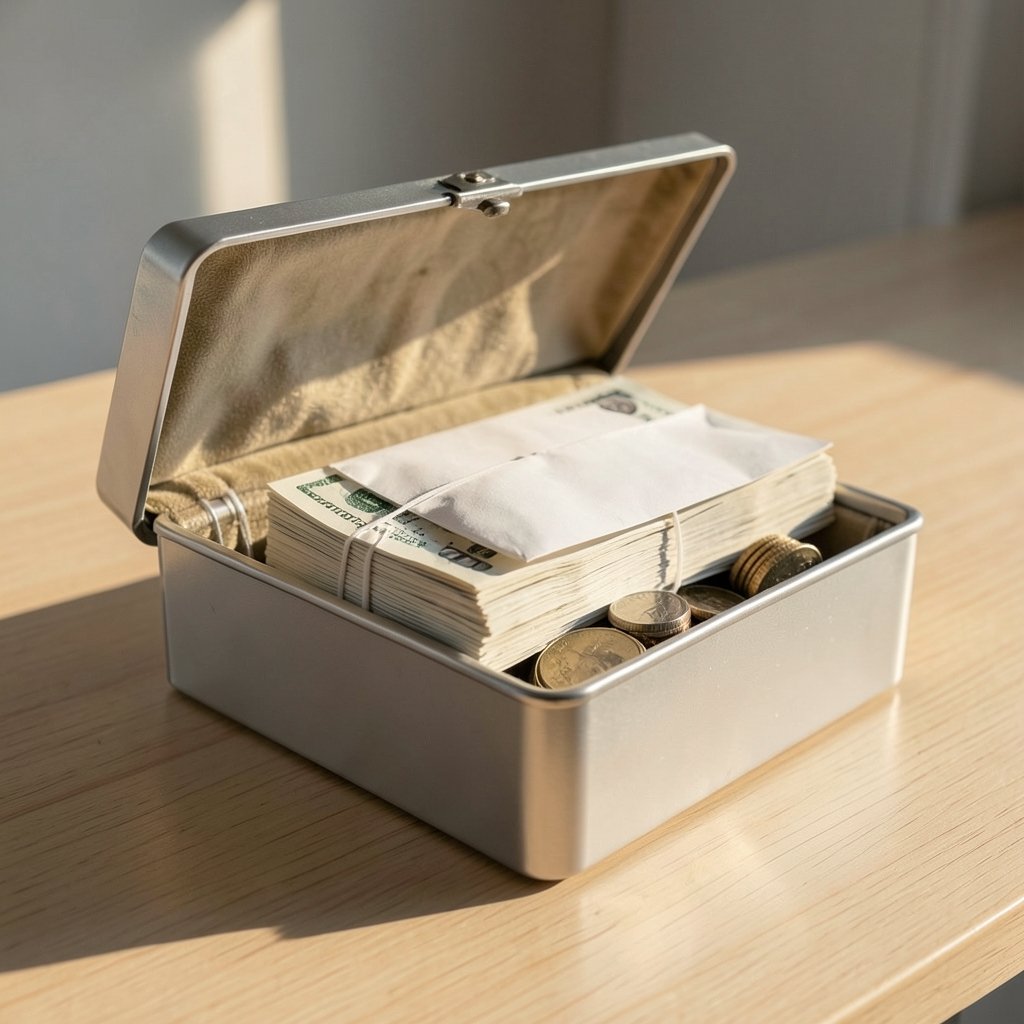
When was the last time you paid for something with a crumpled note or a handful of coins? If you had to think about it, the same is true for other people. Yet even with tap-to-pay cards and phone wallets, money cash has not quietly disappeared. It has changed jobs. Less of it moves across shop counters, but more of it sits in drawers, safes, and emergency envelopes. That shift tells a story about trust, privacy, and who gets left behind when payments go digital.
What “Cash” Actually Means

The word gets used loosely, so it helps to pin it down. In everyday speech, cash means physical banknotes and coins. In economics, the definition sometimes stretches to include balances in checking accounts that you can spend immediately. In accounting, “cash and cash equivalents” is a formal balance-sheet line that can include short-term, highly liquid investments. This article uses the narrow, everyday sense: the paper and metal in your pocket.
That distinction matters because the three definitions move in different directions. Digital bank balances are growing. Physical currency in circulation is also growing in many countries, even as its share of transactions falls.
Why Cash Use Is Falling but Cash Holdings Are Rising


Payment surveys in several countries have found the same pattern. People swipe and tap more often for daily purchases, yet demand for notes as a store of value holds steady or climbs. Cash becomes less of a payment tool and more of a savings tool.
Why would anyone hoard paper money that earns no interest? A few practical reasons:
- Privacy. A cash purchase leaves no digital trail.
- Resilience. Cash works when power, internet, or card networks fail.
- Budgeting. Physically handing over notes makes spending feel real in a way that tapping a card does not.
- Low or negative interest rates. When deposit rates are near zero, holding cash costs little.
That last point has a policy angle. Physical cash puts a floor under interest rates, because savers can always hold notes at zero percent instead of paying a bank to keep their money. Economists have debated this constraint for years, and it is one reason some central banks study limits on large-denomination notes.
Legal Tender: What the Law Really Says
Many people assume a shop must accept cash because it is “legal tender.” The reality is narrower. In the United States, federal statute makes Federal Reserve notes legal tender for debts, but that does not force a private business to accept cash for a purchase. A store can set its own payment policy, as long as it does not discriminate unlawfully. The rule mainly means a creditor cannot refuse valid currency when settling an existing debt.
Rules differ by country, so the U.S. position should not be generalized. Some governments have moved the other way, requiring businesses that provide necessary goods and services to keep accepting cash to protect people who rely on it.
Who Still Depends on Cash
For plenty of households, cash is not a lifestyle choice. It is the only option. People without bank accounts, people with limited digital access, older adults, and anyone living far from reliable internet all lean on physical money. Official surveys of banking access track this population, and the numbers are not trivial even in rich countries. A single-digit percentage of households can translate into millions of people.
There is a second group too: people who have accounts but avoid them. They may distrust banks, worry about fees, or prefer the anonymity of cash. For them, a cashless shop is a locked door.
Practical tip: if you are designing a service, a policy, or a community program, assume some users have no card and no smartphone. A cash option is often the difference between inclusion and exclusion.
Cash, Crime, and the Reporting Rules
Large cash transactions attract scrutiny, and for good reason. Cash is hard to trace, which makes it attractive to criminals. Most countries impose anti-money-laundering rules that require financial institutions to report big cash movements. In the United States, cash transactions above a set threshold must be reported to authorities under the Bank Secrecy Act. Banks and some businesses file these reports routinely. (Cash)
This creates a real tension. The same reporting system that catches laundering also inconveniences honest people making large legitimate cash purchases, such as buying a used car. Knowing the threshold in your country helps you avoid a surprise at the counter. Bring identification, expect paperwork, and do not split a payment into smaller chunks to dodge a report. Structuring transactions that way is itself a red flag and can be illegal.
Counterfeiting: A Small but Persistent Tax
Every central bank fights counterfeiting, and every central bank publishes statistics on notes detected. The absolute numbers are usually tiny compared with the total value of currency in circulation, but the cost is not zero. Merchants absorb losses, and everyone pays a little more to cover them.
What actually works against counterfeiting is layered. Modern notes carry watermarks, security threads, color-shifting ink, and raised print. In practice, the simplest checks catch most fakes:
- Feel the paper. Genuine notes have a distinct texture and raised ink.
- Tilt the note and look for color-shifting elements.
- Hold it to the light to check the watermark and thread.
- Compare it with a note you know is genuine.
Common mistake: relying on a pen test alone. Counterfeiters have adapted, and a pen cannot detect a well-made fake. Touch and tilt are faster and more reliable.
Cash Versus Digital Money: A Fair Comparison
Digital payments are convenient, fast, and increasingly cheap. Cash is private, resilient, and universal. Neither wins on every measure. Here is how they compare on the things people actually care about.
| Feature | Physical cash | Digital payment |
|---|---|---|
| Works without power or internet | Yes | No |
| Requires a bank account | No | Usually yes |
| Leaves a transaction record | No | Yes |
| Fraud protection for the buyer | Limited | Stronger, with chargebacks |
| Speed at checkout | Fast for small amounts | Very fast |
| Risk if lost or stolen | Usually gone for good | Can often be frozen or reversed |
| Cost to the merchant | Handling and security costs | Processing fees |
The table explains why cash survives. It wins on resilience and inclusion, and it loses on recovery after loss. A stolen wallet is rarely refunded, which is why carrying large sums is a bad idea.
The Hidden Costs of Handling Cash
Businesses often assume cash is free because there is no processing fee. It is not. Counting, transporting, insuring, and banking cash all cost money. Staff time adds up. So do safe rentals and armored pickup services. Some retailers quietly price this in.
For small businesses, the practical answer is usually a mix. Keep enough cash for customers who need it, bank the surplus regularly, and set a clear float so staff are not counting coins at closing time. A simple daily reconciliation habit prevents most losses. The broader economics of security and fraud spending are worth understanding if you run anything involving money, and a look at where identity threat detection costs really go shows how quickly protective spending stacks up.
Cash in the Age of Digital Currencies
Central banks are actively researching central bank digital currencies, which would be a digital form of public money rather than a private payment app. Surveys of central banks have found that most are engaged in some form of this work. The appeal is a digital payment system that is public rather than run by a handful of companies. The concern is privacy and the risk of bank runs if people could move deposits into central bank money instantly. If you want the background, this explainer on CBDCs and central bank money going digital covers the trade-offs clearly. (Money)
None of this makes physical cash vanish overnight. New payment rails tend to sit alongside old ones for a long time. Checks, after all, are still with us decades after cards arrived.
Cash Safety: What Works in Practice
Carrying cash safely is mostly about habits, not gadgets. What actually works:
- Carry only what you need for the day.
- Split money between pockets and a bag so a single loss is not total.
- Keep a small emergency stash at home in a secure, discreet place.
- Never flash large notes in public.
- Note serial numbers of large notes if you handle them often.
Common mistake: hiding cash in obvious spots like a freezer or a sock drawer. Burglars know those places. A locked safe bolted down is better than clever hiding.
Scams That Target Cash
Cash is the preferred currency of scammers because transfers are hard to reverse. Gift card scams are a classic example: a caller claims to be from the tax office or a utility and demands payment in gift cards. Once the codes are shared, the money is gone. Understanding how the gift card scam works and why victims rarely get their money back is a cheap insurance policy. The rule is simple: no legitimate agency asks for payment in gift cards, ever.
Cash-only investment schemes deserve the same suspicion. If someone promises high returns and wants physical money handed over, walk away.
Cash and Inflation
Inflation quietly erodes the value of money sitting in a drawer. A hundred dollars hidden under a mattress buys less every year. That does not make holding cash irrational, because cash offers liquidity and safety, but it does mean a large long-term cash stash is a losing bet against rising prices. The practical balance is to keep enough cash for emergencies, usually a few weeks of expenses, and put the rest somewhere that can grow.
Conclusion
Money cash is not a relic, and it is not the future either. It is a stubborn, useful tool that keeps working when other systems break, protects privacy, and includes people that digital payments leave out. Its role is shrinking at the checkout and holding steady in the safe. The smart approach is neither nostalgia nor blind enthusiasm for apps. Keep some cash for resilience and budgeting, know your local rules on legal tender and reporting, watch for scams that demand untraceable payment, and treat a large cash pile as a convenience rather than an investment. Used that way, physical money remains one of the most reliable tools in personal finance.
FAQ
Is it legal for a shop to refuse cash?
In many countries, including the United States, private businesses can set their own payment policies. Legal tender status means a creditor must accept valid currency to settle a debt, but it does not force a shop to accept cash for a new purchase. Local and national rules vary, so check your jurisdiction.
How much cash should I keep at home?
A common guideline is enough to cover a few days to a few weeks of necessary expenses, depending on your comfort level and local risks. Keep it in a secure, discreet place, and do not keep more than you could afford to lose.
Why do governments track large cash transactions?
Cash is hard to trace, so authorities require reports on large cash movements to detect money laundering, tax evasion, and other crimes. Financial institutions file these reports routinely. If you make a large legitimate cash purchase, bring identification and expect paperwork.
Does cash lose value over time?
Yes, when prices rise. Cash earns no interest, so inflation steadily reduces what it can buy. That is why cash works best as a short-term buffer and an emergency fund rather than a long-term place to store wealth.
Are digital payments safer than cash?
It depends on the risk. Digital payments offer chargebacks and records that help recover lost money. Cash offers privacy and works without power or internet, but a lost wallet is usually gone for good. Most people are best served by using both.
Will cash disappear completely?
Unlikely in the near future. Cash use at checkouts is falling in many countries, but demand for notes as a store of value remains strong, and millions of people still depend on physical money. New digital options are being added alongside cash, not replacing it outright.