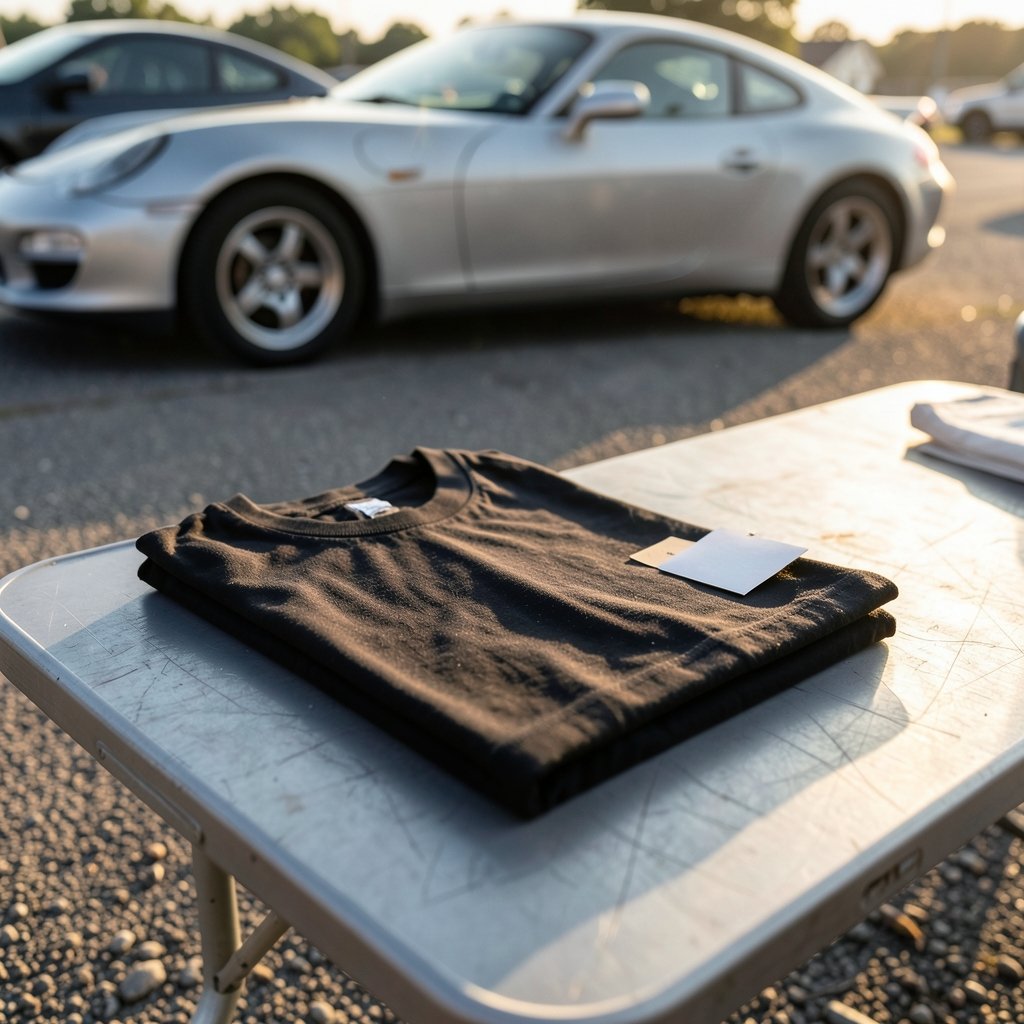
What makes a plain T-shirt with four words on it so hard to walk past? The “Need Money for Porsche” shirt is one of those odd little artifacts of car culture that refuses to die. It shows up at car meets, in streetwear hauls, on gym mirrors, and in gift bags for the friend who has been “about to buy a 911” since college. It is a joke, a flex, a self-own, and a piece of merchandise all at once. (Gift card scam works victims rarely get their money back) (Porsche)
This article looks at where the slogan comes from, why it works, how to buy one without getting burned, and what the phrase actually says about the people who wear it. No hype, no fake history, just a clear look at a very small piece of clothing with a surprisingly big personality.
What the “Need Money for Porsche” shirt actually is
The shirt is novelty apparel: a cotton tee, usually crewneck, printed with the phrase “Need Money for Porsche” in block letters. Some versions add a small crest-style graphic, a silhouette of a sports car, or a winking nod to the brand’s typography. Others keep it dead simple: black text on a white tee, which is arguably the funniest version because it looks like a handwritten plea.
The phrase is a self-deprecating joke about expensive car ownership. The wearer is not literally asking strangers for cash. The humor comes from the gap between the aspiration (a Porsche) and the reality (needing money). It works the same way as a “will work for tickets” sign at a stadium: everyone understands the bit.
A few things the shirt is not:
| What people assume | What it usually is |
|---|---|
| Official Porsche merchandise | Independent, unlicensed novelty printing |
| A single brand’s product | A slogan printed by many small sellers |
| A vintage-only item | Widely available new, in many styles |
| A serious fundraising ask | A joke about aspiration and cost |
That last row matters. If you see a seller implying the shirt supports a charity or a real crowdfunding effort, treat that as a red flag rather than a feature.
Where the slogan comes from, and what can honestly be said

Here is where a lot of articles about this shirt go wrong. They invent an origin story: a specific designer, a specific year, a specific race team. Those stories circulate widely and are almost never sourced.
What can be said with confidence is narrower but still useful. The phrase belongs to a long tradition of novelty car slogans printed on shirts, stickers, and license plate frames. Think of the “My other car is a…” jokes, the “I brake for…” stickers, and the whole genre of bumper-sticker humor that peaked in the 1980s and 1990s. The Porsche version fits neatly into that lineage: a short, readable line that signals you are part of car culture without owning the car.
The phrase also rides on the 911’s status as an aspirational object. The 911 is one of the few cars that is instantly recognizable by silhouette, has decades of continuous production behind it, and carries a price tag that puts it out of reach for most people. That combination is what makes the joke land. A “Need Money for a Camry” shirt would not work, because nobody needs a joke to explain wanting an affordable sedan.
What cannot be verified is who printed the phrase first, when, or whether any version has been trademarked. Anyone who tells you otherwise without a primary source is guessing. If you care about the legal side, the right move is to search the relevant trademark registry directly rather than trust a blog post.
Why the joke works: aspiration, irony, and car culture
The shirt’s appeal is not mysterious, but it is layered. Three things are happening at once.
First, it is a status signal that punches up at itself. Wearing “Need Money for Porsche” says: I know what the good stuff costs, and I am not pretending I have it. That kind of honesty reads as confidence. It is the opposite of the fake-luxury flex.
Second, it is a conversation starter. At a car meet, a shirt like this gives strangers something to comment on. “So, did you get the money yet?” is a ready-made icebreaker. In a room full of people wearing plain black tees, the guy with the slogan is the one people approach.
Third, it is cheap irony. The shirt costs a fraction of a tank of premium fuel. You get the joke, the nod from other enthusiasts, and a bit of personality for less than the price of a decent meal. That value proposition is why novelty tees keep selling decade after decade.
There is also a subtler read. The phrase can function as a gentle critique of car culture’s expense problem. Maintenance, insurance, tires, track days, and the endless upgrade itch all add up. A shirt that jokes about needing money is also a shirt that acknowledges the hobby is not cheap. If you have ever looked at a repair estimate and laughed to keep from crying, you already understand the shirt.
How to buy one without getting ripped off
Buying a novelty tee sounds simple, and mostly it is. But there are a few traps worth knowing, because the same low-effort sellers who print copyrighted slogans also cut corners on the shirt itself.
Check the print method before the design
Screen printing gives the boldest, longest-lasting result and is standard for good novelty tees. Direct-to-garment (DTG) printing is fine for detailed graphics but can fade faster after repeated washing. Heat transfer vinyl is the cheapest option and tends to crack. If a listing does not say how the shirt is printed, assume the cheapest method.
Read the fabric spec, not the photos
A 100% cotton tee in the 5.5 to 6.5 ounce range holds up well. Anything described only as “premium cotton” with no weight is a coin flip. Check whether the listing mentions pre-shrinking. An unshrunk cotton tee can lose a full size after the first hot wash, which turns a funny shirt into a short, funny shirt.
Watch for sizing games
Novelty shirt sellers often use unisex sizing that runs small. Ordering your usual size is the most common mistake buyers make. Measure a tee you already like, compare it to the seller’s size chart, and size up if you are between sizes. If a chart gives only S/M/L/XL with no measurements, that is a warning sign.
Treat “limited edition” claims with suspicion
The slogan is not rare. Anyone with a printer can produce it. A seller claiming a “limited run” of a phrase that has been printed for years is using scarcity as a marketing tactic, not describing reality.
Think twice about the payment method
This is where novelty shopping gets serious. If a seller you found through a social ad asks for payment by gift card, wire transfer, or a peer-to-peer app with no buyer protection, walk away. Gift card scams are a common way fake merch stores collect money that victims almost never recover, and the pattern is well documented: a too-cheap price, a rushed checkout, and a payment method with no recourse. The same caution applies to any store you have never heard of. If you want a broader look at how these schemes play out, this explanation of how the gift card scam works and why victims rarely get their money back is worth five minutes before you check out. (Identity threat detection really costs where money goes)
Styling it without looking like you tried too hard
The shirt is a joke, so the styling should not undercut it. A few practical notes from watching these shirts succeed and fail in the wild:
- Keep the rest of the outfit plain. Dark jeans, neutral sneakers, a simple jacket. The shirt is the loudest thing you are wearing, and that is enough.
- Fit matters more than the graphic. A boxy, oversized tee reads as intentional streetwear. A tee that is tight in the shoulders reads as a sizing mistake.
- Do not pair it with actual Porsche-branded gear. Shirt plus branded cap plus branded jacket turns a joke into a costume.
- Wear it to car events, not to job interviews. Obvious, but worth saying.
- Wash it inside out, cold, and hang dry. This is the single biggest factor in whether the print survives a year.
For the friend who is genuinely deep into the hobby, the shirt also works as a low-stakes gift. It pairs well with other small car-culture items, and it does not require knowing which generation of 911 they prefer.
The bigger picture: novelty slogans and how they spread
The “Need Money for Porsche” shirt is a small case study in how a phrase becomes merchandise. A line starts as an in-joke, gets printed on a few shirts, shows up in photos, gets copied by other sellers, and eventually becomes a category. Nobody owns it, which is exactly why it spreads.
That dynamic has a downside. Unlicensed slogan printing often drifts into trademark trouble, and sellers who print brand names or logos without permission get taken down regularly. Buyers rarely face legal risk, but they do face the practical risk of a store vanishing before a shirt ships. Buying from a seller with a real return policy and a track record is the boring, effective defense.
The same logic applies to the wider world of novelty and impulse purchases. A funny shirt is a small, low-risk buy. A “limited edition” gadget from an unknown store is not. If you want a sense of how quickly an impulse purchase can go sideways, this piece on the Arc x1 handheld and its cloud emulation claims shows how flashy marketing outruns what a product can actually do. The lesson transfers: check the seller, check the specs, and do not let a clever slogan do the thinking for you.
Common mistakes people make with this shirt
A short list, drawn from the questions buyers actually ask:
- Assuming it is official merch. It almost never is. If a listing uses Porsche logos or styling to imply a partnership, that is a reason to be cautious, not reassured.
- Buying the cheapest listing on a marketplace. The photo is often a mockup, and the shirt that arrives is thinner and smaller than pictured.
- Ignoring the wash label. Hot water and a hot dryer will destroy a heat-transfer print in a few cycles.
- Overpaying for “vintage.” Genuine vintage tees exist, but a faded print is not proof of age. Check stitching, tag style, and fabric weight before paying a premium.
- Expecting a loose, relaxed fit from a standard order. Size up once, then adjust.
Conclusion
The “Need Money for Porsche” shirt is not complicated, and that is the point. It is a four-word joke about wanting something expensive, printed on something cheap, worn by people who are in on it. It has no verified origin story, no official owner, and no real fundraising purpose. What it does have is a reliable bit of humor, a low price, and a way of starting conversations at car meets.
Buy one because it makes you laugh, not because a listing promises exclusivity. Check the print method and the fabric weight, size up if you are between sizes, and pay with a method that protects you. Do that, and the shirt will do exactly what it is supposed to do: make the joke, take the wash, and get a nod from the next person who gets it.
FAQ
Is the “Need Money for Porsche” shirt official Porsche merchandise?
Almost never. The vast majority of these shirts are independent novelty prints made by small sellers. Official Porsche apparel exists, but it uses the brand’s own designs and is sold through authorized channels. If a listing implies an official partnership without clear evidence, treat that as a reason to be skeptical rather than a reason to pay more.
Who invented the “Need Money for Porsche” slogan?
There is no reliably documented origin. The phrase fits into a long tradition of novelty car slogans and bumper-sticker humor, and it circulates as a self-deprecating joke about expensive car ownership. Claims about a specific designer or year are usually unsourced. If you need certainty, look for primary sources rather than repeating a popular story.
Is the phrase trademarked?
That cannot be confirmed without checking a trademark registry directly. Trademark status varies by country and by whether anyone has filed an application. If you plan to print and sell shirts with the phrase, search the relevant registry and get proper advice before you invest in inventory.
What size should I order?
Size up if you are between sizes. Novelty shirt sellers commonly use unisex sizing that runs small, and cotton tees can shrink after a hot wash. Measure a shirt you already like, compare those numbers to the seller’s size chart, and avoid listings that give no measurements at all.
How do I keep the print from cracking?
Wash the shirt inside out in cold water, use a gentle cycle, and hang it to dry or use low heat. Avoid ironing directly over the graphic. Screen-printed shirts last longest, while heat-transfer prints are the most fragile. Following the care label is the simplest way to get years out of a cheap shirt.
Can I wear it to a car show or Porsche event?
Yes, and it usually gets a laugh. Keep the rest of your outfit simple so the shirt stays the joke, and skip pairing it with actual branded gear, which turns a wink into a costume. It is a casual piece, so it fits car meets and weekend drives far better than anything formal.