
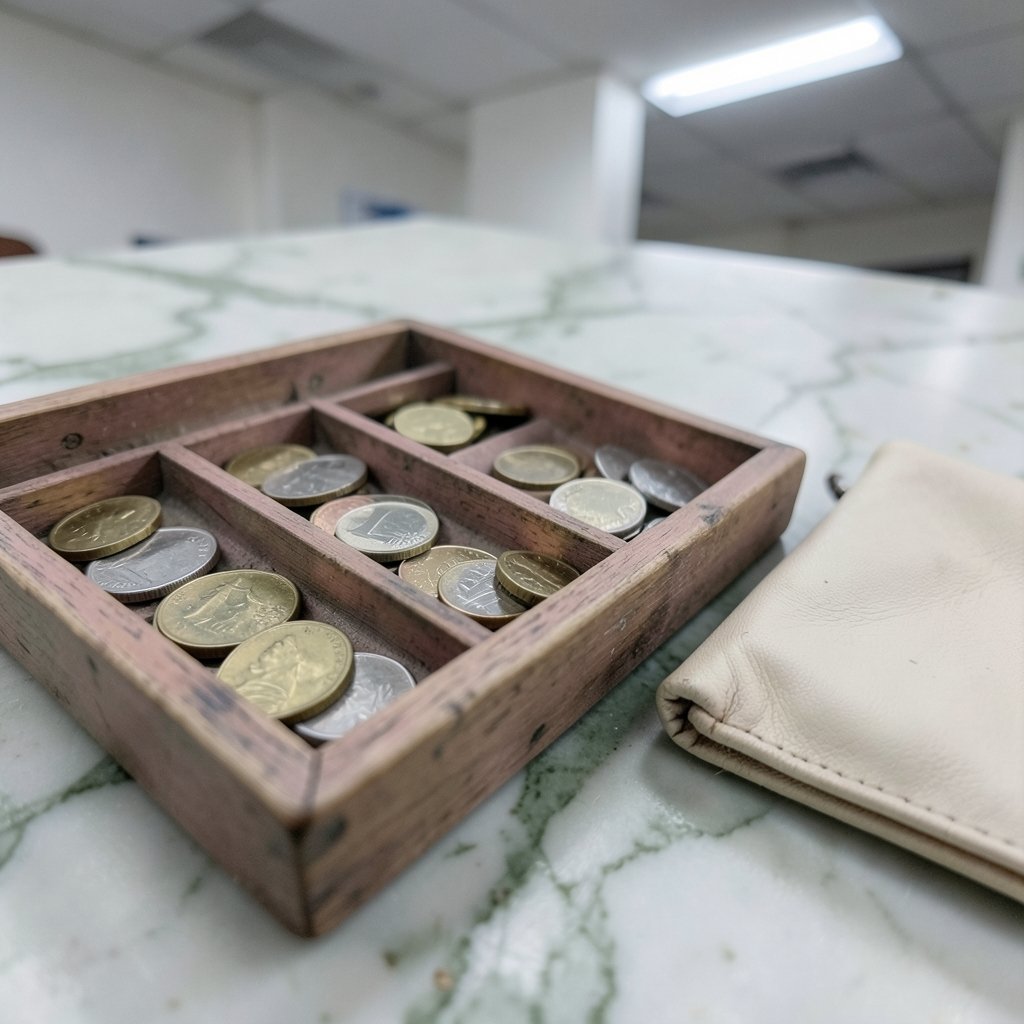
What happens to a country’s money when it gives up control of its own printing press? Italy answered that question with one of the boldest currency swaps in financial history. For 141 years, Italians carried lire. Then, almost overnight, they carried euros. The history of Italian money covers more than coins and notes. It covers national identity, inflation, debt, and what it feels like to hand monetary policy to a bank in Frankfurt.
This article walks through how the lira worked, why Italy joined the euro, how the changeover actually happened, and what practical lessons travelers and businesses can take from it today.
From Unification to the Lira
When Italy unified in 1861, it inherited a patchwork of currencies from the states that had just merged. The new kingdom introduced the lira italiana as a single national currency, replacing the money of Sardinia, the Two Sicilies, Tuscany, and the Papal States. The name itself came from the Latin word for pound, and the lira was originally defined against a fixed weight of silver and gold, much like the French franc and the British pound. (Italian lira)
For most of its life, the lira was a currency that lost value. Italy fought two world wars, rebuilt an industrial economy from scratch, and ran persistent budget deficits. Each of those pressures pushed prices upward. By the 1970s and 1980s, Italians were used to high inflation as a fact of life. Workers negotiated automatic wage increases tied to price rises, a system known as the scala mobile, which helped households cope but also fed the inflationary cycle.
The lira also became a symbol. Italians joked about it, sang about it, and treated million-lira notes as ordinary pocket change. A coffee cost a few hundred lire; a car cost tens of millions. That mental arithmetic shaped a generation.
The 1992 Crisis and the Road to the Euro

The turning point came in September 1992. Italy, like several other European countries, belonged to the European Exchange Rate Mechanism (ERM), a system that kept currencies within narrow bands against each other. Speculative pressure during a period of currency turmoil forced the lira out of the mechanism. The currency devalued sharply, and the episode left a lasting mark on Italian politics and public finance.
In response, Italy pursued a different path. It tightened fiscal policy, pushed inflation down, and worked to meet the convergence criteria set out for joining a single European currency. The institutional foundation for that project had been laid decades earlier, when Italy signed the Treaty of Rome in 1957 as a founding member of the European Economic Community, the forerunner of today’s European Union. That treaty is documented in the EU’s official history of the 1945 to 1959 period.
The euro was introduced as an accounting currency on 1 January 1999, with Italy among the first eleven members of the euro area. For three years, the euro existed only on paper and in electronic transfers. Prices in shops were still in lire.
The Conversion Rate That Stuck
The single most important number in modern Italian monetary history is 1 euro = 1,936.27 Italian lire. That rate was fixed by Council Regulation (EC) No 2866/98, adopted on 31 December 1998 and effective from the start of 1999. The regulation is published in full in the official record of EU law, and the rate was irrevocable. There was no negotiation at the cash register.
Why such a precise, awkward figure? Because the rate had to reflect the market value of the two currencies at the moment of locking, and it had to be identical for every euro-area country. Rounding to a friendly number would have created winners and losers overnight.
In practice, the odd number created a mental conversion problem. Italians learned to divide by roughly 2,000 and then shave a little off. A 10,000-lira note became about 5.16 euros. A 50,000-lira note became about 25.82 euros. Shoppers who rounded too generously often felt they were being overcharged, and many Italians still convert prices in their heads more than two decades later.
How the Cash Changeover Actually Worked
Euro banknotes and coins entered circulation on 1 January 2002, and the lira ceased to be legal tender on 28 February 2002. That gave the country roughly two months of dual circulation, one of the shortest changeovers of any participating country.
The logistics were enormous. Banks, retailers, and cash machines had to be restocked. Starter packs of euro coins were distributed to households so people had small change on day one. Retailers displayed dual prices, in lire and euros, to reassure customers. And the public had to learn a completely new set of note colors and coin sizes, from the one-cent copper coin to the five-hundred-euro note.
After the lira lost legal tender status, the Banca d’Italia, Italy’s national central bank, continued to exchange lira banknotes and coins for euros for a limited period, generally described as a ten-year window ending in early 2012. Anyone who finds an old note in a drawer today should treat it as a collector’s item rather than spendable money, and should confirm current rules directly with the central bank rather than rely on secondhand advice.
| Feature | Italian lira | Euro |
|---|---|---|
| In use from | 1861 | 1999 (accounting), 2002 (cash) |
| Issuing authority | Banca d’Italia | European Central Bank system |
| Conversion rate | Not applicable | 1 EUR = 1,936.27 ITL |
| Legal tender ended | 28 February 2002 | Still current |
| Monetary policy set by | National authorities | ECB Governing Council |
Who Actually Runs Italian Money Today
This is where many people get confused. Italy does not set its own interest rates. The European Central Bank sets monetary policy for the entire euro area, and the Banca d’Italia operates as the country’s national central bank within the Eurosystem. The euro area has grown steadily since 1999 and now includes twenty EU member states, with Croatia the most recent to join at the start of 2023.
That arrangement has clear benefits. Italian exporters sell into a huge market without exchange-rate risk. Travelers cross borders without changing money. Borrowing costs are anchored to a large, liquid currency. But there is a trade-off: when a country’s economy slows, it cannot simply devalue its currency to make exports cheaper. It must adjust through wages, productivity, and fiscal policy instead.
That constraint matters because Italy carries one of the largest public debts in the euro area. Debt-to-GDP ratios in that range make markets nervous, and nervous markets demand higher interest rates. The European Union’s statistical office publishes detailed government finance statistics that track these figures release by release, which is the right place to check current numbers rather than relying on a figure quoted in an old article.
What “Italian Money” Means for Everyday Life
For visitors and residents, the practical side of Italian money is refreshingly simple, but a few habits help.
- Carry some cash. Italy has moved steadily toward cards, and contactless payment is now common in cities. Still, small trattorias, market stalls, and rural shops may prefer cash or set minimum card amounts.
- Watch the tourist markup. Historic centers charge more than the neighborhood a few streets away. The same espresso can cost three times as much at a table on a famous piazza.
- Use the ATM, not the airport kiosk. Bank machines generally give better rates than currency exchange counters at stations and airports.
- Know the tipping norm. Service is often included as a coperto, a small per-person cover charge. Rounding up is generous and sufficient.
- Keep receipts. Italy has a long tradition of receipt enforcement tied to tax compliance, and shops are expected to issue them.
For anyone thinking about money more broadly, the shift from physical lira to digital euro balances mirrors a much larger global trend. Central banks everywhere are studying digital versions of their currencies, and the debate over a central bank digital currency and what it would change for ordinary savers is worth following, because it could reshape how cash works in countries like Italy. (Gift card scam works victims rarely get their money back)
Lessons From a Currency That Disappeared
The lira’s retirement offers a few durable lessons.
First, a currency is a promise, not a natural object. The lira worked because people believed in it and because the state stood behind it. When Italy subordinated that promise to a shared European framework, it gained stability and lost flexibility.
Second, changeovers are mostly a communication problem. The technical work of printing notes is straightforward compared with persuading millions of people that the new money is real, fair, and safe. Dual pricing, starter packs, and clear conversion rules did more for public confidence than any economic argument.
Third, inflation leaves scars. Italians who lived through the 1970s and 1980s remain unusually price-sensitive. That instinct explains why the perceived “rounding up” during the euro changeover became such a sensitive political topic, even though official data showed the currency swap itself added only modestly to prices.
There is also a security dimension to money that never goes away. Wherever value moves, fraudsters follow, and Italy is no exception. Understanding how a gift card scam works and why victims rarely get their money back is a useful reminder that payment habits carry risk regardless of the currency on the note. Likewise, businesses budgeting for fraud defense should know where identity threat detection really costs and where the money goes, since those costs are often underestimated.
The Lira in Memory and in Markets
Old lire still circulate in a different sense. Collectors trade uncirculated notes and coins, and complete lira sets sell as curiosities. Some Italians keep a folded 1,000-lira note as a keepsake. Museums and the central bank’s own numismatic collections preserve the design history, from the allegorical figures of the early republic to the familiar faces of the later series.
The euro itself has changed too. New note series have been introduced with updated security features, and the design debate continues over what European money should look like. For Italy, that debate is personal. The country that gave Europe some of its oldest banks and its most celebrated coinage now uses a currency whose symbols are deliberately neutral, chosen so that no single nation’s history dominates.
Conclusion
Italian money has been through a remarkable transformation in a single lifetime. The lira carried Italy from unification through two world wars, an economic miracle, and a painful devaluation. The euro replaced it with a share of a much larger currency, trading national control for continental stability. The conversion rate of 1,936.27 lire to the euro is now a historical footnote, but the habits it created, the mental arithmetic, the price sensitivity, and the pride in a currency that no longer exists, are still part of daily life in Italy. Whether you are planning a trip, studying European economics, or simply curious about how money changes hands, the Italian story shows that currency is never only about money.
What was the Italian currency before the euro?
The lira was Italy’s currency from unification in 1861 until it was replaced by the euro. Euro banknotes and coins entered circulation on 1 January 2002, and the lira stopped being legal tender on 28 February 2002.
What was the exact lira to euro conversion rate?
The irrevocable rate was 1 euro = 1,936.27 Italian lire, fixed by Council Regulation (EC) No 2866/98 and effective from 1 January 1999. The rate applied to every transaction and could not be renegotiated.
Can you still exchange old Italian lira for euros?
The Banca d’Italia exchanged lira banknotes and coins for euros for a limited period after 2002, generally described as a ten-year window ending in early 2012. Old notes found today are best treated as collector’s items, and current rules should be confirmed directly with the central bank.
Who sets interest rates in Italy now?
The European Central Bank sets monetary policy for the whole euro area. The Banca d’Italia is the national central bank and part of the Eurosystem, but it does not independently decide Italian interest rates.
Why did Italy give up the lira?
Italy wanted the stability and trade benefits of a shared European currency. After the lira was forced out of the European Exchange Rate Mechanism in 1992, Italy tightened fiscal policy to meet the convergence criteria for joining the euro, which it did among the first eleven members in 1999.
Is cash still widely used in Italy?
Yes, though card and contactless payments have grown quickly, especially in cities. Small restaurants, market stalls, and rural shops may still prefer cash, so carrying a modest amount of euro notes is a sensible habit for visitors.



