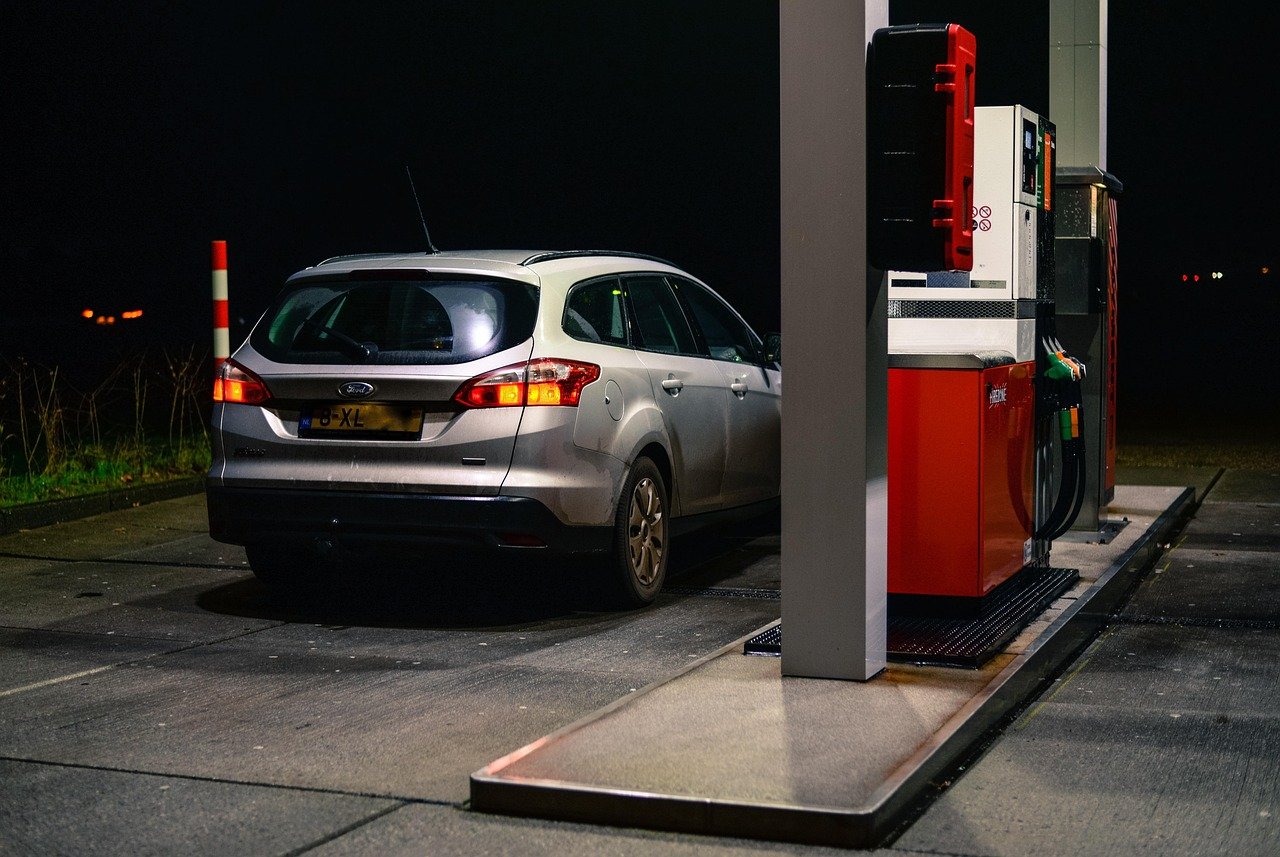
What if the cheapest gas station in town isn’t actually the cheapest place to fill up?
That sounds like a riddle, but it’s the heart of how fuel costs really work. The price on the sign matters, sure. But how you drive, how much air is in your tires, and how many short trips you chain together often matter more than a few cents per gallon. The good news: most of these changes cost nothing and start saving fuel on your very next drive.
This guide walks through what actually works, what barely moves the needle, and the mistakes that quietly drain a tank every month.
Start With the Driver, Not the Pump
The single biggest lever on fuel use sits behind the steering wheel. Aggressive driving — jackrabbit starts, hard braking, weaving through traffic — can cut highway fuel economy by roughly 15% to 30% and city mileage by 10% to 40% compared with gentle driving, according to the U.S. Department of Energy and EPA’s guidance on how driving habits affect fuel economy. That range is enormous. For a household spending $200 a month on gas, the difference between sloppy and smooth driving could be $30 to $60.
What does gentle driving look like in practice? A few habits do most of the work:
- Accelerate smoothly and aim to reach cruising speed without flooring it.
- Look far ahead so you can ease off the throttle instead of braking hard.
- Use cruise control on the highway when conditions allow.
- Combine errands into one trip so the engine stays warm and you avoid repeated cold starts.
That last point gets overlooked. A cold engine burns extra fuel until it reaches operating temperature. Five separate two-mile trips use noticeably more gas than one ten-mile loop with the same stops. Trip-chaining is one of the simplest wins available, and it costs nothing but a little planning.
Speed Is Expensive Above 50 mph

Here’s a physics lesson with a price tag. Aerodynamic drag rises with the square of speed, which means fuel consumption climbs steeply once you pass roughly 50 mph. The DOE’s fuel-saving guidance notes that every 5 mph above 50 mph is like paying an extra $0.20 to $0.30 per gallon, depending on fuel prices.
In plain terms: driving 75 mph instead of 65 mph on a highway trip can burn meaningfully more fuel for a time savings of a few minutes. On a 300-mile drive, that’s a real trade. Slowing down feels tedious, but it’s one of the few fuel savings that requires zero effort beyond easing off the pedal.
The Idling Trap
Many drivers believe restarting the engine burns more fuel than letting it idle. For modern cars, that’s mostly wrong. Idling can burn a quarter to a half gallon of fuel per hour, and the DOE recommends shutting the engine off for stops longer than about 10 seconds — except in traffic, where safety and traffic flow come first.
Think about where idling piles up: drive-through lines, school pickup, waiting for a passenger, warming up the car on a cold morning. A few minutes here and there adds up to gallons over a month. Parking and walking in is often faster anyway.
Tires, Maintenance, and the Small Stuff That Adds Up
Under-inflated tires increase rolling resistance, and the DOE and EPA estimate roughly a 0.2% fuel economy loss for every 1 psi drop across all four tires. That’s about 3% at 15 psi low — small per tank, but real over a year. Checking pressure monthly with a cheap gauge takes two minutes and also improves tire life and safety.
Other maintenance items matter, though usually less than driving style:
| Maintenance item | Typical effect on fuel use | Priority |
|---|---|---|
| Correct tire pressure | Modest but consistent gain | High — free and quick |
| Clean air filter | Small gain, mainly on older cars | Medium |
| Fresh motor oil (right grade) | Small gain | Medium |
| Wheel alignment | Prevents drag from misalignment | Medium |
| Engine tune-up | Restores lost efficiency on neglected cars | Medium to high if overdue |
The honest takeaway: maintenance keeps a car running at its designed efficiency, but it won’t transform a thirsty vehicle into an economical one. Drivers who obsess over oil additives while ignoring their right foot have the priorities backwards.
Shop Smarter at the Pump
Retail gas prices vary widely by region, by station, and by week. The U.S. Energy Information Administration publishes a weekly retail gasoline price update by region, which is useful for benchmarking what you should be paying and spotting unusual spikes.
Practical pump tactics that hold up:
- Use price apps before you leave. A 20-cent difference across town is worth a detour only if the detour is short. Driving five miles out of the way to save $1.50 usually nets nothing.
- Don’t chase premium fuel unless the owner’s manual requires it. Most cars are designed for regular, and premium in a regular car buys no efficiency gain.
- Fill up before price jumps. Prices tend to rise ahead of holidays and summer driving season. If you know a busy weekend is coming, topping off a day early is a mild hedge.
- Skip the “cheapest day of the week” myth. Claims about a reliably cheapest weekday are weakly supported. Prices move with crude markets and local competition, not the calendar.
One more practical note: don’t top off past the automatic shutoff. Overfilling can waste fuel through the vapor recovery system and cause minor mechanical issues. Let the nozzle click and stop.
Plan Routes and Cut Vehicle-Miles
The largest structural savings come from driving fewer miles, not from squeezing efficiency out of each mile. Public transit, carpooling, walking, biking, and remote work all cut fuel spend directly. Even modest changes help: replacing two weekday commutes with transit or a carpool can save several gallons a week.
Route planning matters too. Navigation apps that factor in traffic reduce time spent crawling in stop-and-go conditions, which is exactly where fuel economy suffers most. Combining a gym stop with grocery shopping on the same outing saves more than any fuel additive ever will. If you’re weighing bigger purchases, the same logic applies to household budgets generally — the practical guide on how to choose a wedding venue while saving money and stress shows how planning ahead pays off, and the same discipline works for fuel.
Know What Your Car Actually Costs to Run
If you’re shopping for a vehicle — or wondering whether yours is unusually thirsty — official fuel economy data is the place to start. The EPA and DOE’s Find a Car tool lists official mpg and estimated annual fuel cost for each model year, making side-by-side comparison easy.
The gap between a 20 mpg vehicle and a 30 mpg vehicle is roughly 167 gallons per year at 10,000 miles driven. At $3.50 a gallon, that’s about $585 annually. Over five years, it’s nearly $3,000 — often more than the price difference between the two cars. Buyers who focus only on sticker price miss this entirely.
When a New Car Makes Sense (and When It Doesn’t)
Trading in a paid-off car that gets 22 mpg for a new one that gets 32 mpg rarely pays off quickly once you count depreciation, insurance, and higher registration fees. Run the math before assuming an upgrade saves money. For most drivers, the cheapest car is the one already in the driveway, maintained properly and driven sensibly.
That said, if you’re already in the market, fuel economy deserves real weight. So does reliability, because a breakdown costs far more than a few mpg. The same careful comparison mindset applies to big electronics purchases — the practical buying guide on how to choose a laptop that saves you money walks through the same trade-offs between upfront price and long-term cost.
Hypermiling: Useful Techniques With Real Caveats
Hypermiling refers to advanced fuel-saving techniques: coasting toward red lights, “pulse and glide” acceleration patterns, and drafting behind large trucks. Some of it works, and some of it is dangerous or illegal.
Coasting to a stop instead of braking late is safe and effective. Drafting close behind a semi is neither — it reduces stopping distance and is a genuine safety hazard. Engine-off coasting, sometimes called “hypermiling lite,” is illegal or unsafe in many jurisdictions because it disables power steering and braking assistance. Skip it. The fuel savings are small compared with the risk.
The safe core of hypermiling is simple: anticipate traffic, maintain momentum, avoid unnecessary braking, and keep steady speeds. That’s just smooth driving with a fancier name.
Watch Out for Fuel-Saving Scams
The fuel additive aisle is full of promises. Most aftermarket fuel additives and “miracle” devices — magnetic fuel savers, intake vortices, special pills — have no credible evidence of real savings. Some can even harm engines or emissions systems. If a $30 product genuinely cut fuel use by 20%, every fleet in the country would use it, and fuel economy standards would look very different.
The same skepticism applies to fuel cards and discount programs that require you to spend more to save. A 5-cent-per-gallon discount is worth about $0.75 on a 15-gallon fill-up. If the program costs an annual fee or pushes you toward a store where you buy extras, the math often flips. Scams that prey on drivers’ budgets are common enough that understanding how the gift card scam works and why victims rarely get their money back is worth five minutes of anyone’s time.
A Realistic Monthly Plan
Putting it all together, here’s a simple routine that captures most of the available savings without turning fuel into a hobby:
- Check tire pressure monthly and top up to the door-jamb spec, not the tire sidewall maximum.
- Smooth out your driving for one week and watch your fuel gauge. Most drivers notice the difference.
- Cap highway speed at or near 65 mph on longer trips.
- Shut off the engine during waits longer than a minute.
- Chain errands into single outings and plan routes before leaving.
- Compare local prices with a price app, but only detour when the math works.
- Keep up with oil changes and filters on the manufacturer’s schedule.
None of these require spending money. Together they can plausibly trim 10% to 20% off a typical fuel bill — real money over a year, achieved mostly by changing habits rather than buying gadgets. (Choose monitor practical buying guide that saves you money)
Conclusion
Saving money on gas isn’t about finding a secret station or a magic additive. It’s about the unglamorous basics: a lighter right foot, correct tire pressure, fewer idling minutes, smarter trip planning, and a realistic view of what your car actually costs to run. The savings arrive gradually, but they compound month after month, and every one of them keeps money in your pocket rather than the fuel tank. Start with the free changes this week, and let the gauge show you the results.
Frequently Asked Questions
Does cruise control actually save gas?
On flat highways at steady speeds, yes — cruise control smooths out the small speed fluctuations that waste fuel. In hilly terrain, it can be counterproductive because it aggressively maintains speed uphill. Use it where the road is level and traffic is light.
Is it cheaper to fill up in the morning when it’s cooler?
The idea is that cooler fuel is denser, so you get slightly more energy per gallon. In practice, station tanks sit underground where temperature swings are small, and the effect is negligible. Time of day is not a real savings strategy.
Do fuel additives really improve gas mileage?
Rarely, and not meaningfully. Most aftermarket additives and devices lack credible evidence of savings, and some can damage engines or emissions systems. Money spent on additives is usually better spent on correct tire pressure and an oil change.
How much does aggressive driving really cost?
Quite a lot. Rapid acceleration and hard braking can cut highway fuel economy by roughly 15% to 30% and city mileage by 10% to 40% compared with gentle driving. For a household spending $200 a month on fuel, that can mean $30 to $60 wasted monthly.
Is premium gas worth it for a regular car?
No. If your owner’s manual specifies regular, premium fuel provides no efficiency or performance benefit — you’re simply paying more per gallon. Only use premium when the manufacturer requires or recommends it.
How much can I realistically save on gas each month?
Most drivers who smooth out their driving, fix tire pressure, cut idling, and plan trips can trim roughly 10% to 20% off their fuel bill without buying anything. Larger savings come from driving fewer miles through carpooling, transit, or combining errands.