
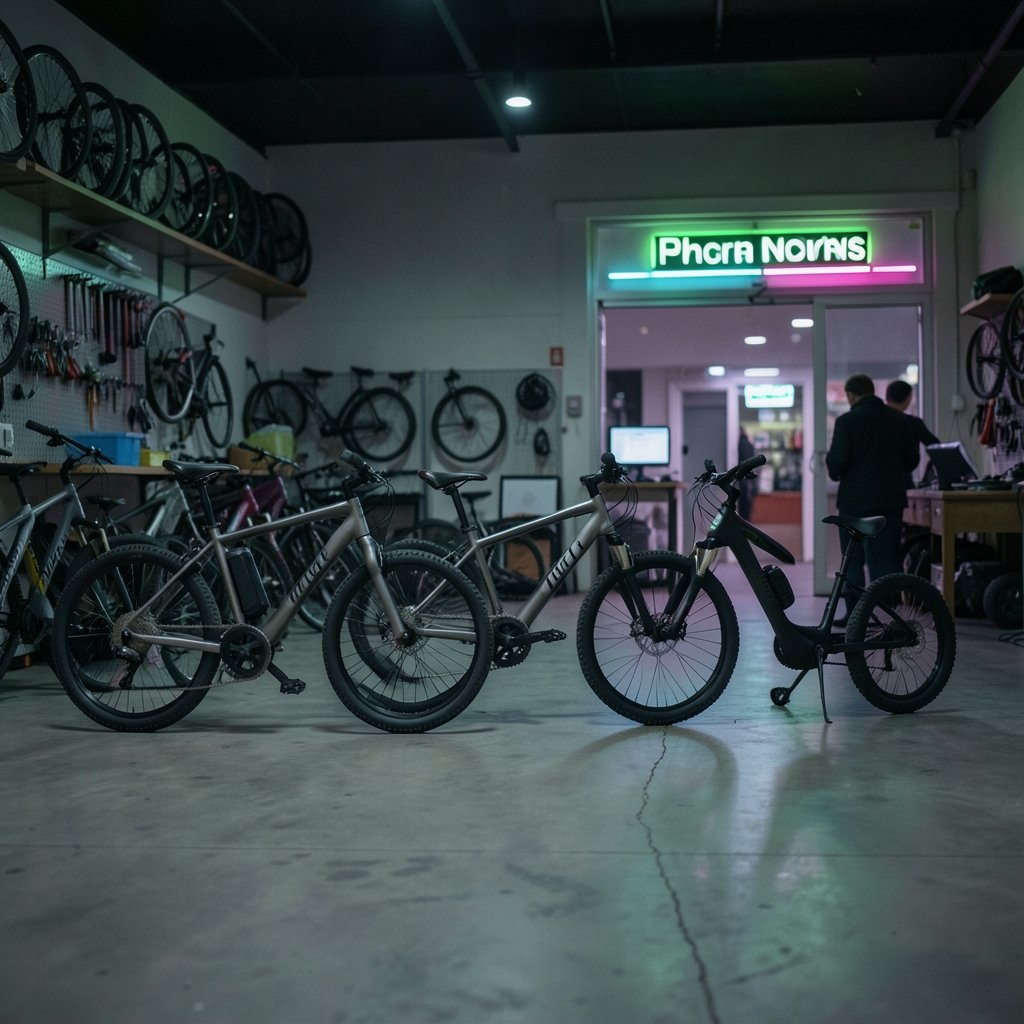
What makes one e-bike brand better than another? It is not the logo on the downtube or the flashiest ad. It is whether the bike’s motor, battery, brakes, and service network match how you actually ride. A commuter grinding up a hill every morning needs something very different from a weekend rider on flat rail trails.
This guide breaks down the best e-bike brands by category, explains what separates them, and shows the mistakes that cost buyers the most money. No hype, just the things that matter once the showroom shine wears off.
What “Best” Actually Means in E-Bikes
Most e-bike brands do not build their own motors. They buy drive systems from a handful of suppliers and build frames around them. That means brand reputation often tracks the motor supplier more than the frame maker.
The big mid-drive names are Bosch, Shimano (STEPS), Yamaha, Brose, and Bafang. Mid-drive motors sit at the cranks, work with the bike’s gears, and feel natural on climbs. Hub motors sit in the wheel, cost less, and dominate budget tiers. Neither is “better” in the abstract. A hub motor is perfectly fine for flat-city riding. A mid-drive earns its price on steep terrain.
The second big split is direct-to-consumer versus dealer networks. Direct-to-consumer brands ship a box to your door and often cost less. Dealer brands cost more but give you a shop that handles warranty work, firmware updates, and brake bleeds. If you are not comfortable turning a wrench, that difference is worth real money.
The Best E-Bike Brands by Category
There is no single winner. There is a best brand for each kind of rider. Here is how the landscape breaks down.
| Category | Brands to Consider | What They Do Well | Watch Out For |
|---|---|---|---|
| Premium commuter and trekking | Bosch-powered European brands, Riese & Müller, Trek, Specialized | Refined mid-drives, integrated batteries, strong dealer support | High prices, proprietary parts |
| Value and direct-to-consumer | Rad Power, Aventon, Ride1Up, Lectric | Low entry prices, throttle options, simple designs | Thinner service networks, variable QC |
| Sport and road | Specialized, Trek, Cannondale, Orbea | Lightweight systems, handling, range | Expensive batteries, less utility |
| Cargo and family | Tern, Urban Arrow, Yuba, Riese & Müller | Stiff frames, load capacity, kickstands that work | Size, storage, higher cost |
| Off-road and trail | Specialized, Trek, Giant, Haibike | Torque, suspension, motor durability | Weight, maintenance needs |
Premium Commuter and Trekking Brands
These are the brands you find in bike shops, and the ones most likely to still support your bike in eight years. A mid-drive from Bosch or Shimano paired with name-brand brakes (Shimano, Magura, Tektro) is the dependable formula. You pay for integration: the battery tucked into the frame, the display wired cleanly, the lights powered from the main pack.
The trade-off is price and proprietary parts. A replacement battery from a premium brand can cost a large fraction of a budget bike’s total price. Buyers should check battery replacement cost before buying, not after.
Value and Direct-to-Consumer Brands
This is where most first-time buyers land, and for good reason. You get a capable commuter for a fraction of premium pricing. The catch is that assembly, tuning, and warranty shipping often fall on you. Budget for a local shop to safety-check the bike after it arrives. That $75 to $120 check catches loose brake mounts, misaligned derailleurs, and under-torqued stem bolts. (Bicycle Safety)
If you are weighing tiers across product categories, the same logic that applies to Logitech MX vs Akko vs Aula peripherals holds here: pick by brand tier and support, not by spec-sheet numbers alone.
Sport, Road, and Off-Road Brands
Lightweight e-road bikes use compact mid-drives that add assist without turning the ride into a moped. Trail e-MTBs need torque, durable suspension, and motors that survive mud and heat. In both cases, the frame maker’s geometry and warranty matter as much as the motor. A great motor on a poorly designed frame still rides poorly.
For riders comparing pedal bikes and e-bikes, the buying instincts overlap. A road bike buying guide for 2025 covers fit and component tiers that carry straight over to e-road shopping.
The Rules That Change Which Brand You Should Buy
Here is the part most buyers skip, and it is the part that can make a bike illegal where you live or uninsurable after a crash.
In the EU and UK, pedal-assist bikes are regulated as EPACs under the EN 15194 standard. Assist cuts off at 25 km/h, and the motor is limited to 250 W continuous. Anything faster or with a higher motor rating is legally a moped, with type approval, licensing, and insurance consequences. This is why European “best brand” lists look so different from American ones.
In the US, regulation is state-level. The three-class system is model legislation, not a federal standard. Class 1 is pedal-assist to 20 mph, Class 2 adds a throttle to 20 mph, and Class 3 reaches 28 mph with pedal-assist only. States have adopted it unevenly, so the same bike can be legal on one side of a state line and restricted on the other. Check your state’s rules before buying a Class 3 bike for trail use, since many trail systems ban them.
Battery safety is the other non-negotiable. Fire authorities point to uncertified lithium packs as a real hazard. Look for electrical-system certification (UL 2849 in the US) and battery certification (UL 2271). Not every brand certifies, and that gap tells you something about how seriously they treat quality control.
What Actually Works in Practice
A few habits separate happy e-bike owners from frustrated ones.
Test ride the motor, not the paint. Ride the steepest hill near the shop. A motor that feels smooth on flat ground can feel weak or noisy under load. Listen for rattle over bumps.
Check the battery replacement price and availability. Ask directly: what does a new pack cost, and will you still sell one in five years? Brands that dodge the question are telling you something.
Ignore range claims as a ranking tool. Manufacturers use different test protocols, so a “60-mile” claim from one brand and a “55-mile” claim from another are not comparable. Real range depends on rider weight, terrain, assist level, and temperature. Cold weather can cut capacity noticeably.
Confirm the service path. If the nearest dealer is two hours away, a direct-to-consumer brand with mail-order parts may serve you better. If you want hands-off ownership, a local dealer wins.
Budget for consumables. E-bikes eat brake pads and chains faster than pedal bikes because of the extra weight and torque. Annual running costs are real, and cheap components wear faster.
Assembly mistakes are common with shipped bikes. The usual culprits are reversed fork quick-releases, loose stem bolts, and brakes that rub because the rotor got bent in transit. A torque wrench and a shop check solve all three.
How Brands Differ on the Things You Cannot See
Spec sheets list motor watts and battery watt-hours. They rarely list the details that decide whether you love the bike in year three.
Torque sensing versus cadence sensing is the big one. Torque sensors measure how hard you push and respond proportionally, which feels like riding with stronger legs. Cadence sensors detect that the pedals are turning and deliver a set assist level, which feels more like a throttle. Budget bikes lean cadence; premium bikes lean torque. Neither is wrong, but test both before deciding.
Battery cell quality varies enormously. Name-brand cells from established manufacturers hold capacity longer and fail less dramatically than no-name cells. Brands that name their cells are usually proud of them.
Firmware and app support is the newest differentiator. Some brands push over-the-air updates that fix motor bugs or add modes. Others never update. A bike with good firmware support ages better.
Frame and component warranties range from a couple of years to lifetime on the frame. Read the fine print on what voids coverage, since water ingress and unauthorized repairs are common exclusions.
If you are also shopping for home appliances or tech alongside a bike purchase, the same “tier and support over raw specs” rule shows up in washing machine and dryer brand comparisons. Buyers who chase headline numbers often regret it.
Where the Money Goes
Most of an e-bike’s cost sits in the motor, battery, and electronics. Frame and components make up the rest. That is why two bikes with similar looks can differ by thousands.
A useful way to think about budget: spend on the drive system and brakes first, then comfort. A mid-tier motor with excellent brakes beats a premium motor with weak stoppers. Hydraulic disc brakes are the standard for good reason, especially on cargo bikes carrying kids or groceries.
Cargo bikes have their own design standards, including dedicated load and stability testing in some markets. If you are hauling children, buy from a brand that specializes in cargo rather than a brand that added a longtail as an afterthought.
Common Mistakes That Cost Buyers Money
Buying on wattage alone is the classic error. A 750 W hub motor and a 250 W mid-drive are not comparable, because the mid-drive uses gearing to multiply torque. Wattage numbers sell bikes; torque and gearing make them climb.
Buying a Class 3 speed bike for trails that ban them is another. So is skipping the test ride, or buying a bike whose battery is a proprietary shape no one else makes. When that pack dies in five years, you may be stuck.
Finally, many buyers forget the accessories budget. A good lock, lights, fenders, and a rack can add several hundred dollars. Factor them in before comparing prices.
Conclusion
The best e-bike brand is the one that matches your terrain, your legal limits, and your willingness to handle maintenance. Premium dealer brands win on refinement and long-term support. Direct-to-consumer brands win on price and simplicity. Sport and cargo brands win where specialized design matters.
Before you buy, verify the motor system, confirm battery certification, check your local speed-class rules, and ask what a replacement battery costs. Do those four things and you will avoid the mistakes that send most e-bikes to the back of the garage. Then ride the steepest hill you can find. The bike will tell you the rest.
FAQ
What is the most reliable e-bike brand?
There is no single most reliable brand, because reliability depends heavily on the motor and battery supplier. Brands using established mid-drive systems and certified batteries tend to have fewer electrical problems. Dealer-supported brands also make warranty claims easier to resolve.
Are expensive e-bike brands worth it?
Often yes, if you ride regularly and want long-term support. Premium brands typically offer better integration, name-brand components, certified batteries, and shops that service the bike. Budget brands can be excellent value, but you may handle more maintenance yourself.
What is the difference between Class 1, 2, and 3 e-bikes?
Class 1 provides pedal-assist up to 20 mph with no throttle. Class 2 adds a throttle that works without pedaling, also to 20 mph. Class 3 provides pedal-assist up to 28 mph. Rules vary by state, and many trails restrict Class 3 bikes.
How long does an e-bike battery last?
Most lithium packs hold useful capacity for several hundred full charge cycles, which often works out to a few years of regular riding. Capacity fades gradually, and cold weather temporarily reduces range. Replacement cost and availability matter more than the headline lifespan.
Do I need a license or insurance for an e-bike?
In most of the US, a compliant low-speed e-bike needs no license or insurance. In the EU and UK, a pedal-assist bike within the 250 W and 25 km/h limits is treated like a bicycle. Anything faster or with a higher motor rating can legally become a moped, which changes the requirements. (Electric bicycle)
Should I buy an e-bike online or from a local shop?
Buy online if you are comfortable with assembly and basic maintenance, and if the brand has good mail-order parts support. Buy locally if you want warranty work handled for you and a shop that knows your bike. Either way, get a safety check before your first long ride.



