
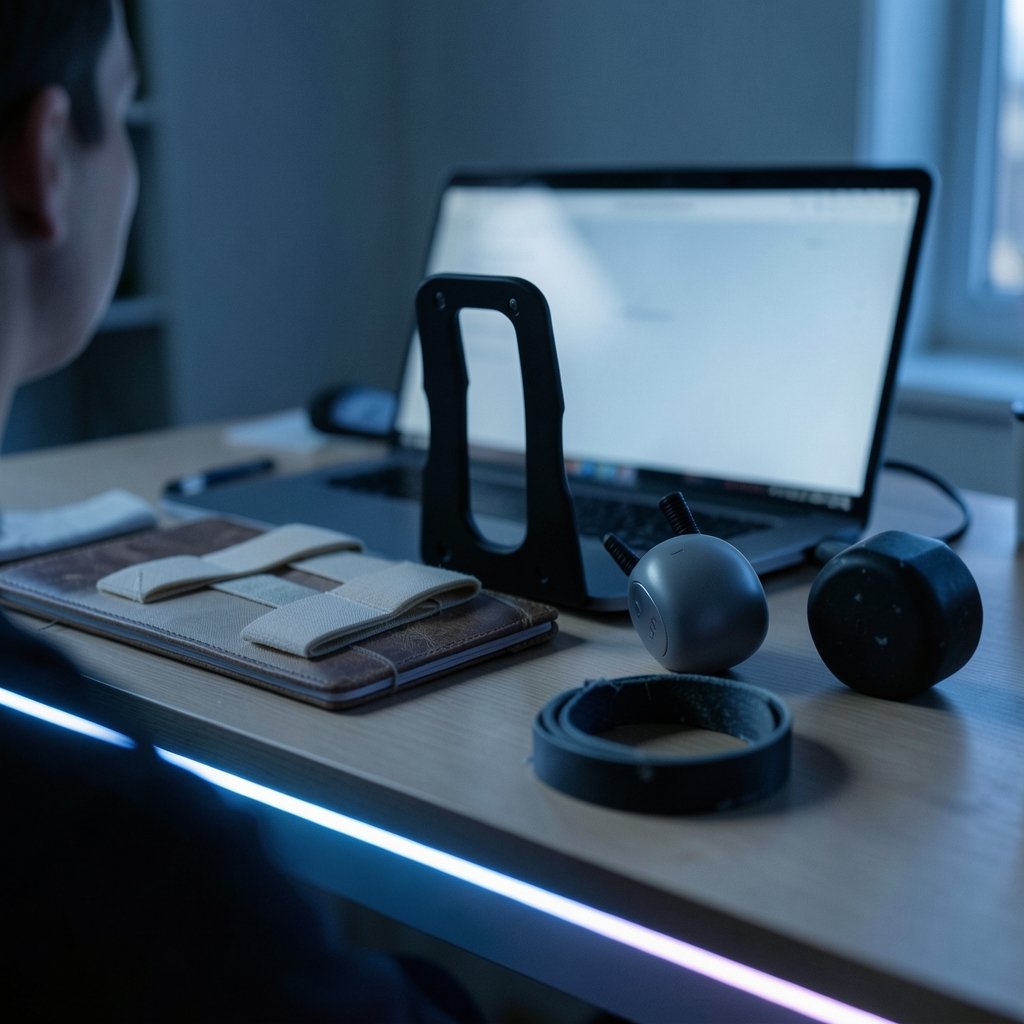
Can a strap you wear for twenty minutes a day really undo years of slouching at a desk? That is the promise behind the booming market for posture correctors, and it is a promise worth examining closely. Walk through any pharmacy aisle or scroll through social media and you will find elastic braces, rigid splints, and vibrating wearables all claiming to straighten your back and banish neck pain. The reality is more complicated, and more interesting, than the marketing suggests. (NHS: Back pain overview)
This guide looks at what posture correctors can and cannot do, who might genuinely benefit, how to judge a product before buying, and why the strongest evidence still points toward movement and strength work over any device you strap on.
What a Posture Corrector Actually Is
Most products sold as posture correctors fall into one of three categories.
Elastic shoulder braces look like a figure-eight harness. They loop over the shoulders and pull them backward, encouraging a more upright position. They are cheap, widely available, and usually adjustable.
Rigid splints and supports use stiffer materials to hold the spine or shoulders in a set position. These are closer to medical orthoses and are sometimes fitted by a clinician.
Sensor-based wearables are small devices that clip to clothing or sit against the upper back. They vibrate or buzz when they detect slouching, acting as a reminder rather than a physical restraint.
The category matters because these products work in completely different ways. A brace physically holds you in place. A sensor tries to change your habits. Confusing the two is one of the most common mistakes shoppers make.
The Evidence Is Thinner Than the Marketing Suggests

Here is the uncomfortable truth for anyone hoping a brace will fix their posture: the research base is weak. Systematic reviews of posture-correcting garments and so-called posture shirts have generally found low-quality evidence and inconsistent effects on both posture and pain. Studies are often small, short, and funded or supplied by manufacturers, which makes it hard to draw firm conclusions. (Building cloud security posture management roadmap that) (Posture (Wikipedia overview))
Some small studies suggest braces can temporarily change shoulder position or alter muscle activity while worn. That is plausible. What is far less established is whether those changes last once the brace comes off. There is little good evidence that wearing a corrector for a few weeks produces lasting postural change.
So when a product page claims to “permanently retrain” your posture, treat that as marketing rather than science. Short-term positional effects do not prove long-term benefit.
The Disuse Concern: Could a Brace Make Things Worse?
A common clinician concern is that prolonged use of a tight brace might weaken the postural muscles through disuse. The logic is simple: if a strap does the work of holding your shoulders back, the muscles that normally do that job may have less reason to engage.
This is a plausible mechanism, not a well-quantified risk. Nobody has run the long, careful trial that would settle it. But it is one reason physiotherapists tend to be cautious about recommending braces for general posture complaints, and it is a good argument for using any corrector sparingly and alongside active exercise rather than instead of it.
There are also practical downsides. Tight straps can cause skin irritation, rub against the ribs or shoulders, and restrict breathing if over-tightened. Anyone who has worn one for a full workday knows the discomfort is real.
Who Might Genuinely Benefit
Posture correctors are not useless. They are just narrower in application than the marketing implies.
People with a prescribed need, such as immobilization after a fracture or surgery, or certain neuromuscular conditions, may be fitted with a brace by a clinician or orthotist. In those cases the device serves a specific medical purpose under professional supervision.
For general “bad posture” caused by desk work, the case is much weaker. Off-the-shelf correctors for everyday slouching are a different, less-supported use. They may serve as a short-term reminder or a training aid, but they are not a treatment.
A sensible middle ground: a brace or sensor can act as a cue while you build better habits, but it should not become a permanent crutch. If you find yourself unable to sit comfortably without it, that is a signal to change approach.
What the Guidelines Actually Recommend
Major clinical guidelines for low back pain do not recommend posture braces. They emphasize exercise, staying active, and avoiding bed rest. For neck and shoulder posture, physiotherapy guidance generally favors strengthening and ergonomic changes over passive supports. (Benefits cloud security posture management multi cloud teams)
That aligns with the broader message from public health bodies: movement and load are good for the musculoskeletal system, and prolonged static positions are not. A brace encourages stillness. Exercise encourages the opposite.
This is also why the most useful posture advice tends to be unglamorous. Stand up regularly. Adjust your screen height. Strengthen your upper back and shoulders. Build movement breaks into your day. None of that sells products, which is precisely why you hear less about it.
How Posture Correctors Are Regulated
Regulation varies widely, and it tells you something about how seriously to take a product’s claims.
In the United States, many posture braces are marketed as general wellness products or low-risk devices. That framing lets them avoid the stricter review applied to devices intended to treat a disease. If a product claims to treat a medical condition, it is making a different kind of claim that invites more scrutiny.
In the EU and UK, non-medical posture supports may fall outside medical device regulation. But the moment a product claims to treat pain or a condition, it typically becomes a medical device and must meet stricter rules.
The practical takeaway for shoppers: bold therapeutic claims on a cheap brace are a yellow flag. If a product promises to cure back pain, ask what regulatory pathway it went through. Often the answer is none.
What to Look For Before You Buy
If you have decided to try a corrector, a few practical checks separate a reasonable purchase from a waste of money.
| What to check | Why it matters |
|---|---|
| Adjustability | A brace that cannot be fitted to your body will be uncomfortable or ineffective |
| Breathable material | You are more likely to wear it consistently if it does not trap heat |
| Clear, modest claims | Products promising to “cure” pain are overreaching |
| Return policy | Fit is hard to judge without wearing it |
| Professional input | A physiotherapist or orthotist can advise on whether a brace suits your situation |
Beyond the product itself, think about the plan. How long will you wear it? What else are you doing to build strength? A brace without a plan is just a strap.
Practical Tips That Actually Work
Having looked at the evidence, the practical advice is fairly clear. Use a corrector, if at all, as a short-term training aid rather than a permanent fix.
- Wear it for short periods, such as twenty to thirty minutes, while you practice sitting upright.
- Pair it with strengthening work for the upper back, shoulders, and core.
- Set up your workspace so the screen sits at eye level and your feet rest flat.
- Take movement breaks every thirty to forty-five minutes rather than holding one position.
- Stop using it if it causes pain, numbness, or skin irritation.
A common mistake is treating the brace as the fix. People who see the best results usually use it as a reminder while they change something bigger about how they sit and move.
Common Mistakes People Make
A few traps show up again and again.
Wearing it too tight. The instinct is to crank the straps so posture feels “corrected.” That usually leads to discomfort and restricted breathing, and it makes you less likely to keep wearing it.
Wearing it all day. Long, continuous use is exactly the pattern that raises the disuse concern. Short, deliberate sessions make more sense.
Skipping exercise. A brace does not build strength. If you want lasting change, the strengthening work is the part that matters.
Believing before-and-after photos. Dramatic transformations are easy to stage with posture alone, since standing differently for a photo changes everything. They are not evidence.
Ignoring pain. A corrector should not hurt. If it does, that is information, not a sign to push through.
The Better-Evidenced Alternative
If the goal is better posture and less discomfort, exercise-based approaches have more support than passive braces. Strengthening the back and shoulder muscles, adjusting your workstation, and taking regular movement breaks all address the underlying issue rather than propping it up.
That does not mean posture correctors are worthless. It means they belong in a supporting role, if at all. Think of them like training wheels: useful for a while, not something you plan to rely on forever.
For anyone weighing the cost and hassle against the likely benefit, the honest answer is that a modest, well-fitted brace used briefly alongside strength work is a reasonable experiment. A brace used as a substitute for movement and exercise is not.
Conclusion
The best posture correctors are not miracle devices, and the search for a single product that fixes posture is likely to disappoint. The evidence for lasting benefit is weak, the risk of overuse is real, and the clinical guidance points firmly toward exercise, ergonomics, and movement over passive supports.
That said, a well-fitted brace or a sensor-based reminder can play a small, useful role as a training aid, especially for people who need a physical cue to notice when they slouch. Treat it as a temporary tool, not a permanent fix; use it briefly and comfortably, and put most of your effort into the unglamorous work of building strength and moving more. Do that, and you may find you need the brace less and less, which is the point.
Frequently Asked Questions
Do posture correctors actually work?
They can temporarily change shoulder position and give you a physical reminder to sit upright, but the evidence for lasting postural change is weak. Most systematic reviews have found low-quality evidence and inconsistent results, so it is best to treat them as short-term training aids rather than fixes.
Can wearing a posture corrector weaken my muscles?
It is a plausible concern rather than a proven one. The theory is that if a brace holds your shoulders back, the postural muscles have less reason to engage. Nobody has run the long trial that would settle it, but it is a good reason to use braces sparingly and alongside strengthening exercise.
How long should you wear a posture corrector?
Short sessions of around twenty to thirty minutes are a sensible starting point, ideally while you practice sitting upright. Long, continuous wear is the pattern most likely to cause discomfort and the disuse concern. Stop if you feel pain, numbness, or skin irritation.
Are posture correctors safe?
For most people, short-term use is low risk, but tight straps can cause skin irritation, rib or shoulder discomfort, and restrict breathing if over-tightened. People with a prescribed need, such as post-surgical immobilization, should use a brace only under clinical supervision.
Do doctors recommend posture correctors?
Major clinical guidelines for low back pain do not recommend posture braces, favoring exercise and staying active instead. Physiotherapy guidance for neck and shoulder posture generally favors strengthening and ergonomic changes over passive supports, so professional advice usually leans toward active approaches. (Cloud security posture management best practices that 2)
What is a better alternative to a posture corrector?
Strengthening the upper back and shoulder muscles, adjusting your workstation so the screen sits at eye level, and taking regular movement breaks all have more support than passive braces. These approaches address the underlying issue rather than propping it up temporarily.



