
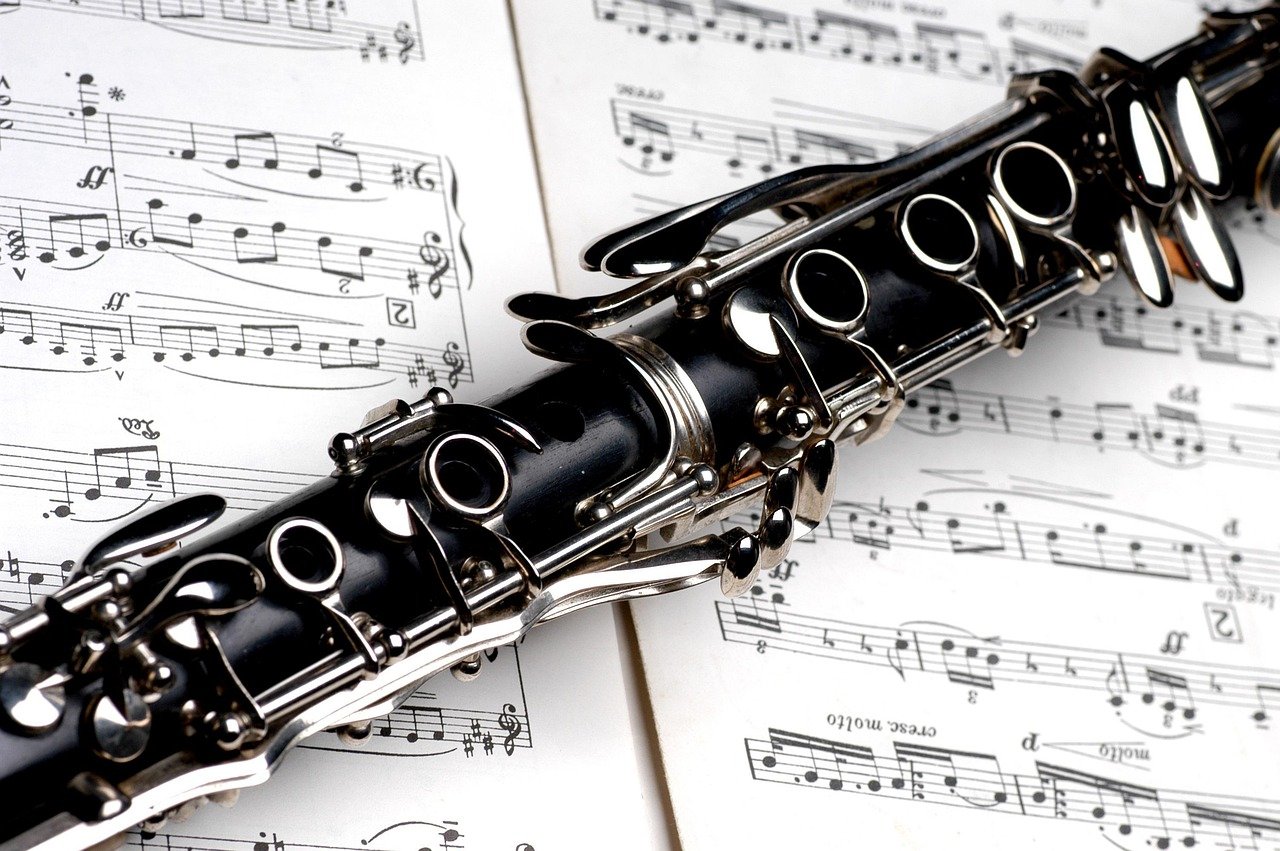
What single instrument can whisper a soft, smoky line in a jazz club, then blast through a full symphony orchestra without breaking a sweat? The clarinet. It’s one of the most versatile instruments in music, and it’s also one of the most misunderstood. People see the shiny keys and the black body and assume it’s just a fancy recorder. It isn’t. Behind that simple tube is a story of invention, rivalry between key systems, and a sound that has shaped everything from Mozart to swing.
This article walks through what a clarinet actually is, how it works, where it came from, and what a beginner should know before picking one up.
What Exactly Is a Clarinet?
A clarinet is a woodwind instrument that makes sound when a single reed vibrates against the player’s lower lip. That’s the key detail. Unlike the oboe or bassoon, which use a double reed, the clarinet uses one thin piece of cane attached to a mouthpiece. This “single-reed” setup gives the clarinet its characteristic warm, hollow tone in the low register and its bright, piercing tone up high. (Clarinet)
The instrument is a straight tube, usually made of wood, with a flared bell at the bottom and a mouthpiece at the top. Holes along the body are covered by keys and rings, and the player opens and closes them to change pitch. It’s held vertically, angled slightly forward, with both hands.
Most people picture the B♭ clarinet, the standard soprano model. But it’s part of a whole family, and that family is bigger than most casual listeners realize.
The Clarinet Family: More Than One Instrument
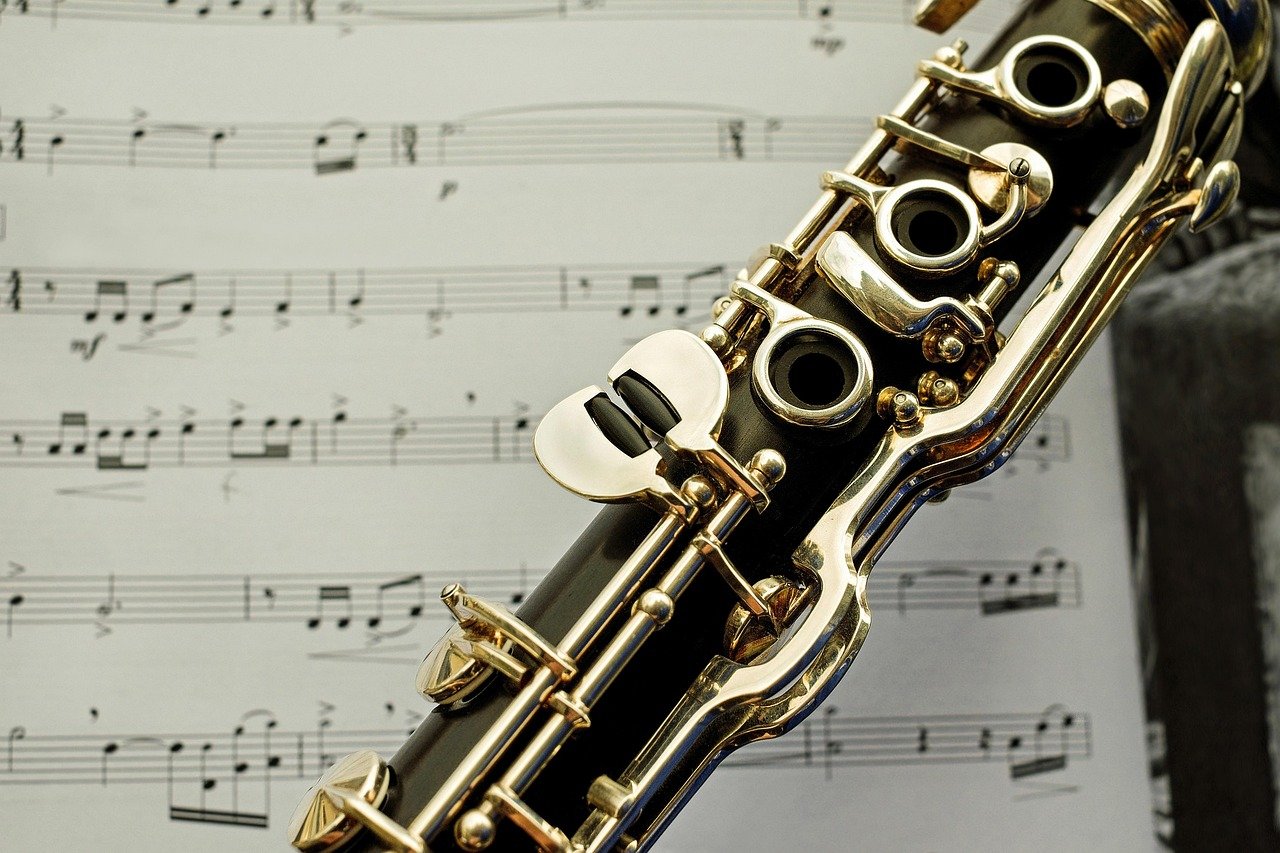
The clarinet isn’t a single instrument so much as a clan. Here’s how the main members compare:
| Model | Sound Relative to Written Pitch | Typical Role |
|---|---|---|
| E♭ clarinet | Minor third higher | Bright, piercing top lines; band and orchestral color |
| B♭ clarinet | Major second lower | The standard; most common in bands, orchestras, and schools |
| A clarinet | Minor third lower | Warmer orchestral voice; common in Romantic repertoire |
| Bass clarinet | Major ninth lower | Deep, dark lines; jazz and modern orchestral writing |
| Contrabass clarinet | Two octaves plus a second lower | Rare; extreme low end in large ensembles |
The B♭ soprano is the workhorse. If someone says “I play clarinet,” they almost always mean the B♭. The A clarinet appears mostly in orchestral parts because composers liked its slightly darker color. The bass clarinet has carved out its own identity, especially in jazz and film scores, where its low, breathy tone is instantly recognizable.
All of these are transposing instruments. That means the note written on the page isn’t the note you hear. On a B♭ clarinet, a written C sounds as a B♭, a major second lower. On an A clarinet, a written C sounds as an A, a minor third lower. This trips up beginners constantly, and it’s worth understanding early.
How the Clarinet Actually Makes Sound
The physics is elegant. Air travels down the tube, and the reed vibrates, creating a standing wave inside the instrument. Opening and closing tone holes changes the length of that wave, which changes the pitch. Simple in theory, tricky in practice.
A few things matter enormously in real playing:
The reed is everything. A chipped, warped, or too-soft reed will fight you all day. Beginners often buy cheap reeds and wonder why they sound bad. A decent cane reed, properly moistened and matched to the mouthpiece, does more for tone than any upgrade.
The embouchure takes time. The lower lip cushions the reed, the upper teeth rest on the mouthpiece, and the corners of the mouth stay firm. Too much bite and the sound chokes. Too little and it squeaks. Most beginners clamp down too hard at first.
Air support drives the sound. The clarinet rewards steady, fast air. Players who blow timidly get a thin, wobbly tone. The instrument is surprisingly resistant, meaning it pushes back, so you have to push through it.
The upper register is a different animal. The clarinet overblows at the twelfth rather than the octave, which is unusual among woodwinds. That’s why it needs a register key to reach the upper register, and why the tone changes character so dramatically as you climb.
The written range of a standard B♭ clarinet runs roughly from E3 up to C7, about three and a half octaves, though strong players push higher. Few instruments offer that much span with such distinct colors at each level.
A Short History: From Chalumeau to Concert Hall
The clarinet is a relatively young instrument, at least compared to the flute or the harp. It emerged around 1700 in Nuremberg, where the instrument maker Johann Christoph Denner modified an older single-reed instrument called the chalumeau by adding a register key. Historians still argue about the exact date and how much of the innovation was Denner’s alone, but the general story is well accepted.
The name comes from the Italian clarino, a high Baroque trumpet. Early listeners thought the clarinet’s upper register sounded like that trumpet, so the instrument borrowed the name.
For decades the clarinet was a supporting player, filling out wind bands and doubling other lines. Then Mozart changed things. His Clarinet Concerto in A, K. 622 from 1791 is one of the first great works written for the instrument, and it remains a cornerstone of the repertoire. Mozart wrote it for the clarinetist Anton Stadler and his extended basset clarinet, which had a slightly lower range than the modern standard model. The concerto is still studied, performed, and recorded constantly.
The 19th century brought the keywork revolution. The modern instrument’s mechanism descends largely from the Boehm system, developed for the flute and adapted to the clarinet. In Germany and Austria, the Oehler system remained dominant and still is in many orchestras there. The French Boehm-system clarinet won out internationally, and that’s what most players outside Central Europe use today. Terminology and attribution dates vary by source, so treat any single “invented in year X” claim with a little caution.
The Clarinet in Jazz and Popular Music
Here’s where the clarinet’s story gets fun. In the 1920s through the 1940s, the clarinet was a leading voice in jazz. Benny Goodman and Artie Shaw became household names, fronting big bands and turning the instrument into a symbol of the swing era. Goodman in particular brought the clarinet into classical concert halls too, commissioning works and blurring the line between jazz and classical performance.
After the swing era, the clarinet’s jazz profile faded. Bebop and later styles favored saxophones and trumpets, which cut through louder ensembles more easily. The clarinet never disappeared, though. It kept a foothold in traditional jazz, klezmer, and later in modern creative music, where players like Don Byron and Anat Cohen pushed it into new territory.
In popular music, the clarinet shows up in surprising places: the opening of Gershwin’s “Rhapsody in Blue,” countless film scores, and the occasional rock or pop arrangement looking for a nostalgic, reedy texture.
Wood, Plastic, or Something Else?
Traditional clarinets are made from grenadilla, also called African blackwood, a dense hardwood prized for its stability and tone. Good grenadilla instruments are expensive, and they can crack if mistreated, especially in dry climates.
Student and outdoor models often use ABS plastic or ebonite. These are cheaper, nearly indestructible, and surprisingly good. A well-made plastic clarinet can carry a beginner through several years of study. The gap between a decent plastic instrument and a cheap wooden one is smaller than many people assume, and a plastic horn that stays in tune beats a cracked wooden one any day.
Mouthpieces are usually hard rubber or plastic, and the reed is cane, though synthetic reeds exist for players who want consistency and don’t mind a slightly different feel.
Practical Tips for Beginners
If you’re starting out, a few habits separate players who progress quickly from those who stall:
- Get a teacher, at least at first. The embouchure and hand position are hard to self-correct, and bad habits take months to undo.
- Buy a decent student instrument, not the cheapest one. A reputable plastic model from a known brand will serve you better than an off-brand bargain that leaks air.
- Invest in reeds. Buy a few strengths and find what works with your mouthpiece. Strength 2 to 2.5 is a common starting point.
- Practice long tones daily. They’re boring and they work. Steady tone is the foundation of everything else.
- Keep the instrument clean. Swab it after every session. Moisture left inside is the enemy of pads and wood.
- Learn your transposition early. Knowing that written C sounds as B♭ on your instrument prevents confusion later.
A common mistake is practicing only fast passages and ignoring tone. Another is playing through pain in the hands or jaw. Discomfort means something is wrong with position or setup, not that you need to tough it out.
Common Questions About the Clarinet
Is the clarinet hard to learn?
It’s moderately challenging. The basics come reasonably fast, but clean tone across all registers takes consistent practice. Many students play simple tunes within a few months and spend years refining control.
How long does it take to get good at clarinet?
With regular practice, a motivated beginner can play in a school band within a year. Reaching an advanced level usually takes several years of steady work, and professional-level mastery takes far longer.
What’s the difference between a clarinet and an oboe?
Both are woodwinds, but the clarinet uses a single reed and a straight cylindrical tube, while the oboe uses a double reed and a conical tube. The oboe sounds brighter and more nasal; the clarinet is warmer and more hollow in its low register.
Why is the clarinet a transposing instrument?
Because of its tube length, the B♭ clarinet naturally produces a B♭ when the player fingers a written C. Writing parts transposed keeps fingerings consistent across the clarinet family, so players can switch between B♭, A, and E♭ models without relearning scales.
Can you play jazz on a clarinet?
Absolutely. The clarinet was a leading jazz instrument in the 1920s through the 1940s, and it remains active in traditional jazz, swing revival, klezmer, and modern improvised music. It’s less common in bebop and later styles, but dedicated players still make it work.
How much does a clarinet cost?
Student plastic models generally cost far less than professional wooden instruments. Prices vary widely by brand and condition, so it’s worth comparing a few reputable student lines and, ideally, having a teacher check any used instrument before you buy.
Conclusion
The clarinet is a small instrument with an outsized reach. It began as a modified folk instrument in a Nuremberg workshop around 1700, borrowed its name from a trumpet, and grew into a fixture of orchestras, marching bands, jazz clubs, and film scores. Its single-reed mechanism, transposing nature, and dramatic register changes make it a fascinating study for anyone curious about how woodwinds work.
For players, the appeal is practical: the clarinet is affordable to start, portable, and capable of enormous expressive range. For listeners, it’s a sound that slips easily between tender and thrilling. Whether you’re considering lessons, hunting for a first instrument, or just want to understand what you’re hearing in the orchestra, the clarinet rewards a closer look. Pick one up, and you’ll find three and a half octaves of possibility waiting inside a single piece of cane.



