

What makes a headphone worth $449.99 in a crowded market? For Sony, the answer has always been the same: silence. The Sony WH-1000XM6 wireless noise canceling headphones arrived in May 2025, roughly three years after the WH-1000XM5, and they carry the weight of a lineup that has defined consumer noise cancellation since the original MDR-1000X in 2016. The question is whether the XM6 earns its higher price or simply polishes a formula that was already good enough.
What the XM6 Actually Is
The WH-1000XM6 is Sony’s flagship over-ear wireless headphone. It sits at the top of the WH-1000X family, which began with the MDR-1000X in 2016 and adopted the “WH-1000XM” naming with the XM2 in 2017 and XM3 in 2018. Every generation since has pushed active noise cancellation further, and the XM6 continues that march. If you want the underlying science, the principles of how anti-noise waves cancel unwanted sound are explained in the encyclopedia entry on active noise control, which is worth a read before you judge any ANC marketing claim.
Sony announced the XM6 in May 2025 and put it on sale shortly after. The launch price was widely reported at US$449.99, up from the XM5’s US$399.99 at its 2022 debut. That $50 bump is the single most debated detail of this release, and it shapes almost every buying decision around the product.
The Design Change Everyone Asked For
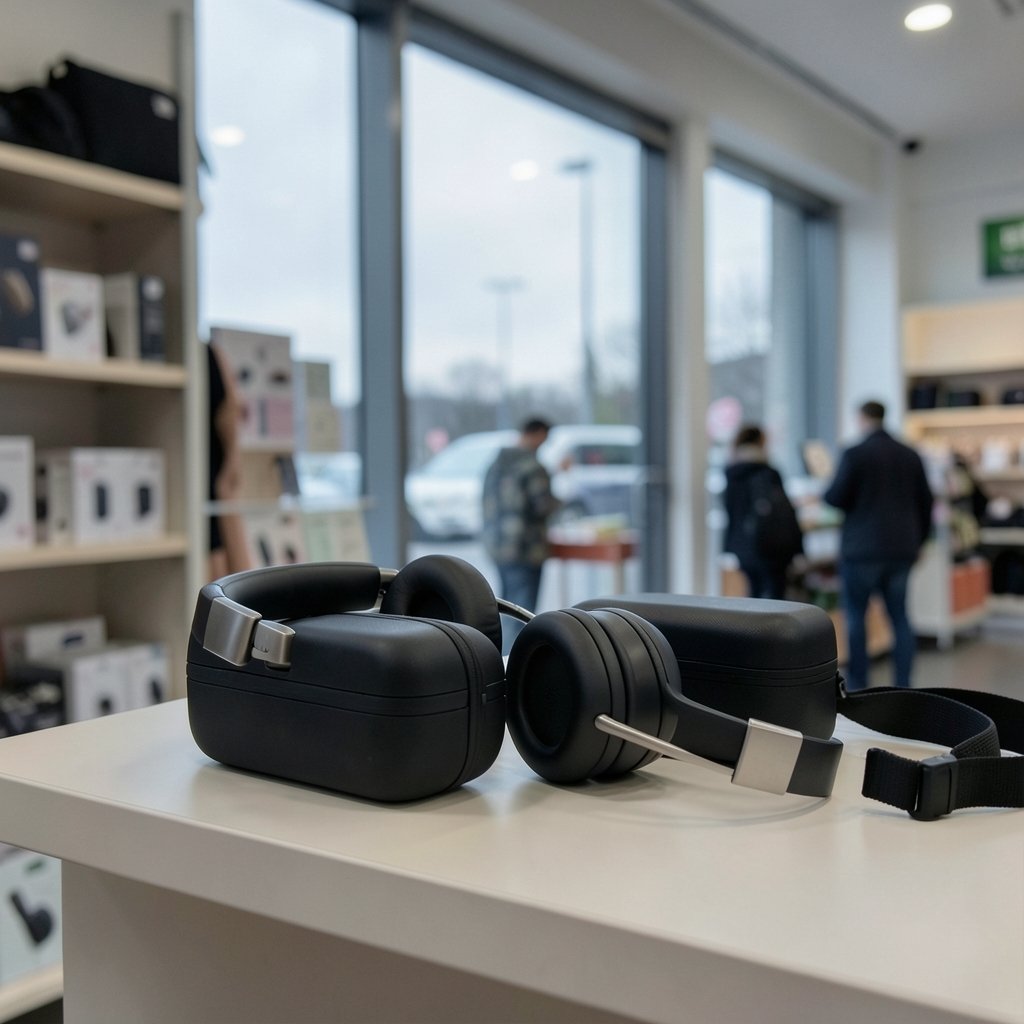
Here is the headline for longtime fans: the XM6 brought back a folding hinge. The XM5, launched in May 2022, did not fold, a decision that frustrated frequent travelers who had grown used to collapsing their XM4 into a compact case. The XM6 reverses that. It folds again.
That matters more than it sounds. A headphone that folds fits into a bag pocket, hangs off a backpack strap, and survives commutes without a bulky hard case. For anyone who skipped the XM5 specifically because of the non-folding design, the XM6 removes the main objection.
The trade-off is familiarity. The XM5’s clean, hinge-free look was polarizing but distinctive. The XM6 leans back toward the practical, and most early coverage treated the folding return as a correction rather than a compromise.
Inside the XM6: Chips, Mics, and Processing
Sony says the XM6 uses a new processor, reported as the QN3 HD noise-canceling processor, paired with more microphones than the XM5 for adaptive cancellation. More mics plus faster processing is the standard recipe for better ANC: the headphones sample more of the surrounding noise and generate a more precise opposing signal.
A practical note here. Microphone count and chip names sound impressive, but they rarely translate directly into real-world performance. What matters is how the system handles the noises people actually encounter: engine drone on a plane, the low rumble of a train, HVAC hum in an office, and the chaotic mid-range of a busy street. Adaptive systems also adjust continuously, which is why two people on the same flight can have different experiences depending on fit and hair coverage around the mics.
Fit is the variable buyers underestimate most. A poor seal around the ears lets low-frequency noise leak past the cancellation entirely, and no processor fixes that. Before blaming the headphones, try a different ear pad size, adjust the headband, and clear hair away from the outer mics.
Battery, Codecs, and Connectivity
Battery life is reported at roughly 30 hours with ANC on, similar to or slightly above the XM5’s rated figure. That is enough for a transatlantic round trip with room to spare, and it keeps the XM6 competitive with the best in its class. Exact charging times and rated figures should be confirmed on Sony’s own specification sheet rather than press summaries, since regional listings sometimes differ.
On connectivity, expect the familiar Sony toolkit: Bluetooth 5.x, LDAC, AAC, and SBC support, multipoint pairing, and app-based EQ and ANC controls. LDAC is Sony’s own high-resolution codec, and the Bluetooth audio landscape it lives in is explained in the Bluetooth SIG’s overview of Bluetooth audio technology and codecs, which covers how codecs differ in bitrate and why that matters for streaming quality. Whether the XM6 adds LE Audio or Auracast support is worth checking against Sony’s official specs, because that answer affects future-proofing more than any single codec does today.
Multipoint pairing deserves a mention for remote workers. Being connected to a laptop and a phone at once, with automatic switching when a call comes in, is one of those features you stop noticing once it works and curse loudly when it doesn’t. If yours misbehaves, the fixes usually involve clearing old pairings and re-pairing in the right order, a routine covered in this guide to the most common Bluetooth headphone problems.
How the XM6 Compares
| Feature | WH-1000XM6 | WH-1000XM5 |
|---|---|---|
| Launch | May 2025 | May 2022 |
| Launch price | US$449.99 | US$399.99 |
| Folding hinge | Yes | No |
| Processor | QN3 HD (reported) | V1 + QN1 |
| Battery (ANC on) | ~30 hours | ~30 hours |
| Codecs | LDAC, AAC, SBC | LDAC, AAC, SBC |
| Multipoint | Yes | Yes |
The table tells a simple story. The XM6 is not a revolution; it is a correction plus a refinement. The folding hinge returns, the processing gets faster, and the price goes up. Whether that adds up depends entirely on what you value.
If you already own the XM5 and travel rarely, there is little here to justify an upgrade. If you own the XM4 and have been waiting for a reason, the XM6 is the most complete package Sony has shipped. And if you are shopping across brands, the real decision is rarely Sony versus Sony. It is Sony versus Bose, and that matchup is broken down in this comparison of the Sony WH-1000XM6 vs Bose QuietComfort Ultra noise cancellation, which focuses on the one thing both companies claim to do best.
Where the XM6 Fits in the Wider Market
The over-ear flagship space has never been more competitive. Bose, Apple, and Sennheiser all have credible claims on the category, and the gap between the top models is narrower than the marketing suggests. For a broader view of how the current generation stacks up, this roundup of the best noise cancelling headphones in 2026 that actually silence noise tests the claim rather than the spec sheet.
Budget matters too. At $449.99, the XM6 sits above a very capable tier of headphones that sell for under $300 and handle commuting noise well enough that most people would struggle to tell the difference in a blind test. If price is the deciding factor, this guide to the best noise cancelling headphones under 300 is a more honest starting point than stretching for a flagship you don’t need.
The earbud crowd has parallel options. Sony’s own WF-1000XM6 and Apple’s AirPods Pro 3 compete in a different form factor with different trade-offs, and the AirPods Pro 3 vs Sony WF-1000XM6 noise cancelling and sound comparison covers which one handles which environment better. Earbuds win on portability; over-ears win on battery and comfort over long stretches. Neither is universally better.
Practical Tips From Real-World Use
A few habits separate people who love their XM6 from people who return it.
First, run the ANC optimizer in Sony’s app after every significant change: new ear pads, a haircut, a different pair of glasses. The headphones adapt to the seal, and a stale profile underperforms.
Second, understand what ANC cannot do. It excels at steady low-frequency noise and struggles with sudden, sharp sounds like a baby crying or a dropped tray. No headphone on the market solves that, and expecting it leads to disappointment.
Third, wind is the classic weak point. Outdoor ANC systems often amplify wind buffeting because the outer mics pick up turbulence. If you cycle or walk in gusty conditions, the wind-noise handling described in this breakdown of wireless earbuds wind noise reduction that actually works applies to over-ears too: reduce the ANC level or switch to ambient mode when the wind picks up.
Fourth, keep the firmware current. Sony has historically improved ANC and connection stability through updates, and a headphone that shipped in May 2025 is likely to behave differently a year later.
The Charging and Accessory Side
The XM6 charges over USB-C, and the cable matters less than people think. What trips up owners is wireless charging pads, which the case may or may not support depending on the model and accessory. If a pad refuses to charge a device, the culprit is usually coil alignment rather than a dead pad, a problem explained in this guide to wireless charger alignment problems that stop your phone charging. Thick cases create a similar failure, covered in this look at whether wireless charging through a thick phone case actually works. The same physics applies to any headphone case with a charging coil inside.
Who Should Buy the XM6
The XM6 makes the most sense for three groups. Frequent flyers who want folding portability plus top-tier cancellation. XM4 owners who skipped the XM5 and want the full upgrade. And anyone who values Sony’s app ecosystem, with its EQ, adaptive sound control, and multipoint management. (WHO fact sheet on deafness and hearing loss)
It makes less sense for XM5 owners with no folding requirement, budget-conscious buyers who would be well served under $300, and anyone who mainly listens in quiet rooms where ANC barely matters.
The price increase is real, and it is the fairest criticism of this release. Sony raised the ceiling without raising the battery life or adding a headline feature beyond the hinge. That is a refinement, not a reinvention, and buyers should judge it that way.
Conclusion
The Sony WH-1000XM6 is the most polished version of a formula Sony has spent nearly a decade perfecting. The folding hinge returns, the QN3 processor and expanded microphone array push cancellation forward, and roughly 30 hours of battery keeps it competitive. It is not a dramatic leap over the XM5, and the $449.99 price asks for patience. But for travelers who want silence in a package that folds into a bag, the XM6 delivers exactly what the lineup has always promised: the world, turned down.
Frequently Asked Questions
When did the Sony WH-1000XM6 come out?
Sony announced the WH-1000XM6 in May 2025, and it went on sale shortly after. That is roughly three years after the WH-1000XM5, which launched in May 2022, making it a longer gap than the XM4-to-XM5 cycle. The XM4 arrived in August 2020.
Does the WH-1000XM6 fold?
Yes. The XM6 brought back a folding hinge, reversing the XM5’s non-folding design. This was one of the most widely reported changes at launch and a direct response to traveler feedback. It makes the headphone easier to pack and store in a smaller case.
How much does the Sony WH-1000XM6 cost?
The launch price was widely reported at US$449.99, up from the XM5’s US$399.99 debut price. Regional pricing varies, so buyers outside the US should check local listings. The increase is the most common criticism in early coverage of the headphone.
How long does the WH-1000XM6 battery last?
Battery life is reported at roughly 30 hours with noise cancellation on, similar to or slightly above the XM5’s rated figure. Real-world results depend on volume, codec choice, and temperature. Exact rated figures and charging times should be confirmed on Sony’s official specification sheet.
What codecs does the WH-1000XM6 support?
Expect Bluetooth 5.x with LDAC, AAC, and SBC support, plus multipoint pairing and app-based EQ and ANC controls, consistent with the XM5. LDAC is Sony’s high-resolution codec. Whether the XM6 adds LE Audio or Auracast support is worth verifying against Sony’s official specifications.
Is the WH-1000XM6 worth upgrading from the XM5?
For most XM5 owners, no. The core experience, including battery life and codec support, is similar, and the main additions are the folding hinge and faster processing. XM4 owners who skipped the XM5 have a much stronger case, especially if they travel often and want the folding design back.



