
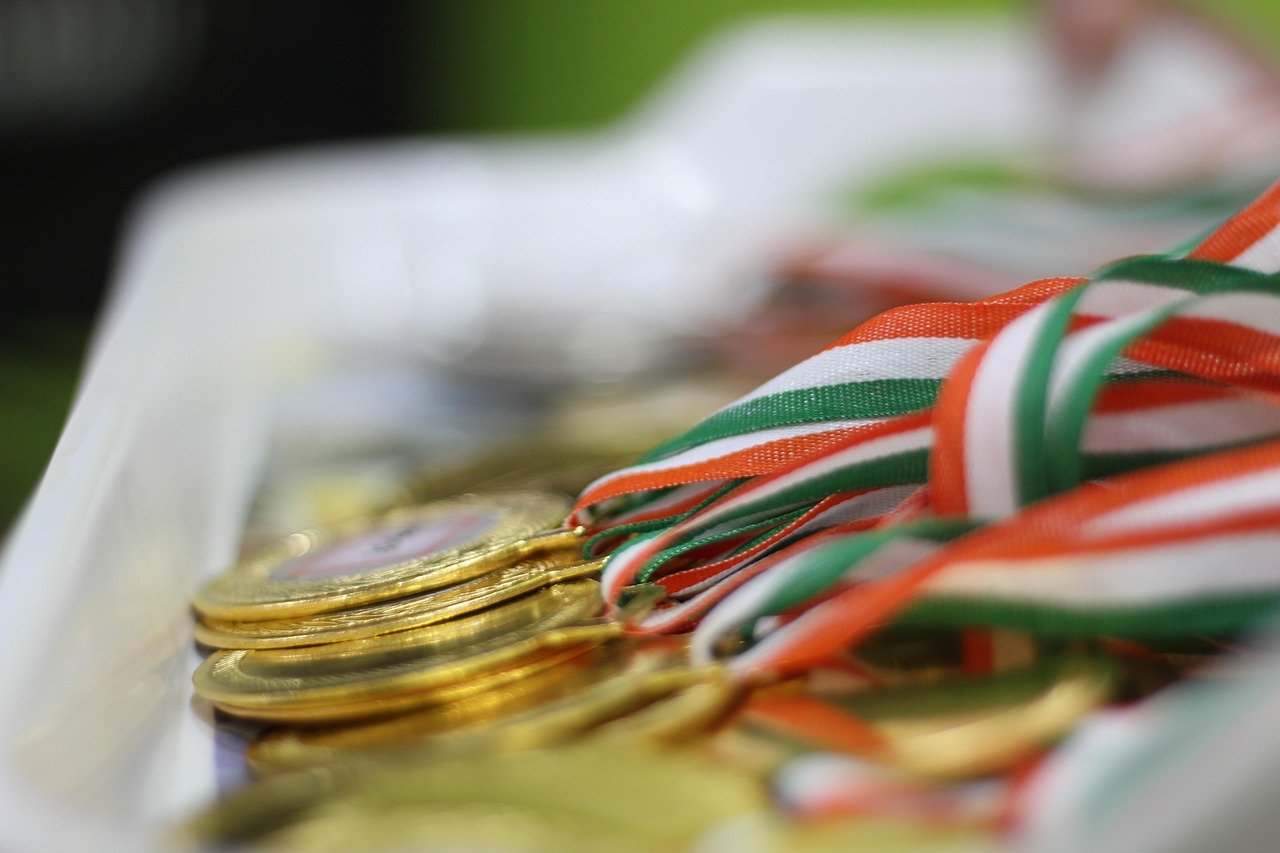
What makes a small disc of metal worth more than the gold inside it? Every medal ever made raises that question. A medal is a struck or cast piece of metal bearing a design and inscription, given to honor an achievement, mark an event, or serve as a personal ornament. It is one of humanity’s oldest ways of saying “this mattered.” And yet the object itself is usually modest: a few grams of alloy, a ribbon, a box. The value lives in what the medal stands for. (Medal)
This article looks at medals from several angles: where the word comes from, how they are manufactured, which famous awards define the category, how collectors approach them, and what practical knowledge helps when you buy, store, or evaluate one. Whether you are curious about the Olympic podium, inherited a family medal, or want to understand military decorations, the same fundamentals apply.
Where the Word “Medal” Comes From
The English word entered the language in the 16th century by way of Middle French médaille, which came from Italian medaglia, ultimately from a Vulgar Latin term related to metallia, meaning “metals.” That lineage is a useful reminder: a medal is, first and foremost, a piece of metal shaped for a purpose beyond currency.
That distinction matters. Medals are studied alongside coins within numismatics, the broader discipline of money and medallic art, but they are not legal tender. A coin circulates and carries a denomination; a medal commemorates and carries a message. The boundary is usually clear, though commemorative coins blur it when they are issued as collectibles rather than spending money.
How Medals Are Made: Striking Versus Casting
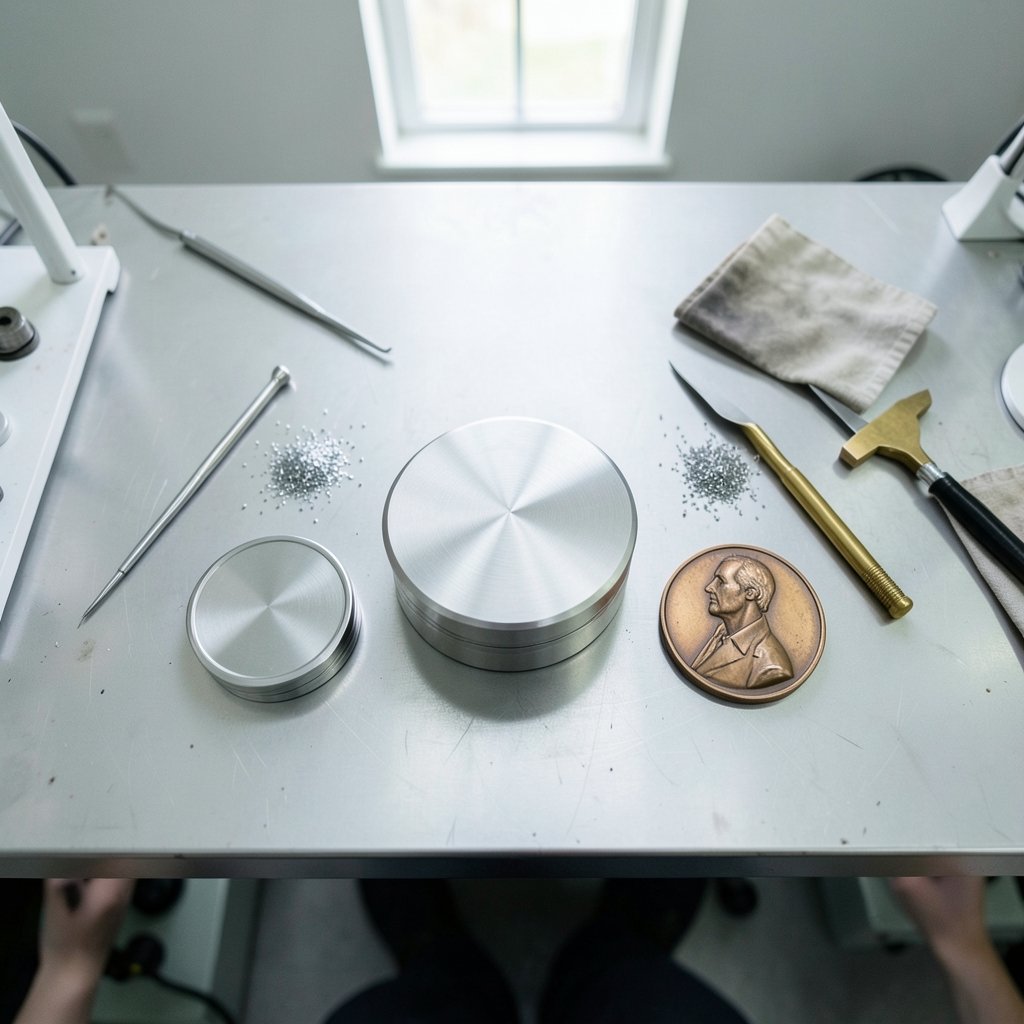
Almost every medal in the world is produced by one of two methods, and the choice shapes everything about how it looks and feels.
Striking means pressing a hardened steel die into a metal blank with enormous force. The die carries the design in reverse, and the press transfers it in a single blow or a series of blows. Striking produces crisp edges, fine lettering, and mirror-like fields. It is the standard method for official awards, decorations, and anything produced in quantity, because a single die can turn out thousands of identical pieces.
Casting means pouring molten metal into a mold. It allows deeper relief, irregular shapes, and one-off pieces, which is why sculptors and artists often prefer it. The trade-off is softer detail and more variation between pieces.
| Feature | Struck | Cast |
|---|---|---|
| Detail | Very fine, sharp lettering | Softer, more sculptural |
| Production | High volume from one die | Small runs or single pieces |
| Typical use | Official awards, decorations | Art medals, commemoratives |
| Surface | Crisp fields, defined rims | Textured, variable |
A practical tip from the collecting world: look at the rim and the lettering first. Sharp, uniform lettering and a clean rim suggest striking; slightly rounded letterforms and tiny surface pits suggest casting. This matters when someone claims a piece is an official issue.
The Awards That Define the Category
Olympic Medals
The modern Olympic Games, revived in 1896, award gold, silver, and bronze medals, and the hierarchy has become a global shorthand for first, second, and third. One detail surprises many people: since the 1912 Stockholm Games, Olympic “gold” medals have been made mostly of silver with a gold plating, rather than solid gold. The gold content is a thin layer, not the body of the medal.
That is not a cost-cutting trick so much as physics and economics. A solid gold medal of that size would be extraordinarily expensive, and the symbolic function does not require it. What matters is the standard: consistent size, consistent design language, and a plating specification that ensures the medal looks and feels like gold.
The Nobel Prize Medal
First awarded in 1901, the Nobel Prize medal is struck in 18-carat green gold and plated with 24-carat gold. The physics, chemistry, physiology or medicine, and literature medals share a face designed by Erik Lindberg in 1902. The medal is a good example of how design consistency builds institutional identity: a single portrait face, reused for more than a century, becomes instantly recognizable.
Military Decorations
Military honors carry the heaviest symbolic weight of all. The Victoria Cross, instituted in 1856, is the highest British award for gallantry. It is cast in bronze, and according to long-standing tradition the metal is said to derive from captured cannon, though researchers have debated the exact source of the metal over the years. Treat the cannon story as tradition rather than settled fact.
In the United States, the Medal of Honor is the highest military decoration. It was established in 1861 for the Navy and extended to the Army in 1862. These decorations are not collectibles in the ordinary sense; they are protected, regulated, and in some jurisdictions legally restricted in how they may be sold or displayed. Anyone inheriting one should check the applicable rules before offering it for sale.
Reading a Medal: What the Details Tell You
Experienced collectors and curators look at a medal in a fixed order. The sequence is worth learning because it prevents expensive mistakes.
- Obverse first. The “front” usually carries the portrait, emblem, or central design. Note the style of lettering and any artist’s initials or signature.
- Reverse next. The back often carries the inscription, date, recipient name, or award citation. A named medal is almost always more significant than an unnamed one.
- Rim and edge. Official awards frequently have the recipient’s name engraved or impressed on the rim. This is the single most important feature for provenance.
- Metal and weight. Weigh the piece and compare it with published specifications. A surprising weight is a red flag.
- Ribbon and suspension. Original ribbons, clasps, and suspension rings add substantially to value and authenticity. Replaced ribbons are common and not necessarily disqualifying, but they should be disclosed.
- Documentation. The box, certificate, and citation can matter as much as the medal itself.
A common mistake is cleaning a medal before having it assessed. Abrasive polishes and ultrasonic cleaners strip patina, scratch surfaces, and can cut value dramatically. The practical rule: do not clean anything until an expert has seen it. Store medals flat, in acid-free enclosures, away from humidity and direct sunlight, and keep ribbons unfurled so creases do not set.
Medals in Language and Everyday Speech
The word has slipped far beyond the podium. “The other side of the medal” and “every medal has its reverse” are common idioms meaning that every situation has a downside. In golf, medal play refers to stroke play, where the total number of strokes is counted, as distinct from match play, where holes are won individually. The usage dates to the 19th century and remains standard in the rules of the game.
These expressions survive because the medal itself is such a compact metaphor. It has two sides, it is awarded rather than bought, and it marks a moment that cannot be repeated. That combination gives the object its unusual hold on the imagination.
Buying, Selling, and Inheriting Medals
The market for medals splits into three rough tiers, and each behaves differently.
Official state awards are the most regulated. Many countries restrict the sale of military decorations, and some prohibit trading in the highest honors outright. Verify the rules in your jurisdiction before listing anything.
Commemorative and event medals form the largest and most accessible tier. Values depend on rarity, condition, design quality, and the significance of the event. Mass-produced modern commemoratives often have modest resale value regardless of their original price.
Art medals and historical medallic art attract specialist collectors. Here the artist, the edition size, and the condition of the patina drive price. Provenance, such as an auction record or a known collection, can multiply value.
For anyone building a collection, the soundest approach is to specialize. A focused collection of one country, one period, or one theme is easier to research, easier to authenticate, and easier to sell than a scattered drawer of unrelated pieces. Buy the reference books before you buy the medals; the books are cheaper and they teach you what to look for.
What Actually Works in Practice
A few habits separate people who enjoy medals from people who end up with regrets.
Buy from sellers who provide clear, high-resolution photographs of both faces, the rim, and the ribbon. Ask directly whether the piece has been cleaned or repaired; honest sellers answer without hesitation. Get a written description that includes weight and diameter, because those figures are hard to fake and easy to check. And when a price seems unusually low for a rare award, the most likely explanation is not a bargain but a copy. Reproduction medals are legal and widely sold, which is fine as long as they are labeled as reproductions.
For inherited pieces, resist the urge to polish and start with documentation instead. Photograph everything, write down what you know about the recipient, and keep the medal with its box and papers. Family medals often have more sentimental than financial value, and that is a perfectly good reason to keep them.
Conclusion
A medal is a small object with a large job. It has to compress an achievement, a moment, or a life into metal and ribbon, and then survive long enough to be understood by people who were not there. The word’s roots in “metals” remind us of the physical side: struck or cast, weighed, measured, and examined. The awards themselves, from the Olympic podium to the Victoria Cross, remind us of the other side: meaning that no assay can measure. Learn to read both sides, and the object opens up.
Frequently Asked Questions
What is the difference between a medal and a coin?
A coin is legal tender with a stated denomination and a issuing authority that guarantees it for commerce. A medal has no spending value. It is issued to commemorate an event, honor a person, or mark an achievement. Both fall under numismatics, the study of coins and medallic art, but only the coin is money.
Are Olympic gold medals solid gold?
No. Since the 1912 Stockholm Games, Olympic gold medals have been made predominantly of silver with a layer of gold plating. The plating gives the appearance and prestige of gold without the cost of a solid gold disc of that size. The specification is set by the organizing bodies rather than left to individual hosts.
What is the difference between striking and casting a medal?
Striking presses a hardened die into a metal blank under great force, producing sharp lettering, crisp rims, and fine detail at high volume. Casting pours molten metal into a mold, which allows deeper relief and unusual shapes but yields softer detail. Official awards are almost always struck; art medals are often cast.
Why should you not clean an old medal?
Cleaning removes patina, the aged surface layer that many collectors value, and abrasive polishes can scratch the metal permanently. Ultrasonic cleaning can damage plated surfaces and loosen soldered fittings. The safe approach is to leave the medal as it is and let a qualified conservator or appraiser advise on any treatment.
What does “medal play” mean in golf?
Medal play is another name for stroke play, the format in which a player’s total number of strokes across the round determines the result. It contrasts with match play, where each hole is won or lost individually. The term has been in use since the 19th century.
Is it legal to sell a military medal?
It depends on the country and the specific award. Some nations restrict or prohibit the sale of their highest military decorations, while others allow private sales with conditions. Before listing any military medal, check the rules that apply where you live and where the buyer is located.



