
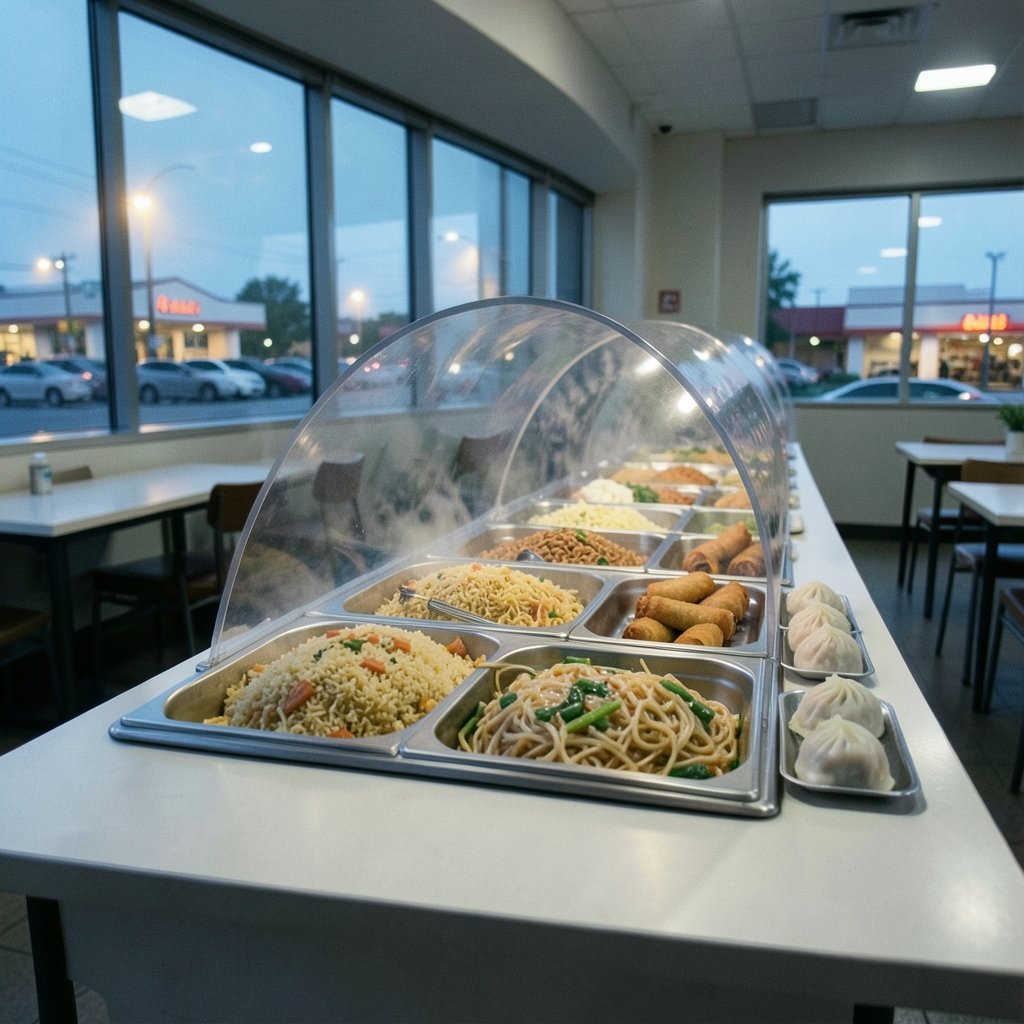
What if the best Chinese buffet near you is hiding in a strip mall you drive past every week without noticing? That happens more than people admit. The buffet is one of the most common restaurant formats in the United States, yet it is also one of the least reviewed and least understood. People search for one, pick the first result on a map, and then wonder why the fried rice was cold. (Best empanada de ataon near me)
Finding a good one takes a little more thought than tapping the first pin on a map. You need to know what the format actually is, how to read the clues that separate a fresh buffet from a tired one, and how to check the things that matter, like food safety records and real prices. This guide walks through all of it in plain language.
What “Chinese Buffet” Actually Means
A Chinese buffet in the US is usually an American-Chinese restaurant with an all-you-can-eat format. The food draws from Cantonese cooking and other regional traditions, but the dishes are adapted to local tastes. You will see the familiar lineup: General Tso’s chicken, sweet and sour pork, lo mein, egg rolls, crab rangoon, and a big tray of fried rice. (American Chinese cuisine)
This is not the same as dim sum, where servers push carts of small plates, and it is not the same as a la carte Chinese dining. A buffet is built for volume and speed. The kitchen cooks in large batches and refills trays throughout service.
That format has real strengths. It is fast, it is predictable, and it lets a group with different tastes eat together without a long negotiation over the menu. It also has a built-in weakness: food that sits under a heat lamp too long loses texture and flavor. That single fact explains most of the difference between a great buffet and a bad one.
Why “Near Me” Results Are Not a Fair Ranking

When you type chinese buffet near me into a search engine or map app, the results are shaped by your device’s location, your search history, and paid placements. They are not a neutral list of the best food in your area. A restaurant that pays for visibility can appear above a better one a mile farther away.
The same applies to review scores. A place with 4.6 stars and 40 reviews is a different bet than a place with 4.2 stars and 900 reviews. Volume matters, and so does recency. A burst of one-star reviews from last month tells you more than a five-star review from three years ago.
The practical fix is to use “near me” as a starting point, not a verdict. Pull up a map, note the candidates within a comfortable drive, and then check each one against the signals below.
The Signals That Separate a Fresh Buffet From a Tired One
Experienced buffet diners read a room the way a mechanic listens to an engine. Here is what they look at, in order.
The crowd and the clock
A busy buffet turns over food faster. If you walk in at 5:30 p.m. on a Saturday and the dining room is half empty, the trays have probably been sitting. Lunch rush and early dinner are usually the safest bets. The last hour before closing is the worst time to arrive, because kitchens stop cooking down and start stretching what is left.
The tray level and the tray surface
Look at the food, not the decor. Trays that are more than half full and freshly topped are a good sign. Dried edges on sliced meat, a skin forming on sauce, or fried items that look dark and glossy all point to food that has been held too long.
The rotation
Watch for a few minutes. Does staff replace a nearly empty tray with a fresh one, or do they push the old food to the center and top it off? The second habit is common and it is the clearest warning sign in the building.
The non-Chinese items
Many buffets add a small sushi bar, a salad station, or a dessert case. That is fine, but those stations tell you about the kitchen’s attention to detail. Sushi rice that is cold and hard, or a salad bar with wilted lettuce, suggests the same care level everywhere else.
The restroom and the entry
This is an old trick and it works. A clean restroom and a swept entry usually track with a clean kitchen. A sticky floor and a broken soap dispenser usually do not.
A Quick Comparison of Buffet Formats
Not every all-you-can-eat Chinese restaurant works the same way. Knowing the format helps you set expectations before you sit down.
| Format | Typical setup | Best for | Watch out for |
|---|---|---|---|
| Classic American-Chinese buffet | Long hot bar, 30 to 60 items, dessert case | Families, big appetites, mixed tastes | Long holding times at off-peak hours |
| Mongolian grill | You pick raw ingredients, staff cook them on a round grill | People who want control over sauce and spice | Long lines at peak times |
| Hot pot | Simmering broth at the table, raw items brought to you | Groups who want a slow, social meal | Cooking times you have to manage yourself |
| Dim sum | Cart service or a checklist of small plates | Sharing and tasting many dishes | Not all-you-can-eat, and often pricier |
| Hybrid buffet and menu | Buffet plus a full a la carte list | Diners who want one cooked-to-order dish | Buffet quality can be an afterthought |
If you are weighing a buffet against other casual options, it helps to think about what you actually want from the meal. Some nights call for a slow, shared plate of small bites, and a different kind of restaurant fits better. The same logic applies when you branch out into other cuisines.
How to Check Food Safety Before You Go
Buffets involve a lot of food held at warm temperatures for hours, so food safety is not a side issue. It is the main issue.
US food code sets time and temperature rules for holding hot and cold food, and local health departments enforce them. Most counties and cities publish restaurant inspection results online, often searchable by name. A quick check takes two minutes and tells you far more than a wall of five-star reviews.
Here is a simple routine that works in most jurisdictions:
- Search your county or city health department site for the restaurant’s name.
- Look at the most recent inspection, not the oldest one.
- Read the specific violations rather than just the letter grade. A single temperature violation is common and often corrected on the spot. Repeated problems across multiple inspections are a pattern.
- Check whether the grade is posted at the entrance when you arrive, and whether it matches what you found online.
Rules vary by state and county, so the exact grading system you see may differ from a neighboring area. If a restaurant’s record is not online, call the local health department and ask. They answer this question all the time.
Prices, Hours, and the Fine Print
Buffet pricing follows a few predictable patterns. Lunch is almost always cheaper than dinner. Weekday prices are lower than weekend prices. Many places add a surcharge on holidays and a separate price for children by age or height.
A few things catch people off guard:
- Drinks are often not included. Soda and tea may be charged per glass or per person.
- Waste charges exist. Some buffets post a fee for large amounts of uneaten food. It is rarely enforced, but it is on the sign.
- Senior and kids’ discounts usually require you to ask.
- Hours shift on holidays. Call ahead on major holidays, when many buffets run a special, higher-priced menu.
Prices change often, and online menus go stale fast. A phone call is still the fastest way to confirm both the price and the hours.
Practical Tips That Actually Improve the Meal
A few habits make a real difference, and they cost nothing.
Arrive early in service. The first 30 minutes of lunch or dinner is when everything is freshest. The kitchen has just set up, and the trays are full.
Take small portions on the first pass. You get to taste more, and nothing goes cold on your plate while you eat something else.
Skip the items that suffer most from holding. Fried food, crisp vegetables, and anything breaded degrade fastest under a heat lamp. Braised dishes, stews, and saucy items hold up far better. That is a useful rule whether you are at a Chinese buffet or any other all-you-can-eat spot.
Ask for a fresh batch if a tray looks tired. Most staff will bring out a new pan without complaint. It is a normal request.
Go with a group. Buffets are built for groups, and a table of four can sample far more of the menu than a solo diner.
Eat in order. Start with lighter items, then move to heavier sauces and fried dishes. Your palate notices more at the start of the meal than at the end.
Common Mistakes People Make
The biggest mistake is choosing purely on star rating. A high score with a small number of reviews is thin evidence. A slightly lower score with hundreds of recent reviews is usually the better guide.
The second mistake is arriving at the wrong time. A buffet at 8:45 p.m. is a different restaurant from the same buffet at 5:15 p.m. If your schedule forces a late visit, order from the a la carte menu instead of the bar if the option exists.
The third mistake is ignoring the health record. It takes two minutes to check and it is the single most useful piece of information available about a buffet.
The fourth is assuming every all-you-can-eat place is a bargain. Add up drinks, tax, and tip, and compare that total to a normal sit-down meal. Sometimes the buffet wins easily. Sometimes it does not.
Beyond the Buffet: Widening the Search
Sometimes the best meal nearby is not a buffet at all. If you are exploring your area for good casual food, it pays to look past a single format. A good strategy is to build a short list of reliable spots across a few cuisines so you always have a fallback when the buffet is closed or packed.
That approach works for almost any craving. If the group cannot agree on Chinese, a short list of dependable options for a good empanada de jamon y queso near me or a solid plate of callos a la madrilena near me saves the evening. The same habit applies when you want lighter food, and a short list of the best salads near me keeps a healthy option within reach. Building that personal list once means you never have to start from zero again.
For non-food errands, the same “verify before you commit” logic applies. If you need a repair, it is worth knowing how to find a trustworthy garage door pro fast rather than calling the first number in a search result. The pattern is the same one that works for restaurants: check the record, read recent reviews, and confirm the details directly.
Conclusion
Finding a good Chinese buffet near you comes down to a handful of habits rather than luck. Understand what the format is and what it does well. Treat “near me” results as a starting point instead of a ranking. Read the room when you walk in, paying attention to the crowd, the trays, and how quickly food gets replaced. Check the local health inspection record before you go. Confirm prices and hours with a phone call, especially around holidays. Arrive early, take small portions, and favor dishes that survive a heat lamp.
Do those things and the buffet stops being a gamble. It becomes one of the most reliable, affordable, and genuinely fun ways to feed a group. The best one near you is probably closer than you think. It just needs a little more looking than the first pin on the map.



