
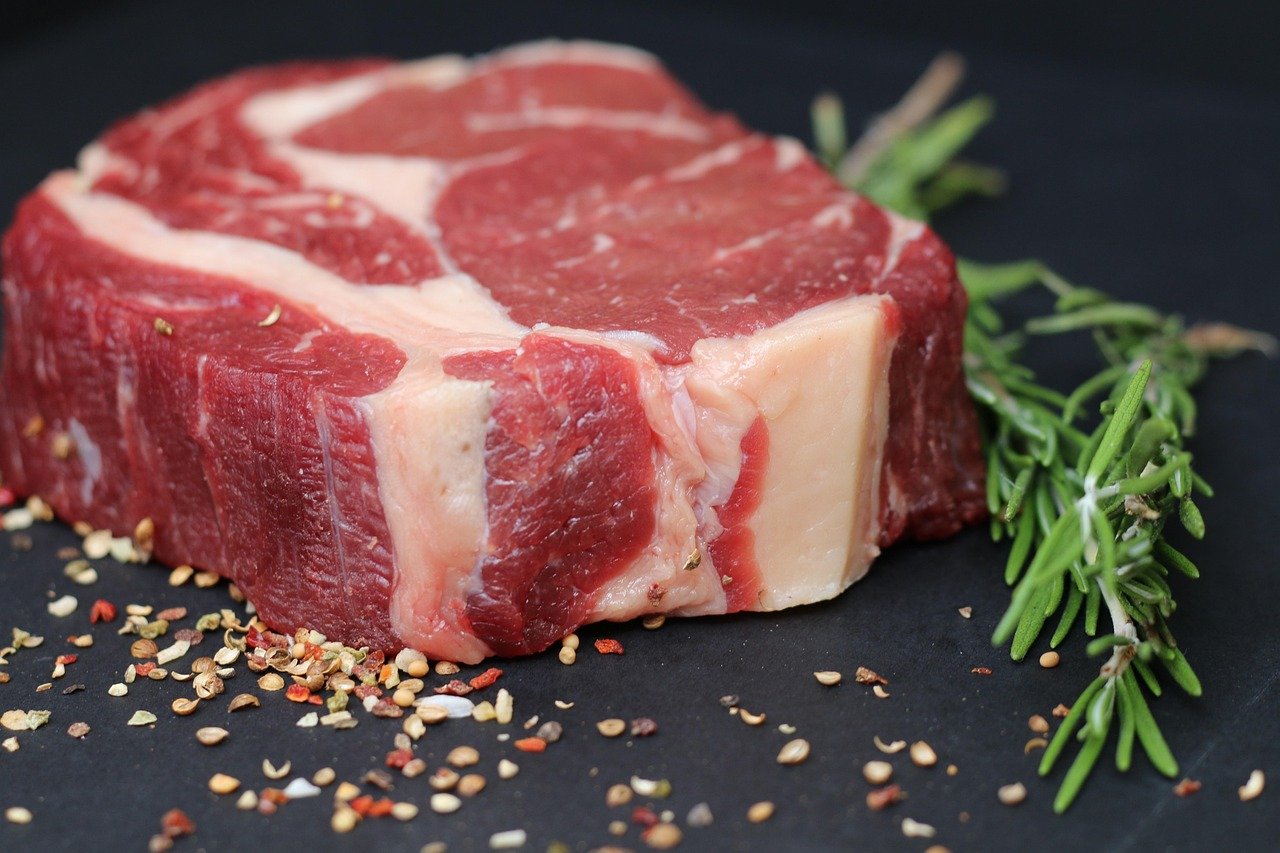
What if the difference between a good steak and a great one comes down to five degrees? That’s not an exaggeration. Pull a ribeye at 128°F and you get a juicy, rosy center. Leave it on until 140°F and you’ve crossed into medium territory, still tasty but noticeably firmer and less giving. The window for medium rare is narrow, and most home cooks miss it not because they lack skill but because they never measure.
The number itself is simple: medium rare steak is typically pulled from the heat at around 130–135°F (54–57°C). But that single figure hides a few wrinkles. Doneness bands differ slightly by source, carryover cooking pushes the temperature higher after the steak leaves the pan, and the government’s food-safety minimum sits in a different place entirely from the culinary definition. Getting medium rare right means understanding all three.
What Temperature Is Medium Rare Steak?
The widely published culinary range for medium rare beef sits between 130°F and 135°F (54°C to 57°C) as a final, rested temperature. Many cooks aim for the lower end of that band and pull the steak earlier, usually around 125–130°F, to account for the heat that keeps climbing during rest.
Here’s the thing worth stating plainly: there is no official, legally defined standard for doneness labels. “Medium rare” is a kitchen convention, not a regulated term. Different cooking authorities publish bands that vary by several degrees, and restaurant chains often have their own internal targets. If you compare three reputable temperature charts side by side, you’ll find small disagreements at every level of doneness. (Gift card scam works victims rarely get their money back) (Doneness)
That’s not a reason to despair. It’s a reason to pick a target, learn how your own equipment behaves, and adjust from there.
The full doneness spectrum for reference
| Doneness | Final internal temperature | What the center looks like |
|---|---|---|
| Rare | 120–125°F (49–52°C) | Cool red center, very soft |
| Medium rare | 130–135°F (54–57°C) | Warm red-to-pink center, yielding |
| Medium | 140–145°F (60–63°C) | Pink center, firmer bite |
| Medium well | 150–155°F (66–68°C) | Faint pink, mostly gray |
| Well done | 160°F+ (71°C+) | Uniform gray throughout |
Those figures are final temperatures after resting. The pull temperature, as noted, runs a little lower.
Pull Temperature vs. Final Temperature: Why the Gap Matters

Carryover cooking is the reason a steak pulled at 128°F can end up at 135°F on the plate. Heat stored near the surface of the meat continues to migrate inward after the steak leaves the pan, grill, or oven. The thicker the cut and the hotter the cooking method, the bigger the rise. A thin flank steak might climb 3°F. A thick bone-in ribeye seared in a screaming-hot cast iron pan can climb 10°F or more.
This is why experienced cooks talk about pull temperatures rather than target temperatures. If you want a final 132°F medium rare, you pull at roughly 125–127°F and let physics finish the job.
Practical guidance that works in a real kitchen:
- Pull thin steaks (under 1 inch) at 128–130°F. They carry over less.
- Pull thick steaks (1.5 inches and up) at 122–125°F. They carry over more.
- Rest on a warm plate, loosely tented with foil. A tight foil wrap traps steam and softens the crust.
- Rest 5–10 minutes for a standard steak, longer for a roast. Slicing early loses juice to the cutting board.
If you want a deeper walkthrough of crust formation and timing by thickness, this guide to grilling steak for perfect crust and doneness covers the mechanics well.
The Food Safety Question Nobody Explains Clearly
Here’s where a lot of articles get slippery. The federal safe minimum internal temperature for whole cuts of beef, including steaks, is 145°F (63°C) followed by a three-minute rest. That figure comes from the U.S. Department of Agriculture’s food-safety guidance, and it is a pathogen-reduction standard, not a doneness recommendation. The agency does not define “medium rare” at all.
So medium rare, at 130–135°F, sits below the government’s safety floor. That’s simply true, and it’s worth saying without hedging. The reason whole-cut steak can be eaten at lower temperatures than, say, ground beef is that bacteria on a whole muscle live mostly on the surface, where searing heat reaches them. When beef is ground, those surface bacteria get mixed throughout the entire mass, which is why ground beef requires 160°F (71°C) regardless of how you like your burger.
That distinction matters for anyone who assumes “medium rare burger” equals “medium rare steak.” It doesn’t, and the safety profile is genuinely different.
For readers who want the primary source, the USDA’s safe minimum internal temperature chart lays out the standards for whole cuts, ground meat, and poultry side by side.
Why Your Thermometer Reading Might Be Wrong
Even with the right target number, plenty of steaks miss because the measurement itself is off. A few common mistakes show up again and again:
Reading the wrong spot. The probe needs to hit the thickest part of the steak, away from bone and large fat pockets. Bone conducts heat differently and can give a reading several degrees off. Fat renders and shifts, so a probe sitting in a seam of marbling isn’t measuring muscle.
Using a cheap dial thermometer. Many analog instant-read thermometers are accurate to plus or minus 5–10°F, which is roughly the entire medium rare window. A calibrated digital instant-read thermometer is the single best upgrade most home cooks can make.
Checking too early and too often. Every time you poke a steak, you lose a little juice and let heat escape. Start checking about 10°F below your target and then leave it alone.
Forgetting to calibrate. Ice water should read 32°F. If your thermometer doesn’t, adjust it or replace it.
Not accounting for the cut. A lean sirloin and a heavily marbled ribeye behave differently. Marbling insulates and slows heat transfer, so a thick ribeye can take noticeably longer to reach the same internal temperature.
The same measurement discipline applies elsewhere in the kitchen. Anyone who monitors a freezer with a wireless probe knows how much signal problems and placement errors can distort a reading, and the same wireless freezer temperature sensor troubleshooting logic applies to any probe-based measurement.
Does the Cooking Method Change the Target?
Not the target itself, but it changes how fast you get there and how much carryover you’ll see.
Grilling and pan-searing deliver intense surface heat, which produces a fast temperature climb and meaningful carryover. Pull early. If you’re working on a grill, the practical timing and crust advice in this grill steak guide is worth reading before your next cook.
Reverse searing (low oven, then a final sear) produces a gentler, more even rise and less carryover, so you can pull closer to your target. It’s also far more forgiving for thick cuts.
Sous vide eliminates carryover almost entirely because the meat never gets hotter than the water bath. Set the bath to 130–132°F and the steak is medium rare edge to edge.
Cast iron on an induction hob runs hot and fast. Thinner steaks can blow past medium rare in under a minute, so have your thermometer ready.
One more practical note: resting matters as much for juiciness as for carryover. A steak sliced immediately after cooking loses a surprising volume of liquid. Five minutes of patience is the cheapest improvement available. And if you end up with leftovers, the right reheating method matters more than most people expect, so it’s worth learning the best way to reheat steak without pushing it into well done territory.
How Restaurants Hit Medium Rare Consistently
Professional kitchens don’t have better thermometers than you do, generally. What they have is repetition and a system.
They use the same cuts from the same suppliers, so they learn exactly how a given thickness behaves on a given grill. They rest steaks in a warm spot rather than a cold counter. And many use a touch test as a backup to the probe, comparing the firmness of the meat to the base of the thumb, though this is far less reliable than a reading.
The lesson for home cooks is straightforward: cook the same cut the same way several times, record your pull temperature and your final result, and build your own correction factor. After three or four attempts, you’ll know that your 1.25-inch strip on your pan needs to come off at 126°F to land at 133°F. That personal data beats any generic chart.
Common Myths About Medium Rare
Myth: Medium rare means the steak is raw in the middle. It doesn’t. At 130°F+, muscle proteins have begun to denature, the meat is warm throughout, and the texture is tender rather than chewy. Rare is the cooler, softer end of the spectrum.
Myth: You can judge doneness by color alone. Myoglobin, the pigment that gives steak its red color, changes appearance with lighting, resting time, and packaging. A steak that looks deep red under restaurant lighting may read a full doneness level differently in daylight. Color is a rough cue, not a measurement.
Myth: Letting a steak come to room temperature before cooking removes the need for a thermometer. It narrows the temperature gap slightly, but a thick steak’s center barely moves in 30 minutes on the counter. It’s not a substitute for measuring.
Myth: Searing seals in the juices. Searing builds flavor through browning, but it doesn’t create a waterproof seal. Resting does far more for juiciness.
Conclusion
The medium rare steak temperature question has a clean answer: aim for a final 130–135°F (54–57°C), and pull your steak roughly 5–10°F below that to account for carryover. Everything else is calibration. Learn your thermometer, learn your cut, and learn your pan. Within a few cooks you’ll have a personal pull temperature that lands you in the rosy center every time, without guessing.
And keep the safety picture in perspective. Federal guidance sets 145°F as the minimum for whole cuts, which is a pathogen standard rather than a doneness target. Medium rare sits below it. Knowing that plainly, rather than pretending otherwise, is part of cooking well.
What temperature should I pull a medium rare steak at?
Pull a medium rare steak at about 125–130°F (52–54°C) and let it rest. Carryover cooking will raise the internal temperature another 5–10°F, landing it in the 130–135°F medium rare range. Thicker steaks carry over more, so pull them at the lower end.
Is medium rare steak safe to eat?
Medium rare sits below the federal safe minimum of 145°F for whole cuts of beef. The risk is lower than with ground beef because bacteria on whole muscle live mainly on the surface, which searing heat reaches. The decision is a personal one, but the temperature gap is real and worth understanding.
Why does my steak go from rare to medium so fast?
The medium rare window is only about 5°F wide, and carryover cooking can move a steak 10°F after it leaves the heat. Thin steaks and very hot pans accelerate the climb. Using a calibrated instant-read thermometer and pulling earlier than you think you should solves most of the problem.
Does resting a steak really change the final temperature?
Yes. Heat stored near the surface continues moving inward while the steak rests, raising the center temperature. A thick steak seared in a hot pan can climb 10°F or more. Resting also lets juices redistribute, so slicing early costs you both temperature control and moisture.
What temperature is medium rare for a burger?
There is no safe medium rare for a burger. Ground beef must reach 160°F (71°C) because surface bacteria get mixed throughout the meat during grinding. A pink-centered burger carries a genuinely different risk profile than a pink-centered steak, and the two should not be treated the same way.
Do I need a meat thermometer, or can I judge by touch?
A thermometer is far more reliable. The touch test, comparing firmness to the base of your thumb, varies by hand, by cut, and by how thick the steak is. Given that the medium rare window spans roughly 5°F, a calibrated digital instant-read thermometer is the only method that gives you repeatable results.



