
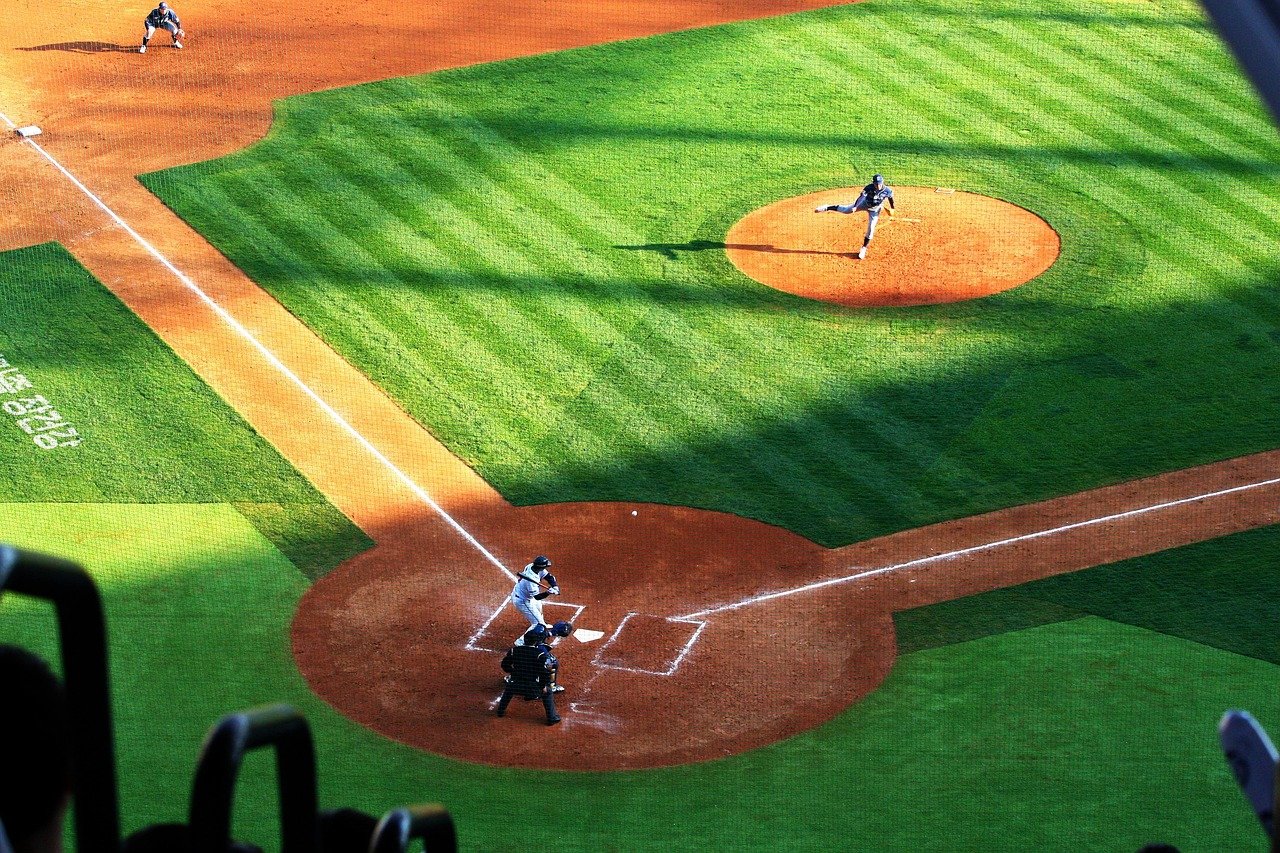
What do a batter walking back to the dugout, a dieter abandoning a plan, and a politician losing a vote have in common? In English, all three can be said to “strike out.” The word carries real weight because it started somewhere very specific: a baseball diamond. Understanding where strikeout came from, how it is scored, and how it escaped the ballpark explains a lot about why English speakers reach for it so often.
The Short Answer: What Is a Strikeout?
In baseball, a strikeout happens when a batter is called out after accumulating three strikes during a single at-bat. That is the core definition, and everything else is detail. The batter may swing and miss, may watch a pitch go through the strike zone without swinging, or may foul off pitches until the count runs against them.
The term has a second life outside sports. To strike out can mean to fail, to be defeated, or to come up empty after a serious effort. That figurative sense is now common in business writing, politics, and casual conversation. The two meanings share a root, and the drift between them is one of the more interesting small stories in English usage.
Where the Word Came From

Baseball writers were using “strike out” as early as the 1840s, when the sport was still organizing itself in the northeastern United States. Early newspaper accounts described a batter who “struck out,” and the phrase stuck because it described exactly what happened: the batter struck at the ball and came away with nothing to show for it.
Over time, the two-word verb phrase “strike out” became a single-word noun, strikeout. That split is worth remembering. The verb stays open (“he struck out looking”), while the noun closes up (“he recorded nine strikeouts”). If you are writing about baseball statistics, the closed form is the one you want.
How a Strikeout Actually Happens
An at-bat is a small negotiation between pitcher and batter, and a strikeout is the pitcher winning that negotiation outright. Three strikes end it. A pitch counts as a strike in several situations:
- The batter swings and misses at any pitch.
- The pitch passes through the strike zone and the batter does not swing.
- The batter fouls off a pitch while already holding two strikes, though a foul tip caught cleanly can count as a third strike.
- The batter bunts foul with two strikes.
A ball, by contrast, is a pitch outside the strike zone that the batter does not swing at. Four balls send the batter to first base. The count (strikes first, then balls) drives every decision in the at-bat, and a hitter who falls behind 0-2 is in serious trouble.
The Strike Zone
The strike zone is the area over home plate roughly between the batter’s knees and the midpoint of the torso, with the width defined by the plate itself. Umpires judge it in real time, and since 2020s-era baseball has experimented with automated ball-strike systems in the minor leagues, the zone has become a topic of genuine public debate. The zone matters because a strikeout is often less about the batter’s failure than about the pitcher hitting a spot.
The Dropped Third Strike
Here is a rule that confuses newcomers more than any other. If the catcher fails to catch a third strike, the batter can run to first base and try to reach it safely. Two conditions apply: first base must be unoccupied, or there must be two outs. This is commonly called a dropped third strike, and it produces some of the strangest plays in the sport, including strikeouts recorded on pitches the batter never touched.
The practical lesson for scorekeepers: a strikeout and an out are not always the same event. A pitcher can be credited with a strikeout while the batter reaches base. That distinction shows up in the statistics and in arguments about how much a pitcher really controlled the inning.
Reading the Statistic
Strikeouts are tracked for both pitchers and hitters, and the same number tells opposite stories depending on who owns it.
| Statistic | Who owns it | What a high number means |
|---|---|---|
| Strikeouts (K) | Pitcher | Dominance; missing bats consistently |
| Strikeouts (SO) | Batter | Vulnerability; failing to make contact |
| Strikeouts per nine innings | Pitcher | How often the pitcher strikes out batters per nine frames |
| Strikeout rate (K%) | Both | Share of plate appearances ending in a strikeout |
| Strikeout-to-walk ratio | Pitcher | Command and control combined into one figure |
The letter K is the standard scorekeeping symbol for a strikeout, a convention that goes back to the 19th century when writers needed a compact notation. A backwards K, less common but widely understood, marks a strikeout where the batter did not swing, often called a strikeout looking. (Strikeout)
Why Strikeouts Went Up
For decades, baseball treated strikeouts as a mild embarrassment for hitters and a mixed blessing for pitchers, since a strikeout costs more pitches than a groundout. That thinking has shifted. Modern analysis showed that trading contact for power was often worth it, and both strikeout rates and home run rates climbed together. Pitchers now throw harder on average than they did a generation ago, and bullpens are stocked with specialists who throw one inning at maximum effort.
The result is a sport where a strikeout is no longer a failure state for the offense so much as a calculated cost. Hitters accept more of them to get to pitches they can drive. That trade-off is one of the defining strategic arguments in the game today.
Common Mistakes People Make With the Word
A few errors show up again and again, and they are easy to fix once you know them.
Mixing up the verb and the noun. “He had three strike out” is wrong. Write “three strikeouts” for the noun and “he struck out three times” for the verb. The hyphenated “strike-out” appears in some older writing but is now rare in American sports coverage.
Confusing a strikeout with a strike. A strike is one pitch. A strikeout is three of them in one at-bat. A pitcher can throw twenty strikes in a game and record zero strikeouts.
Assuming every strikeout is an out. As noted above, the dropped third strike breaks that assumption. So does the rare case of a batter reaching on a wild pitch on strike three.
Applying baseball rules to cricket. Cricket has a batsman “on strike” and a “strike rate,” but it has no strikeout. The two sports share vocabulary and nothing more. Writing that a cricketer “struck out” will read as an error to anyone who follows the game.
Overusing the figurative sense. “Strike out” works well as a vivid way to describe a failure, but it loses force when every setback becomes a strikeout. Reserve it for clean, decisive misses.
Using Strikeout Outside Baseball
The figurative sense of strike out settled into English during the 20th century and now appears everywhere. A salesperson strikes out on a pitch. A bill strikes out in committee. Someone striking out in dating means a string of unsuccessful attempts. The metaphor works because the baseball version is so legible: three chances, a clear failure, and a walk back to the bench.
Related baseball idioms reinforce the pattern. “Three strikes and you’re out” moved from the diamond into law and policy in the 1990s, when several U.S. states adopted habitual-offender sentencing statutes built on the phrase. “Swing and a miss” now describes any near-miss attempt. “Batting a thousand” means perfect success, borrowed from the batting average scale. The sport’s vocabulary has proven unusually portable because the situations it describes, a single contest between two parties with a clear winner, map onto so much of ordinary life.
There is a nuance worth keeping. In baseball, a strikeout is not shameful. It is a normal outcome that happens to good hitters thousands of times a season. When the word travels outside the sport, it picks up a heavier tone of failure than the original carries. That gap is why baseball fans sometimes find the figurative use slightly dramatic.
A Note on Scoring and Records
Scorekeepers record a strikeout as K in the scorebook, with the putout credited to the catcher unless the batter reaches base. A pitcher’s strikeout total is one of the oldest tracked statistics in the sport, and career leaderboards for strikeouts are among the most cited records in baseball history.
The statistic also shapes how pitchers are evaluated. A pitcher who strikes out many batters but walks many too is less valuable than the raw strikeout total suggests, which is why strikeout-to-walk ratio became a standard measure. It captures both halves of the pitcher’s job in one number.
For hitters, strikeout rate is a red flag when it climbs above roughly a quarter of plate appearances, though the threshold has risen as the game has changed. A young player with power and a high strikeout rate is a common profile, and teams now weigh whether the power justifies the misses. That calculation drives modern roster building. (Hall of Famers)
Practical Tips for Writers and Fans
If you are writing about the sport, a few habits will keep you accurate. Use the closed form strikeout for the noun and the open form strike out for the verb. Say “struck out” in the past tense, not “strike outed.” When you cite a statistic, say whether it is a season total or a rate, because the two are not interchangeable.
If you are learning the game, watch the count. A 1-2 count with a runner on third tells you more about the next pitch than any highlight reel. The pitcher will likely expand the zone, and the batter will likely chase. That small drama, repeated thousands of times a season, is what the word was invented to describe.
If you are using the term figuratively, be specific about what failed. “The proposal struck out in committee” is clearer than “the proposal struck out,” because it tells the reader where the failure happened. The baseball metaphor rewards precision.
Conclusion
Strikeout is a small word with an unusually clean history. It began as a description of a batter who swung and came away empty, hardened into a formal statistic with its own symbol and scoring rules, and then escaped the ballpark to describe failure of every kind. The rules behind it, three strikes, a defined zone, and the strange dropped-third-strike exception, are worth knowing because they explain why the metaphor feels so natural. Three chances, a clear outcome, and no ambiguity. That is a structure English speakers have found useful for more than a century, and it shows no sign of fading.
Frequently Asked Questions
What counts as a strikeout in baseball?
A strikeout occurs when a batter receives three strikes in a single at-bat. Strikes come from swings and misses, pitches in the strike zone that the batter does not swing at, and certain foul balls with two strikes already recorded. The batter is then out unless the dropped-third-strike rule applies.
Is it “strikeout” or “strike out”?
Both are correct, but they serve different roles. Strikeout as one word is the noun, as in “he had two strikeouts.” Strike out as two words is the verb, as in “he struck out in the fifth.” The hyphenated “strike-out” is older and now uncommon in American sports writing.
Can a batter reach base on a strikeout?
Yes. If the catcher fails to catch a third strike and first base is open, or there are two outs, the batter may run to first and attempt to reach safely. The pitcher still gets credit for the strikeout, but no out is recorded. This is the dropped third strike, and it produces some of the oddest plays in the sport.
Why is a strikeout called a K?
The letter K became the scorekeeping symbol for a strikeout in the 19th century, when writers needed a compact notation that would not be confused with other marks in the scorebook. A backwards K is often used to show a strikeout where the batter did not swing.
Does “strike out” mean the same thing outside sports?
Not exactly. Outside baseball, to strike out means to fail or come up empty, as in a proposal that fails in committee or a series of unsuccessful attempts at something. The figurative sense is stronger and more negative than the baseball original, where a strikeout is a routine outcome rather than a disgrace.
Is strikeout a term in cricket?
No. Cricket uses “strike” to describe the batsman facing the bowler and “strike rate” to measure scoring speed, but there is no strikeout in the sport. The vocabulary overlaps, and that overlap causes confusion, but the rules and the terms are entirely separate.



