
What makes one person learn the drums in months while another spends years stuck playing the same four beats? The answer usually isn’t talent. It’s how the lessons are structured, how practice time is used, and whether the learner ever gets a chance to play with other people. Drum lessons can be brilliant or nearly useless depending on a handful of choices made at the start. (Cloud disaster recovery examples hard lessons from real)
This guide covers those choices: the main teaching routes, what a good first year looks like, how to practice in a way that sticks, and the mistakes that quietly derail adult beginners. It is written for anyone weighing up lessons for themselves or for a child, and for anyone who has already started and suspects something is not clicking.
What drum lessons actually teach
A common misconception is that drum lessons are about learning to hit things faster. Speed comes later, and often arrives on its own. The core of good instruction is coordination and time.
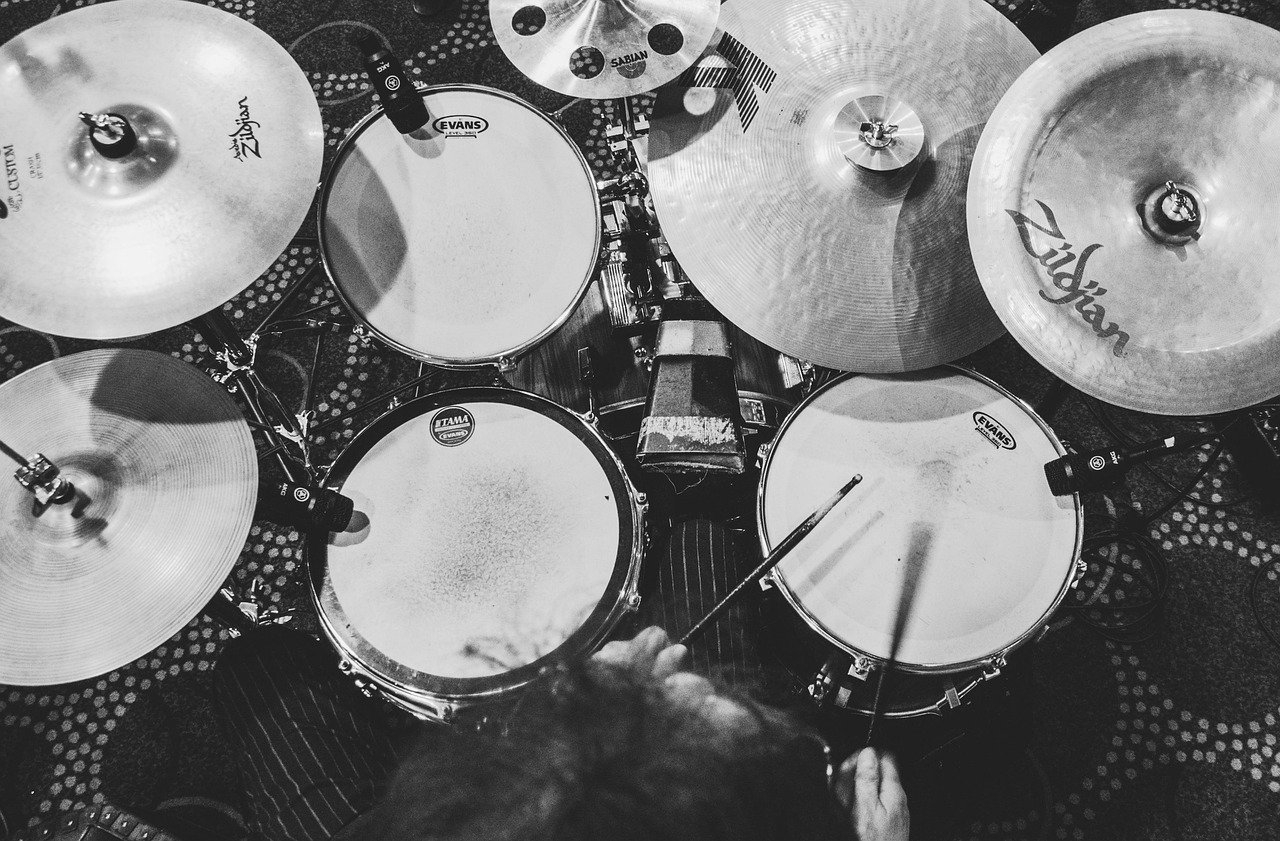
A drum kit is a single instrument played with all four limbs. The bass drum, snare, toms and cymbals are combined into one setup played by a seated player, a configuration that took shape in the early 20th century alongside jazz and dance bands. Learning it means teaching each limb a separate job and then getting them to cooperate. That is a motor skill, not a piece of knowledge, which is why lessons look different from, say, history tutoring.
Beyond coordination, a solid teacher covers:
- Timekeeping: playing to a click or metronome and staying locked in.
- Dynamics: controlling volume so a groove breathes instead of blasting.
- Notation: reading drum notation well enough to learn new material independently.
- Rudiments: the standard sticking patterns that underpin technique. The Percussive Arts Society publishes a widely used list of 40 international drum rudiments, which most teachers draw on.
- Style vocabulary: rock, pop, funk, jazz, shuffle and Latin grooves.
- Ear training: copying parts from recordings by listening rather than reading.
Notice how little of that is about flashy fills. Fills are the fun part. Groove is the job.
The three main routes into drumming
Most learners end up on one of three paths, and each suits a different temperament. There is no single best option, but there is usually a best option for a given person.
| Route | Best for | Strengths | Watch out for |
|---|---|---|---|
| Private teacher (in person) | Beginners of any age, especially children | Real-time feedback on grip and posture, accountability, playing with another musician | Cost, travel, and teacher quality varies enormously |
| Graded syllabus (Rockschool, Trinity, ABRSM) | Learners who like structure and goals | Clear progression, external assessment, recognised certificates | Can become exam-focused at the expense of playing music |
| Online lessons and apps | Self-starters, rural learners, tight budgets | Cheap or free, huge choice, pause and rewind | No one corrects a bad grip, easy to drift |
Private lessons
One-to-one teaching remains the fastest route for most beginners because a teacher can see and hear problems as they happen. A slumped posture, a choked cymbal, a bass drum foot that tenses up under pressure: these are hard to spot alone.
The catch is that teacher quality is uneven. A brilliant player is not automatically a brilliant teacher. Ask about their teaching experience alongside their gigging history, and ask what a typical first month looks like.
Graded syllabi
Graded music exams give lessons an external structure. Trinity College London and the Associated Board of the Royal Schools of Music both run graded music exams, and Rockschool, now part of RSL Awards, offers graded exams specifically in drums and percussion. ABRSM was founded in London in 1889 and its graded exams are used internationally, though its syllabi have historically centred on percussion rather than drum kit.
Graded routes suit learners who respond well to a ladder. The risk is treating the certificate as the point. A learner can pass Grade 5 and still struggle to hold a groove in a band, so exams should sit alongside real playing, not replace it.
Online and app-based learning
Online drum instruction has grown substantially since the 2010s, with video lessons and subscription platforms covering everything from absolute basics to advanced independence. For adults with unpredictable schedules, this is often the only realistic option.
The honest limitation is feedback. Video cannot tell you that your left hand is gripping too tightly. The practical fix is a hybrid: use online material for daily practice and book occasional in-person or video-call check-ins to correct technique before bad habits set in. If you are already comfortable diagnosing your own technical problems, this approach works well. The same principle applies to any equipment-heavy hobby: knowing what to check yourself saves a lot of frustration, much like understanding why your external SSD shows less capacity than advertised before assuming the drive is faulty.
What a good first year looks like
Beginners often arrive with unrealistic timelines, usually fuelled by videos of children playing impossible solos. A realistic first year looks roughly like this.
- Months 1 to 2: basic grip, posture, single strokes, and the first few beats. Learning to play a simple rock groove with a steady pulse.
- Months 3 to 4: adding fills, playing along to songs at slow tempos, first work with a metronome. Reading basic notation.
- Months 5 to 6: more grooves, dynamics, and the beginnings of limb independence. Playing with a recording without losing the pulse.
- Months 7 to 9: style vocabulary, rudiments in context, and playing with other musicians for the first time.
- Months 10 to 12: longer songs, basic improvisation, and a first performance or recording.
Progress is rarely linear. Most learners hit a plateau around month four, when early novelty fades and the work gets repetitive. Teachers who warn learners about this in advance tend to keep more of them.
How to practice so it actually sticks
Practice quality matters far more than practice length. Research on motor skill acquisition, including the deliberate practice framework associated with Anders Ericsson from the 1990s onward, supports spaced, focused repetition over long massed sessions. Twenty focused minutes four times a week beats a single two-hour session on Sunday.
Practical rules that work:
- Slow down until it is boring. If you can play it fast but not slowly, you cannot play it.
- Use a metronome for at least part of every session. Time is the whole instrument.
- Break problems into pieces. Isolate the bar that falls apart, loop it, then rejoin it to the rest.
- Stop when form collapses. Tension and sloppy grip under fatigue teach the wrong movement.
- Record yourself. Phone recordings expose timing drift that your ears forgive in the moment.
The most common mistake is practising the parts you already play well because they feel good. The second most common is skipping the metronome because it is annoying. Both feel productive and neither is.
The mistakes that quietly derail adult beginners
Adults learn differently from children. They tend to be more analytical, more self-critical, and far more likely to quit after a bad session. A few patterns show up again and again.
Buying too much gear too early. A beginner does not need a seven-piece kit. A basic kit, a throne at the right height, and decent sticks are enough for a year.
Skipping the boring fundamentals. Grip, posture and single strokes feel trivial. They are the foundation for everything else, and fixing them later is far harder than learning them right.
Never playing with anyone. Drumming is a group activity. Joining a beginner band, a community group or a jam night accelerates progress faster than any amount of solo practice. The same logic explains why structured, social learning works so well in other skill areas, as this look at swimming lessons and who benefits from them makes clear: guidance plus regular practice plus other people beats solitary effort.
Ignoring hearing protection. Drumming is loud. Hearing-conservation guidance from public-health bodies such as the US CDC and NIOSH recommends limiting exposure to high sound levels and using hearing protection. Musician’s earplugs cost little and preserve the hearing you need to play.
Practising without a plan. Wandering onto the kit and playing whatever comes naturally is fun, and it has its place. It is not practice. A five-minute written plan for each session changes everything.
Kit, space and budget
Lessons cost money, and so does the instrument. A few practical notes help avoid overspending.
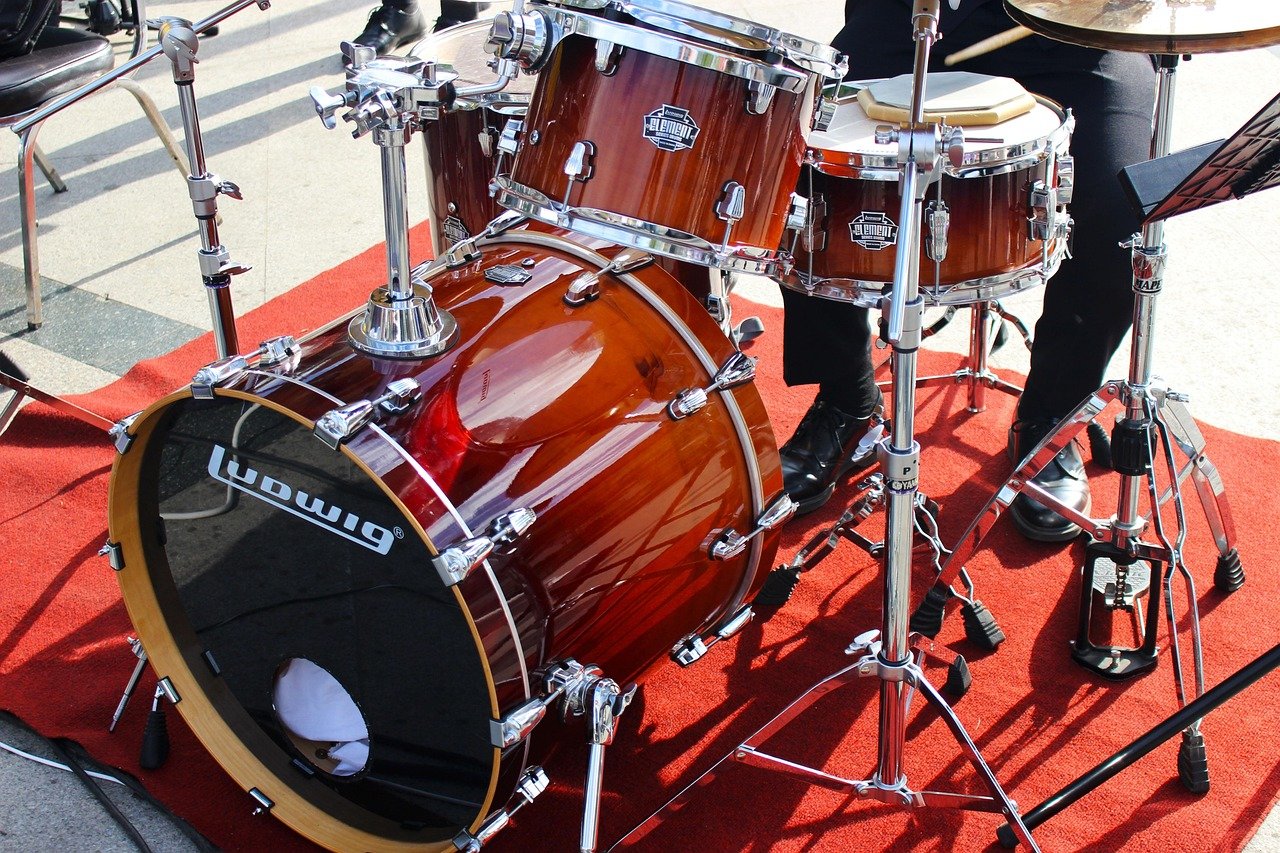
Acoustic kits are loud and need space, ideally a garage or a room where noise will not cause problems with neighbours. Electronic kits solve the volume issue and are the practical choice for flats and apartments, though the feel differs from acoustic drums and hi-hat response is often the weak point. Practice pads are cheap, portable and genuinely useful for rudiment work. (Noise-induced hearing loss)
For children, a common and sensible approach is to start on a practice pad plus weekly lessons, then buy a kit once interest has survived a few months. For adults, a used electronic kit is often the best value entry point.
Budget also needs to cover the hidden costs: sticks break, heads wear out, and cymbals are expensive to replace. Setting aside a small monthly amount for consumables avoids nasty surprises.
Choosing a teacher
A short checklist separates good teachers from good players.
Ask whether they teach reading and playing by ear, whether they use a graded syllabus or their own plan, and how they handle a student who has not practised. Ask to sit in on a trial lesson. Watch whether they correct grip and posture in the first session, whether they play along with the student, and whether the student leaves with something specific to work on.
Good teachers explain why a task matters, along with what to do. They also set realistic expectations and celebrate small wins, which matters enormously for retention. A learner who feels progress is happening keeps showing up.
Conclusion
Drum lessons work best when three things line up: a teacher or structure that gives honest feedback, a practice routine built on slow, spaced repetition, and regular chances to play with other people. The route matters less than the consistency. Private lessons, a graded syllabus, or a well-chosen online course can all get a beginner to the same place, provided the fundamentals are not skipped and the metronome is not ignored.
The learners who progress fastest are rarely the most naturally gifted. They are the ones who practise a little on most days, protect their hearing, and find someone to play with long before they feel ready.
Frequently asked questions
How long does it take to learn the drums?
Most beginners can play a basic rock groove along to a simple song within two to three months of weekly lessons and regular practice. Playing confidently with a band typically takes a year or more. Progress depends far more on practice consistency than on natural talent.
Do I need an acoustic drum kit to take lessons?
No. Many learners start on a practice pad for rudiments and an electronic kit for grooves, which keeps noise manageable in flats and apartments. Acoustic kits are louder and need more space, but they feel different to play. A practice pad alone is enough for the first few weeks.
Are online drum lessons as good as in-person ones?
They can be, with one caveat. Online lessons deliver content well but cannot reliably correct grip, posture and tension problems. The most effective approach for most self-directed learners is online material for daily practice plus occasional in-person or video-call check-ins to fix technique before habits set in.
What age should a child start drum lessons?
Many teachers accept children from around six or seven, provided the child can reach the pedals and follow simple instructions. Younger children often start on a practice pad and hand percussion before moving to a full kit. Readiness matters more than age.
Do drum lessons teach music reading?
Good ones do, at least to a basic level. Reading drum notation lets a learner pick up new material independently and work through graded syllabi. Playing by ear matters just as much, so a balanced teacher covers both rather than treating notation as optional.
How do I protect my hearing when practising drums?
Use musician’s earplugs or isolation headphones during every session, keep practice rooms as soft and furnished as possible, and limit total exposure time. Public-health guidance on noise exposure recommends both reducing volume and limiting duration. Ringing ears after practice is a warning sign, not a normal part of learning.
Is it worth paying for a graded syllabus?
It depends on the learner. Graded exams from established boards give clear goals, external assessment and recognised certificates, which suits structured personalities and younger students especially. Learners who mainly want to play in bands may do better with a teacher-led plan built around real songs.



