
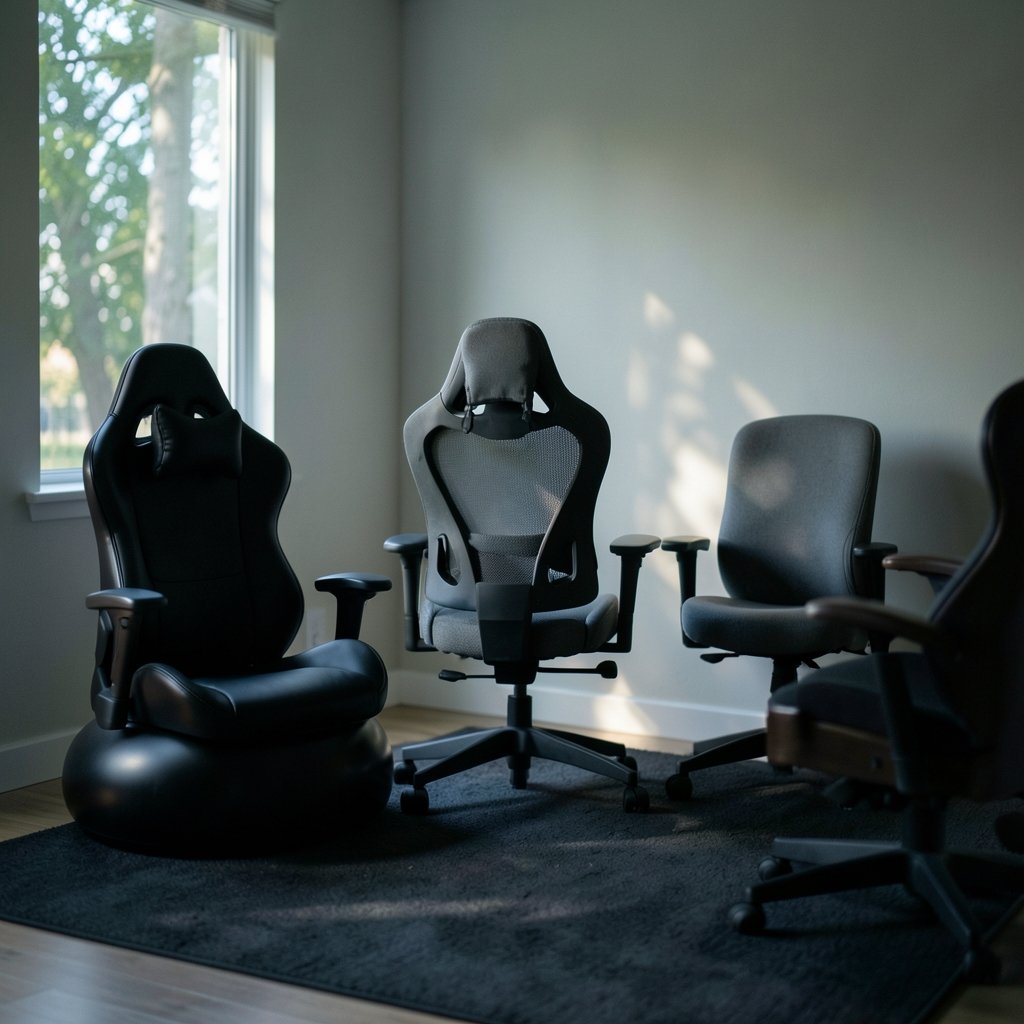
What if the chair you sit in for eight hours a day changes how you work, along with how your back feels at 5 p.m.? That is the question worth asking when comparing the Secretlab Titan Evo, the Herman Miller Embody, and the chair referred to as the Tc200. These three get grouped in the same conversation, but they are built for very different kinds of workdays. One leans toward long gaming and streaming sessions, one is tuned for posture-focused office marathons, and one remains something of an unknown that deserves careful handling before anyone spends money on it.
This comparison focuses on workflow differences rather than marketing claims. It looks at how each chair’s adjustments, materials, and design choices change the way you actually sit, shift, and stay productive across a full day.
Why Workflow Matters More Than Spec Sheets
A chair’s spec sheet tells you what adjustments exist. It does not tell you how often you will use them. That gap is where most buying mistakes happen.
Someone editing video for six hours needs frequent position changes and a seat that stays comfortable through long stretches of focused stillness. Someone alternating between writing, calls, and standing needs quick, repeatable adjustments. Someone gaming competitively may care more about a locked-in recline and shoulder support than about a finely tuned lumbar curve.
The practical differences between these chairs come down to five things: seat depth and height range, lumbar adjustability, armrest range, recline and tilt mechanics, and material breathability. Those are the levers that change your day-to-day workflow. Everything else is detail.
It also helps to know that office chairs are tested against published standards, which gives you a neutral way to judge build claims. The ANSI/BIFMA X5.1 standard for office chairs sets durability and safety tests that reputable manufacturers design around. A chair that meets a recognized testing standard is easier to trust than one that only offers marketing language.
The Secretlab Titan Evo: Built for Long, Leaned-Back Sessions
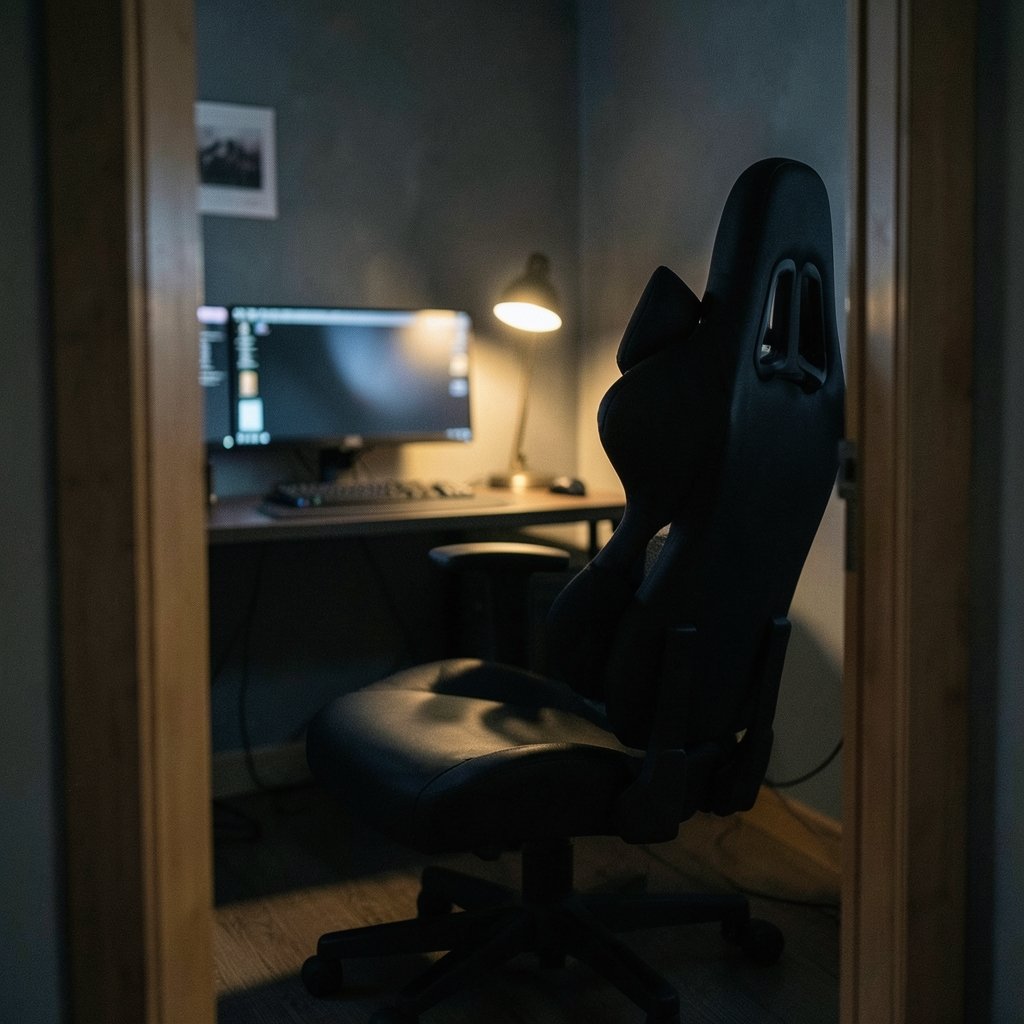
The Titan Evo 2022 series, announced in late 2021, brought a redesigned pebble seat base, a four-way L-ADAPT lumbar system, and magnetic head pillow attachments. Those features tell you a lot about the intended workflow.
The pebble seat base is shaped to reduce pressure points at the edges, which matters if you sit for long stretches without getting up. The four-way lumbar support adjusts both up and down and in and out, so you can dial in pressure at a specific point on your lower back. The magnetic head pillow is a small convenience, but it is the kind of thing you notice when you recline often and do not want to fiddle with straps.
In practice, the Titan Evo suits people who alternate between upright focus work and relaxed recline. Its workflow strength is versatility within a single posture family: you lean back, you sit up, you adjust lumbar, and you keep going. Its workflow weakness is that it is a big, padded chair. If your workspace is tight or you run hot, the padding and material choices can feel like a lot by hour six.
Warranty terms have historically been advertised around five years, though terms vary by region and should be checked against the manufacturer’s current support documentation before purchase. (Ergonomics)
The Herman Miller Embody: Tuned for Posture Over Padding
The Embody launched in 2008, designed by Bill Stumpf and Jeff Weber. Its Backfit adjustment and pixelated back structure are the heart of its design philosophy: instead of cushioning you, it tries to follow the shape of your spine and distribute pressure across many small contact points.
That approach changes the workflow in a specific way. The Embody rewards people who sit upright and move subtly. It encourages micro-adjustments and a more active seated posture. If your day is writing, coding, or reading, with lots of small shifts and few long reclines, this design fits naturally.
The trade-off is that it feels different from a padded gaming chair. People who expect a plush seat are often surprised. The Embody asks you to trust a firmer, more structured sit. For posture-focused office work, that is a feature. For lounging through a long stream, it can feel like the wrong tool.
Herman Miller has historically offered a 12-year warranty on its seating line, including the Embody, though terms vary by region and should be confirmed on the manufacturer’s warranty page.
The Tc200 Question: What to Do When the Specs Are Unclear
Here is where honesty matters. Reliable, primary-source specifications for a chair called the Tc200 are hard to confirm. It may be a regional model, a newer release, or a naming variation. Without verified manufacturer documentation, any detailed comparison would be guesswork dressed up as expertise.
The practical advice is simple: treat the Tc200 as unverified until you can find official specifications from the maker. Ask three questions before considering it:
- Who manufactures it, and is there an official product or support page?
- What are the documented seat height, seat depth, and weight capacity ranges?
- Does the maker publish warranty terms and any testing standard it meets?
If you cannot answer all three, the chair is not ready to be compared on workflow grounds. A missing spec sheet is itself useful information. It tells you the product has not been documented to the same level as the Titan Evo or the Embody, and that raises the risk of a purchase you cannot evaluate.
Side-by-Side: How the Three Compare on Workflow Levers
The table below summarizes what is documented and what remains uncertain. Treat the Tc200 column as a placeholder until official specs appear.
| Workflow lever | Secretlab Titan Evo | Herman Miller Embody | Tc200 |
|---|---|---|---|
| Seat depth and height range | Documented; broad range | Documented; broad range | Unverified |
| Lumbar adjustability | Four-way L-ADAPT | Backfit spine-following design | Unverified |
| Armrest range | Multi-direction adjustable | Adjustable | Unverified |
| Recline and tilt | Generous recline, lockable | Active, posture-oriented | Unverified |
| Material breathability | Padded, warmer | Suspended, breathable | Unverified |
| Warranty (advertised) | Around 5 years, region-dependent | Historically 12 years, region-dependent | Unverified |
| Best-fit workflow | Mixed gaming and focus work | Upright posture-heavy office work | Unknown |
The pattern is clear. Two chairs have documented, comparable design philosophies. The third does not, and pretending otherwise would mislead anyone reading this.
Practical Tips That Actually Change Your Setup
Specs aside, a few habits make more difference than the chair itself. These come from how people actually use these chairs, not from marketing.
Set seat depth first. Slide the seat so there are two to three fingers of space behind your knee. This single adjustment prevents most pressure and circulation complaints, and it is the one people skip.
Adjust lumbar before armrests. Get your lower back supported, then bring the armrests up so your shoulders relax. Doing it in the reverse order usually leaves you hunched.
Move every 30 to 45 minutes. Public-health guidance from the World Health Organization on physical activity and sedentary behaviour recommends reducing prolonged sitting. No chair cancels out eight hours of stillness. The best chair is one that makes it easy to shift, stand, and return.
Match the chair to the longest single block of your day. If your longest block is focused writing, prioritize posture support. If it is gaming or streaming, prioritize recline and shoulder comfort. Buying for your average day rather than your longest block is a common mistake.
Check warranty terms in your region before you buy. A long warranty is only useful if it applies where you live and covers the parts that fail.
Common Mistakes People Make
The biggest mistake is buying for the wrong workflow. People who spend their day in deep focus work often buy a heavily padded recliner-style chair because it looks comfortable, then find themselves slouching by mid-afternoon. The reverse also happens: gamers buy a firm posture chair and miss the recline they wanted.
A second mistake is treating adjustability as a checklist. A chair with twelve adjustments you never touch is not more ergonomic than one with five you use daily. The workflow question is not how many levers exist, but which ones you will actually reach for.
A third mistake is ignoring materials. Breathability affects how long you can sit comfortably, and it is rarely listed as a headline feature. If you run warm, a suspended back design will usually feel better through a long afternoon than dense padding. (OSHA Ergonomics Overview)
A fourth mistake is buying an undocumented product. If a chair has no official spec page, no warranty terms, and no testing information, you are buying on faith. That is a poor basis for a purchase you will live with for years.
Where Tools and Workflows Overlap
Chair choice is one part of a broader workflow question. The same logic applies to the software and devices around your desk. If you are comparing note-taking tools for a local-first setup, a breakdown of Obsidian vs Logseq local-first notes compared by workflow follows the same principle: match the tool to how you actually work, not to a feature list. If your writing workflow leans on AI assistance, a guide to the use of Claude in a practical writing workflow that actually works covers the day-to-day habits that matter. And if you are weighing a phone upgrade that affects how you work away from the desk, the iPhone 17 vs iPhone 16 upgrade differences that matter daily is a useful parallel. The theme is consistent: workflow fit beats raw specs every time.
Conclusion
The Secretlab Titan Evo and the Herman Miller Embody are both well-documented chairs with clear, different design philosophies. The Titan Evo suits people who want a padded, versatile chair that handles both focus work and relaxed recline. The Embody suits people who sit upright for long stretches and want their chair to follow their spine rather than cushion it. The Tc200, until official specifications and warranty terms are published, cannot be fairly placed on that spectrum.
The workflow differences to understand are not about which chair is best in the abstract. They are about which chair matches your longest work block, your posture habits, and your tolerance for padding versus structure. Get those three things right, and the spec sheet becomes a confirmation rather than a decision.
FAQ
Is the Secretlab Titan Evo good for office work?
Yes, for many people. Its four-way lumbar support and broad adjustment range suit mixed workdays. The main caveat is that its padded design runs warmer than a suspended back, which matters if you sit for long, uninterrupted stretches.
How is the Herman Miller Embody different from a gaming chair?
The Embody is built around posture support rather than padding. Its Backfit design follows the shape of your spine across many small contact points. That makes it excellent for upright focus work but less plush for long reclines.
What is the Tc200 chair?
Reliable, official specifications for a chair called the Tc200 are not easy to confirm. It may be a regional or newer model. Until a manufacturer publishes documented specs and warranty terms, it should be treated as unverified.
Does a longer warranty mean a better chair?
Not automatically, but it is a useful signal. A long warranty suggests the maker expects the chair to last. Always check that the terms apply in your region and cover the parts most likely to fail.
How often should I adjust my chair?
Adjust it whenever your body tells you to. A good habit is to shift position every 30 to 45 minutes and to reset seat depth and lumbar support at the start of each long work block.
Can any chair fix back pain from sitting all day?
No chair replaces movement. Guidance from public-health bodies recommends reducing prolonged sitting, so the best approach combines a well-fitted chair with regular standing and movement breaks throughout the day.



