
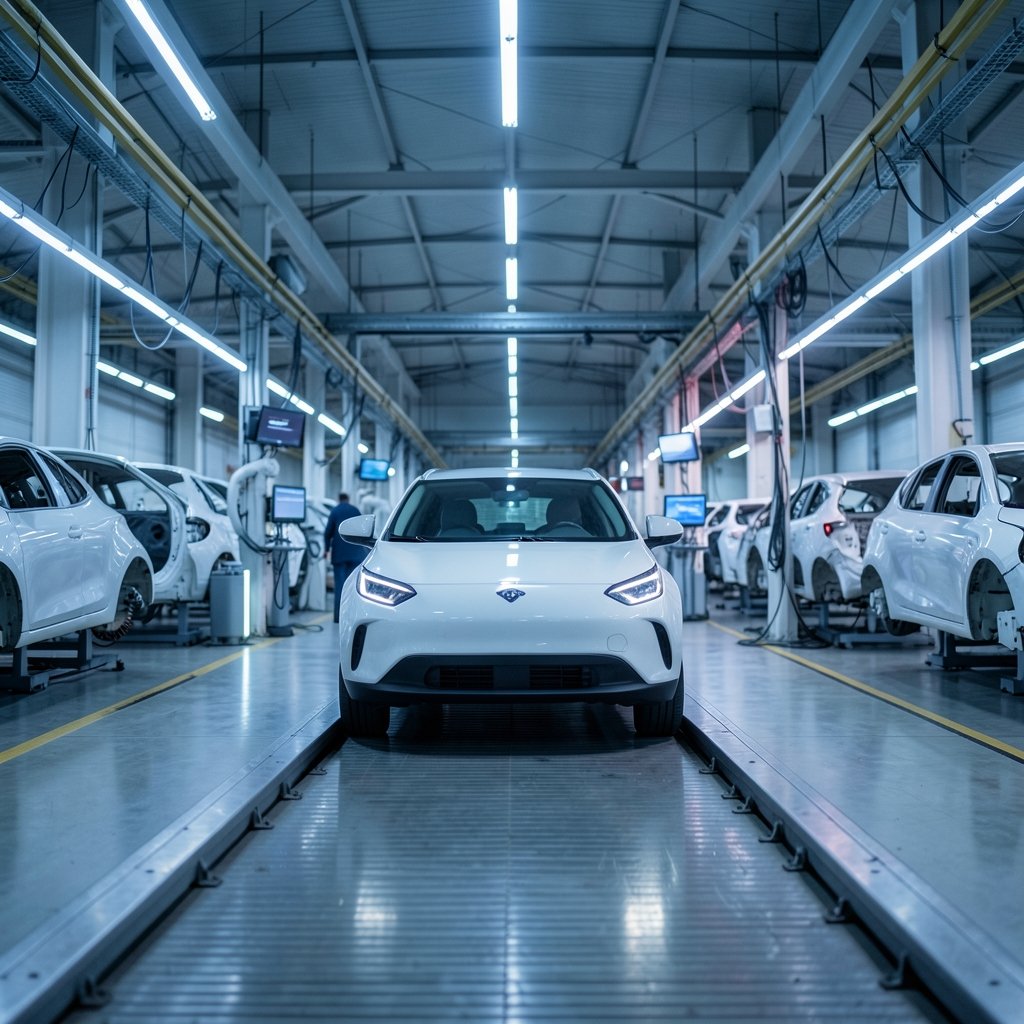
What makes one electric car outsell two dozen rivals at once? It is tempting to answer with a single number, a price cut, or a clever ad campaign. The real answer lives somewhere less glamorous: in factory floors, software pipelines, and the boring decisions made years before a single car reaches a driveway. The claim that the Tesla Model Y outsells 24 EVs combined gets repeated constantly, and it deserves a careful look, because the number is only as good as the dataset behind it. More useful than the headline is what it reveals about how Tesla builds and updates cars compared with everyone else. That gap is the thing to study heading into 2027. (Tesla website robotaxi semi roadster three hardware bets 2026) (Electric vehicle)
Where the “Outsells 24 EVs Combined” Number Actually Comes From
Start with a fact that surprises many people: Tesla does not publish separate sales figures for the Model 3 and the Model Y. Its quarterly reports combine them into one line. Anyone quoting a per-model number is working from third-party registration data, not from Tesla itself. That distinction matters enormously. Registration datasets from different firms cover different countries, count fleet sales differently, and publish on different schedules.
So a claim like “the Model Y outsells 24 EVs combined” can be perfectly true in one market and one quarter, and false in another. The honest way to read it is as a snapshot: here is one model, here is a basket of rivals, here is a specific place and time. The pattern it points to is real, though. The Model Y has been among the best-selling vehicles on the planet, electric or otherwise, for several years running. When one model climbs that high, the interesting question shifts from “how many” to “how.” (Tesla model 3 at 250 000 miles one replaced part really) (Explaining electric and plug-in hybrid electric vehicles)
Why Per-Model Data Is Messier Than It Looks

Automakers generally report sales by brand or by model family. Independent trackers fill in the gaps using registration records. That creates three layers of uncertainty worth keeping in mind:
- Scope. A tracker covering 50 markets will produce different totals than one covering 80.
- Timing. Registrations lag deliveries by weeks or months, so quarterly comparisons can wobble.
- Grouping. Count the Model Y as one model or split it by trim and region, and rankings shift.
None of this makes the data useless. It just means the “24 EVs combined” framing is a rhetorical device built on top of estimates. Treat it as a directional signal about market concentration, not as an audited financial fact.
The Manufacturing Workflow: Fewer Parts, Fewer Steps
Here is where the workflow story gets concrete. Tesla’s approach to building the Model Y leaned hard on gigacasting, the practice of casting very large aluminum underbody sections as single pieces instead of assembling dozens of smaller stamped parts. The company introduced this on the Model Y around 2020 and 2021.
Why does that matter for sales? Fewer parts mean fewer welds, fewer robots, fewer fixtures, and less floor space per vehicle. In theory, a simpler body structure shortens the line and reduces the capital needed to add capacity. That is a workflow advantage, not a marketing one. It also comes with tradeoffs: large castings can be costly to repair after a collision, and changing a casting means changing a very expensive die.
A practical lesson for anyone studying manufacturing: do not copy the headline technique, copy the reasoning behind it. The reasoning is to reduce the number of steps between raw material and finished car. Teams that count steps as well as parts tend to find savings the org chart hides.
Software Workflow: The Car That Changes After You Buy It
The second workflow difference is over-the-air updates. Tesla has shipped software updates to the Model Y since its 2020 launch, adding features, adjusting behavior, and occasionally fixing safety defects remotely. Regulators have documented both over-the-air recalls and over-the-air remedies, which tells you this is now a mainstream regulatory category, not a novelty.
Compare that with the traditional model, where a fix means a dealership visit and a service bay. The workflow difference is not really about software talent. It is about who owns the update pipeline end to end. When one company writes the firmware, controls the delivery channel, and manages the regulatory paperwork, the loop from problem to fix can be days instead of months. That speed compounds. Buyers notice a car that improves, and that reputation feeds the next sales cycle.
If you want to understand the machinery underneath this, the same principles show up in how modern models are trained and shipped, which is why guides on how to train an AI model are surprisingly relevant to anyone following automotive software strategy. The overlap is real: data collection, iteration speed, and deployment discipline.
A Side-by-Side Look at the Two Workflows
| Dimension | Tesla-style workflow | Traditional automaker workflow |
|---|---|---|
| Body structure | Large single-piece castings | Many stamped and welded parts |
| Update delivery | Over-the-air, remote | Dealer visit, service bay |
| Model-level sales data | Combined lines, third-party estimates | Often reported per model |
| Refresh cadence | Frequent, incremental | Periodic, model-year based |
| Repair economics | Castings can be costly to replace | Panel replacement is routine |
The table is a simplification, and plenty of legacy brands now ship over-the-air updates too. The gap is narrowing. But the starting positions were very different, and starting positions shape 2027 more than any single product launch will.
What Actually Changes by 2027
No 2027 sales data exists yet, so any 2027 claim is a forecast. With that caveat firmly in place, several forces look likely to matter.
Policy is the wild card. The U.S. federal clean vehicle credit, created by the 2022 Inflation Reduction Act, was modified by later legislation, and reporting through 2025 indicated the consumer credit would end after September 30, 2025. Anyone building a 2027 forecast on top of a purchase incentive should check the current status directly rather than trusting a summary written years earlier. Demand that depended on a subsidy does not automatically survive its removal.
Competition is catching up on software. Over-the-air updates are becoming table stakes. The workflow advantage that looked exotic in 2021 looks ordinary in 2026. That erodes part of Tesla’s edge.
Manufacturing cost still decides winners. Casting strategy, battery pack design, and factory layout remain the levers that determine whether a car can be sold profitably at a given price. A brand can win headlines with software and still lose on unit economics.
Concentration cuts both ways. If one model dominates, rivals respond by targeting niches rather than fighting head-on. Expect more small, cheap, city-focused EVs rather than more direct Model Y clones.
Common Mistakes People Make When Reading This Story
A few traps show up again and again in discussions of this topic.
- Treating estimates as audited numbers. Per-model figures come from trackers, not from company filings. Say so when you cite them.
- Comparing different periods. A record quarter compared with a weak quarter flatters whoever won the timing lottery.
- Ignoring market scope. “Outsells 24 EVs” in Norway means something different than in Brazil.
- Assuming workflow advantages are permanent. They decay as competitors copy them, which is exactly what is happening now.
- Forgetting repair and insurance costs. Buyers care about total cost of ownership, and large castings affect it.
What Actually Works If You Want to Learn From This
Practitioners who study manufacturing and product workflows tend to agree on a few habits that beat copying features.
- Map the steps, not the parts. Count handoffs between design, tooling, and production. Most delay lives in handoffs.
- Own the update channel. If a fix requires three vendors and a dealer appointment, your feedback loop is too long.
- Measure the cost of a change. The winning metric is not how cheap a part is, but how cheap it is to change that part next year.
- Separate signal from story. Use registration data for direction, company filings for financials, and never mix the two in one sentence.
That last habit is the difference between analysis and cheerleading. The same discipline applies to adjacent topics people often lump together. Debates about privacy tooling, for instance, get clearer once you read about Tor versus VPN privacy anonymity trust threat model differences, because the lesson there is identical: know what each system actually protects before you compare them.
The Refresh Factor and the Ownership Experience
The Model Y launched in 2020, and a refreshed version was reported in 2025 with deliveries in some markets that year. Refresh timing varied by region, which matters because a buyer in one country may be comparing a new design against a rival’s older one while a buyer elsewhere faces the opposite.
There is a second-order effect here too. A car that receives frequent software updates and periodic hardware refreshes keeps attracting attention without a full redesign budget. That is a workflow choice with marketing consequences. It also raises a question buyers should ask directly: what will this car be able to do in three years that it cannot do today? Brands with a real update pipeline can answer. Brands without one tend to change the subject.
For a concrete look at how durability and long-term ownership play out in practice, this account of a Tesla model 3 at 250 000 miles with one replaced part is worth reading alongside any sales chart. Longevity stories and sales stories are different kinds of evidence, and both belong in the picture.
Conclusion
The “outsells 24 EVs combined” headline is best understood as a pointer, not a proof. It points at a genuine pattern: one model achieving unusual market concentration, built on workflow choices that reduced manufacturing steps and shortened the loop between problem and fix. Those choices were made years before the sales charts noticed them, and they are being copied fast. By 2027, the advantage will look smaller, policy support may look different, and the winners will be the companies that kept their change costs low and their update channels short. Read the number, then read the workflow behind it. That is where the durable lesson lives.
FAQ
Is it true that the Tesla Model Y outsells 24 EVs combined?
It can be true in a specific market and period, but it is not a company-reported figure. Tesla combines Model 3 and Model Y sales in its disclosures, so any per-model comparison comes from third-party registration data. The claim depends entirely on which models, markets, and months are included in the basket.
Why doesn’t Tesla publish separate Model 3 and Model Y sales?
Tesla reports production and deliveries with the two models on a single line. That practice has been consistent across its quarterly reports for years. Analysts work around it using registration records from national authorities and independent trackers, which is why estimates vary between sources.
What does gigacasting actually change in the manufacturing workflow?
It replaces many stamped and welded pieces with fewer large castings, which reduces the number of assembly steps, robots, and fixtures needed per vehicle. The tradeoff is that a large casting can be expensive to replace after a crash, and changing the design means retooling an expensive die.
Do over-the-air updates really matter to buyers?
They matter when they deliver visible improvements or fast safety fixes. Regulators now document over-the-air recalls and remote remedies, which shows the practice has moved into the mainstream. The workflow advantage is speed: a fix can arrive without a service visit, which shortens the feedback loop considerably.
Will the Model Y still lead in 2027?
Nobody knows, and no 2027 data exists. Several forces could shift the picture: the end of federal purchase incentives, rivals catching up on software updates, cheaper competing models, and regional refresh timing. Treat any 2027 projection as a scenario, not a result.
How should I compare EV sales figures without getting fooled?
Check three things before believing any ranking: the data source, the geographic scope, and the time period. Prefer company filings for financials and registration data for model-level trends, and never blend the two in a single comparison. If a claim does not name its dataset, treat it as marketing.



