
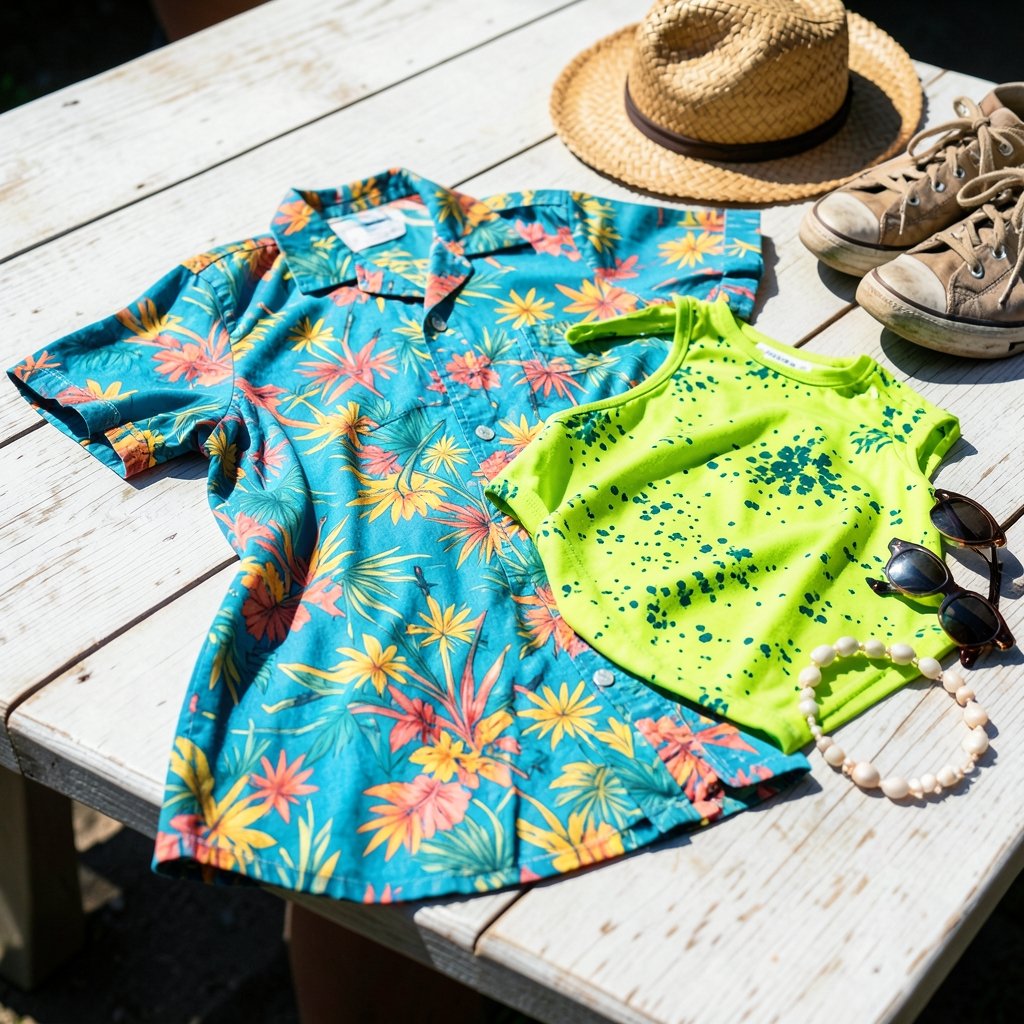
What comes to mind when someone says “wear a crazy shirt”? For one person, it is a floral button-up pulled from the back of a closet. For another, it is a neon novelty top worn to a school fundraiser. The phrase sounds simple, yet it covers a surprisingly wide range of clothing, from Hawaiian shirts with decades of history to cheap printed tops bought for a single party.
That flexibility is exactly why the term confuses people. It is not a formal style name, and you will not find it sitting between “cravat” and “cufflink” in a dictionary. It is everyday language, and like most everyday language, it means whatever the speaker needs it to mean. This article unpacks those meanings, traces where the most famous “crazy” shirt came from, and explains how to wear one without looking like you lost a bet.
What Does “Crazy Shirt” Actually Mean?
In plain English, a crazy shirt is a loud, brightly patterned, deliberately eye-catching shirt. Think bold florals, clashing colors, novelty prints, or anything designed to be noticed from across a room. It is informal speech, not a technical label, so its meaning shifts with region and context.
The word doing the heavy lifting here is loud. In English, “loud” does not only describe sound. It also describes clothing that is visually bold or garish. A loud shirt is one that shouts rather than whispers. That sense of the word underpins the whole idea of a crazy shirt, and it explains why the two phrases are often used interchangeably.
There is also a regional split worth knowing. In UK and Irish usage, “crazy shirt” and “loud shirt” turn up often in school contexts, especially for charity mufti days or non-uniform days, when pupils pay a small amount to swap uniforms for bright or novelty clothing. In the US, the same idea usually appears as “Hawaiian shirt,” “party shirt,” or “novelty shirt.” Same concept, different vocabulary.
One caution before going further: “crazy shirt” is not a standard dictionary headword in major English dictionaries as far as most references show. Related terms like “Hawaiian shirt,” “Aloha shirt,” and the “garish” sense of “loud” are properly defined. So if you are writing formally, treat “crazy shirt” as colloquial and reach for a more precise term.
The Aloha Shirt: The Original Crazy Shirt
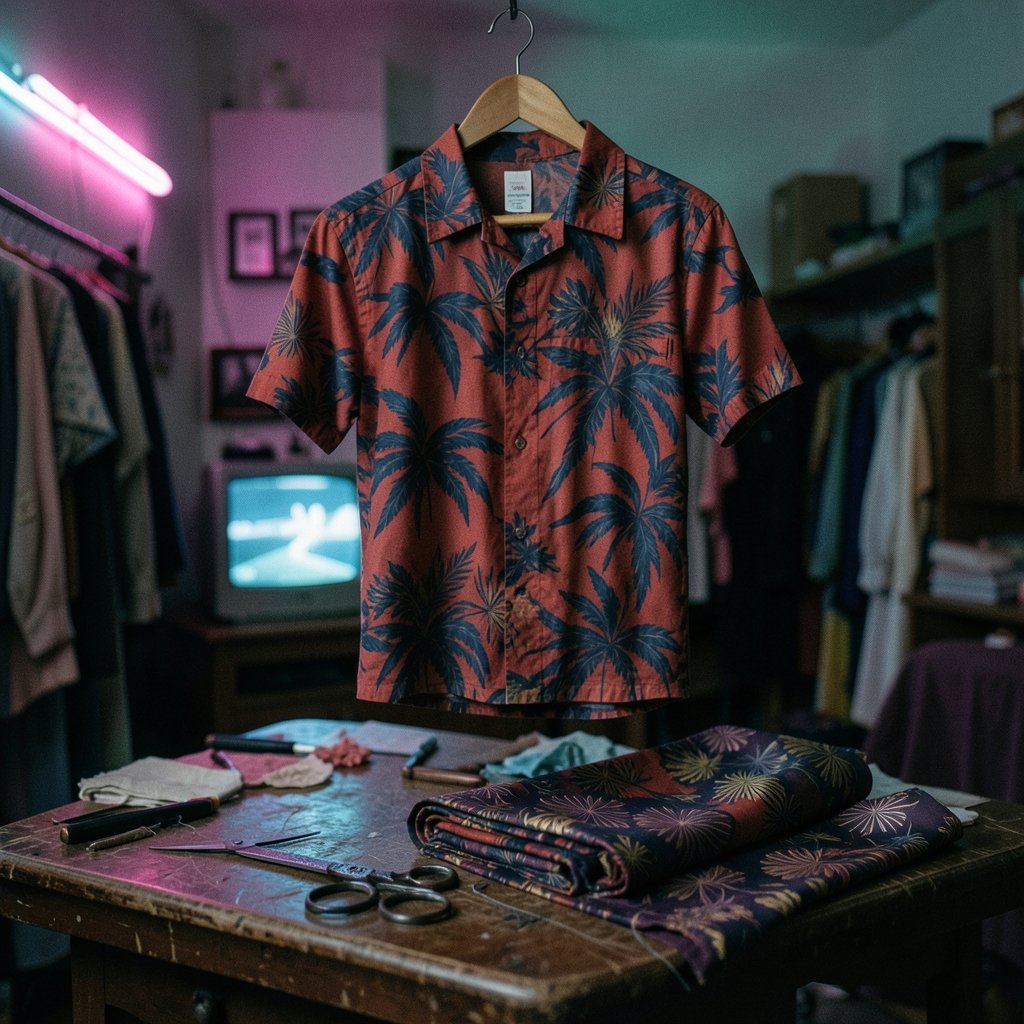
Most crazy shirts trace their DNA back to one garment: the Aloha shirt, better known outside Hawaii as the Hawaiian shirt.
Where it came from
The style is generally traced to Honolulu in the 1920s and 1930s, when local tailors began making short-sleeved, brightly printed shirts from imported Japanese kimono fabric. The lightweight cloth suited the climate, and the vivid prints suited the mood.
Here is the honest part: the exact origin story is contested. Several tailors are credited with inventing the garment, and the accounts do not agree. Anyone who tells you one person definitively invented the Aloha shirt is overselling their certainty. What is clear is that by the 1930s, “Aloha shirt” was in commercial use as a named style, and the shirt had become both a tourist staple and a symbol of Hawaii.
How it spread
Hawaiian shirts reached the US mainland after World War II, partly through servicemen who had been stationed in the Pacific and brought the style home. From there it moved from souvenir to wardrobe staple to cultural shorthand for relaxed, sunny, slightly rebellious dressing.
Why it matters culturally
The Aloha shirt has been used both as casual wear and as statement dress in Hawaii, including in business and political settings. That dual life is unusual. Few garments can be worn to a beach and to a formal office in the same region without raising eyebrows. The shirt’s ability to slide between those worlds is a big part of why it endures.
Other Shirts That Earn the “Crazy” Label
The Hawaiian shirt is the headline act, but it is not the whole show. Several other styles fall under the crazy shirt umbrella.
| Shirt type | Signature look | Typical setting |
|---|---|---|
| Hawaiian / Aloha shirt | Bold floral or tropical print, short sleeves | Beach, parties, casual Fridays |
| Bowling shirt | Contrasting panels, short sleeves, often a name embroidered | Retro and costume wear |
| Novelty print shirt | Graphics, slogans, cartoon or seasonal themes | Fundraisers, holidays, themed events |
| Christmas shirt | Festive prints, often worn for charity days | Seasonal fundraising events |
| Loud dress shirt | Bright color or clashing pattern in a formal cut | Deliberate statement dressing |
Bowling shirts deserve a mention of their own. Short-sleeved button-ups with contrasting panels, they are tied to 1950s and 1960s American bowling culture. Today they read as retro-cool, which is a neat trick for a garment that was once purely functional teamwear.
Novelty and Christmas shirts are a seasonal retail category in their own right. In the UK, Christmas jumper and shirt days are closely tied to charity fundraising, and the Christmas Jumper Day campaign run by Save the Children began in 2012. That campaign helped turn festive knitwear and printed tops into a mainstream December ritual rather than a joke.
How to Wear a Crazy Shirt Without Looking Ridiculous
Here is where practical experience beats theory. Most people who look bad in a crazy shirt do not fail because the shirt is too bold. They fail because they treat it as an afterthought.
Anchor the shirt with quiet pieces. A loud shirt paired with neutral trousers, plain jeans, or a solid skirt works because the shirt gets to be the star. Pair it with patterned bottoms and the whole outfit competes with itself.
Fit matters more than print. A wild print on a badly fitting shirt looks like a costume. The same print on a shirt that fits the shoulders and sits at the right length looks intentional. Get the fit right first, then have fun with the pattern.
Match the occasion. A Hawaiian shirt at a beach barbecue is effortless. The same shirt at a conservative office meeting is a statement you may not want to make. Dress codes at many schools and workplaces restrict loud or novelty clothing except on designated days, and those rules vary by institution, so check before you commit.
Pick one loud element. If the shirt is the loud element, keep shoes, belt, and accessories calm. If you want a second bold piece, make it small.
Watch the fabric. Cheap novelty shirts often use thin, shiny polyester that photographs badly and traps heat. A cotton or cotton-blend shirt with a proper print will look sharper and last longer.
Season it sensibly. Short-sleeved printed shirts work best in warm weather. In cooler months, layer a loud shirt under a plain jacket or overshirt so the print shows in controlled doses.
Common mistakes people make
- Buying a crazy shirt online without checking the size chart, then discovering the fit is boxy.
- Choosing a print that clashes with their skin tone because they shopped by pattern alone.
- Wearing a novelty shirt to an event that turned out to be smarter than advertised.
- Assuming “crazy” means “cheap.” There is a real difference between a well-made printed shirt and a disposable one.
- Forgetting that photographs flatten prints. A shirt that looks great in the mirror can look muddy in a group photo.
Crazy Shirts at School and at Work
The school context is where the term does the most work, especially in the UK and Ireland. Charity non-uniform days often carry a theme, and “crazy shirt day” is a common one because it is cheap, easy, and inclusive. Almost every pupil can find or borrow a bright shirt, which makes it a low-barrier fundraiser.
Workplaces borrow the same idea. Casual Fridays, team socials, and charity events sometimes invite staff to wear something loud. The unwritten rule is that the shirt should be the joke, not the person wearing it. A cheerful, well-chosen print lands well. A shirt with an inside joke printed on it usually does not.
If you are organizing a crazy shirt day, a few practical tips make it run smoothly. Announce the theme clearly, set a modest contribution, keep the dress code safe and appropriate, and offer an easy opt-out so nobody feels excluded. If you are comparing how different game and activity sites structure their themed events and daily challenges, the workflow differences between Crazygames vs Poki vs Coolmath Games offer a useful parallel for how a simple theme can be organized in very different ways.
Buying a Crazy Shirt: What to Check
Whether you are shopping for a party, a fundraiser, or just a fun addition to your wardrobe, a short checklist saves regret.
- Read the fabric composition. Cotton breathes; cheap polyester does not.
- Check the size chart against a shirt you already own. Measurements beat labels.
- Look at the print in natural light if you can. Screens exaggerate saturation.
- Check the return policy. Novelty items are often final sale.
- Think about repeat wear. A shirt you can wear more than once is better value than a single-use costume.
- Consider secondhand first. Vintage Hawaiian and bowling shirts are widely available and often better made than new novelty versions.
Conclusion
A crazy shirt is less a specific garment than a category of intent. It is clothing chosen to be noticed, whether that means a vintage Aloha shirt with genuine history, a bowling shirt borrowed from mid-century America, or a bright novelty top worn to raise money for a school charity day.
The term stays loose because the clothes themselves stay playful. That looseness is a feature, not a bug. If you take one thing away, let it be this: a crazy shirt works best when the fit is right, the rest of the outfit is calm, and the occasion actually calls for it. Get those three things lined up, and a loud shirt stops being a risk and starts being the best-dressed decision in the room.
Frequently Asked Questions
What is a crazy shirt?
A crazy shirt is an informal term for a loud, brightly patterned, deliberately eye-catching shirt. It usually refers to short-sleeved button-ups in floral, Hawaiian, or novelty prints, though the phrase is flexible and depends on context.
Is a crazy shirt the same as a Hawaiian shirt?
Not exactly. A Hawaiian shirt, or Aloha shirt, is a specific garment with a traceable history dating to 1920s and 1930s Honolulu. A crazy shirt is a broader, informal label that can include Hawaiian shirts, bowling shirts, novelty prints, and Christmas shirts.
Where did the Hawaiian shirt come from?
The style is generally traced to Honolulu in the 1920s and 1930s, when local tailors made short-sleeved, brightly printed shirts from imported Japanese kimono fabric. The exact origin is contested, with several tailors credited, and the style spread to the US mainland after World War II.
Why is “loud” used to describe shirts?
English uses “loud” to mean visually bold or garish, as well as noisy. A loud shirt is one that draws attention through color or pattern. That sense of the word is the foundation of the whole crazy shirt idea.
Can you wear a crazy shirt to work or school?
Often yes, but check the rules first. Many schools and workplaces have dress codes that restrict loud or novelty clothing except on designated days such as charity non-uniform days or casual Fridays. Policies vary by institution, so confirm before wearing one.
How do you style a crazy shirt without looking silly?
Keep the rest of the outfit simple. Pair the shirt with neutral trousers or plain jeans, make sure it fits well at the shoulders and hem, and limit yourself to one bold element. Good fit and a calm backdrop do more for a loud shirt than any accessory.



