
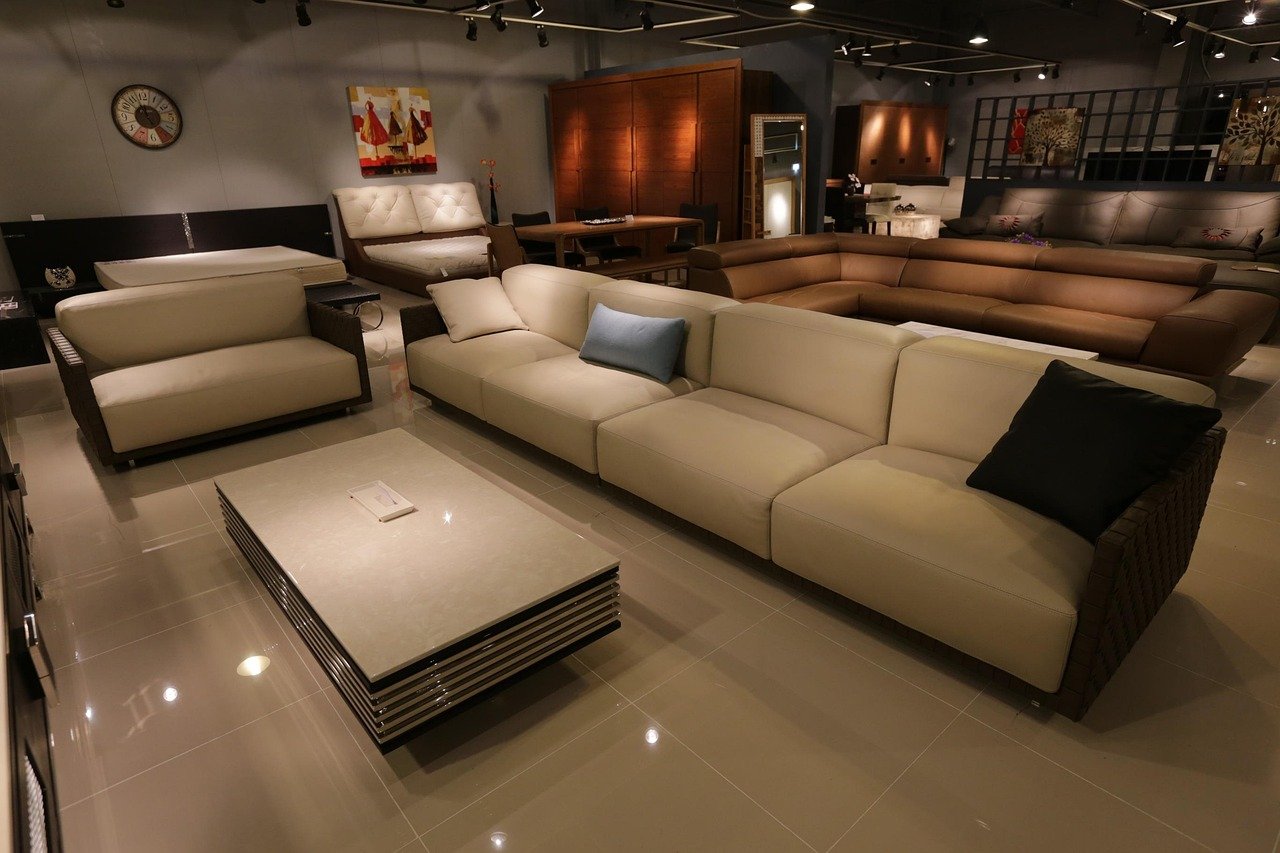
What if the couch you love is the exact reason your living room feels cramped? It happens all the time. Someone buys a deep, overstuffed three-seater because it looked amazing in a showroom, and six weeks later the room feels like a storage unit. The couch isn’t bad. The fit is.
This guide is about fit. It covers the dimensions that matter, the types of couches that work in tight spaces, and the mistakes that turn a small living room into a maze. No universal “best couch” exists, because no two rooms are identical. But there are reliable rules, and once you know them, choosing gets a lot simpler.
Why Most People Buy the Wrong Couch
The single biggest mistake in small living rooms is shopping by overall length. A couch can be a perfectly reasonable 78 inches wide and still wreck a room if its seat is 24 inches deep and its arms are thick slabs. Length tells you how much wall it eats. Depth and arm style tell you how much floor it eats. Both matter.
The second mistake is ignoring the walkway. Design guidance commonly recommends leaving roughly 30 to 36 inches (about 76 to 91 cm) of clearance around furniture so people can move comfortably. That figure is a widely repeated design convention, not a legal standard. For a harder reference point, the 2010 ADA Standards for Accessible Design require a minimum clear width of 36 inches (915 mm) for accessible routes. That’s an accessibility rule, not a furniture rule, but it’s a useful reminder of how much space a person actually needs to pass.
The third mistake is trusting the showroom. Showrooms are huge. A couch that looks modest there can dominate a 12-foot-wide room. Always tape the footprint out on your floor before you buy.
Measure Before You Shop: The Numbers That Matter

Before browsing anything, grab a tape measure and write down four things.
- Wall length. The longest uninterrupted wall where the couch could sit.
- Doorway and stair width. Measure the narrowest point between the store and your living room.
- Walkway target. Decide how much clearance you want to keep. Aim for 30 inches minimum in a tight room.
- Room depth. The distance from the couch wall to the opposite wall or furniture.
That last one is where people get surprised. If your room is 11 feet deep and you want a coffee table plus a walking path, a deep-seated couch plus a wide table can consume most of it.
Delivery is its own trap. A couch that fits the room may not fit through a 30-inch door or around a tight stair turn. Measure the door, the hallway, and the stairwell before you commit. This single step prevents more returns than any other.
The Couch Types That Suit Small Rooms
Not every couch style is built for tight spaces. Here’s how the main options compare.
| Type | Typical width | Best for | Watch out for |
|---|---|---|---|
| Loveseat | 48–60 in (122–152 cm) | Narrow rooms, one or two people | Tight for three adults |
| Apartment or condo sofa | 60–72 in (152–183 cm) | Rooms with limited wall space | Shallow seats suit some, not all |
| Standard three-seat sofa | 72–90 in (183–229 cm) | Larger small rooms | Can dominate a narrow room |
| Sectional | Varies widely | Corner placement, open plans | Large assembled footprint |
| Sleeper sofa | Varies | Guest use in a studio | Deeper body, heavier frame |
These ranges are typical manufacturer figures, not formal standards. Furniture dimensions are not standardized in the US or EU, so always check the actual spec sheet for the specific model.
Loveseats: The Obvious Pick, With Caveats
A loveseat typically runs about 48 to 60 inches wide, compared with roughly 72 to 90 inches for a standard three-seat sofa. In a narrow room, that difference is enormous. A loveseat leaves room for a side table, a lamp, and breathing space.
The caveat is seating capacity. A loveseat comfortably seats two adults. If three people live in the home and the couch is the main gathering spot, a loveseat may frustrate everyone. Consider a small sofa in the 66-to-72-inch range instead, or pair a loveseat with a lightweight accent chair that can move out of the way.
Apartment Sofas: The Middle Path
Apartment and condo sofas sit between loveseats and full-size couches. They often have shallower seats, around 18 to 20 inches instead of the standard 21 to 24 inches. Shallower seats matter more than overall length in small rooms, because they reduce how far the couch juts into the floor space.
The trade-off is comfort for tall people. A 6-foot-2 guest on an 18-inch-deep seat will feel perched. Test the depth in person if you can, or read reviews from taller buyers.
Sectionals: Strong Effects, Real Risks
Modular and sectional sofas offer flexibility, but they often have deeper seats and larger overall footprints. A sectional can be brilliant in a small room with an awkward corner, because it uses space that would otherwise sit empty. It can also swallow the room whole.
The rule: compare assembled dimensions, not module count. A three-piece sectional sounds compact until you add up the total depth and width. And measure the corner. A sectional that blocks the only path to the kitchen is a daily annoyance.
If your room is genuinely tight, the same spatial thinking that helps you make a small living room look bigger with practical design tactics applies directly to couch choice: sightlines and floor visibility do more for perceived space than any single purchase.
Seat Depth, Arms, and Legs: The Details That Decide
Three small features change how big a couch feels in a room.
Seat depth. Standard sofas often have seats around 21 to 24 inches deep. Shallower is better in small rooms. Deep seats invite lounging but push the couch further into the room and make the coffee table crowd your knees.
Arm style. Track arms and slim arms save several inches per side compared with rolled or pillow-top arms. On a 60-inch loveseat, slim arms can free up nearly half a foot of usable seating.
Leg style. Raised legs let you see floor underneath the couch. That visible floor makes the room read as larger. A skirted couch that sits flush to the ground looks heavier and shrinks the space visually.
One more: back height. A low back keeps sightlines open across the room. A high back can feel cozy but blocks the view and makes a small room feel boxed in.
Fabric, Color, and the Visual Weight Problem
A couch’s visual weight matters as much as its measurements. Dark, heavy fabrics in a small room can feel like a boulder dropped in a puddle. Lighter tones, subtle patterns, and fabrics with some texture tend to recede.
That doesn’t mean everything must be beige. A mid-tone couch in a warm gray, muted green, or soft blue can anchor a room without dominating it. What to avoid: large-scale prints, high-contrast piping, and very dark upholstery in a room with limited light.
Lighting plays into this too. The way a screen or lamp throws light across a room changes how colors and shapes read, which is why the guidance on gaming monitor vs tv room lighting and how it changes viewing is surprisingly relevant to furniture placement. A couch that looks great in daylight can look like a shadow in a dim corner.
What to Check Before You Buy
Beyond size, a few practical checks save headaches.
Flame-safety labels. Upholstery flammability rules vary by jurisdiction. In the US, California’s TB 117-2013 changed furniture flammability testing and labeling, with labeling requirements taking effect around 2014. In the UK, furniture must meet the Furniture and Furnishings (Fire) (Safety) Regulations 1988, as amended. Check the label, especially in a small apartment where the couch is close to everything.
Return policy. Return windows and trial periods vary widely, and they are your main protection if the couch doesn’t fit. Read the written policy, not the marketing page. Confirm who pays return shipping on a large item.
Assembly. Some couches arrive in pieces. In a small room, assembling in place can be easier than wrestling a fully built couch through a hallway. But check that the assembled dimensions match what you measured.
Cushion maintenance. Removable, washable covers are worth the upgrade in a small home where the couch gets constant use.
Common Mistakes and What Actually Works
Here’s the pattern that shows up again and again.
Mistake: pushing the couch against the wall in a narrow room. Sometimes floating it slightly, or angling it, opens up the flow. Not always possible, but worth testing with tape on the floor.
Mistake: buying the deepest, plushest couch available. Comfort in the store is not the same as fit at home. A moderately deep couch with good support often serves small rooms better than a cloud-like monster.
Mistake: skipping the walkway test. Tape the couch footprint on the floor, then walk the path you’d actually take. If you have to sidestep, the couch is too big.
What works: buying for the room, not the showroom. A 60-inch loveseat with slim arms and raised legs will almost always beat a 78-inch deep-seated sofa in a room under 150 square feet.
What works: keeping one clear path. Every small living room needs at least one unobstructed route through it. Protect that route above all else.
What works: pairing with movable pieces. Light accent chairs and ottomans that can shift for guests give you flexibility a fixed couch can’t.
The same principle applies across the home. Budget-smart upgrades in tight spaces reward planning over impulse, whether you’re rethinking a couch or weighing small kitchen remodeling ideas and budget-smart upgrades that pay off. Measure first, buy second.
How Small Is “Small,” Really?
Here’s an honest caveat: “small living room” has no formal definition. There is no standard square-footage threshold that makes a room small. A 10-by-12-foot room in a city apartment and a 12-by-14-foot room in a suburban house both get called small, and they call for different couches.
That means any “best for small rooms” claim is relative. Use the ranges in this guide as starting points, then measure your actual room. A couch that’s perfect for one small room can be wrong for another with the same square footage but a different door position or window wall.
Conclusion
The best couch for a small living room is the one that fits the room, the walkway, and the doorway, in that order. Start with a loveseat or apartment sofa in the 48-to-72-inch range, favor shallow seats and slim arms, and keep at least 30 inches of clear path. Tape the footprint on the floor before you buy, measure the door you’ll carry it through, and read the return policy like it matters, because it does.
Get the fit right and the room feels intentional. Get it wrong and no amount of styling fixes it. Measure twice, sit once.
Frequently Asked Questions
What size couch fits a small living room?
There’s no universal answer, but a loveseat at roughly 48 to 60 inches wide or an apartment sofa at 60 to 72 inches is a practical starting range. The real test is the walkway: if the couch leaves at least 30 inches of clear path, it’s probably the right size. Always check the specific model’s dimensions, since furniture sizes aren’t standardized.
Is a loveseat or a small sofa better for a tight space?
A loveseat wins on footprint and leaves more room for side tables and walking space. A small sofa wins on seating capacity. If two people live in the home and the couch is the main seat, a loveseat works well. If three or more people gather regularly, a 66-to-72-inch sofa is usually the better compromise.
How much space should I leave around a couch?
Design guidance commonly suggests about 30 to 36 inches of clearance for walkways. For a firmer reference, the 2010 ADA Standards for Accessible Design set a 36-inch minimum clear width for accessible routes. That’s an accessibility standard rather than a furniture rule, but it shows how much room a person needs to pass comfortably.
Does seat depth matter more than couch length?
In small rooms, usually yes. Standard seats run about 21 to 24 inches deep, while apartment sofas are often 18 to 20 inches. A shallower seat keeps the couch from jutting into the floor space and leaves room for a coffee table. Length affects wall space; depth affects how the room flows.
Can a sectional work in a small living room?
Yes, if it fits an awkward corner that would otherwise go unused. The risk is footprint. Modular sectionals often have deeper seats and larger assembled dimensions, so compare the total assembled size rather than the number of modules. Measure the corner and confirm the path to the rest of the room stays clear.
What should I check before ordering a couch online?
Measure your doorways, hallway, and stair turns, and compare them to the couch’s shipping dimensions. Read the return policy carefully, including who pays return shipping on a large item. Check the flame-safety label, since upholstery rules vary by jurisdiction, and confirm whether the couch arrives assembled or in pieces.



