
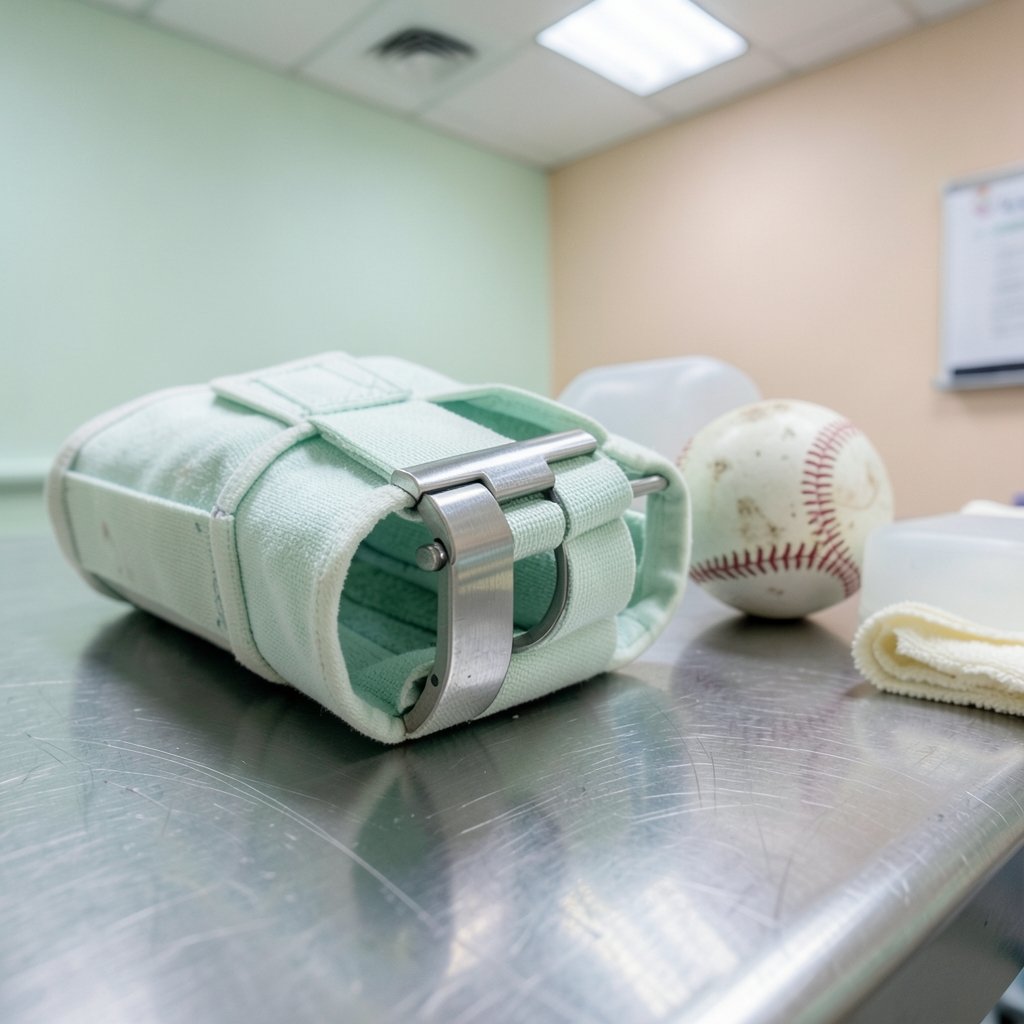
Quick Answer: What is tommy john surgery?
Tommy John surgery is the common name for ulnar collateral ligament (UCL) reconstruction, a procedure that rebuilds the torn ligament on the inner side of the elbow using a tendon graft, usually taken from elsewhere in the patient’s own body. The operation is named after the Major League pitcher who first had it done publicly in 1974 and then returned to the mound.
The alternative is often rest and rehabilitation rather than surgery, and the two paths differ enormously in timeline: rehab can be measured in weeks or months, while reconstruction typically means 12 to 18 months before competitive throwing. Some partial tears heal well without an operation, and some do not.
Before committing, a patient should weigh the grade of the tear, throwing volume and age, graft type, rehab access, return-to-play odds, and the risk of a revision procedure later.
A Pitcher, a Surgeon, and a Career That Wouldn’t End
What if a career-ending injury turned out to be a career extender? That is essentially the story of Tommy John surgery, and it is why a procedure with a clinical name like ulnar collateral ligament reconstruction is known to almost every baseball fan on earth.
The plot is simple enough. In 1974, Los Angeles Dodgers pitcher Tommy John damaged the ligament on the inside of his throwing elbow. Dr. Frank Jobe, the team physician, proposed something nobody had really done before: take a tendon from somewhere else in John’s body and use it to rebuild the damaged ligament. The operation was performed on September 25, 1974. John sat out, rehabbed, and returned to major league pitching in 1976, then kept going for years after that.
That comeback is the reason the surgery carries his name. It is also the reason generations of pitchers have viewed a torn UCL as a detour rather than a dead end. The procedure itself has evolved, but the basic idea has not changed much: replace or reinforce a failed ligament with a tendon graft so the elbow can handle throwing again.
The surge in demand for the operation has tracked the broader rise in throwing velocity and year-round competition. That same pattern shows up in other markets where demand outruns supply, as coverage of the open source frontier AI prediction market surge in 2026 shows, and it explains why buyers chasing scarce hardware follow the Akihabara GPU price surge story so closely. Scarcity and demand rarely stay quiet.
What Actually Happens During the Operation
The ulnar collateral ligament is a short, strong band of tissue on the inner side of the elbow. It connects the humerus (upper arm bone) to the ulna (forearm bone) and acts as the main stabilizer when the arm whips forward in a throwing motion. When it tears, the elbow can feel unstable, and throwing hard becomes painful or impossible.
During reconstruction, the surgeon makes an incision on the inner elbow, examines the damaged ligament, and then harvests a tendon graft. Common donor sites include the palmaris longus tendon in the forearm, a hamstring tendon, or a toe extensor tendon. The graft is threaded through drill holes in the two bones, usually in a figure-eight pattern, and fixed in place. Over the following months, the graft becomes a living ligament as blood supply returns and tissue remodels.
Not every damaged ligament needs a full rebuild. Some surgeons perform a repair, tightening or reattaching the existing ligament rather than replacing it. Repair can mean a faster recovery for the right candidate, but it is not suitable for every type or location of tear. That is a conversation for a surgeon with imaging in hand, not a decision to make from a web page.
| Procedure | What It Involves | Typical Recovery Window |
|---|---|---|
| UCL reconstruction | Torn ligament replaced with a tendon graft | Roughly 12 to 18 months |
| UCL repair | Existing ligament reattached or tightened | Often shorter, case dependent |
| Non-surgical rehab | Rest, strengthening, throwing program | Weeks to months, varies widely |
Who Ends Up on the Operating Table?
Baseball pitchers dominate the statistics because no other common activity loads the UCL the way repeated high-effort throwing does. Every pitch is a small stress test, and hundreds of them add up. But pitchers are not the only patients. Other overhead athletes, including javelin throwers and some volleyball and tennis players, can injure the same ligament. Occasionally, a non-athlete tears it in a fall or an awkward lift.
The more uncomfortable part of the story involves young athletes. Sports medicine clinicians have raised repeated alarms about reconstruction rates among adolescents, and the usual suspects are familiar: year-round play on multiple teams, showcase events, and high pitch volumes with too little rest. A teenager’s elbow is still growing, and the growth plates add their own vulnerability.
Prevention guidance exists and is not secret. Pitch-count limits, required rest days between outings, avoiding multiple teams in the same season, and taking real time off from throwing each year are the standard recommendations. The catch is that these rules only work when coaches, parents, and players all follow them, and the temptation to keep a talented arm in the game is strong.
The Recovery Timeline Nobody Wants to Hear
Here is the part that surprises people: the surgery is often the easy day. The rehab is the long haul. Most athletes face something in the range of 12 to 18 months before returning to competitive throwing, and the range is wide because the variables are wide.
Rehab generally moves through phases. Early weeks focus on protecting the graft and restoring gentle motion. The middle months build strength in the forearm, shoulder, and core. Later phases introduce a structured throwing program that progresses from short tosses to bullpen sessions to game-speed pitches. Rushing any phase is how comebacks stall.
Practical experience from athletic training settings points to a few things that genuinely matter. First, hit the range-of-motion milestones before chasing strength. Second, treat the throwing program as a prescription, not a suggestion, because the gap between “feels fine” and “is ready” is where re-injury lives. Third, build the whole kinetic chain, since a weak shoulder or poor mechanics will happily dump the load back onto a healing elbow.
Common mistakes are equally predictable. Athletes hide pain so they don’t lose their spot. They skip the boring band work. They return to throwing on a timeline borrowed from someone else’s recovery. And they treat a successful return as the finish line rather than the start of a maintenance phase.
There is also a hardware angle for the modern patient. Anyone recovering at home with a laptop, a game console, and a charging setup should think about protecting that equipment the way they protect the elbow, which is why a guide to the best surge protectors for a home office that actually protects your setup is worth a read before the rehab couch becomes a command center.
What Are the Real Odds of Coming Back?
Outcomes are generally described as good, especially for professional and college-level athletes, and that is the headline most people remember. The footnote is that good does not mean guaranteed. A meaningful share of athletes do not return to their previous level of performance, and some never return to competition at all.
Age matters. Younger patients are more likely to need a revision, a second reconstruction after the first fails, and revision surgery tends to produce less reliable results than the first operation. That is one reason clinicians push so hard on prevention in teenagers: the first surgery is a repair, but the second is a harder problem.
Graft choice, tear pattern, surgical technique, rehab quality, and the athlete’s own anatomy all shape the outcome. So does honesty about goals. A recreational player hoping to throw catch with their kids has a different bar than a drafted pitcher chasing a roster spot, and the risk-benefit math looks different for each.
How the Surgery Fits Into a Bigger Sports Economy
Tommy John surgery sits at an odd intersection of medicine and sports business. A healthy pitching arm is a valuable asset, so the operation protects careers, contracts, and roster plans. That economic pressure explains why teams invest heavily in rehab programs and why the procedure’s reputation has spread far beyond orthopedic circles.
It also explains some of the wishful thinking. Because so many famous pitchers came back, the surgery can look like a tune-up rather than a serious reconstruction with real failure rates. The comparison to other high-demand, high-cost markets is not perfect, but the psychology rhymes: when something scarce and valuable is on the line, people convince themselves the fix is simpler than it is. The same instinct shows up in coverage of the RTX 5090 resale price surge, where a $1,999 MSRP still matters to buyers even as street prices climb.
The healthiest takeaway is unglamorous. Pitch counts exist for a reason. Rest days exist for a reason. Mechanical flaws and shoulder weakness get addressed before they become elbow problems. Surgery is a strong option, but it is a fallback, not a strategy.
Conclusion
Tommy John surgery is ulnar collateral ligament reconstruction, a procedure that rebuilds a torn elbow ligament with a tendon graft and carries the name of the pitcher who proved a comeback was possible. It has rescued countless careers and remains one of the more memorable stories in sports medicine.
It is also serious surgery with a long rehab, real uncertainty, and better results when it is the last resort rather than the first idea. For athletes and parents, the most valuable lesson is the least dramatic one: protect the arm early, follow the pitch limits, and treat rest as training rather than weakness.
Frequently Asked Questions
Is Tommy John surgery only for baseball players?
No. Pitchers are the most common patients because repeated throwing stresses the ligament so heavily, but the procedure is also performed on other overhead athletes and occasionally on people who tear the ligament in a fall or accident. The underlying injury is the same regardless of how it happened.
Can a partial UCL tear heal without surgery?
Sometimes. Some partial tears respond well to rest and a structured rehabilitation program, especially when the tear is minor and the patient is willing to follow a gradual throwing progression. Others do not improve, and the decision usually comes down to imaging, symptoms, and the level of throwing the patient wants to return to.
How long until an athlete can throw again after surgery?
Most athletes face roughly 12 to 18 months before returning to competitive throwing, though the range varies by individual, graft type, and level of play. Gentle motion work typically starts well before that, and a structured throwing program is introduced in stages. Anyone promising a much faster timeline should be questioned closely.
Does having the surgery make a pitcher throw harder?
Not by itself. Some pitchers return with better mechanics or improved strength after a full rehab program, which can show up as added velocity, but the surgery rebuilds a ligament rather than upgrading an arm. The goal is restoring stability and function, and any velocity gains are a byproduct of training, not the operation.
What is a revision Tommy John surgery?
A revision is a second reconstruction performed after the first graft fails. It is more common in younger patients, and outcomes tend to be less predictable than with a first procedure. That risk is a major reason clinicians emphasize pitch limits and rest for adolescent throwers.
Can the surgery be prevented?
Many UCL injuries in young athletes are tied to workload, so prevention focuses on limits: pitch counts, required rest days, avoiding year-round play on multiple teams, and taking a genuine offseason from throwing. Good mechanics and shoulder and core strength help too. No approach eliminates risk entirely, but workload management is the most proven lever.



