

Have you ever been told to lie “in a recumbent position” and wondered whether that means flat on your back, curled on your side, or something in between? The ambiguity is common. The phrase shows up on hospital forms, in first-aid manuals, on pregnancy advice pages, and even in bike shop catalogs, and it rarely arrives with a clear picture attached.
The confusion is understandable, because recumbent is a broad umbrella term, not a single pose. Getting it right matters more than most people expect. The exact position can change how well someone breathes, how a physical exam turns out, and whether an unconscious casualty keeps a clear airway. This guide unpacks the term from every practical angle: what it literally means, how clinicians use it, where it shows up in everyday life, and the mistakes people make when they assume all lying-down positions are the same.
What Does Recumbent Position Actually Mean?
Recumbent describes a body that is lying down rather than standing or sitting upright. The word comes from Latin roots meaning “to lie back” or “to recline,” which is why it shares a family resemblance with “reclining” and “incumbent.” It is a posture category, not a precise instruction.
That broadness is both the term’s strength and its weakness. In casual writing, “recumbent” simply signals horizontal. In medicine, it is almost always paired with a qualifier that pins down the details:
| Term | Body orientation | Common context |
|---|---|---|
| Supine | Flat on the back, face up | General exams, resting, procedures |
| Prone | Flat on the stomach, face down | Breathing support in severe illness |
| Lateral recumbent | Lying on one side | Recovery position, pregnancy sleep |
| Dorsal recumbent | On the back with knees bent, feet flat | Pelvic and abdominal exams |
| Trendelenburg | On the back, head tilted lower than feet | Specific clinical scenarios, not simply “recumbent” |
Notice that supine and dorsal recumbent are not the same thing, even though both involve lying on the back. In the dorsal recumbent position, the knees are flexed and the feet rest flat on the surface, which relaxes the abdominal muscles and gives a clinician better access during certain examinations. Treating these terms as interchangeable is one of the most common mistakes, and it can lead to genuinely wrong instructions being passed along.
Why the Distinction Between Positions Matters
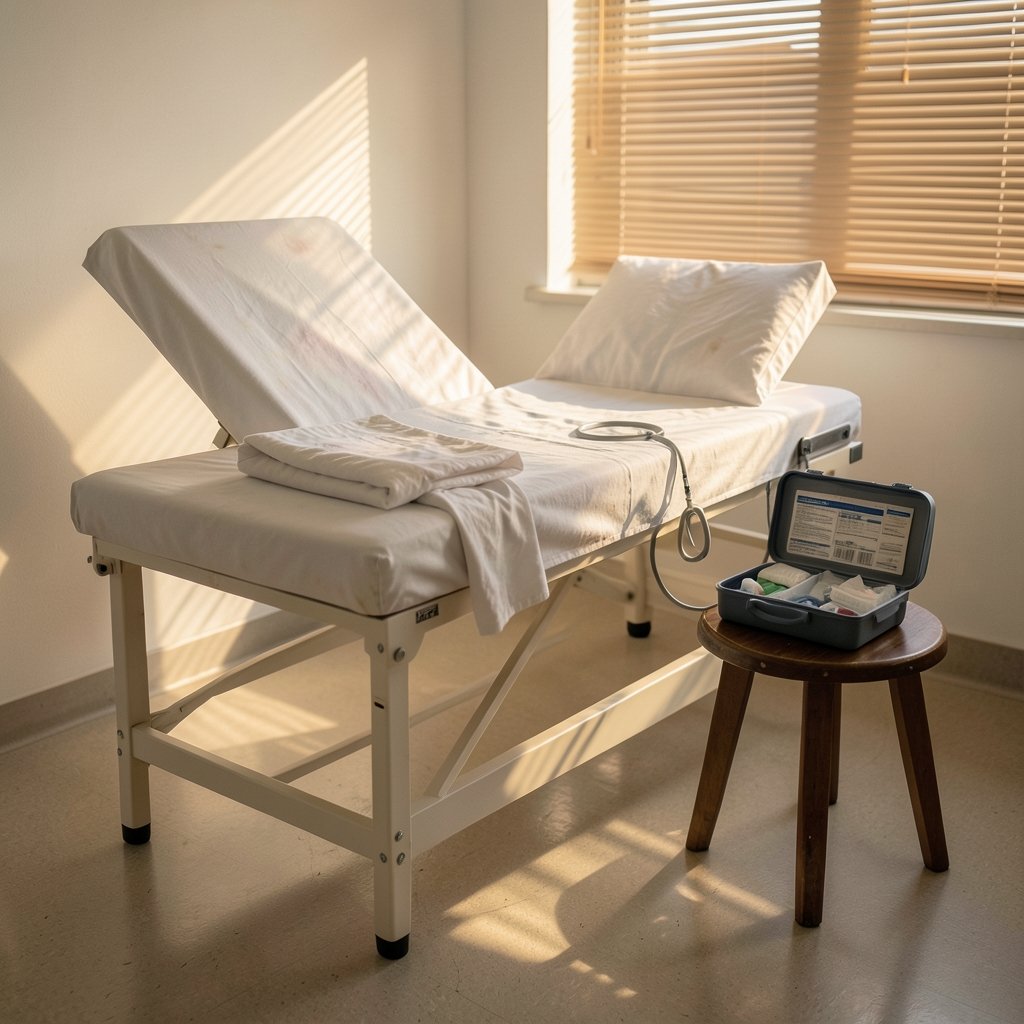
A skeptic might ask why anyone bothers with such fine distinctions. The answer is that body position changes physiology in measurable ways. Gravity shifts how blood pools, how the diaphragm moves, and how easily the airway stays open. Small adjustments in angle or orientation can produce real differences in comfort, breathing, and safety.
This is why clinical settings treat positioning as an active decision rather than an afterthought. Nurses reposition patients to protect pressure points and support breathing. Sonographers and physicians choose specific orientations to get clear images or reliable exam findings. First-aid instructors teach a single side-lying posture because it protects the airway of someone who cannot protect it themselves. In each case, the qualifier attached to “recumbent” is doing real work.
The Dorsal Recumbent Position in Clinical Exams
The dorsal recumbent position deserves its own spotlight because it trips people up so often. Picture lying on your back with your knees bent and your feet flat on the table, roughly shoulder-width apart. That is it. The head typically stays flat or slightly elevated, and the arms rest at the sides.
Clinicians favor this setup for abdominal, pelvic, and genital examinations. Bending the knees relaxes the abdominal wall, which makes it easier to feel internal structures and reduces tension for the patient. It is a small mechanical trick with a big payoff: a relaxed abdomen gives a more accurate exam and a less uncomfortable experience.
Here is a practical tip that actually helps. If you are preparing for an exam that uses this position, wear loose clothing and expect to be asked to shift your hips toward the edge of the table. Many people instinctively tense their stomach muscles the moment they lie back, which defeats the purpose. Taking a slow breath out as you settle into position helps the abdominal muscles release. If you have hip or knee problems, say so before the exam starts, because the standard knee bend can be adjusted.
Lateral Recumbency and the Recovery Position
Lying on the side, or lateral recumbent positioning, is the basis of the recovery position taught in first aid. When someone is unconscious but breathing, placing them on their side helps keep the tongue from blocking the airway and lets fluids drain rather than pool in the throat.
The exact technique varies between first-aid organizations, and guidance gets updated over time, so it is worth checking the current instructions from a recognized resuscitation body rather than relying on a version you learned years ago. The core principle, however, stays stable: a side-lying posture with the head slightly lower and the airway unobstructed.
A frequent mistake in practice is rolling someone too far, so they end up partly face-down, or not far enough, so they remain mostly on their back. The goal is a stable side position with the upper leg bent for balance and the head tilted gently back to keep the airway open. Another common error is moving a casualty who has a suspected spinal injury without clear need; if breathing is not at risk, the priority order changes.
Prone Positioning and Breathing Support
Prone positioning, lying face down, is the mirror image of supine. It has drawn serious clinical attention as a strategy in acute respiratory distress syndrome (ARDS), a severe form of lung failure. A landmark trial published in the New England Journal of Medicine in 2013, known as PROSEVA, examined prone positioning in patients with severe ARDS and is widely cited as a turning point in how clinicians think about body position as therapy rather than mere comfort.
The logic is mechanical. In a person lying face down, the distribution of air and blood in the lungs shifts, which can improve oxygen exchange in damaged lungs. It is not a casual intervention, though. Prone positioning in an intensive care setting involves teams of trained staff, careful padding, and constant monitoring. For home caregivers, the takeaway is simply awareness: position is a clinical tool, and in serious illness it should be guided by professionals.
Left Side Lying in Pregnancy
Pregnancy is where recumbent positioning enters everyday conversation most often. Lying flat on the back in late pregnancy can compress the inferior vena cava, the large vein that returns blood from the lower body to the heart. That compression can reduce blood flow and cause a drop in blood pressure, a pattern sometimes called supine hypotensive syndrome. The result can be dizziness, nausea, or a general feeling of unwellness.
Because of this, side-lying, particularly on the left, is commonly recommended in late pregnancy. The left side is often favored because it keeps the uterus off the vena cava, which runs slightly to the right of the spine. Specific recommendations differ between health bodies and are updated periodically, so the most reliable source is current guidance from a national health service or obstetric professional organization rather than a forum thread.
Practical advice that genuinely helps: if you wake on your back, do not panic. Roll onto your side and go back to sleep. The concern is prolonged flat-on-back positioning, not a brief roll in the night. A pillow tucked behind the back can make it easier to stay on your side, and a pillow between the knees takes pressure off the hips.
Recumbent in Everyday Life: Bikes and Furniture
Outside medicine, recumbent shows up in two places most people encounter.
The first is furniture. A recumbent chair or recliner is built for a reclined posture, with the back angled well past upright. These designs spread body weight across a larger area and reduce strain on the lower back, which is why they appear in both living rooms and clinical waiting areas.
The second is the recumbent bicycle, a machine ridden in a reclined or near-reclined posture with the pedals out in front rather than below. Riders often report less pressure on the wrists, neck, and saddle area, since the body’s weight rests against a broad seat back instead of being supported by the arms and pelvis. The trade-off is a lower profile in traffic and a different balance feel, which is why recumbent bikes appeal strongly to some riders and not at all to others. Neither design is objectively better; they simply distribute load differently.
Common Mistakes People Make
Errors around recumbent positioning tend to cluster into a few predictable patterns.
- Using the terms interchangeably. “Recumbent,” “supine,” “prone,” and “dorsal recumbent” all describe different things. If a clinician or instructor gives you a specific term, follow that term, not your general impression of “lying down.”
- Assuming flat is always best. For some exams and conditions, a slight head elevation or a knee bend is part of the correct setup. Flattening out completely can make an exam harder or a patient more uncomfortable.
- Ignoring the airway in first aid. The whole point of lateral recumbency in an emergency is protecting breathing. A position that looks tidy but leaves the face partly down or the neck over-extended is not doing its job.
- Sleeping flat on the back in late pregnancy. Side-lying is the recommended default. If you wake on your back, simply change position.
- Skipping the setup. Whether it is a medical exam, a first-aid scenario, or a long session in a recliner, small details like knee support, pillow placement, and surface firmness make a real difference to comfort and safety.
If you are the kind of person who likes getting the mechanics exactly right, the same mindset pays off elsewhere. The patience required to set up a position correctly is not unlike the care needed to fix a bent keyboard switch pin without breaking it — small, deliberate adjustments beat force every time.
How to Get Positioning Right in Practice
A few habits separate people who get this right from those who muddle through.
First, ask for the specific term when instructions are vague. “Lying down” is not an instruction; “on your left side with your knees bent” is. Second, check current guidance for anything safety-related, especially first aid and pregnancy, because recommendations evolve. Third, treat comfort as information. Sharp pain, numbness, or breathlessness in a position is a signal to change something, not to tough it out. Fourth, support the body where it needs it: a pillow under the knees for back-lying, one between the knees for side-lying, and padding at pressure points for anyone who cannot move themselves.
For anyone who spends long stretches reading or working in a reclined posture, the details of setup matter too. If you switch between devices while lying back, it helps to sync reading position across devices so it actually works — otherwise you spend half your session hunting for your place instead of resting.
Conclusion
Recumbent position is one of those terms that seems simple until you need to act on it. It describes lying down, but the qualifier attached to it carries the real meaning: supine for flat on the back, prone for face down, lateral for side-lying, dorsal recumbent for the knees-bent exam posture. Each one changes how the body behaves under gravity, and each one has a context where it is the right choice.
The practical takeaway is straightforward. When someone gives you a positioning instruction, get the specifics, follow the current guidance for anything safety-related, and pay attention to how the position actually feels. Small adjustments, made deliberately, are what turn a vague instruction into a comfortable and safe posture. Whether you are preparing for a medical exam, caring for someone in an emergency, settling in for the night during pregnancy, or simply choosing a chair, understanding what recumbent really means puts you in control of the details that matter.
Frequently Asked Questions
What is the difference between supine and recumbent?
Recumbent is the broad category: any posture where the body is lying down rather than upright. Supine is one specific version of it, meaning flat on the back with the face up. So all supine positions are recumbent, but not all recumbent positions are supine. Lying on your side or your stomach is also recumbent.
What is the dorsal recumbent position used for?
It is lying on the back with the knees bent and the feet flat on the surface. Clinicians use it for abdominal, pelvic, and genital examinations because bending the knees relaxes the abdominal muscles, making internal structures easier to feel and the exam more comfortable for the patient.
Is lying on your left side during pregnancy actually necessary?
Side-lying, particularly on the left, is commonly recommended in late pregnancy because lying flat on the back can compress the inferior vena cava and reduce blood flow, which may cause dizziness or nausea. Specific advice varies between health bodies, so check current guidance from a national health service or obstetric organization. If you wake on your back, just roll onto your side.
What is the recovery position and how does it relate to recumbent positioning?
The recovery position is a lateral recumbent posture used for someone who is unconscious but breathing. Lying on the side helps keep the tongue from blocking the airway and allows fluids to drain. Technique details vary between first-aid organizations, so follow the current instructions from a recognized resuscitation body.
Why is prone positioning used in severe lung illness?
Lying face down changes how air and blood are distributed in the lungs, which can improve oxygen exchange in damaged lungs. A landmark trial published in the New England Journal of Medicine in 2013, known as PROSEVA, studied prone positioning in severe ARDS. It is a supervised intensive-care intervention, not a casual home remedy.
Are recumbent bicycles easier on the body?
Many riders find them easier on the wrists, neck, and saddle area because body weight rests against a broad seat back rather than being carried by the arms and pelvis. The trade-offs include a lower profile in traffic and a different sense of balance. Whether a recumbent bike suits you depends on your body and riding conditions.



