
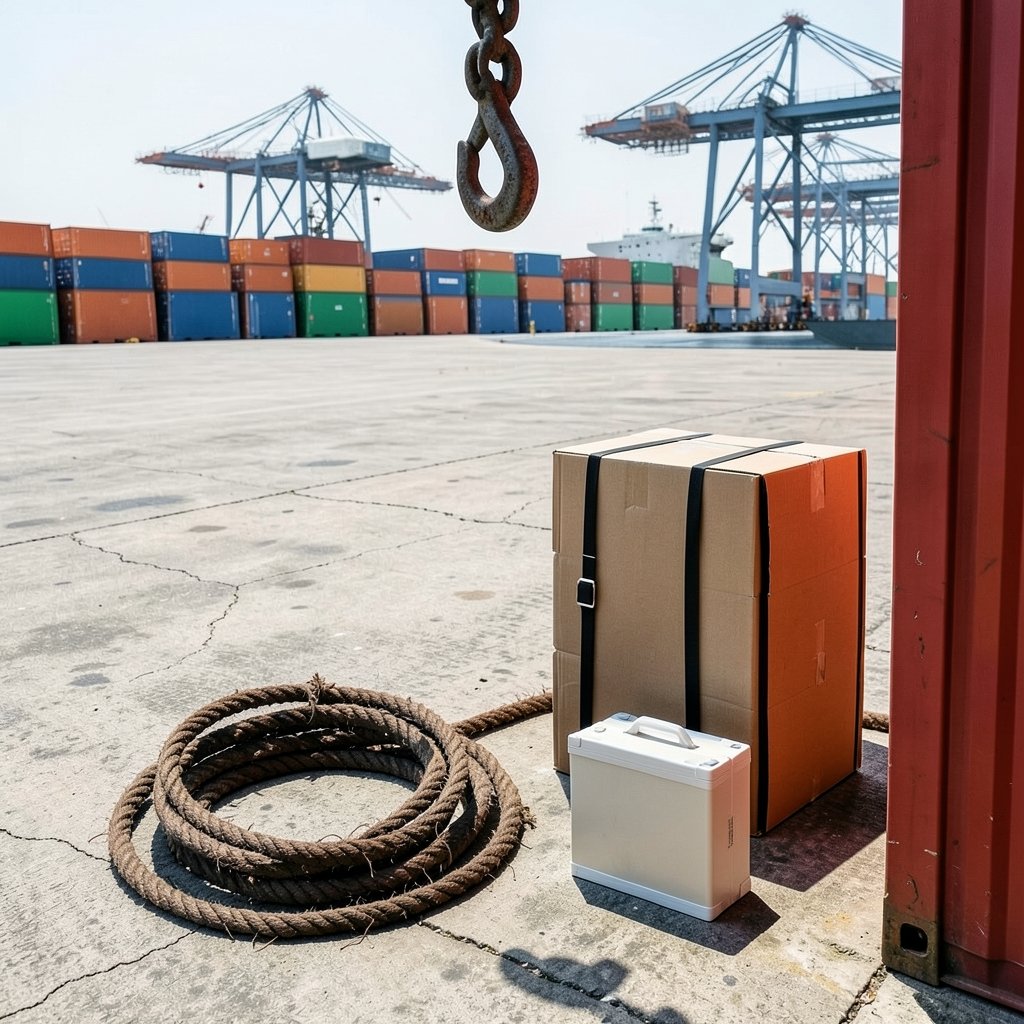
What do a container of sneakers, a racehorse, and a crate of lithium batteries have in common? All three can be shipped as cargo. That single phrase covers a surprising amount of ground, from the dry legal definition of freight to one of the darkest chapters in maritime history. It also shapes who pays when things go wrong at sea. Understanding what “shipped as cargo” actually means matters whether you are booking freight, writing a contract, or just trying to read a bill of lading without glazing over.
What Does “Shipped as Cargo” Actually Mean?
Cargo means goods carried on a vessel or vehicle as freight rather than as passengers or crew. Once a shipment becomes cargo, a specific set of legal rules applies. The carrier takes responsibility for the goods under a contract of carriage, and liability is capped, defined, and fought over.
The international framework most freight moves under is the Hague–Visby Rules. The original Hague Rules date to 1924, and the Visby Protocol amended them in 1968. Together they set out how much a carrier owes when cargo is lost or damaged, and what defenses the carrier can raise. This is not trivia. It is the difference between a shipping line paying a full claim and paying a fraction of it.
In practice, cargo status is documented. A bill of lading acts as the receipt, the contract, and often the document of title. If your goods are listed there as freight, they are cargo. If they are not listed at all, you have a problem.
The Legal Line Between Cargo, Passengers, and Crew

The distinction sounds academic until you are standing on a dock arguing about it. Cargo is freight. Passengers are people traveling under a passenger contract. Crew are the people running the ship. Each category carries different rights, different liability limits, and different insurance.
The awkward cases sit in between. Stowaways and people smuggled aboard are treated as neither passengers nor cargo under most national laws, which leaves them in a legal gap. The International Maritime Organization’s FAL Convention, adopted in 1965, addresses how stowaways should be handled, but the treatment is administrative rather than protective in the way passenger law is.
That gap is not new. It is the same logic that once let human beings be classified as freight, which is where the phrase “shipped as cargo” carries its heaviest historical weight.
When People Were Shipped as Cargo
The transatlantic slave trade is the most consequential historical case of people being shipped as cargo. Enslaved Africans were carried as freight under bills of lading, recorded in ships’ manifests alongside other goods. The British Parliament abolished the trade with the Slave Trade Act 1807, and the United States followed with an act effective January 1, 1808.
The Zong massacre of 1781 is the case that made the logic impossible to ignore. Enslaved people were thrown overboard from the slave ship Zong so the owners could claim insurance on their “cargo.” The court case that followed in 1783 became a landmark in British abolitionism. The insurers disputed the claim, and the dispute exposed the horror of a system that priced human beings as freight.
That history is why the phrase deserves care. Used casually about a pallet of electronics, it is harmless industry shorthand. Used about people, it names a crime.
Live Animals: Cargo With Special Rules
Here is a wrinkle many shippers learn the hard way. Under international carriage rules, live animals are generally excluded from the carrier’s ordinary liability for loss or delay, subject to conditions. In plain terms, animals travel as freight, but the carrier’s exposure is narrower than it is for a crate of furniture.
That makes animal transport a higher-risk category for the shipper. Insurance, veterinary documentation, ventilation, feeding, and water arrangements all fall more heavily on the party sending the animal. Anyone moving livestock, racehorses, or exotic animals should assume the carrier’s standard liability does not fully cover them.
The same principle extends to dangerous goods. The International Maritime Dangerous Goods (IMDG) Code, first adopted in 1965 and mandatory under SOLAS, classifies and regulates hazardous cargo. Air freight has its own regime through the IATA Dangerous Goods Regulations and ICAO Technical Instructions, with carrier liability set by the Warsaw Convention of 1929 and the Montreal Convention of 1999. If your cargo is hazardous, the paperwork burden multiplies before anything moves.
How Containerization Standardized Cargo
For most of history, cargo was breakbulk: sacks, barrels, crates, and coils, loaded piece by piece. That changed in April 1956, when the Ideal X sailed from Newark to Houston carrying the first containerized load. Standardized containers turned cargo into a unit that cranes, trucks, and ships could handle the same way everywhere.
The ISO 668 standard fixes container dimensions, which is why a forty-foot box built in one country fits a chassis in another. The exact first publication date of ISO 668 is best confirmed against the current standard text rather than repeated from memory, but the effect is not in doubt. Standardization is what made global supply chains cheap enough to be ordinary.
For teams building the software that tracks all this, the same principle applies: standardize the unit, and everything downstream gets simpler. That is the thinking behind treating infrastructure as versioned, reviewable code, as described in this guide to GitOps practice where teams ship infrastructure with Git as the source. Cargo and configuration both benefit from a single source of truth.
Cargo in the Cloud: A Different Kind of Freight
The word has jumped industries. In software, “shipped” means released, and “cargo” sometimes shows up in build pipelines and deployment tooling. The metaphor holds because the underlying problem is the same: move a defined unit from one place to another without losing or corrupting it.
Teams that run Kubernetes at scale often describe their deployments as freight moving through a pipeline. The discipline required is familiar to any freight forwarder. You need a manifest, a destination, a record of what changed, and a way to roll back. A practical walkthrough of that workflow appears in this GitOps tutorial on shipping Kubernetes changes with Git as the source of truth.
Choosing the tooling matters less than the workflow. Teams comparing deployment controllers often find the real differences are in how changes are promoted and audited, not in the feature list, as this breakdown of Argo CD versus Flux workflow differences explains. The same is true of cloud migration: the shipping steps that actually work are the ones with a clear sequence and an owner, which is the focus of these cloud refactoring implementation steps that actually ship.
Practical Tips From the Loading Dock
Experience in freight and in platform engineering converges on a few habits that separate smooth shipments from expensive lessons.
Document before you move. A bill of lading with vague descriptions is a claim waiting to be denied. Describe the goods, the count, the condition, and any known defects at the point of receipt. Photographs with timestamps cost nothing and settle arguments later.
Match the regime to the cargo. General goods, live animals, and dangerous goods each sit under different liability rules. Assuming the standard carrier liability applies to a horse or a battery shipment is one of the most common and costly mistakes.
Read the liability cap before you need it. Hague–Visby limits are calculated per package or per kilogram, and the lower figure often applies. Shippers who want full value coverage need to declare it and pay for it, not discover the cap after a loss.
Never treat people as freight. It sounds obvious, and it should be. But the historical record shows how easily paperwork can be used to strip people of legal status. Any process that classifies human beings as cargo is a process that needs to be dismantled, not optimized.
Standardize the unit, then standardize the handoff. The container worked because the box and the crane agreed on dimensions. Software deployments work the same way: a consistent artifact and a consistent promotion path beat heroics every time. Teams scaling hybrid environments run into this constantly, which is why these hybrid cloud implementation steps that actually ship emphasize repeatable handoffs over one-off migrations.
Cargo, APIs, and the Paperwork Problem
Freight is mostly information. A ship carries boxes, but the transaction is documents: manifests, customs declarations, certificates of origin, insurance slips. The industry has spent decades trying to digitize that flow, with mixed results.
Modern logistics platforms expose cargo data through interfaces so that shippers, carriers, and customs systems can talk without rekeying. Getting that right is its own discipline, covered in this cloud API management implementation guide for teams that ship. When the data model is sound, a container’s status updates once and propagates everywhere. When it is not, you get the familiar sight of a driver calling three offices to find out where a pallet is.
What Actually Goes Wrong
Most cargo losses are boring. Damage in handling, delays at port, missing paperwork, temperature excursions, and misdeclared contents account for far more claims than dramatic incidents. The dramatic cases get the headlines, but the operational ones cost the money.
The fix is usually procedural rather than technological. Clear descriptions, honest declarations, appropriate packaging, and a named person accountable for each shipment prevent most disputes. The same holds in software: most failed deployments trace back to an undocumented change or an unclear owner, not to a flaw in the tool.
Conclusion
“Shipped as cargo” is a phrase with two lives. In trade, it is a precise legal status that determines liability, insurance, and paperwork for everything from sneakers to lithium batteries. In history, it is a reminder of how easily a classification can be used to dehumanize. Both meanings reward attention. Whether you are booking freight, writing a bill of lading, or deploying a release, the lesson is the same: define the unit, document the handoff, and know exactly which rules apply before anything leaves the dock.
What is the legal definition of cargo?
Cargo is goods carried on a vessel or vehicle as freight rather than as passengers or crew. Under the Hague–Visby Rules, which date to 1924 and were amended by the 1968 Visby Protocol, the carrier’s liability for cargo loss or damage is defined and capped. The bill of lading is the document that establishes the cargo status of a shipment.
Why are live animals treated differently from other cargo?
Under international carriage rules, live animals are generally excluded from the carrier’s ordinary liability for loss or delay, subject to conditions. Animals travel as freight, but the risks they carry are unusual, so the shipper bears more of the burden through insurance, documentation, and care arrangements.
What was the Zong massacre and why does it matter?
In 1781, enslaved people were thrown overboard from the slave ship Zong so the owners could claim insurance on their “cargo.” The court case that followed in 1783 became a landmark in British abolitionism. It matters because it exposed the logic of treating human beings as freight, a system the British Parliament abolished in 1807.
When did container shipping begin?
The first container ship, the Ideal X, sailed from Newark to Houston in April 1956. The ISO 668 standard later fixed container dimensions so that boxes built anywhere would fit the same handling equipment, which is what made modern global supply chains practical.
How are dangerous goods regulated as cargo?
At sea, the International Maritime Dangerous Goods (IMDG) Code, first adopted in 1965 and mandatory under SOLAS, classifies and regulates hazardous cargo. In the air, the IATA Dangerous Goods Regulations and ICAO Technical Instructions apply, with carrier liability set by the Warsaw Convention of 1929 and the Montreal Convention of 1999.
Are stowaways considered cargo or passengers?
Neither, under most national laws. Stowaways and people smuggled aboard fall into a legal gap between passenger and cargo status. The International Maritime Organization’s FAL Convention, adopted in 1965, addresses how stowaways should be handled, but the treatment is administrative rather than protective in the way passenger law is.



