
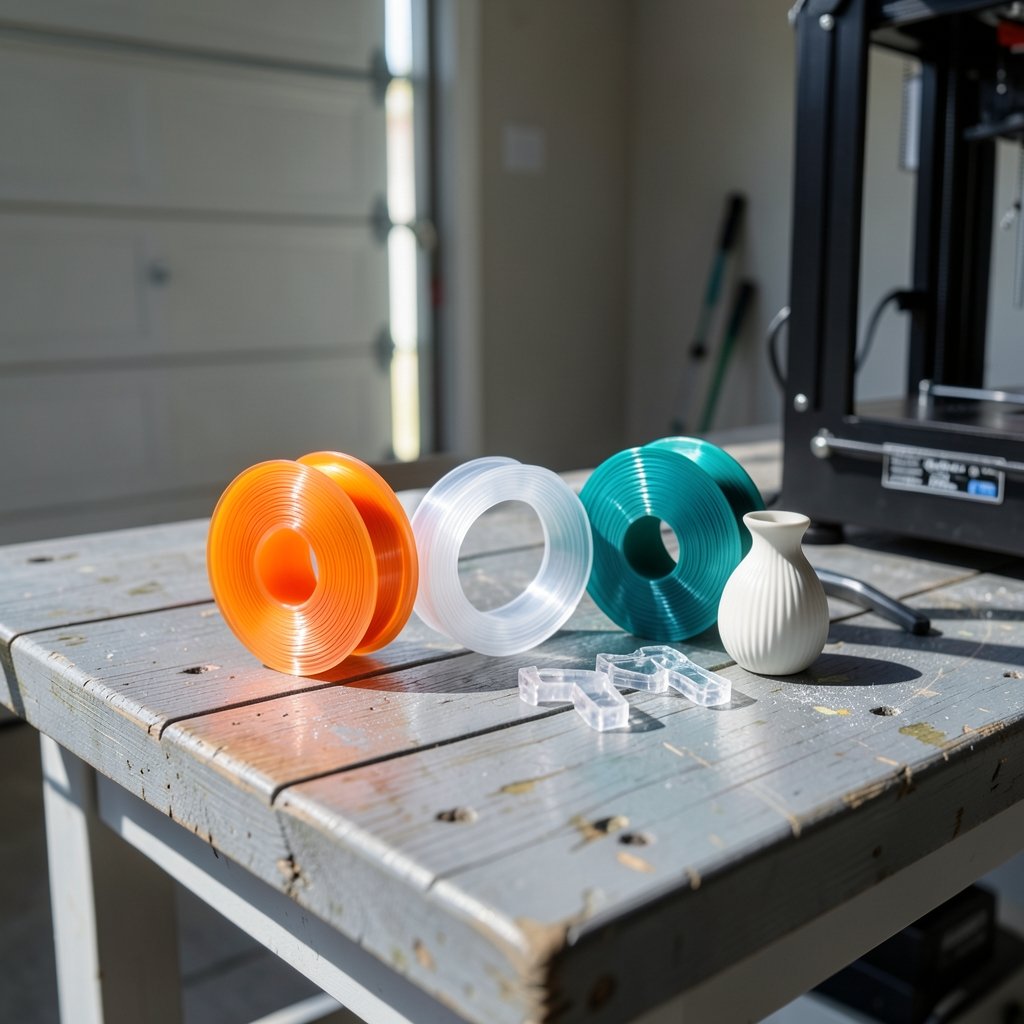
What if the filament that frustrates you the most on Monday is the same one that saves your project on Friday? That is often how it goes with polyethylene terephthalate glycol, better known as PETG. Search forums for “PETG problems” and you will find pages of complaints about stringing, blobs, and parts fused to the build plate. Search for “strongest easy filament” and the same material keeps showing up. Both things are true, and understanding why turns PETG from a headache into one of the most useful spools on your shelf.
What Is PETG and Where Does It Come From?
PETG is a copolyester. It starts with the same chemistry as the PET used in drink bottles, then adds a monomer called cyclohexanedimethanol, or CHDM. That addition disrupts the polymer’s ability to crystallize. The result is a material that melts at a lower temperature, prints clearer, and resists shattering far better than plain PET.
In practical terms, that means PETG sits between PLA and ABS on almost every axis. It is tougher than PLA but softer and less stiff. It handles heat and sunlight better than PLA but not as well as ABS or ASA. It prints at moderate temperatures without an enclosure, which is exactly why so many people reach for it as their second-ever filament.
The glass transition temperature of PETG is commonly reported around 80 °C, though grades vary between roughly 75 and 85 °C. That number matters more than any marketing claim. It tells you a PETG part will hold up in a hot car dashboard on a mild day but may sag on a blazing one.
How PETG Compares to PLA and ABS
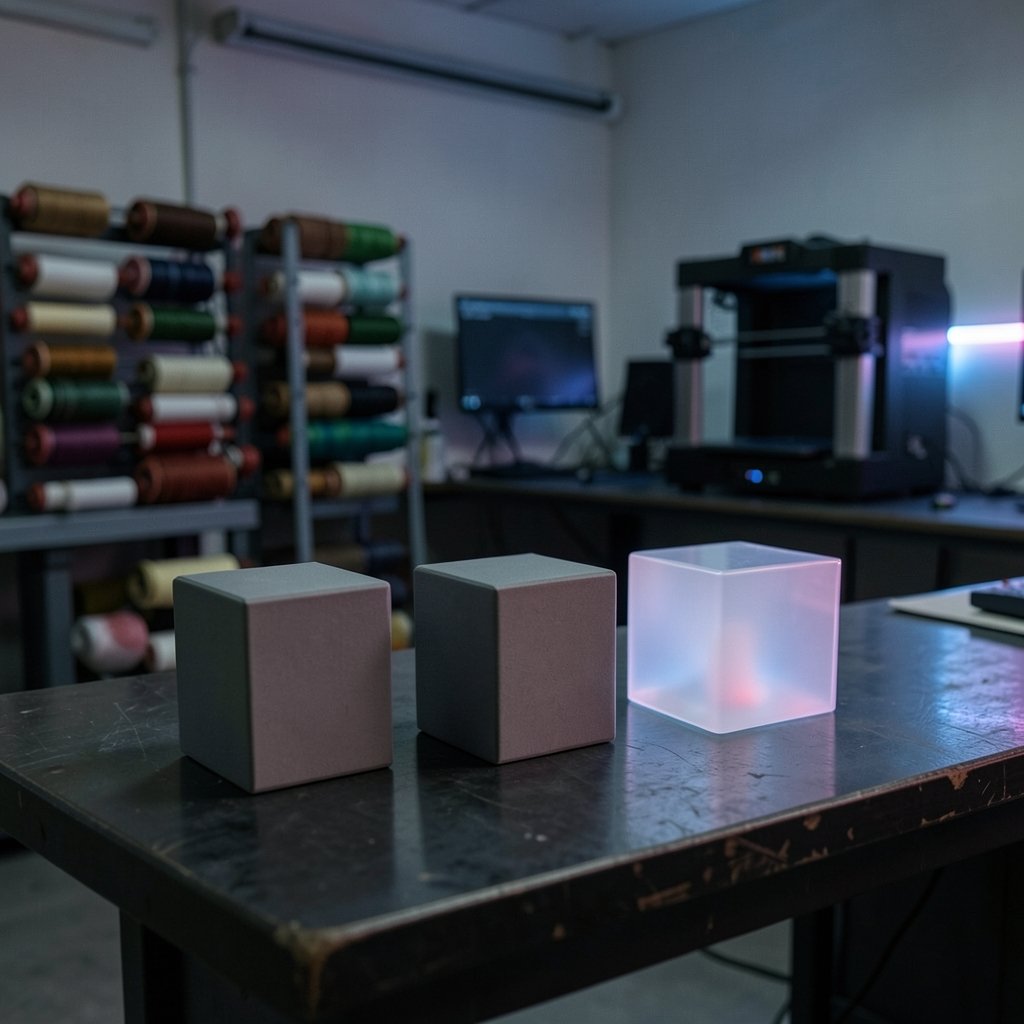
Numbers from different manufacturers and test methods do not line up neatly, so treat any comparison as a general guide rather than a spec sheet. Still, the broad relationships hold across brands.
| Property | PLA | PETG | ABS |
|---|---|---|---|
| Print nozzle temp | 190–220 °C | 220–250 °C | 230–260 °C |
| Bed temp | 50–60 °C | 70–80 °C | 90–110 °C |
| Enclosure needed | No | No | Usually yes |
| Impact resistance | Low, brittle | Good | Good |
| Stiffness | High | Moderate | Moderate |
| Heat resistance | Low | Moderate | Higher |
| Warping tendency | Low | Low to moderate | High |
| Fumes while printing | Minimal | Low | Noticeable |
If you want a deeper comparison of how these materials behave outdoors, the trade-offs between ASA and ABS filament weather resistance and print settings are worth reading alongside this one. The same logic applies to PETG: it survives sun and rain better than PLA, but it is not a true outdoor engineering plastic over years of exposure.
Print Settings That Actually Work
The settings on the spool are a starting point, not a destination. A few adjustments make the difference between a clean part and a stringy mess.
Temperature
Start at 240 °C on the nozzle and work down in 5 °C steps if you see stringing or blobs. Many people run PETG too hot because they are used to pushing ABS. Running cooler, around 230 °C, often cleans up the surface finish at a small cost in layer strength.
For the bed, 75–80 °C is a sensible range. Below 70 °C, first-layer adhesion gets unreliable on smooth surfaces.
Speed and Cooling
PETG likes to be printed a little slower than PLA, especially on the first layer. Part cooling should be modest. Blasting a PETG part with a strong fan at full power weakens layer bonding, which is the opposite of what most people want from this material.
Retraction
This is where most frustration lives. PETG is a stringy material by nature. Short, slightly slower retractions usually beat long, fast ones. If you have tuned retraction for PLA and simply switched spools, expect strings.
Bed Adhesion and the Removal Problem
PETG bonds to some build surfaces almost too well. On bare glass or certain PEI sheets, a large flat part can bond so firmly that removing it takes chunks of the sheet with it. Two habits solve this:
- Raise the nozzle slightly (a little more first-layer gap than you would use for PLA).
- Use a release agent such as glue stick on surfaces prone to over-adhesion.
Let the plate cool completely before removing the part. Warm PETG is much more likely to tear or take surface material with it.
Moisture: The Hidden Cause of Bad PETG Prints
PETG absorbs water from the air. Wet filament produces popping sounds at the nozzle, cloudy or bubbly surfaces, weak layer lines, and inconsistent extrusion. If your settings are dialed in and the prints still look bad, moisture is the first suspect.
The symptoms are easy to spot once you know them. A guide to 3D printer filament moisture symptoms and how to spot wet filament fast walks through the visual and audible clues. Drying PETG before a long print is cheap insurance, and storing it in a sealed container with desiccant prevents the problem from returning. If you are deciding between active drying and passive storage, this breakdown of filament dryer versus dry box for drying and storing filament covers the practical differences.
A common mistake is drying filament once and then leaving the spool on the printer for weeks. In a humid room, it reabsorbs moisture. Treat drying as maintenance, not a one-time fix.
Where PETG Genuinely Shines
PETG earns its place in a few clear situations.
Functional household parts. Brackets, hooks, clips, jigs, and tool holders benefit from PETG’s toughness. Where PLA snaps under a sudden load, PETG tends to bend and recover.
Parts exposed to water or mild chemicals. PETG resists many dilute acids, alcohols, and oils, which makes it a reasonable choice for parts that get splashed or wiped down. It is attacked by strong bases and some solvents, so do not assume universal chemical resistance.
Outdoor use with realistic expectations. For garden stakes, planter clips, or mailbox brackets, PETG outperforms PLA in sun and heat. If you are weighing materials for a sun-exposed project, this comparison of PLA versus PETG outdoor use and which filament survives the sun lays out the realistic lifespan of each.
Clear or translucent prints. PETG prints with a pleasing translucency that PLA struggles to match, which suits light diffusers and decorative pieces.
Where PETG Falls Short
Honesty about limitations saves wasted spools.
It is not stiff. Long unsupported spans and structural parts that need rigidity often do better in PLA or a filled filament. PETG flexes, and that flex is not always welcome.
It strings. Even well-tuned PETG strings a little. If your parts need to look perfect straight off the bed, expect to spend time on retraction tuning or post-processing.
It is not high-heat. At around 80 °C glass transition, PETG will soften in a hot car or near a heater. Do not use it for engine bay parts or anything near a heat source.
Food contact is contested. FDM parts have porous layer lines that can harbor bacteria, and filament additives vary by brand. Regulators oversee food-contact materials rather than finished printed objects, so a “food safe” label on a spool does not guarantee a safe printed bowl. For anything that touches food regularly, treat PETG as a craft material, not a kitchen one.
Recycling is complicated. PETG carries resin identification code #1, the same as PET, but many municipal programs do not accept 3D printing waste or colored filament. Do not assume a spool goes in the blue bin.
Practical Tips From the Workshop Bench
A few habits separate people who like PETG from people who curse it.
- Dry the spool before the first print. Even new filament can arrive wet.
- Print a temperature tower for every new brand. The same color from two manufacturers can want settings 15 °C apart.
- Keep a glue stick near the printer. It is the cheapest fix for over-adhesion.
- Slow the first layer down. PETG rewards patience on layer one more than on any other layer.
- Store spools sealed with desiccant. A dry box costs less than a wasted spool.
- Do not chase perfection on stringing. A quick pass with a heat gun or a sharp blade handles most wisps.
One underrated tip: if your printer runs a remote monitoring setup, watching a long PETG print through a dashboard can catch a failing first layer before it becomes a spaghetti pile. Systems that use MQTT retained messages to deliver data to late subscribers are handy here, because the dashboard shows the current state the moment you open it rather than waiting for the next update. It is a small thing that saves big prints.
Buying PETG Without Wasting Money
Most PETG on the market is decent. The differences show up in consistency, color accuracy, and moisture control at the factory.
Look for spools that ship vacuum-sealed with a desiccant pack. Check reviews for complaints about diameter variance, since inconsistent filament diameter causes inconsistent extrusion. Avoid bargain spools with no temperature guidance printed on the label; that usually signals minimal quality control.
For a first spool, a mid-priced brand in a natural or translucent color is a sensible choice. Translucent PETG hides layer lines and shows off the material’s best quality. Save the tricky matte and metallic blends for later.
Conclusion
PETG is not the best filament at anything in particular, and that is precisely why it earns a permanent spot on the shelf. It is tough enough for real parts, forgiving enough to print without an enclosure, and heat-resistant enough to survive a summer afternoon that would turn a PLA bracket into a Salvador Dalí sculpture. The catch is that it demands a little respect: dry filament, a tuned retraction setting, and a release agent on stubborn build surfaces.
Treat those three things as non-negotiable and PETG becomes the reliable middle ground between PLA’s brittleness and ABS’s fussiness. Treat them as optional and you will join the forum threads complaining about strings and welded parts. The material is not difficult. It just asks you to pay attention.
Frequently Asked Questions
Is PETG stronger than PLA?
PETG is tougher and more impact-resistant than PLA, meaning it bends and absorbs shocks rather than snapping. PLA is stiffer, so it resists bending better under steady loads. For parts that get dropped or knocked, PETG usually wins. For rigid structures that should not flex, PLA often performs better.
What temperature should I print PETG at?
Most guidance puts the nozzle between 220 and 250 °C and the bed between 70 and 80 °C. Start near 240 °C and adjust downward if you see stringing or blobbing. Every brand and color behaves slightly differently, so a temperature tower test is worth the twenty minutes.
Why is my PETG print stringing so much?
Stringing comes from a combination of too-high nozzle temperature, insufficient or poorly tuned retraction, and wet filament. Dry the spool first, then lower the temperature in small steps and shorten the retraction distance. Some light stringing is normal with PETG and cleans up easily with a heat gun.
Can PETG be used outdoors?
Yes, with realistic expectations. PETG handles sunlight and moisture better than PLA and will not degrade as quickly, but it is not a long-term outdoor engineering plastic. It can soften in extreme heat and slowly weather over years. For permanent outdoor parts in harsh climates, ASA or ABS is usually the better choice.
Is PETG food safe?
This is contested. The raw filament may be made from food-contact-approved material, but FDM printing creates porous layer lines that can trap bacteria, and additives vary by brand. Regulators oversee food-contact materials rather than finished printed objects. For regular food contact, PETG is best treated as a craft material rather than a kitchen-safe one.
Does PETG need to be dried before printing?
Often, yes. PETG absorbs moisture from the air, and wet filament causes popping sounds, bubbly surfaces, and weak layer bonds. Drying before a long or important print is cheap insurance. Store spools in a sealed container with desiccant between uses so they do not reabsorb moisture.



