
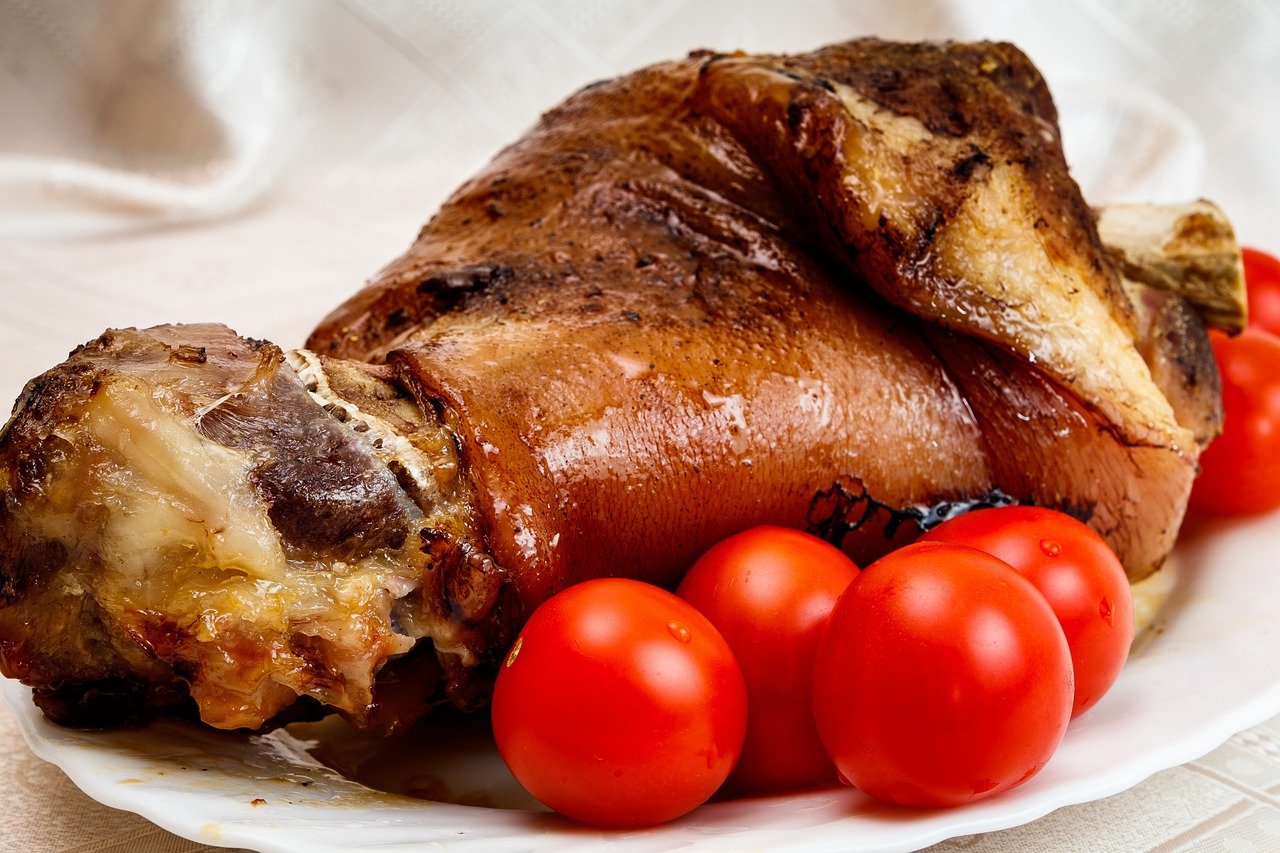
What do you do with a cut of meat that is tough, bony, and stubbornly cheap when every other cut at the counter costs three times as much? If you are looking at a pork shank, the answer is simple: you cook it slowly, and you let time do the work that a hot pan cannot. The shank is one of the most rewarding cuts in the pig, but only if you understand what it is and stop treating it like a chop.
What Exactly Is a Pork Shank?
The pork shank is the lower leg of the pig. On the front leg, it sits below the elbow. On the hind leg, it sits below the stifle joint. Either way, it is a hard-working muscle group that carried the animal’s weight, which explains almost everything about how it cooks.
That workload has two consequences. First, the meat is dense and lean in the muscle fibers themselves. Second, it is packed with connective tissue, the collagen that surrounds and binds muscle. The cut also carries a high bone-to-meat ratio, so a shank that looks enormous at the butcher counter yields a modest amount of actual meat.
This is the single most important thing to understand about the cut. A pork shank is not a steak with a bone in it. It is a braising cut, and it rewards patience rather than speed.
Shank, Hock, or Knuckle? Sorting Out the Names
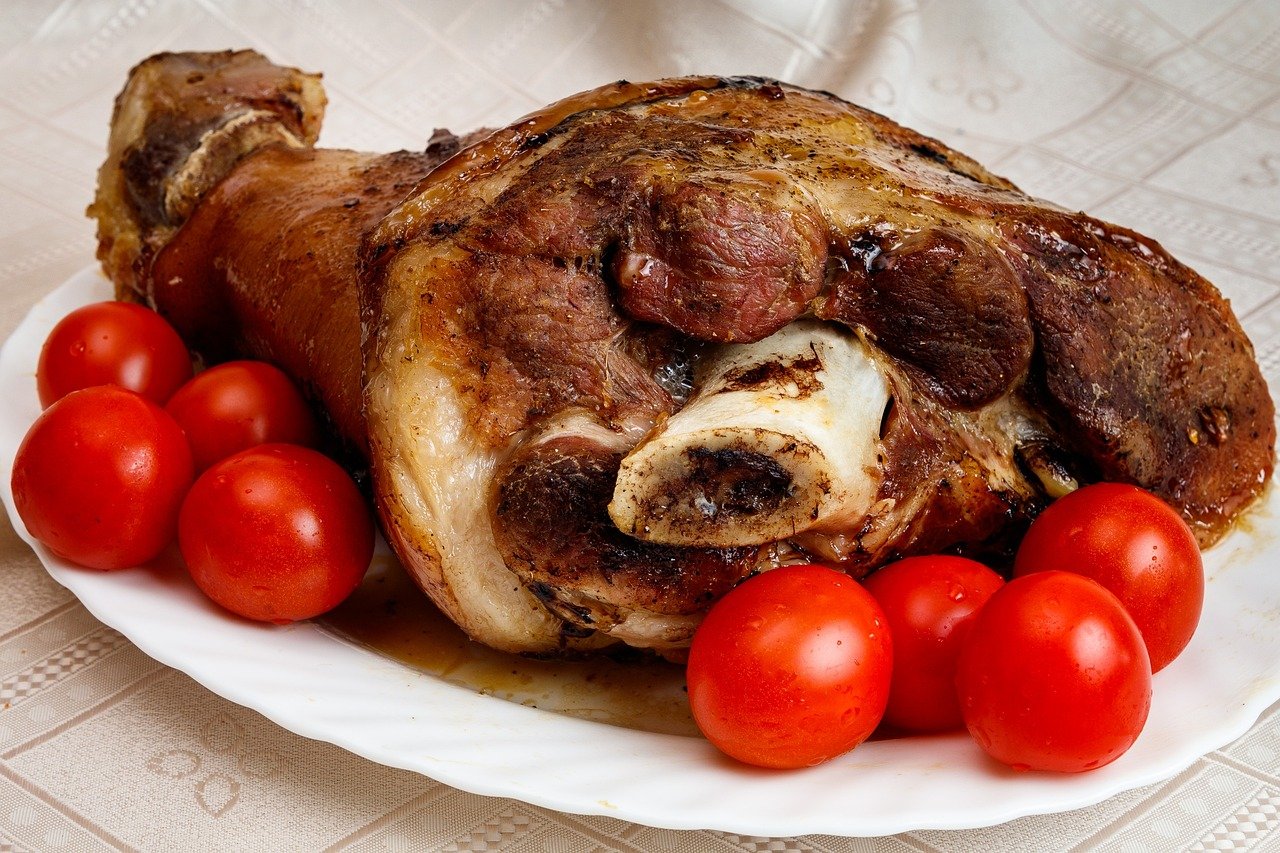
Here is where many shoppers get lost. Depending on who is behind the counter and which cuisine the recipe comes from, the same anatomical region gets three different names.
| Term | Typical meaning | Common use |
|---|---|---|
| Pork shank | Lower leg below elbow or stifle | Braising, stewing, slow roasting |
| Ham hock | Lower leg region, often cured or smoked | Flavoring beans, greens, soups |
| Pork knuckle | The joint area, often skin-on | Roasted whole, as in German cooking |
The overlap is real and it is not consistent. A butcher may hand you a fresh hock when you ask for a shank. A recipe translated from German may call the same piece a knuckle. A recipe translated from Chinese may simply say “pork leg.” None of these are wrong, but they are not interchangeable in every context, especially when curing or smoking is involved.
The practical takeaway is to describe what you want rather than relying on the label. Ask for the lower leg with the skin on or off, and specify fresh rather than cured. That description travels better than any single word.
Recipes also rarely specify whether the shank comes from the front or hind leg. In practice, the difference is minor for braising purposes, but hind shanks tend to be a little meatier and front shanks a little more gelatinous. If a recipe does not say, either works.
Why Slow Cooking Changes Everything
The magic of a braised pork shank is a chemical transformation, not a secret technique. Collagen, the tough protein in connective tissue, breaks down into gelatin when held at a gentle simmer for a long time in a moist environment. Gelatin is soft, rich, and slightly sticky, and it is what gives a well-braised shank its luxurious texture.
You can see the proof in the braising liquid. Chill the leftovers and the sauce sets into a wobbling jelly. That is dissolved gelatin, and it is a sign the cook did their job.
Dry, high heat does the opposite. Roast a shank fast and the collagen tightens before it can convert, leaving you with meat that is simultaneously dry and chewy. This is the most common mistake home cooks make with the cut: treating it like a pork loin.
How to Buy a Good Pork Shank
A few practical checks make the buying decision easier:
- Look at the skin. If you want crackling, choose skin-on. If you want clean braised meat, ask the butcher to remove it.
- Check the meat-to-bone ratio. Pick up two shanks and compare. The meatier one is usually the better value.
- Ask about freshness versus curing. Fresh shanks are for braising. Smoked or cured hocks are for flavoring pots of beans and greens, and they behave very differently.
- Buy more than you think you need. Because of the bone, plan on roughly one shank per person for a main course, or slightly less if the shanks are large.
Shanks are often among the cheaper cuts at the counter, though demand has grown as braising and whole-animal cooking have become more popular. That is good news for anyone willing to cook them properly.
Braising a Pork Shank: A Method That Works
Braising is forgiving, but the sequence matters. Here is a reliable approach.
- Dry and season the shank. Pat it thoroughly dry and salt it generously. Moisture on the surface prevents browning.
- Sear it hard. In a heavy pot with a little oil, brown the shank on all sides over medium-high heat. This builds flavor in the final sauce.
- Soften aromatics. Remove the shank, then cook onion, carrot, and celery in the same pot until they take on color.
- Add liquid and return the meat. Pour in stock, wine, or a mix, plus aromatics like bay, thyme, or star anise depending on the direction you are going. The liquid should come about halfway up the shank, not submerge it.
- Cover and simmer gently. Keep the pot at a bare simmer, not a rolling boil, for two to three hours. A rolling boil can shred the meat before the collagen has fully converted.
- Test for doneness. The meat should pull away from the bone easily with a fork. If it fights back, give it more time.
- Reduce the sauce. Skim the fat, strain the braising liquid, and reduce it until it coats a spoon. The gelatin will give it body.
A common mistake is undercooking out of fear of overcooking. Shanks are far more forgiving of extra time than of too little. If the meat is still tight, keep going.
Roasting and the Crackling Question
Roasted pork knuckle, known in German cooking as Schweinshaxe, is a traditional Bavarian dish commonly served with dumplings and sauerkraut. The appeal is the contrast between crisp, blistered skin and soft, yielding meat underneath.
Getting both textures at once takes a two-stage approach. Braise or steam the shank first until the meat is tender, then finish it in a hot oven to crisp the skin. Trying to roast it from raw at high heat gives you crisp skin and tough meat. Some cooks score the skin and rub it with salt before the final blast of heat to encourage bubbling.
If you are working with a skinless shank, roasting still works, but you lose the crackling payoff. In that case, braising is usually the better use of the cut.
Pork Shank Around the World
The cut shows up in kitchens on nearly every continent, usually in the same role: a cheap, flavorful piece stretched into a filling meal.
In Chinese cooking, braised pork knuckle appears in Cantonese and other regional cuisines, often cooked with soy sauce, star anise, and rock sugar. Red-cooked versions are associated with Shanghainese cooking, where the sweet-savory glaze clings to the skin. The dish is typically served with rice and greens to balance the richness.
In Northern and Central Europe, the roasted knuckle tradition runs from Germany into Austria and the Czech lands, where it is served with mustard, bread, and beer. In the American South, smoked hocks are less a main dish and more a seasoning agent, simmered into pots of beans, collards, and peas until the broth turns silky.
The common thread is that every tradition treats the shank as a flavor source rather than a lean protein. That framing is useful no matter which direction you cook.
Making the Most of the Leftovers
Because shanks are bony, they generate a lot of leftover liquid and a fair amount of picked meat. Both are worth keeping.
The braising liquid, once defatted, is essentially a light stock enriched with gelatin. It freezes well and makes an excellent base for soup or a pot of beans. The picked meat can go into tacos, fried rice, or a ragu. And the bone itself can go back into a pot for stock.
This is one of the quiet advantages of the cut. A single shank can produce a main course, a second meal from the leftovers, and a batch of stock. Few cuts at the counter offer that kind of return.
Food Safety Without the Guesswork
Pork safety guidance has changed over the years, and some older cookbooks still reflect the old rules. Fresh pork should be cooked to a safe minimum internal temperature of 145 °F (63 °C) with a three-minute rest, a standard that was lowered from 160 °F in 2011. A digital instant-read thermometer is the only reliable way to check, especially near the bone, where readings can be misleading.
That said, braised shanks usually sail well past 145 °F during their long cook, and that is fine. The temperature matters most for lean pork cuts that dry out quickly. For shanks, doneness is better judged by texture: the meat should yield easily to a fork and pull cleanly from the bone.
Nutrition in Brief
Pork shank meat is a source of protein, thiamin (vitamin B1), and zinc. Fat content varies considerably with how much the shank is trimmed and whether the skin is left on. A skin-on shank braised in rich stock will be a far heavier dish than a trimmed, skinless one. If you are watching fat intake, ask the butcher to trim and remove the skin, and skim the braising liquid before reducing it.
Common Mistakes and How to Avoid Them
Most disappointing shank dinners trace back to a handful of avoidable errors.
The first is cooking it too fast. High heat tightens collagen instead of converting it, and no amount of sauce fixes chewy meat. The second is skipping the sear, which costs you the deep flavor that makes the dish worth the wait. The third is under-seasoning the liquid, since the meat draws flavor from the braise rather than carrying it on its own. The fourth is discarding the braising liquid, which is arguably the best part of the whole process.
Get those four things right and the cut becomes almost foolproof.
Conclusion
The pork shank is a cut that asks for time and gives back flavor. It is bony, inexpensive, and easy to get wrong if you treat it like a quick-cooking chop. But braise it gently, let the collagen turn to gelatin, and you get tender meat, a glossy sauce, and a second meal from the leftovers. Whether you roast it skin-on in the Bavarian style or braise it with soy and star anise, the method is the same: low heat, moisture, and patience. Once you have cooked one properly, the cheapest cut at the counter starts to look like the smartest one. For more kitchen guidance and cut-by-cut advice, visit
What is the difference between a pork shank and a ham hock?
They refer to the same general region of the lower leg, but the terms are used inconsistently. A shank usually means the fresh lower leg sold for braising, while a hock is often cured or smoked and used to flavor beans, greens, and soups. Ask your butcher to clarify whether the piece is fresh or cured before you buy.
Is pork shank a tough cut?
Yes, and that is the point. The shank is a heavily exercised muscle full of collagen, which makes it tough when cooked quickly. Long, moist cooking converts that collagen into gelatin, and the meat becomes tender and rich. Treat it as a braising cut and the toughness disappears.
How long should you cook a pork shank?
Plan on roughly two to three hours at a gentle simmer for a braised shank, depending on its size. The reliable test is texture rather than the clock: the meat should pull away from the bone easily with a fork. If it still resists, keep cooking.
Can you roast a pork shank instead of braising it?
You can, but the best results come from a two-stage method. Cook the shank until tender first, then finish it in a hot oven to crisp the skin. Roasting from raw at high heat gives you crisp skin and tough meat, which is the opposite of what you want.
Do you need to remove the skin before cooking?
It depends on the dish. Leave the skin on if you want crackling, as in a roasted knuckle. Remove it for clean braised meat or if you are watching fat intake. Either way, ask the butcher to do the trimming if you are unsure.
What can you do with leftover braising liquid?
Keep it. Once chilled, the liquid sets into a jelly because of the dissolved gelatin, which is a sign of a good braise. Skim off the fat, then use it as a base for soup, beans, or a sauce. It also freezes well for later use.



