
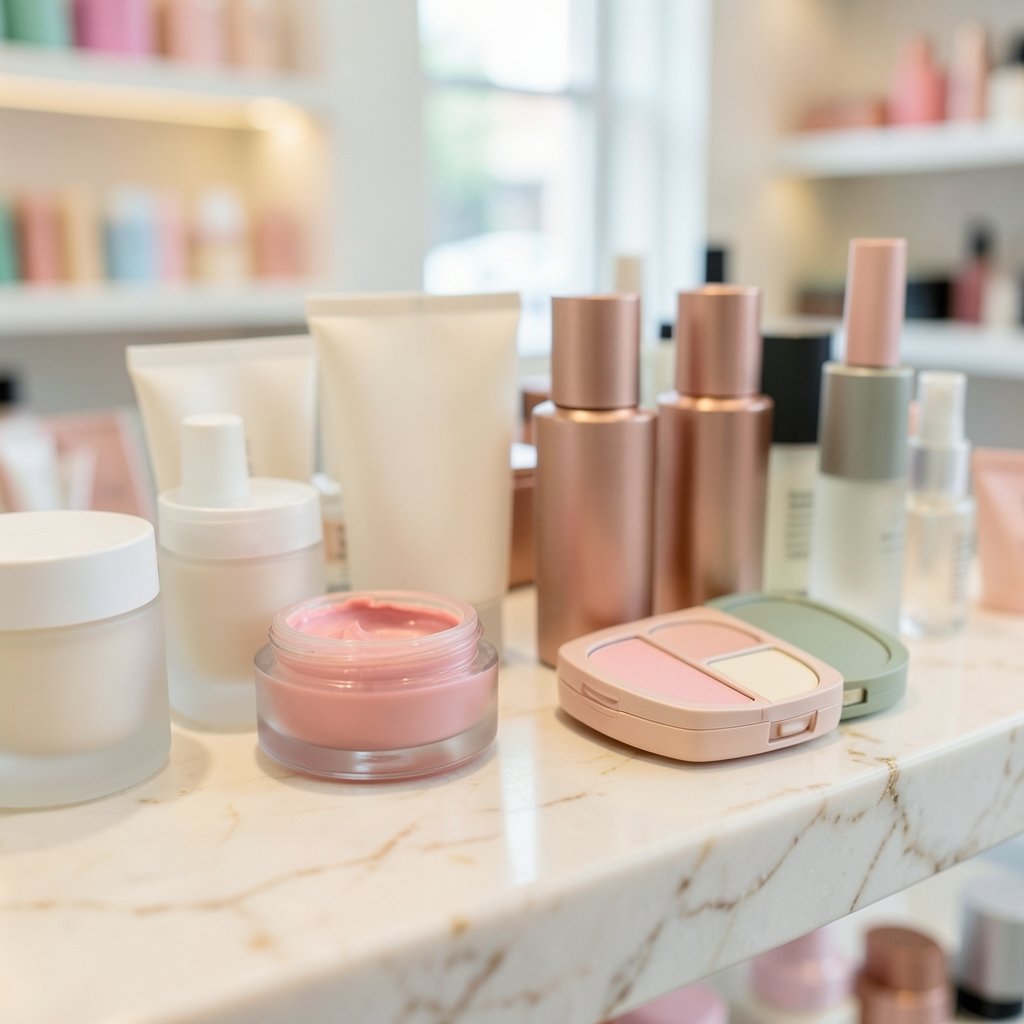
What comes to mind when someone says “idea cosmetics”? A Japanese drugstore brand? A clever marketing phrase? A product line built around a single gimmick? The phrase gets used in all three ways, and that ambiguity is exactly why so many people searching for it end up confused. This guide sorts out what the name most likely points to, why the term is so slippery, and how to evaluate any cosmetics label that leans on “idea” as its selling point.
Why “Idea Cosmetics” Is Hard to Pin Down
Most product names resolve cleanly. You type them in, and one official site appears. “Idea cosmetics” does not behave that way, and there are three reasons.
First, the term is genuinely used as a brand name in at least one market, where it appears in Japanese-language contexts as a drugstore-style cosmetics label. Second, it doubles as a generic phrase in beauty marketing, where “idea” signals novelty, clever packaging, or a problem-solving concept rather than a specific company. Third, the words are so common that search results mix brand pages, press releases, retail listings, and unrelated articles.
That collision matters for shoppers. If you cannot tell whether you are looking at a brand page or a marketing slogan, you cannot judge the product. The fix is to slow down and identify which of the three meanings you are actually dealing with before you read a single ingredient list.
The Three Things “Idea Cosmetics” Usually Means
Sorting the phrase into categories makes the research much faster. Most uses fall into one of these buckets.
| Meaning | What it looks like | How to confirm it |
|---|---|---|
| A brand name | A company name in Japanese or English, with an official product catalog and retailer listings | Look for a corporate site, an address, and a product lineup with consistent packaging |
| A marketing concept | Phrases like “the idea behind this formula” or “idea-driven beauty” | Check whether the phrase appears in quotes as a slogan rather than as a company name |
| A category description | “Idea cosmetics” used to mean clever, novelty, or problem-solving products | Look for the term in editorial roundups rather than in brand materials |
A quick test: if the phrase appears with a registered-sounding name and a product range, treat it as a brand. If it appears inside a sentence about a formula’s inspiration, treat it as marketing language. If it appears in a listicle, treat it as a loose category and expect the writer to define it.
When It Is a Brand Name
Brand names that read as ordinary words are common in cosmetics. The word “idea” carries useful connotations: intelligence, thoughtfulness, a solution to a problem. A brand using it is signaling that its products are smart rather than luxurious.
The practical consequence is that you should verify identity before buying. Look for a consistent company name, a stable product catalog, and packaging that matches across listings. If the only source is a marketplace seller with no company information, you are probably not looking at an established brand.
When It Is a Marketing Concept
Many cosmetics companies describe their products as “idea-driven.” This usually means the formula solves a specific annoyance: a cushion compact that does not cake, a cleanser that removes sunscreen in one step, a lip tint that survives a meal. The “idea” is the problem being solved, not the company making it.
This is not dishonest, but it is not a quality guarantee either. A clever concept can be executed badly. Judge the product on ingredients, testing, and reviews, not on how inventive the pitch sounds.
When It Is a Loose Category
Beauty editors sometimes use “idea cosmetics” to group novelty or problem-solving products. In this usage, the phrase has no fixed definition, and two writers will use it differently. Treat it as a signal to read the surrounding paragraph carefully rather than as a technical term.
How to Evaluate Any Cosmetics Brand You Cannot Fully Verify
If you cannot confirm a brand’s background, you can still evaluate its products. The method below works for any label, including one you have never heard of.
- Check the ingredient list for order and completeness. Ingredients are listed by weight until the one percent mark, so the first five entries tell you most of what the product actually is.
- Look for a full address and a named manufacturer. A legitimate cosmetics business can be traced to a company, not just a marketplace storefront.
- Search for the product name plus the word “review” in the language of the brand’s home market. Reviews in the original language are harder to fake at scale than translated ones.
- Compare the price against the category. A serum priced far below its peers usually has a reason, and that reason is often a lighter concentration of the active ingredient.
- Check for expiration dates and batch codes. These are basic signs of a manufacturer with real quality control.
- Test on a small area first. Patch testing is not glamorous, but it is the single most reliable way to avoid a reaction to an unfamiliar formula.
A common mistake is treating a polished website as proof of legitimacy. Design is cheap. Manufacturing records and ingredient transparency are not. Another mistake is assuming that a brand with a foreign name is automatically imported or higher quality; many brands are named in English for domestic marketing reasons.
What Actually Matters in the Formula
Whatever the brand is called, the formula does the work. A few principles hold across nearly every product category.
Concentration beats buzzwords. A product can list a fashionable ingredient and still contain very little of it. The position in the ingredient list is a rough guide, and a brand that publishes percentages is usually more confident in its formula.
Delivery matters as much as the ingredient. Vitamin C, for example, is unstable and degrades with light and air. Packaging choices like opaque pumps and airless bottles are not cosmetic flourishes; they protect the formula. A clever concept paired with poor packaging can underperform a boring product in a good bottle.
Fragrance and preservatives deserve attention. These are common causes of irritation. If a product’s selling point is a striking scent, that scent is also a potential trigger for sensitive skin.
Claims should be specific. “Brightening” is vague. “Reduces the appearance of dark spots in eight weeks” is testable. Specific claims are easier to check and usually reflect actual testing.
If you are building a routine around unfamiliar products, a sensible approach is to change one item at a time. That way, if something irritates your skin, you know which product caused it. This is the same logic that applies when you validate a startup business idea before you build anything: test the smallest version first, then commit.
The Retail and Packaging Side of “Idea” Brands
Cosmetics is a crowded market, and naming is part of the competition. A brand that calls itself an “idea” brand is making a promise about how it thinks, not just about what it sells. That promise shows up in three places you can inspect.
Packaging design. Compact, travel-friendly, or multi-use formats are the most common “idea” claims. They are easy to verify: does the product actually fit in a bag, does it leak, does the pump dispense the right amount?
Product range. Idea-driven brands usually launch with a small, focused range rather than a hundred SKUs. A tight lineup suggests the company spent its budget on formulation rather than on shelf space.
Pricing structure. Brands that compete on cleverness rather than luxury positioning often price in the middle of the market. Extremely low prices and “idea” branding together are a warning sign, because formulation and testing are the expensive parts.
The same pattern appears outside beauty. Budget-conscious buyers in other categories learn to separate a clever concept from a durable product, which is why guides on small kitchen remodeling ideas with budget-smart upgrades emphasize checking materials before falling for a design pitch. Cosmetics rewards the same skepticism.
Common Mistakes Shoppers Make With Ambiguous Brand Names
A few errors come up again and again when people research a name they cannot quite place.
Assuming one search result is the whole story. If the phrase is ambiguous, the first page of results may mix several different entities. Read at least three sources before drawing a conclusion.
Confusing a trademark with a category. A brand name and a marketing term can look identical. Check whether the phrase is capitalized and used as a proper noun in the source.
Trusting translated reviews without checking the original. Machine translation flattens nuance, and review farms exploit that. Where possible, read reviews in the brand’s home language.
Skipping the ingredient list because the concept is appealing. The concept is the pitch. The ingredient list is the product.
Buying a full size before testing. Samples and travel sizes exist for a reason. A small trial is cheaper than a full bottle you cannot use.
Ignoring the return policy. Unfamiliar brands vary widely here, and a generous return policy is often a sign of confidence in the product.
Where “Idea” Thinking Genuinely Helps
Not every clever concept is empty. Some of the most useful innovations in cosmetics started as simple observations about how people actually behave.
Multi-use products are a good example. A tint that works on lips and cheeks solves a real problem for people who carry small bags. Solid formats that survive travel solve a real problem for frequent flyers. Sunscreen that does not leave a white cast on deeper skin tones solved a problem that the industry ignored for years.
The test for any of these is whether the convenience survives contact with reality. A multi-use tint that dries out in three weeks is not a good idea; it is a good pitch. A solid shampoo that actually lathers and rinses clean is a genuine improvement.
This is where the “idea” framing becomes useful rather than confusing. It gives you a question to ask: what specific problem does this product claim to solve, and does the evidence support that it solves it? That question works whether you are evaluating a Japanese drugstore label, a startup brand, or a product line built around a single clever feature.
The same discipline applies to how you spend time researching. If you use AI tools to compare products or draft a routine, structured prompts get better results than vague ones, and guides on ChatGPT prompt ideas for work that actually save you time show how to frame a question so the answer is usable. For visual research, an AI interior design generator for room ideas demonstrates the same principle in a different field: the tool is only as good as the specificity of the request.
Conclusion
“Idea cosmetics” is not one thing, and that is the most useful fact about it. The phrase most often points to a brand name used in Japanese-language beauty retail, but it also appears as a marketing concept and as a loose editorial category. None of those meanings tells you whether a product is any good.
What tells you is the same set of checks that works for every cosmetics purchase: a traceable manufacturer, a complete ingredient list, specific claims, sensible packaging, and a small trial before a full-size commitment. Clever branding can point you toward a product worth trying, but it cannot substitute for the formula inside the bottle. Treat “idea” as an invitation to ask better questions, not as a promise that the answers will be good.
Frequently Asked Questions
What is idea cosmetics?
The phrase is used in three ways: as a brand name in Japanese-language beauty retail, as a marketing term for products built around a clever concept, and as a loose editorial category for novelty or problem-solving cosmetics. Because the term is ambiguous, the first step is working out which meaning applies to the source you are reading.
Is idea cosmetics a Japanese brand?
The strongest association is with Japanese-language beauty retail, where the word appears as a drugstore-style cosmetics name. However, the exact corporate identity and product history cannot be confirmed from the available sources, so shoppers should look for an official company page and a consistent product catalog before treating any listing as authentic.
How can I tell a real brand from a marketing slogan?
Look at how the phrase is used. A brand name appears as a proper noun with a product range, packaging, and company information. A marketing slogan appears inside a sentence about a formula’s inspiration. If the only source is a marketplace listing with no company details, treat it as unverified.
Are idea-driven cosmetics worth buying?
Sometimes. The concept is a pitch, not a quality guarantee. Judge the product on its ingredient list, the specificity of its claims, its packaging, and independent reviews. A clever concept executed with good formulation is worth buying; a clever concept with a thin formula is not.
What should I check first on an unfamiliar cosmetics label?
Start with the first five ingredients, since they are listed by weight and reveal what the product mostly is. Then look for a named manufacturer and address, an expiration date or batch code, and specific rather than vague claims. Patch test before using anything new on your face.
Why do so many cosmetics brands use ordinary words as names?
Common words carry useful associations. “Idea” suggests intelligence, thoughtfulness, and problem-solving, which positions a brand as smart rather than luxurious. The trade-off is search ambiguity, which is why verifying the company behind the name matters more than the name itself.



