
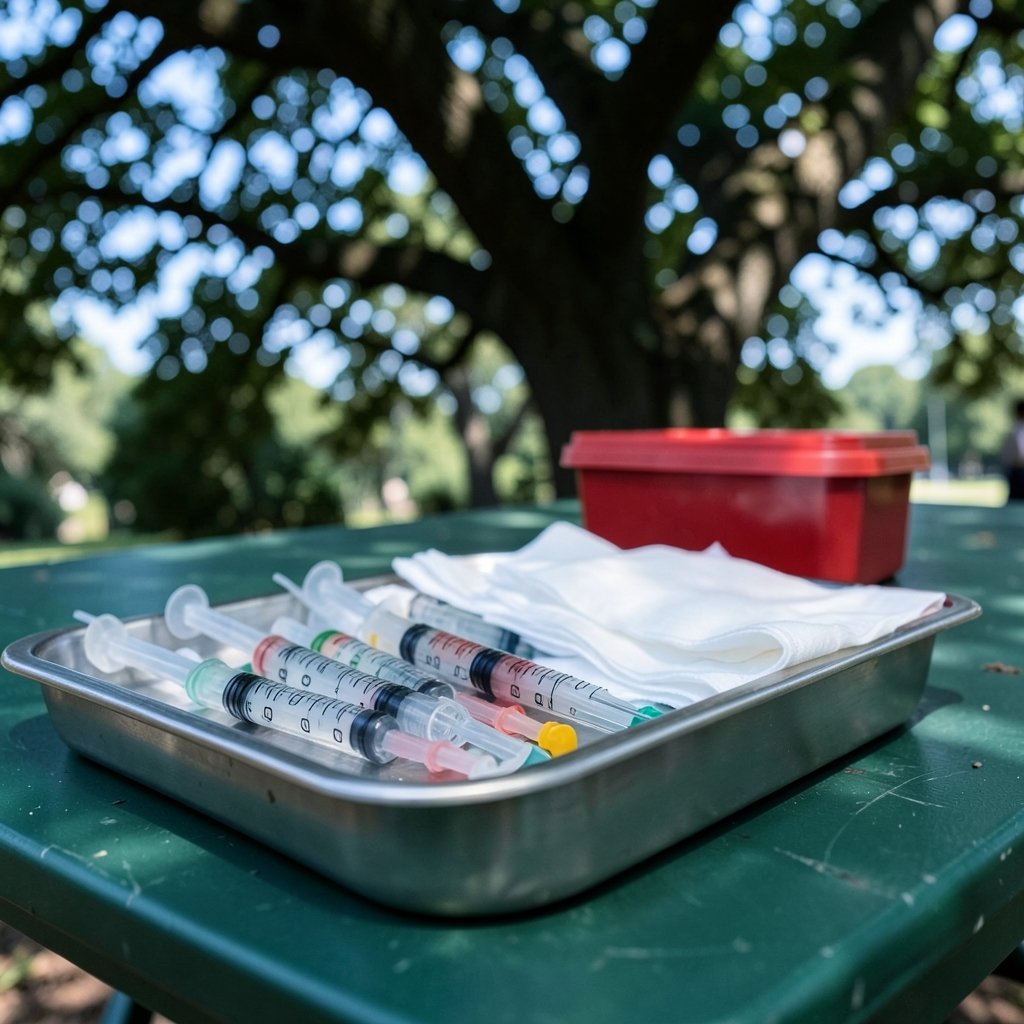
What do a flu shot, a blood draw, and a tattoo have in common? Each one depends on a thin piece of stainless steel that most people never think about until it touches their skin. The syringe needle is one of the most common medical devices on earth, yet few people understand why one looks like a hair and another looks like a small pipe. That gap matters. The wrong gauge can make an injection painful, a blood draw slow, or a vaccine less effective.
This guide breaks down how needles are sized, color-coded, and chosen. It also covers sharps safety, disposal rules, and the mistakes that even experienced caregivers make.
What a Syringe Needle Actually Is
A needle is a hollow tube with a sharpened tip. It attaches to a syringe barrel or a needleless connector through a hub, usually made of plastic. The metal part is called cannula tubing, and it is made from stainless steel for strength and corrosion resistance.
Three features define how a needle performs:
- Gauge (G): the outer diameter of the tube. The scale runs backward, so a higher number means a thinner needle. A 30G needle is much finer than an 18G.
- Length: measured from the hub to the tip, usually in inches or millimeters.
- Wall type: regular wall, thin wall, or extra-thin wall. A thinner wall leaves a wider internal opening for the same outside diameter, which lets fluid flow faster.
The dimensions and requirements for needle tubing are set by an international standard, ISO 9626. Manufacturers follow it so that a 21G needle from one company fits the same jobs as a 21G from another.
A Short History
The modern hypodermic syringe is usually credited to Alexander Wood and Charles Gabriel Pravaz, both working around 1853. Their designs were crude by today’s standards, and early needles were large, reusable, and painful. Disposable needles and plastic syringes changed everything in the twentieth century, turning injections into a routine, low-risk procedure. The next big shift was safety engineering, driven by the needlestick injuries that plagued hospitals.
Reading the Gauge Chart
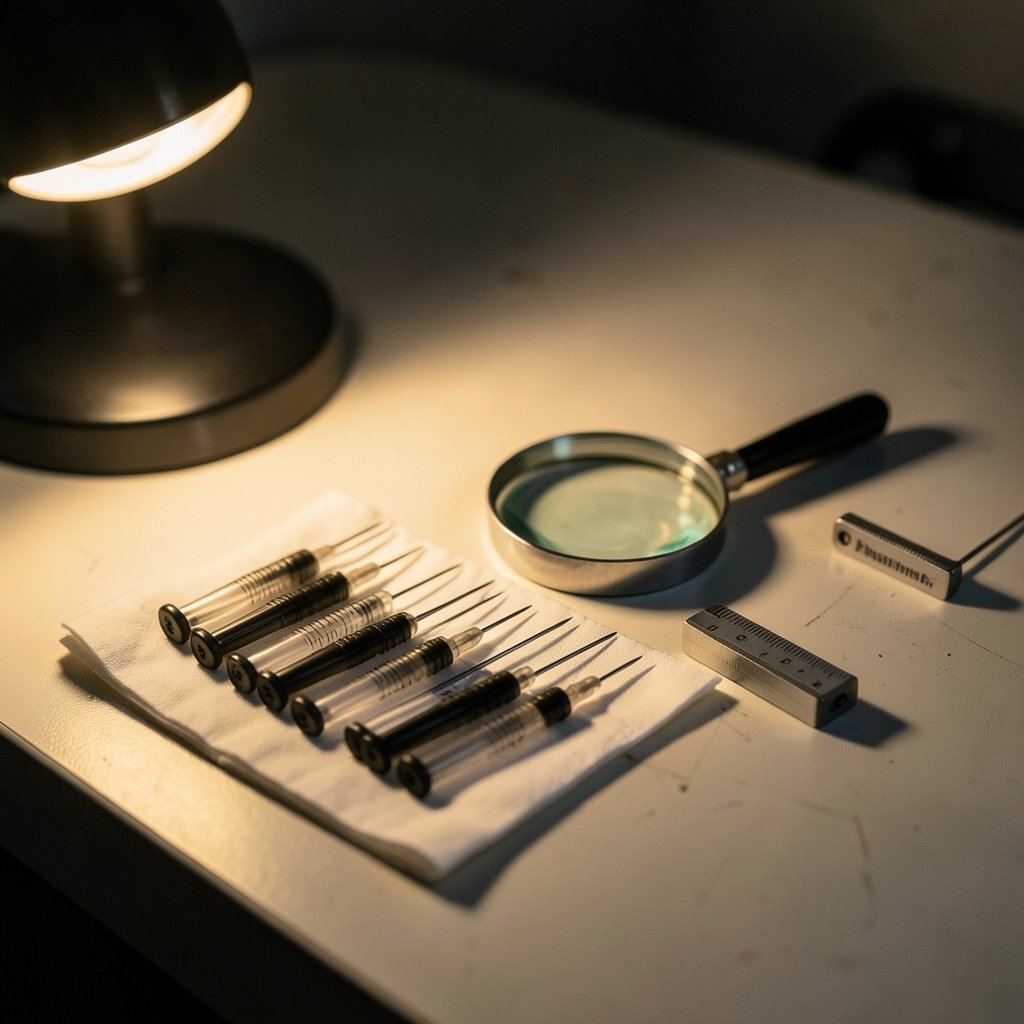
Gauge numbers can confuse anyone who assumes bigger numbers mean bigger needles. They do not. Here is a practical reference for the sizes most people encounter.
| Gauge | Approx. outer diameter | Common use |
|---|---|---|
| 14G | 2.1 mm | Large-volume rapid infusion, trauma |
| 18G | 1.2 mm | Blood donation, surgery, thick fluids |
| 21G | 0.82 mm | Routine blood draws, IV starts |
| 23G | 0.64 mm | Vaccines, shorter infusions |
| 25G | 0.51 mm | Most adult vaccines, fragile veins |
| 27G | 0.41 mm | Fine work, dental, some cosmetic use |
| 30G+ | Under 0.31 mm | Insulin pens, very delicate injections |
Two cautions. First, exact diameters shift slightly depending on wall thickness and manufacturer, so treat the numbers as close approximations. Second, a thinner needle is not automatically better. Very fine needles bend more easily and flow more slowly, which can make a blood draw take longer or hemolyze a sample.
Color Codes: The Quick-Glance System
Needle hubs are color-coded so a clinician can grab the right size without squinting at tiny print. An international standard, ISO 6009, sets the color for each gauge. Common examples include green for 21G, blue for 23G, and orange for 25G.
The system is genuinely useful in a hurry, but it has limits. Colors vary slightly between manufacturers, and some specialty needles do not follow the standard at all. Treat the color as a first check and the printed label as the final word. In practice, the most common mistake is grabbing a needle by color memory after a long shift and discovering it is one gauge off.
Choosing the Right Needle for the Job
Needle selection comes down to three questions: what is being injected, where, and into whom.
For intramuscular injections, such as most adult vaccines, guidance generally calls for a 22G to 25G needle and a length of 1 to 1.5 inches (25 to 38 mm) for adults. Length depends on body weight and injection site. A shorter needle in a larger arm may not reach muscle at all, delivering the dose into fat instead, where absorption is less predictable. This is one of the most common real-world errors: choosing a needle that looks comfortable rather than one that reaches the target tissue.
For subcutaneous injections, such as insulin, a much shorter and finer needle works best, often 4 to 6 mm at 30G or higher. These are designed to reach just under the skin and no further.
For blood draws, the priority flips to flow. A 21G or 22G needle fills the tube quickly without damaging red blood cells. Using a 25G for a large draw can cause slow flow and a hemolyzed sample, which means a repeat stick for the patient.
For fragile or pediatric veins, smaller gauges reduce trauma, but the trade-off is slower flow and a higher chance of the needle clogging. Skilled clinicians balance these factors rather than defaulting to the smallest option.
Needle Length Matters as Much as Gauge
People fixate on gauge and ignore length, which is a mistake. Length determines whether the medication lands in the right tissue layer. The difference between a 5/8 inch and a 1 inch needle can be the difference between a vaccine working as intended and sitting in subcutaneous fat.
Practical tips that hold up in real settings:
- Match length to the patient’s body habitus, not to habit. A fixed default size fits some patients well and others poorly.
- Pinch or bunch tissue only when the technique calls for it. Improper technique can push a short needle deeper or keep a long one too shallow.
- Check the label every time. Mixing up a 1 inch and a 5/8 inch needle is easy when both hubs look similar.
Safety-Engineered Needles and Sharps Injuries
Needlestick injuries are not a minor inconvenience. They expose healthcare workers to bloodborne pathogens, and the scale is significant. A widely cited estimate puts sharps injuries among hospital-based healthcare personnel in the United States at roughly 385,000 per year.
Policy responded to that risk. The Needlestick Safety and Prevention Act became law on November 6, 2000. It directed the Occupational Safety and Health Administration to revise its Bloodborne Pathogens Standard, 29 CFR 1910.1030, so that employers must evaluate and use safer medical devices, including sharps with engineered sharps injury protections. Those devices include retractable needles, shielding needles, and self-sheathing designs.
Do safety needles eliminate injuries? Not entirely. Reviews of the evidence have found reductions for some device types, but the research has methodological limits, and a device only works if it is actually activated. The most common failure is a clinician who is rushed and skips the safety mechanism. Engineering helps, but training and staffing levels still matter.
Safe Disposal: The Step People Skip
Used needles belong in a sharps container that is closable, puncture-resistant, leak-proof, and clearly labeled. This practice is part of the same OSHA standard that governs workplace exposure.
Common mistakes in home and clinic settings:
- Recapping a needle by hand. Most needlestick injuries happen during recapping or disposal, not during the injection itself.
- Overfilling a sharps container past the fill line, which forces a needle to be pushed in and can cause a stick.
- Tossing loose needles into household trash, which endangers sanitation workers.
- Leaving a used needle on a tray “for a second” and forgetting it.
If you handle needles at home, such as for insulin or injectable medication, a dedicated sharps container and a known drop-off location solve most of the risk.
Injection Safety Around the World
Unsafe injection practices remain a global problem. The World Health Organization recommends single-use syringes and, where reuse risk is high, reuse-prevention syringes that lock after one use. WHO estimated in 2014 that unsafe injections caused about 1.7 million hepatitis B infections, 315,000 hepatitis C infections, and up to 33,800 HIV infections each year.
The lesson scales down to individuals too. A needle is a single-use device. Reusing one, even on the same person, risks infection and dulls the tip, which makes the next injection more painful and more damaging to tissue.
Cost, Storage, and Practical Buying Tips
Needles are inexpensive compared with most medical supplies, but the wrong purchase wastes money and creates risk. A few practical rules:
- Buy the sizes you actually use. A bulk box of a gauge you rarely reach for sits on the shelf until it expires.
- Check the expiration date and sterile packaging before use. A compromised seal means the needle is no longer sterile.
- Store needles in a dry place away from heat and moisture. Bathroom cabinets are a poor choice because of humidity.
- Match the needle to the syringe. Not every needle hub fits every barrel, and forcing a connection can damage the seal.
If you are weighing broader household health spending, the same logic applies as with other major purchases: plan for the essentials first. The same discipline that helps you figure out how much money you really need to buy a house applies to medical supplies. Buy what you need, in the quantity you will use, and skip the upsell. (Arc x1 handheld 308 cloud emulation 2026 buyers need know)
Common Myths About Syringe Needles
A few beliefs refuse to die. Here is what the evidence actually supports.
Myth: A thinner needle always hurts less. Finer needles reduce insertion pain, but a dull or bent needle, a poor angle, or a slow injection can hurt more than a slightly larger sharp one. Technique often matters more than gauge.
Myth: Bigger needles are stronger. Larger gauge numbers mean thinner tubing, and thin tubing bends more easily. Strength is not a simple function of size.
Myth: Any needle works for any injection. Length and gauge both need to match the tissue and the volume being delivered. A mismatch can mean a failed vaccine or a painful, slow draw.
Myth: Safety needles make training unnecessary. Devices fail when people skip the safety step. Training is not optional.
When Needles Are the Wrong Tool
Not every fluid delivery needs a needle. Needleless connectors, catheter systems, and topical or oral routes exist for good reasons. The same instinct applies in other technical decisions: more complexity is not always better. Just as a service mesh explained: what it does and when you actually need one shows that extra infrastructure only pays off in the right conditions, a needle is the right tool only when the route, volume, and tissue call for it.
Conclusion
The syringe needle is a small device with a large set of rules behind it. Gauge runs backward, length determines where medication lands, and color codes are a helpful shortcut rather than a guarantee. Safety-engineered designs and strict disposal practices reduce real risks, but they only work when people use them correctly. Whether you are a clinician stocking a cart or a patient managing injections at home, the practical takeaway is simple: match the needle to the job, check the label, and never skip the sharps container.
Frequently Asked Questions
What does the gauge number on a syringe needle mean?
Gauge measures the outer diameter of the needle tube, and the scale is inverse. A higher number means a thinner needle, so a 30G is much finer than an 18G. The dimensions are standardized so that needles from different manufacturers behave predictably.
Which needle gauge is used for most vaccines?
Most adult vaccines use a 22G to 25G needle, with a length of 1 to 1.5 inches for intramuscular injection. The exact choice depends on the patient’s weight and the injection site, since a needle that is too short may not reach muscle tissue.
Is a thinner needle always less painful?
Not always. Finer needles reduce insertion pain, but a dull tip, a poor angle, or a fast injection can hurt more than a slightly larger sharp needle. Technique and needle condition often matter more than gauge alone.
What should I do with a used syringe needle?
Place it immediately in a sharps container that is closable, puncture-resistant, leak-proof, and labeled. Do not recap by hand, do not overfill the container, and never put loose needles in household trash. Many communities offer drop-off or mail-back programs for home-generated sharps.
Can a needle be reused safely?
No. Needles are designed for single use. Reuse risks infection, dulls the tip, and can damage tissue. Global guidance recommends single-use syringes, and reuse-prevention designs that lock after one use are preferred where reuse risk is high.
Why are needle hubs color-coded?
Color coding lets clinicians identify a gauge at a glance, and an international standard assigns colors such as green for 21G and orange for 25G. Colors can vary slightly between brands and some specialty needles skip the system, so the printed label should always be the final check.



