
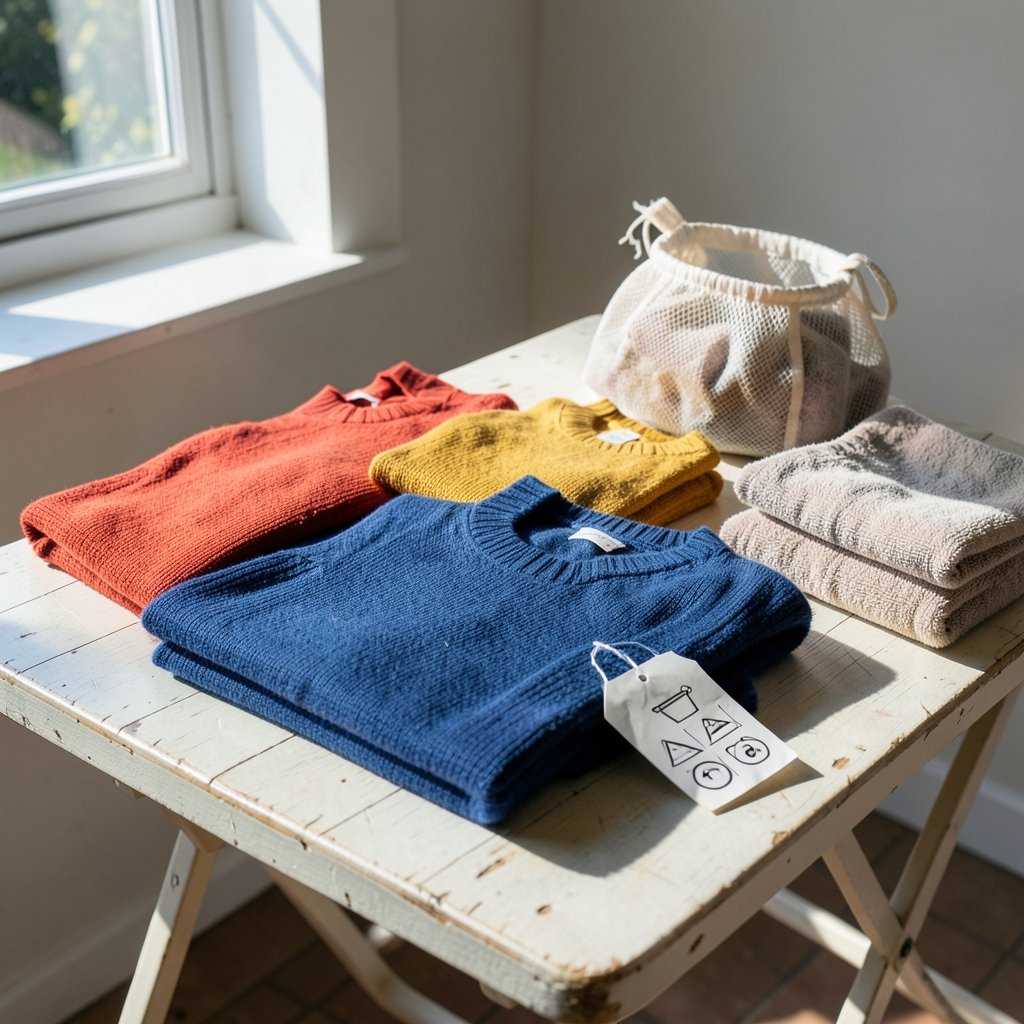
What happens when you pull a favorite sweater from the dryer and it now fits a toddler? Nine times out of ten, the answer was printed right there on the care label, in symbols most people glance at and ignore. Those little tubs, triangles, and circles are not decoration. They are a compact instruction manual, and reading them correctly is the difference between a garment that lasts years and one that shrinks in a single wash.
This guide breaks down every symbol family, explains the numbers and dots, covers the differences between regional systems, and points out the mistakes that quietly ruin clothes.
Why Care Labels Exist at All
The international symbol system grew out of a mid-20th-century effort to standardize laundry instructions across borders. The five core symbols — a washtub, a triangle, an iron, a circle, and a square — were developed by GINETEX, a European labelling body founded in 1963. The symbols are now codified internationally in ISO 3758, the standard titled Textiles — Care labelling code using symbols. The current edition is ISO 3758:2023, which replaced the 2012 version.
One important nuance: the standard defines what the symbols mean, but it does not force manufacturers to use them. In the European Union, care labelling is largely voluntary and industry-led. In the United States, the Federal Trade Commission’s Care Labeling Rule requires care instructions on clothing, but it does not require the ISO symbol set specifically. In practice, most major brands use the symbols anyway because they cross language barriers better than words ever could.
Understanding the label is only half the battle. Knowing what the fabric itself is telling you matters too, which is why guides on how to identify clothing from an image pair well with label literacy — the fiber content and the care symbols together tell the full story.
The Washtub: Temperature, Cycle, and Hand Wash
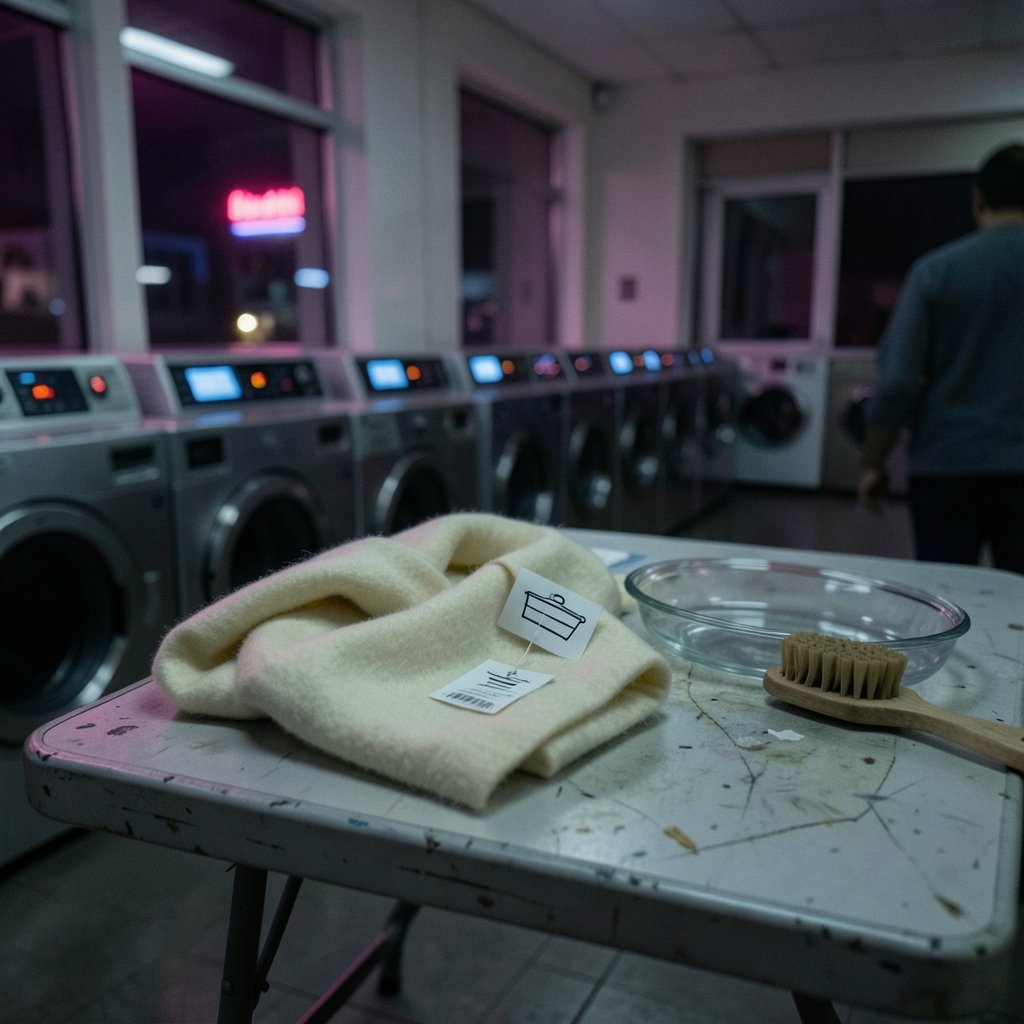
The washtub is the symbol people see most and misread most. Here is how to decode it:
| Symbol Variation | Meaning |
|---|---|
| Tub with a number (30, 40, 60) | Maximum wash temperature in °C |
| Tub with a hand inside | Hand wash only, max 40 °C, gentle handling |
| Tub with one bar underneath | Mild or gentle cycle |
| Tub with two bars underneath | Very mild cycle (wool settings) |
| Tub crossed out | Do not wash at all |
The number is a maximum, not a target. Washing a 40 °C garment at 30 °C is fine. Washing it at 60 °C is how you get felted wool and faded dye. A common mistake is treating the number as a recommendation rather than a ceiling.
The bars underneath the tub are equally important and frequently missed. A bar means reduced mechanical action — slower agitation, longer soak, gentler spin. If a garment has two bars, running it through a standard cotton cycle is asking for trouble even at the right temperature.
The Triangle: Bleach Rules
The triangle governs bleach, and it has three states:
- Empty triangle: any bleach is permitted, including chlorine.
- Triangle with two diagonal lines inside: oxygen (non-chlorine) bleach only.
- Triangle crossed out: no bleach of any kind.
Most people never bleach anything, so this symbol gets ignored. But “no bleach” also matters for stain removers and oxygen boosters, which are bleach in a different costume. A scoop of color-safe oxygen powder in a load of no-bleach fabrics can still dull certain dyes over time.
The Iron: Dots Are Degrees
The iron symbol tells you the maximum safe ironing temperature:
| Dots Inside Iron | Maximum Temperature |
|---|---|
| One dot | 110 °C |
| Two dots | 150 °C |
| Three dots | 200 °C |
| Iron crossed out | Do not iron |
One dot is the territory of synthetics like nylon and polyester, which will glaze or melt under a hot iron. Three dots covers cotton and linen, which shrug off high heat. A crossed-out iron usually appears on acrylics, some fleece, and textured fabrics where any iron contact would flatten or damage the surface.
Practical tip: when in doubt, iron on the lowest setting and work up. You cannot un-melt a scorch mark, but you can always add heat. A pressing cloth adds a safety margin for dark fabrics that show shine.
The Circle: Dry Cleaning Codes
The circle tells you what a professional cleaner may do:
- Circle with a letter inside (P, F, or W): the solvent class permitted. P covers most standard dry cleaning solvents; F indicates more delicate solvents; W means wet cleaning is acceptable.
- Circle crossed out: do not dry clean.
- Empty circle: dry clean with any standard method.
A crossed-out circle is not a suggestion to hand-wash instead — it often means the manufacturer wants you to wash at home and the dry cleaning process itself would damage the finish, the trim, or the dye. Conversely, a garment that says dry clean only may survive a gentle home wash, but that is a gamble, not a rule.
The Square: Drying Instructions
The square is the most crowded symbol family because drying has the most variables:
| Symbol Variation | Meaning |
|---|---|
| Square with a circle inside | Tumble dry permitted |
| Circle with one dot | Low heat |
| Circle with two dots | Medium heat |
| Circle with three dots | High heat |
| Square with a horizontal line | Dry flat |
| Square with a curved line at the top | Line dry |
| Square with three vertical lines | Drip dry |
| Square crossed out | Do not dry |
The dots inside the tumble-dry circle follow the same logic as the iron: more dots, more heat. One dot is the safe default for anything stretchy, coated, or synthetic. High heat is what turns elastic waistbands crunchy and shrinks cotton jersey.
Dry flat is the instruction people break most often, usually out of impatience. Knitwear hung on a hanger while wet will stretch at the shoulders and never recover its shape. Laying it flat on a towel, reshaping it by hand, and letting it air dry takes a day but preserves the fit.
Regional Differences: ISO, ASTM, and JIS
The ISO 3758 system is the closest thing to a global standard, but it is not the only one. The United States uses ASTM D5489, a standard guide for care symbols that is broadly aligned with ISO 3758 but not identical in every detail. Japan uses JIS L 0001, whose symbols differ visually from the ISO set — the Japanese wash symbol, for example, uses a different tub design.
For most shoppers this matters only when buying imported clothing or secondhand pieces from abroad. If a symbol looks almost familiar but slightly off, it probably is. The safest approach is to search the specific symbol shape rather than assume it matches the ISO version.
The Mistakes That Actually Ruin Clothes
After years of watching laundry go wrong, a few patterns stand out. These are the errors that cause the most damage:
- Ignoring the bars under the tub. The temperature gets all the attention, but the cycle bars determine whether a delicate survives.
- Treating “dry clean only” as absolute or as optional. Neither is true. It is a risk assessment, and the fiber content decides how much risk you are taking.
- Overloading the dryer. Even a low-heat setting causes wear when clothes tumble for two hours because the load was packed tight.
- Skipping the label on the first wash. The first wash is when shrinkage and dye bleeding happen. After that, the damage is done and cannot be undone.
- Assuming all symbols are mandatory. They are not, which is why some cheap garments carry incomplete or vague labels. When in doubt, wash cold and air dry.
Care extends beyond the washing machine. A hat that survives the wash can still be wrecked by a careless dry, so it helps to know how to wash a hat without wrecking the brim or shape — the same principles of gentle temperature and controlled drying apply.
Reading Symbols Alongside Fiber Content
Care symbols do not exist in a vacuum. The fiber composition on the same label explains why the symbols say what they say. A 100% wool sweater will almost always show hand wash or a wool cycle with a crossed-out tumble dry, because heat and agitation felt the fibers permanently. A polyester blend will show low-heat ironing because the fiber softens well below cotton’s tolerance.
This is where a little textile knowledge pays off. Someone who understands that viscose loses strength when wet will treat a “hand wash” symbol with appropriate respect rather than tossing the item in with the towels. The same instinct applies to understanding how symbols communicate meaning in other contexts — the way money symbols really mean more than their face value in text shows how a single glyph can carry layered instructions. Care labels work the same way: one small icon encodes temperature, mechanical action, and chemical tolerance all at once.
Plants offer a parallel lesson in reading subtle signals. Anyone who has learned to keep a golden pothos thriving knows that yellowing leaves communicate overwatering long before the plant collapses. Fabric tells you similar things — pilling, fading, and stiffening are the garment equivalent of a drooping leaf, warning that the care routine needs adjusting before the damage becomes permanent.
Building a Care Routine That Sticks
The most reliable approach is to sort laundry by care requirement rather than by color alone. A simple three-basket system works well:
- Cold and gentle: delicates, wool, anything with a hand-wash symbol.
- Standard warm: everyday cottons and blends at 30-40 °C.
- Hot and heavy: towels, sheets, and sturdy workwear at 60 °C.
Within each basket, check for crossed-out symbols before anything goes in the machine. A single “do not wash” item thrown in with a load of towels can shed dye or lose its shape beyond repair. Sorting takes thirty seconds and saves entire garments.
Drying deserves equal attention. The tumble-dry dots are a maximum, not a requirement. Air drying on a rack or line extends the life of almost everything, preserves elastic, and reduces the lint that comes from repeated tumbling. Reserve the dryer for items that genuinely need it — towels, bedding, and anything with a “tumble dry” symbol that has no line-dry alternative.
When the Label Is Missing or Unreadable
Older garments, handmade pieces, and cheap fast-fashion items often have faded or absent care labels. In that case, work from the fiber content if it is legible, and default to the gentlest option: cold water, mild detergent, gentle cycle, air dry. Natural fibers like cotton and linen tolerate more heat; synthetics, wool, and anything with elastane do not. When the fiber is unknown, treat the garment like a delicate. The worst outcome of washing something too gently is that it needs another wash. The worst outcome of washing it too aggressively is that it never fits again.
Conclusion
Care symbols are a small piece of design that saves an enormous amount of money and frustration. The washtub sets the temperature ceiling, the triangle rules bleach, the iron caps heat, the circle governs dry cleaning, and the square controls drying. The numbers and dots are maximums, the bars mean gentleness, and the crossed-out versions mean stop. None of it is complicated once the code clicks — and once it does, the dryer stops being a gamble and starts being a tool. The next time a label catches the eye, read it before the first wash, not after.
Frequently Asked Questions
What does a washtub with a hand inside mean?
It means hand wash only, typically at a maximum of 40 °C. The garment should be washed in water by hand with gentle agitation, not put through a machine cycle. Even a delicate machine setting may be too rough for fabrics marked this way.
What is the difference between one, two, and three dots on a care label?
Dots indicate heat levels. On the iron, one dot means 110 °C, two means 150 °C, and three means 200 °C. On the tumble-dry circle, one dot means low heat, two means medium, and three means high. More dots always means more heat is tolerated.
Does a crossed-out triangle mean I cannot use stain remover?
Not exactly, but it is a warning. A crossed-out triangle means no bleach, and some stain removers and oxygen boosters contain bleaching agents. Check the product label before applying anything to a no-bleach fabric, and test on a hidden seam first.
Are care symbols legally required on clothing?
It depends on the country. In the United States, the FTC’s Care Labeling Rule requires care instructions but not the ISO symbols specifically. In the EU, care labelling is largely voluntary and industry-led. The symbols are widespread because they work, not because every country mandates them.
What should I do if the care label says dry clean only but I want to wash it at home?
Assess the risk first. Structured jackets, lined garments, and anything with acetate or delicate trim should go to a professional. Simple cotton or polyester pieces marked dry clean only often survive a cold, gentle hand wash, but shrinkage and dye loss are real possibilities. When the garment matters, follow the label.
Why do some imported clothes have symbols I do not recognize?
Different regions use different standards. The US follows ASTM D5489, Japan uses JIS L 0001, and most of the world aligns with ISO 3758. The symbols are similar but not identical, so an unfamiliar icon on an imported garment is usually a regional variant rather than a printing error.



